
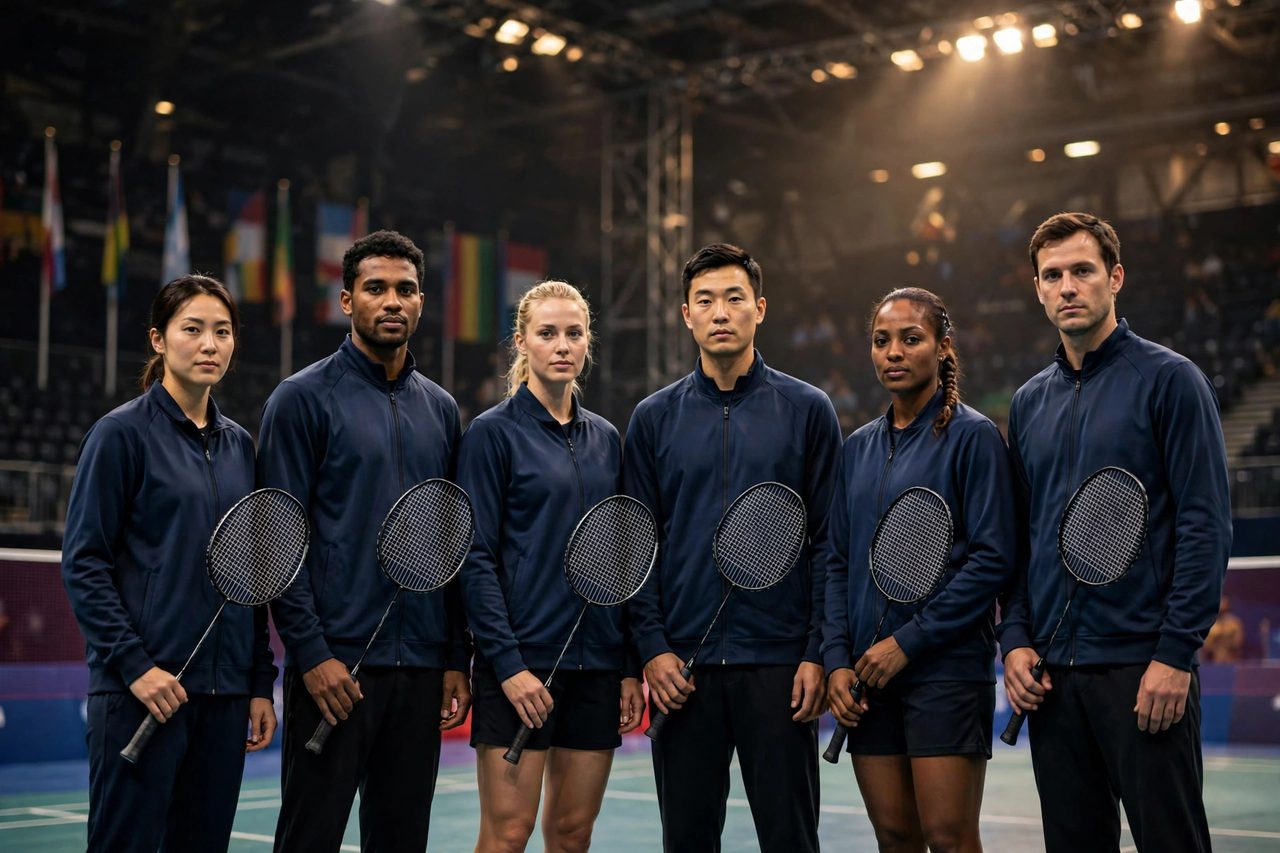
Every two years, badminton stops being an individual sport. For ten days, the world’s best players put down their singles ambitions and pick up a flag, because the Thomas Cup and the Uber Cup — the men’s and women’s world team championships — are the two trophies that mean more to players than almost any individual title. They are also, for newcomers, the most confusing events in the sport. Here is how they work.
Two cups, one event
The Thomas Cup is the men’s world team championship. It is named after Sir George Thomas, the founder-president of the International Badminton Federation (now the BWF), who wanted badminton to have its own version of tennis’s Davis Cup. The first edition was planned for 1941, delayed by the Second World War, and eventually held in 1948–49, won by Malaya.
The Uber Cup is the women’s equivalent, named after Betty Uber, the former British player who proposed a women’s team event in 1950. The two tournaments are staged together, in the same city, in the same week — most recently in Horsens, Denmark, from 24 April to 3 May 2026 — and they follow identical formats.
The format: five matches, first to three
Sixteen teams qualify for each cup. Qualification runs mostly through the continental championships — Asia and Europe send their top four teams each, while Africa, Oceania and Pan America send their champions — with the remaining places going to the highest-ranked teams that have not already qualified.
The sixteen teams are drawn into four groups of four. In the group stage, every team plays every other team in its group, and every tie is played out in full — all five matches, even if the overall result is decided early. The top two teams from each group advance to the quarter-finals, and from there it is straight knockout: quarter-finals, semi-finals, final.
Each tie consists of five matches, played in a fixed order: first singles, first doubles, second singles, second doubles, third singles. The first team to win three matches wins the tie — and in the knockout rounds, play stops as soon as a team reaches three, which is why a tie can end 3–0 without the remaining rubbers being played.
That structure is what makes the cups so dramatic. A team with one superstar and nothing behind them gets exposed fast: you need three singles players and two doubles pairs, all of international standard, and a weak link anywhere in the order can cost the whole tie. Lineups are determined by world ranking, which stops teams from hiding their best players in a lower slot for tactical advantage.
Why the cups matter so much
The Thomas Cup has a roll of honour dominated by the sport’s great powers: Indonesia have won it a record 14 times, China and Malaysia close behind. India broke through for a first title in 2022, beating Indonesia in the final — a landmark moment for a country that had never won a world team event. On the women’s side, China dominate the Uber Cup with 16 titles, though South Korea’s 2022 triumph and Indonesia’s run to the 2024 final showed the field is far from closed.
The cups also produce the sport’s most famous atmospheres. A team event turns a badminton hall into a football stadium: teammates on the bench living every point, coaches gesticulating, whole squads roaring on a third singles player who would never fill an arena alone. The 2022 Thomas Cup final, when India beat Indonesia in Bangkok, is remembered as much for the noise from the Indian bench as for the badminton itself.
For players, the cups carry a different kind of pressure. Lose an individual final and you lose alone; lose the deciding match of a Thomas Cup tie and you feel you have let down a country. That is also why winning one means so much — it is the rare badminton title that belongs to a team, a federation and a flag, not just a name on a trophy.
When to watch
The cups run every two years, in even years, and the next edition after Horsens 2026 will arrive in 2028. If you are new to the sport, the group stage is the best place to start: the ties are played in full, you see every discipline, and the lower-ranked teams get their moment. Then stay for the knockouts, where a single third singles match can decide a nation’s week. No individual tournament in badminton does drama quite like it.
Related articles
How the Indonesia Open Works
Badminton's loudest week: a simple guide to the Super 1000 in Jakarta, its format, its history and why Istora Senayan matters.
How the Malaysia Open Works
Badminton's season opener in Kuala Lumpur: a simple guide to the Super 1000, its format, its fans and its history.
How the European Badminton Championships Work
Five titles, one week, and the best players in Europe: here is how badminton's biggest continental event works.