
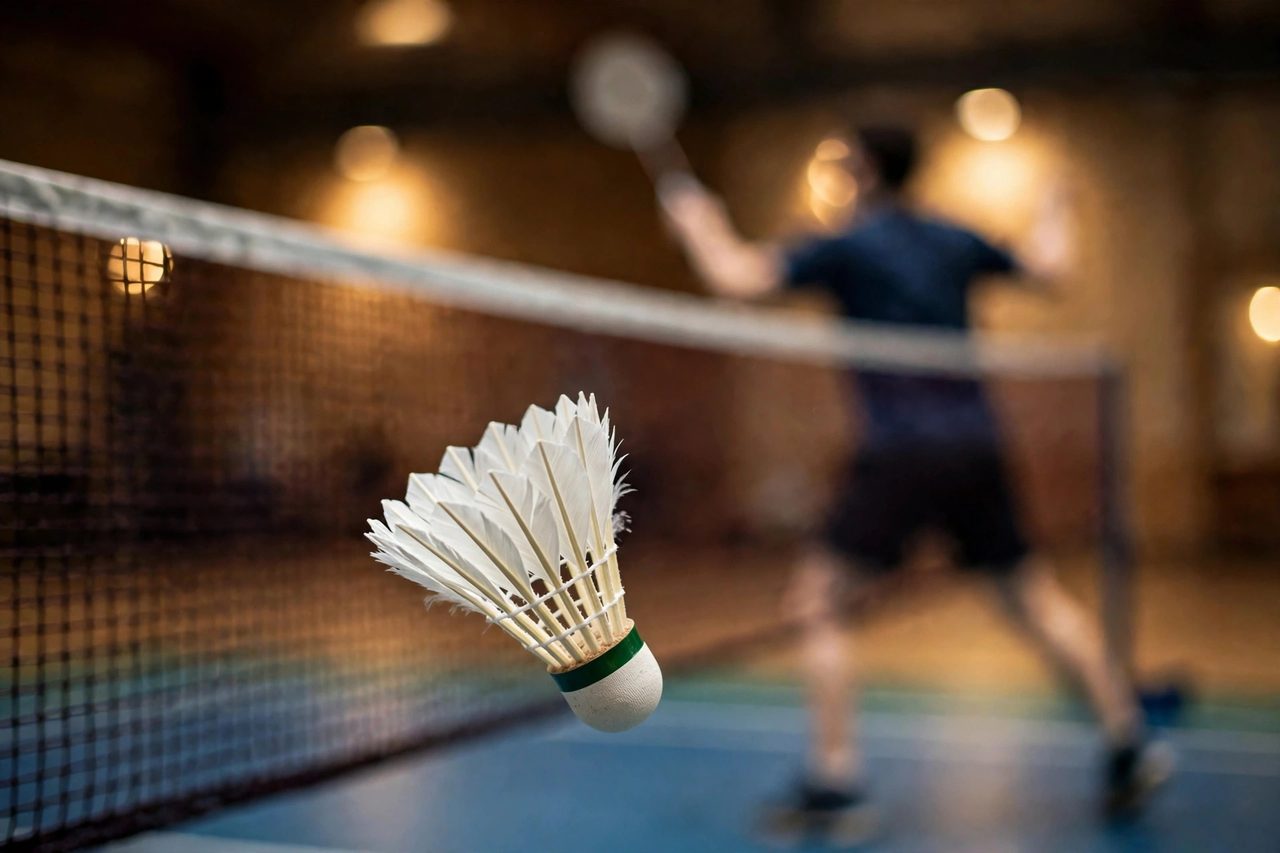
Every sport has its ball — except badminton, which plays with something that looks like it escaped from a craft box: a little cork nose with 16 feathers stuck in the back.
It is called a shuttlecock. A shuttlecock is the feathered object players hit back and forth over the net instead of a ball — badminton has no ball at all. Players also call it a shuttle, or a birdie. Whatever you call it, no other major sport uses anything like it.
A ball that is not a ball
The first thing to know is that a shuttlecock is built backwards compared with a ball. A ball is round and smooth, so it keeps flying in a straight line. A shuttle is a cone: a small, heavy nose at the front and a wide, feathery skirt at the back. That shape is the whole trick.
When you hit a shuttle hard, it leaves the racquet incredibly fast. Smashes in top matches regularly pass 400 kilometres per hour — faster than a tennis serve. But the wide skirt drags against the air, so the shuttle slows down far more sharply than any ball would, and ends its flight dropping almost straight down, like a stone.
That strange flight is what makes badminton what it is. A rally — a rally is a run of shots back and forth before someone wins the point — can be long and fast at the same time, because players can smash with full power and still expect the shuttle to stay in court. The air itself acts as a brake.
Sixteen feathers, all from the same wing
So why 16 feathers? The sport’s rules say a feather shuttle must have exactly 16. Each one is between 62 and 70 millimetres long, glued into a cork base about the size of a bottle cap, and the whole thing weighs between 4.74 and 5.50 grams — about the same as a sheet of paper folded in half.
The number is not random. Sixteen feathers, spaced evenly, give the shuttle the right mix of drag and spin. Fewer feathers and the shuttle wobbles. More and it gets heavy and sluggish. Sixteen is the sweet spot, and the rules locked it in.
There is another detail that sounds like a joke but is not: all 16 feathers must come from the same wing of the bird. Top shuttles use goose feathers, usually from the left wing. Feathers curve in one direction, so a left-wing feather spins one way and a right-wing feather spins the other. Mix them and the shuttle flies crooked. Use one wing only, and the shuttle spins neatly as it flies, which keeps it stable and pointing nose-first.
The feathers are a by-product of geese raised for food. The best ones are sorted by hand for length, bend and stiffness, then glued and stitched into the cork, which is covered in a thin layer of leather. Duck feathers also work, but they wear out faster. That hands-on work is why good feather shuttles cost real money and do not last long.
Feather versus plastic
If you have played badminton at school or in a park, you probably used a plastic shuttle. Instead of feathers, it has a single moulded nylon skirt. Plastic shuttles are cheap, tough and almost impossible to break — the right choice for beginners, schools and casual games.
But they do not fly like feathers. The plastic skirt cannot copy the fine, flexible way real feathers bend and grip the air, so plastic shuttles fly a little faster and flatter, and do not slow down in quite the same way. That is why plastic shuttles are not used in top-level competition: only feathers are allowed there. Feather shuttles give players finer control, especially on the soft shots — the gentle drop shot, which is a shot that just clears the net and falls steeply, and the clear, which is a high, deep shot to the back of the court.
Tested by hand, on court
Before a match, players test the shuttles. The test is written into the rules, and it is wonderfully low-tech. A player stands at the back line, hits the shuttle with a full underhand swing, and watches where it lands. A shuttle of the right speed should land between 530 and 990 millimetres short of the opposite back line.
If it flies past that zone, it is too fast for the hall. If it falls short, it is too slow. Players pick the speed to match the conditions: in a hot hall the air is thinner, so shuttles fly faster, and players choose a slower shuttle to compensate. Shuttle tubes carry speed numbers — 76 is a common one — to help players pick. It is one of the few tests in world sport done by feel, on the court, minutes before the match.
Why nothing else is like it
Other sports have tried similar ideas, but none built a whole global game around a feathered cone. Football needs a ball that rolls. Tennis needs a ball that bounces. Badminton needs something that flies fast, then stops — because the court is small, the net is high, and the game is built on deception: making your opponent guess wrong about where the next shot is going.
The shuttle makes that possible. Its wild slowdown means a player can hit a smash — a smash is a hard, steep, downward shot, the most attacking shot in the game — and still have the shuttle land in. It means a soft shot can die just over the net while a hard shot from the same position flies to the back line.
Next time you watch badminton, ignore the players for a moment and watch the shuttle. It goes up like a rocket and comes down like a falling leaf. It is the weirdest ball in sport — and the sport would not work without it.
Related articles
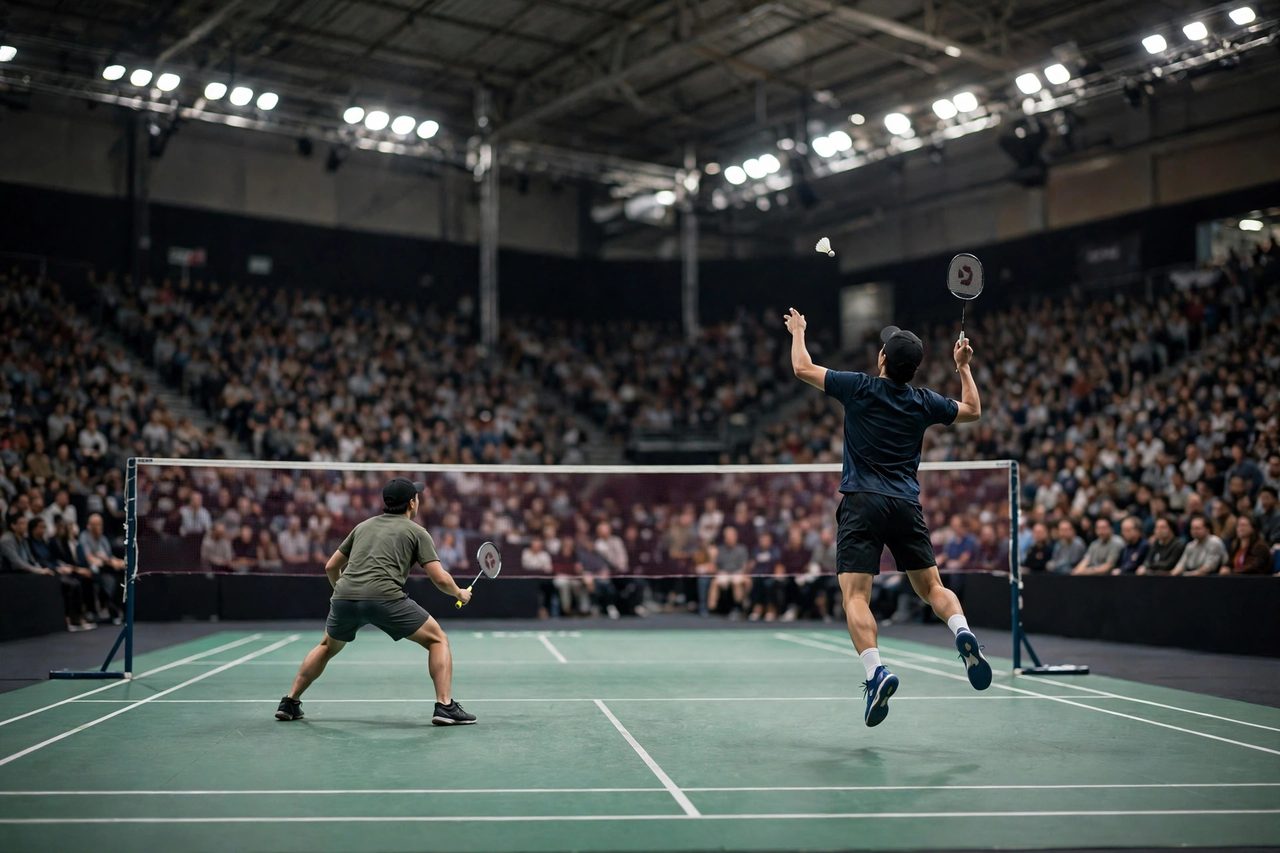
Badminton: The World's Most Played Racquet Sport — and Most People Don't Even Know It
More than 300 million people play badminton. It is an Olympic sport, it has the fastest shot in racquet sports, and it fills huge arenas in Asia. So why does so much of the West still think of it as a garden game?
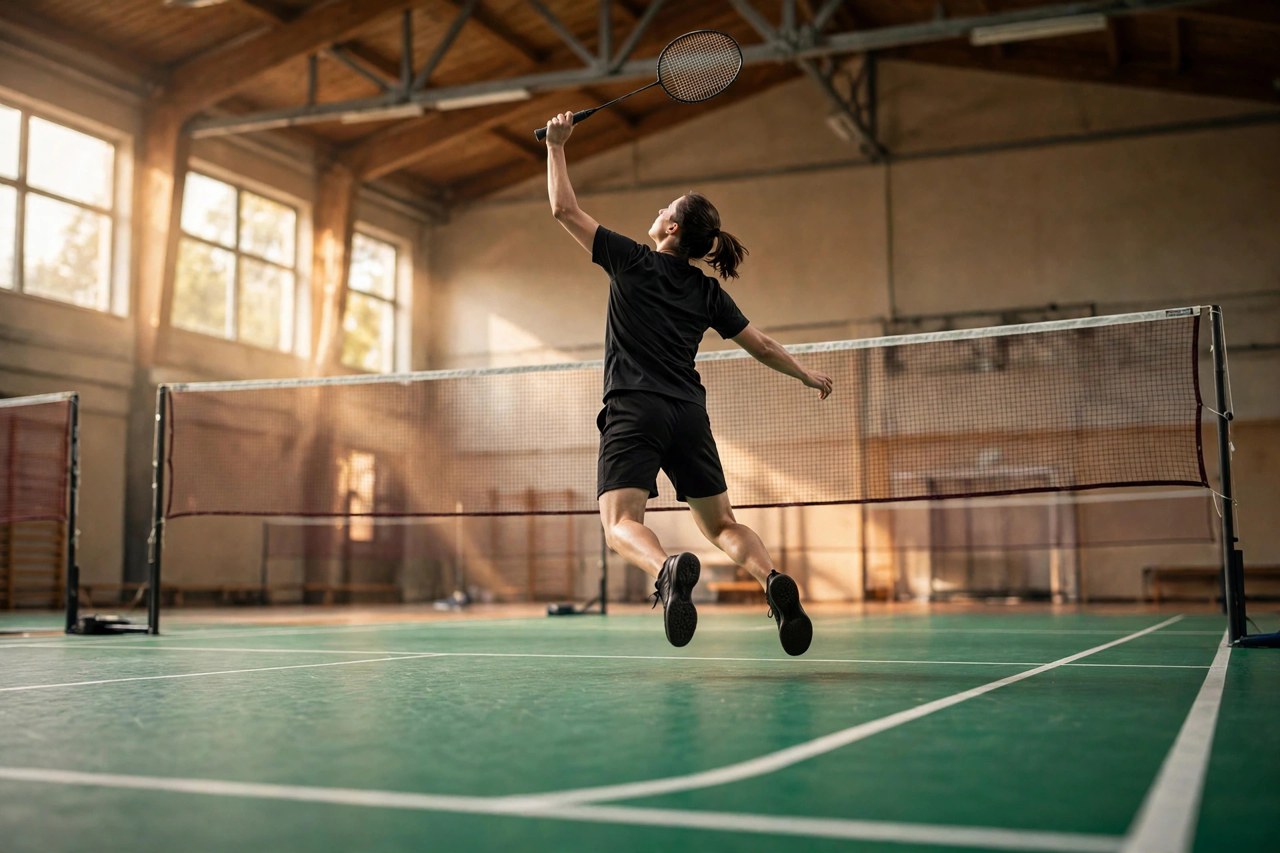
From Wood to Carbon: How the Badminton Racquet Changed the Game
A badminton racquet used to weigh as much as a small hammer. Today it weighs less than a phone. Here is how wood, steel and carbon fibre turned badminton into the fastest racquet sport on earth.
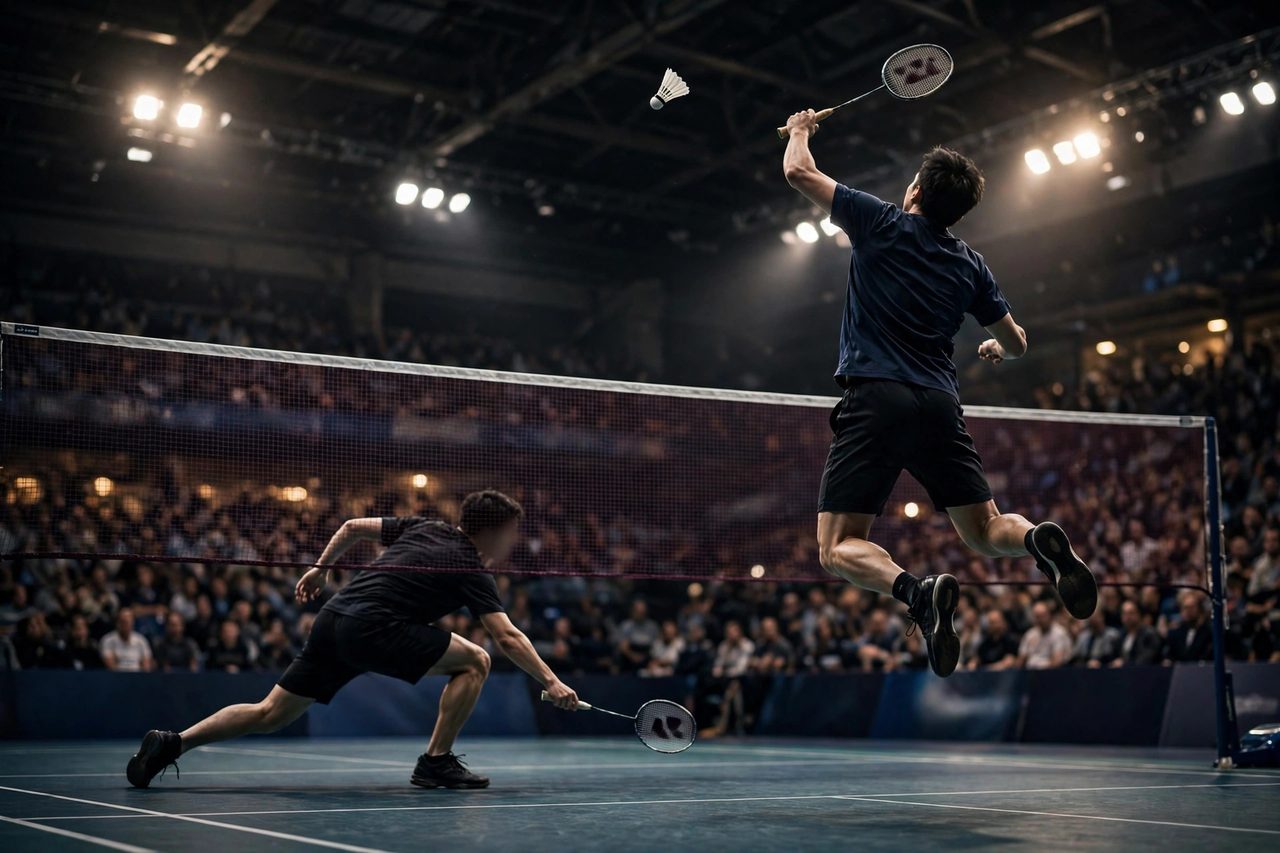
Lin Dan vs Lee Chong Wei: The Rivalry That Made Badminton
For more than a decade, China's Lin Dan and Malaysia's Lee Chong Wei played the matches that turned badminton into must-watch sport.