
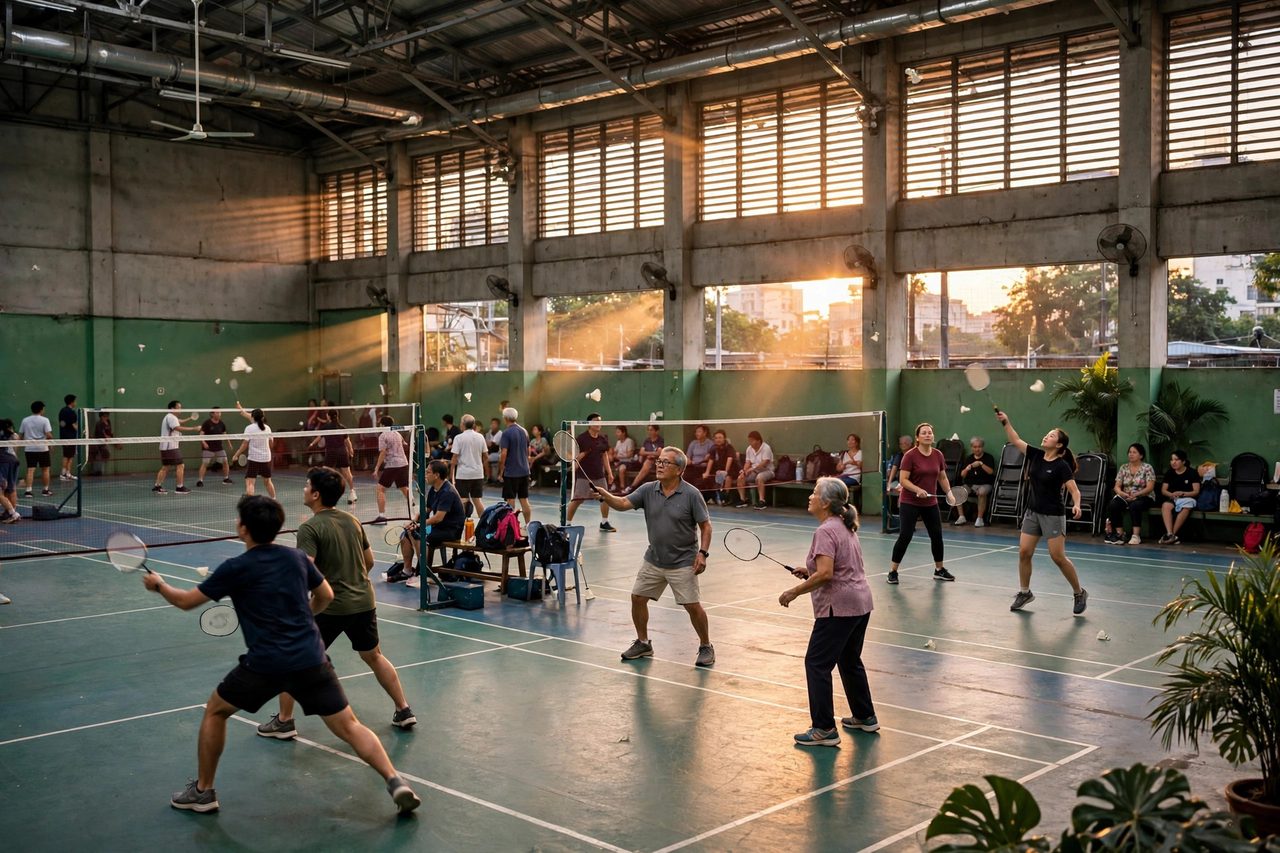
In most countries, badminton is a sport you play at school or at the leisure centre. In Malaysia, it is something closer to a national condition. It is the sport that stops the country — finals watched in mamak stalls at midnight, office arguments about line calls, children named after shuttlers. And this week in Paris, the obsession produced a statistic that says everything: a record four Malaysian doubles pairs reached the semi-finals of the French Open, a Super 750 event. No country had ever done that before.
The man who made it a religion
Every obsession needs a founding figure, and Malaysia’s is Lee Chong Wei. Born in Bagan Serai, Perak, in 1982, Lee spent 349 weeks ranked world No. 1 — including a 199-week consecutive streak — won three Olympic silver medals in 2008, 2012 and 2016, and became the first Malaysian to reach an Olympic singles final. He never won the Olympic gold or the world title that would have completed his career, and in a way that made the devotion deeper: Malaysia adopted him not just as a champion but as a shared heartbreak, a man who carried a nation’s hopes for a decade and kept coming back.
When Lee retired in June 2019 after a diagnosis of nose cancer, the country mourned like it had lost a member of the family. He was inducted into the BWF Hall of Fame in 2023. His rivalry with China’s Lin Dan — the “Lin-Lee” showdowns, two Olympic finals, a decade of duels — remains the defining rivalry of the modern sport, and in Malaysia it is remembered the way other countries remember football derbies.
A doubles nation, too
Malaysia’s badminton identity was never just about one man. The country has always been a doubles power: the Sidek brothers in the 1980s and 90s, and in the modern era pairs like Aaron Chia and Soh Wooi Yik, the world champions. But the real shift of the last few years has been the depth — and the women’s game catching up with the men’s.
Pearly Tan and Thinaah Muralitharan, the first Malaysian women’s doubles pair to win the French Open (2022), reach an Olympic semi-final (Paris 2024) and a World Championships final (2025), rebuilt what Malaysian women’s doubles could be. Their Denmark Open title in October 2026, ending an 18-year wait for a Malaysian women’s doubles crown there, was celebrated at home like a national holiday.
And then came Paris. In the same week, four Malaysian doubles pairs reached the French Open semi-finals: Pearly-Thinaah in the women’s doubles, Goh Sze Fei and Nur Izzuddin in the men’s doubles — who had stunned world No. 1 pair Kim Won Ho and Seo Seung Jae 21–15, 21–18 in the quarter-finals — Man Wei Chong and Tee Kai Wun, also in the men’s doubles, and Hoo Pang Ron and Lai Pei Jing in the mixed doubles, who went on to reach the final. It was a depth no other nation could match that week, and a vindication of a system that has spent decades producing doubles players in volume.
Why it runs so deep
Badminton fits Malaysia in a way few sports fit any country. It needs little space and little money to start — a racquet, a shuttle, a patch of flat ground — and it rewards the qualities Malaysian coaching has always prized: speed, reflexes, deception, touch. It is played in every school, every community hall, every housing estate; the country’s tropical evenings are made for it. And because Malaysia is a multi-ethnic country, badminton became one of the few things that belonged to everyone at once — Malay, Chinese and Indian Malaysians have all produced champions, and all cheer the same flag.
The sport also carries the weight of the one prize Malaysia has never won: an Olympic gold medal, in any sport. Badminton has come closest, again and again — Lee’s three silvers, the men’s doubles silvers — and every Olympic cycle the whole country leans in, hoping this is the time. That unfinished business is part of the obsession. It keeps the story open.
The next generation
The Paris semi-finals suggest the story is in good hands. The doubles depth is real, the women’s game has arrived, and the pipeline behind them — juniors raised on Lee Chong Wei highlights and Pearly-Thinaah finals — is deeper than ever. Malaysia may still be waiting for its first Olympic gold. But if a country’s love for a sport could win one, it would have won it years ago.
Related articles
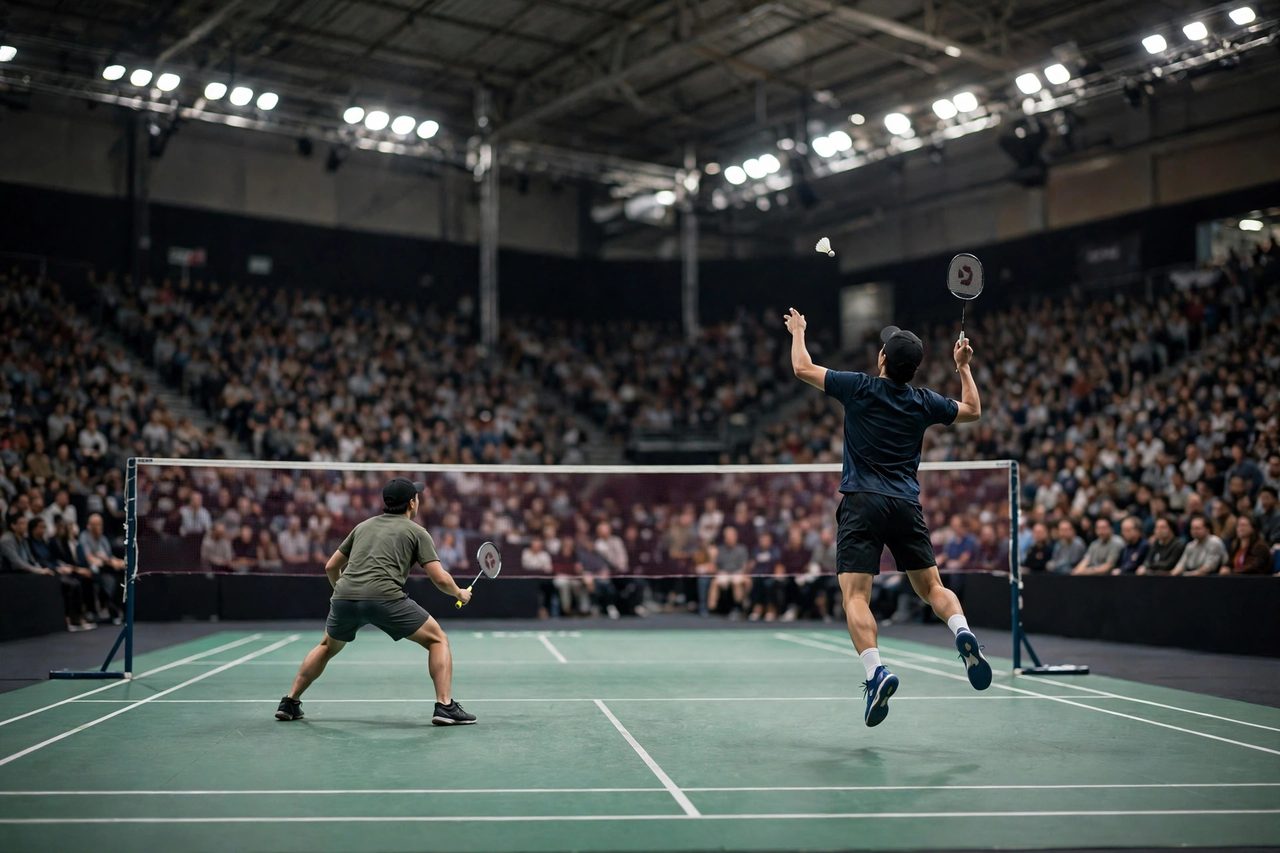
Badminton: The World's Most Played Racquet Sport — and Most People Don't Even Know It
More than 300 million people play badminton. It is an Olympic sport, it has the fastest shot in racquet sports, and it fills huge arenas in Asia. So why does so much of the West still think of it as a garden game?
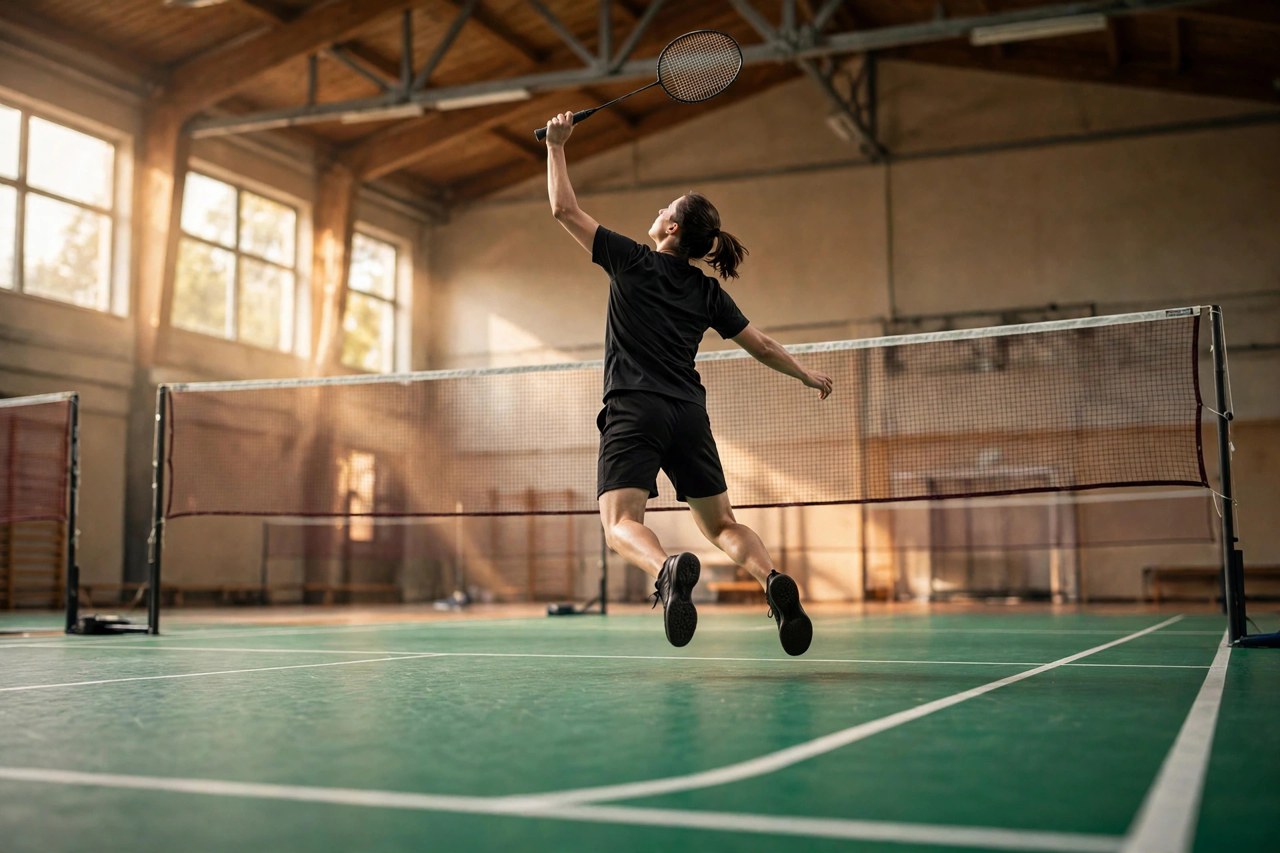
From Wood to Carbon: How the Badminton Racquet Changed the Game
A badminton racquet used to weigh as much as a small hammer. Today it weighs less than a phone. Here is how wood, steel and carbon fibre turned badminton into the fastest racquet sport on earth.
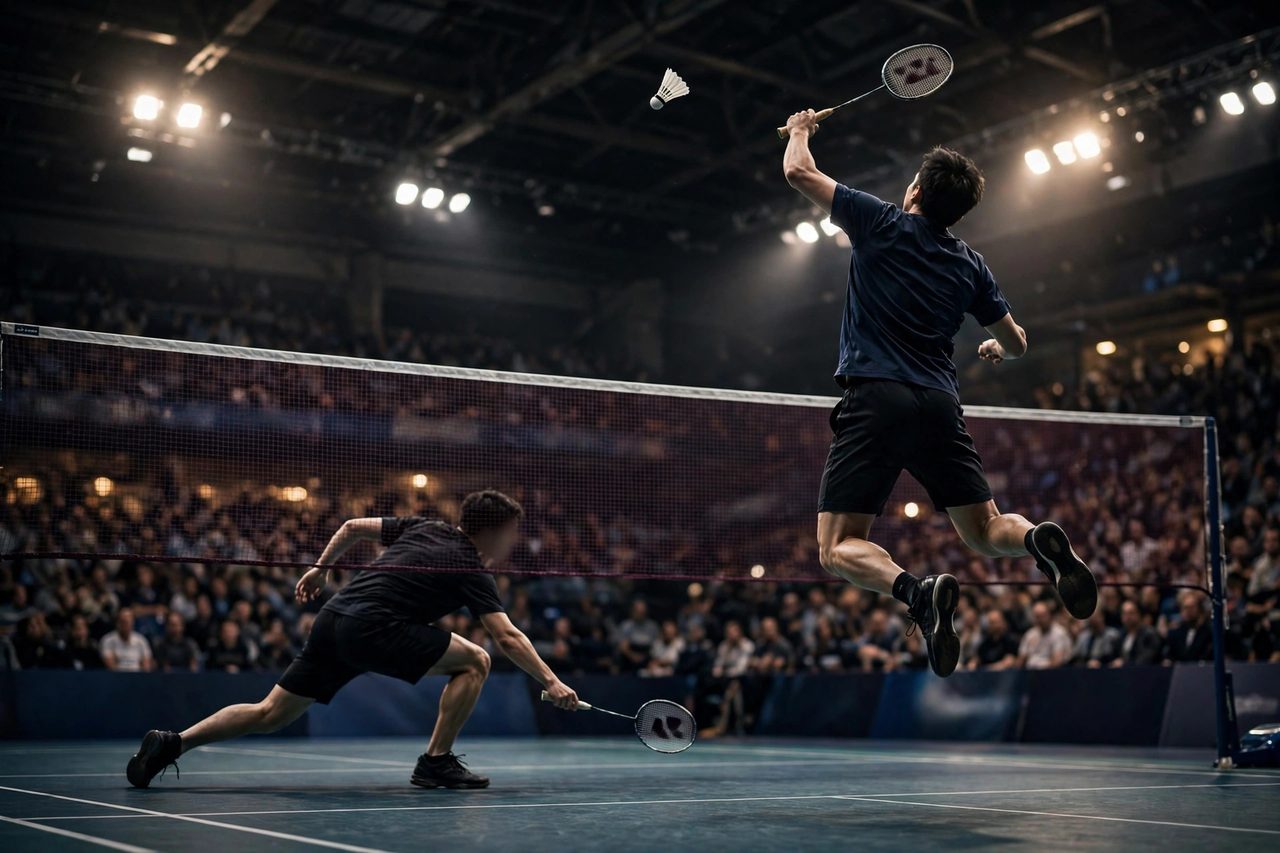
Lin Dan vs Lee Chong Wei: The Rivalry That Made Badminton
For more than a decade, China's Lin Dan and Malaysia's Lee Chong Wei played the matches that turned badminton into must-watch sport.