
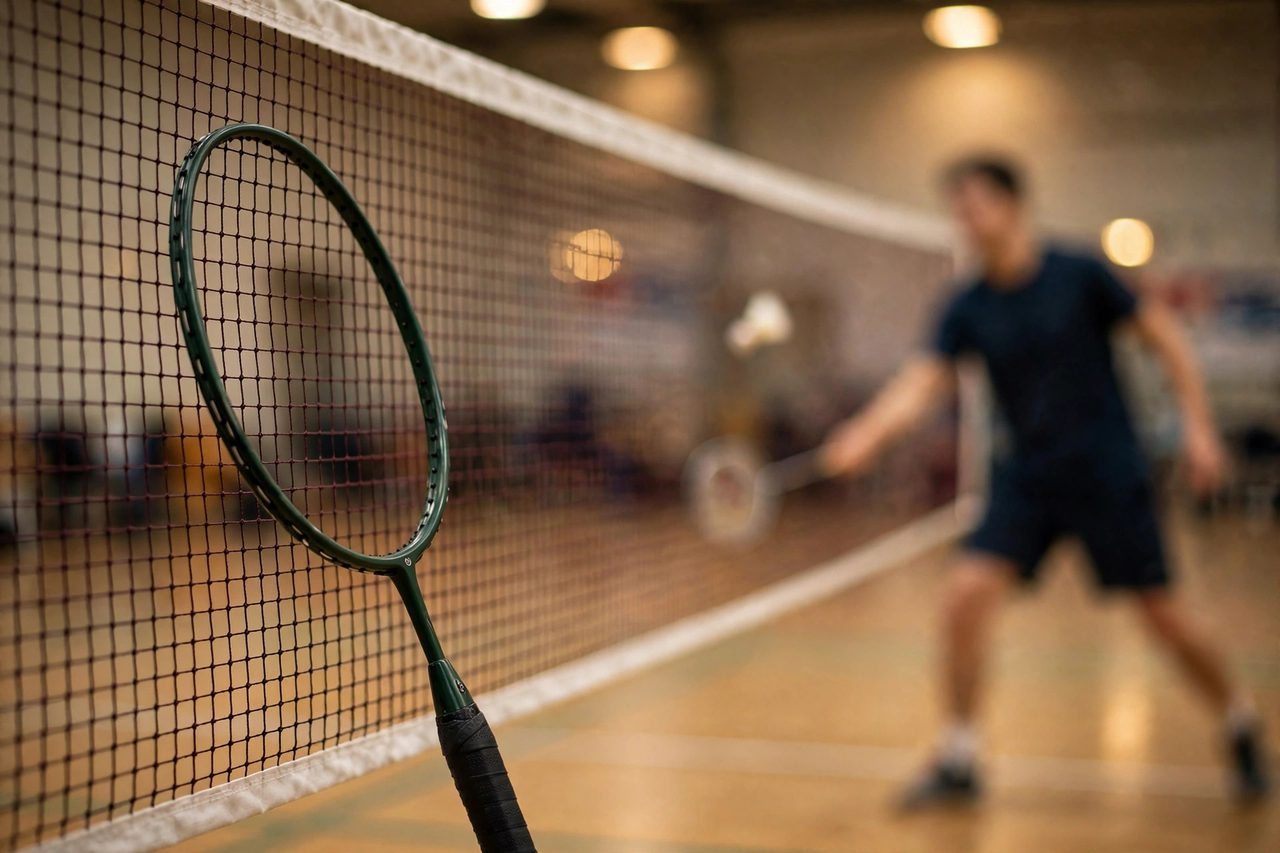
Some racquets are built for power. Some are built for control. The Yonex Nanoflare 800 Pro is built for speed — and for the kind of player who wants to win rallies by being quicker than everyone else on court.
This is a review of a real product, and the specs below are the ones Yonex and its retailers list. It is not a racquet for everyone. But if your game is fast doubles, flat drives and counter-attacking, it might be exactly what you have been looking for.
The basics
The Nanoflare 800 Pro comes in two weight classes. The 4U version weighs around 83 grams, and the 3U version around 88 grams. “U” is badminton’s weight code: the higher the number, the lighter the racquet. A 4U racquet is light and quick to move; a 3U racquet has a bit more weight behind it.
The balance is head-light. That means the weight sits more toward the handle than the head, so the racquet feels fast and easy to swing. It is the opposite of a head-heavy racquet, which puts weight in the head for extra smash power but feels slower to move.
The shaft — the long thin part between the handle and the head — is stiff. A stiff shaft bends less when you hit the shuttle, which gives you a more direct, precise feel. The trade-off is that you need good swing speed to get the best out of it. If your swing is slow, a stiff racquet can feel unforgiving.
The racquet is 675 millimetres long, which is 10 millimetres longer than standard, and it comes in a deep green colour. It is made in Japan, and it is sold unstrung, so you choose your own strings and tension. The recommended tension is 20 to 28 pounds for the 4U version and 21 to 29 pounds for the 3U.
What is new about it
The 800 Pro is a rework of the original Nanoflare 800, and the biggest change is the frame. The old 800 had a super-thin, razor-like frame. Yonex has replaced it with a wide profile frame — a broader, more stable frame shape, the same style used on the Nanoflare 700 and 1000Z.
The point of the wider frame is stability. When the shuttle hits the strings at high speed, a thin frame can twist slightly. A wider frame holds its shape better, so more of your energy goes into the shot and less is lost to twisting. Yonex also says it improves repulsion — how quickly the shuttle springs off the strings.
The second big change is the string pattern. Most Yonex racquets have 22 main strings and 21 cross strings. The 800 Pro adds an extra cross string, making it 22 by 22. That tighter pattern stiffens the feel of the hitting surface and raises the surface pressure on the shuttle, which Yonex says gives you more repulsion and control during fast drive exchanges.
The materials are top-end: high-modulus graphite, a material called M40X, and copper foil built into the frame. M40X is a strong, stiff graphite that Yonex uses in its flagship racquets. The copper adds a little extra mass in the right places and helps the frame stay rigid.
How it plays
The Nanoflare 800 Pro is at its best in the flat, fast parts of the game. A drive is a flat, fast shot hit roughly parallel to the floor, usually in doubles, where both pairs are trying to attack without lifting the shuttle up. This racquet is made for that battle.
In doubles, where rallies are quick and the shuttle comes back at you fast, the head-light balance and light weight mean you can react, block and counter-drive without your arm tiring. The stiff shaft keeps your shots accurate when you are hitting at full speed.
At the net it is quick too. Fast hands win points in doubles, and a light racquet helps you win the race to the shuttle. The wide frame gives you a bit more forgiveness on off-centre hits than the old razor-thin 800 did.
Where it is less strong is the back court. If your game is built on huge smashes from the back, a head-heavy racquet like the Astrox series will give you more free power. The 800 Pro can smash well — it is a pro-level racquet, after all — but you have to generate the power yourself. It rewards fast arms, not lazy ones.
Who should buy it
This racquet suits advanced and tournament players who play a lot of doubles, or singles players who like to attack with speed rather than raw power. If you are a beginner, the stiff shaft will probably feel too demanding. If you are an intermediate player with a fast swing who is moving into competitive doubles, it is a serious option.
The 4U version is the better pick for most people. It is easier to move quickly through a long match, and it suits the fast doubles game this racquet is built for. The 3U version is for stronger players who want extra weight and stability and can keep their swing speed up for a whole match.
One practical note: because it is sold unstrung, budget for strings and stringing on top of the racquet price. A control string like Yonex Exbolt 65 pairs well with it, and a tension in the low-to-mid 20s in pounds is a sensible starting point for most club players.
The verdict
The Nanoflare 800 Pro does one thing very well: it makes you faster. It is light, stiff, stable and built for the flat, furious exchanges that decide doubles matches. It will not give you a bigger smash for free, and it will not forgive a slow swing. But if speed is your game, this is one of the best racquets Yonex makes for it.
Related articles
Yonex Astrox 88S Pro Review: The Front-Court Doubles Racquet Built for Speed and Control
The Yonex Astrox 88S Pro is the third-generation doubles racquet for front-court players: fast, stiff, and 5mm longer than standard. Our review covers the real specs and who it suits.

Yonex Astrox 88D Pro Review: The Doubles Smasher Built for the Back Court
The Yonex Astrox 88D Pro is the third-generation doubles attack racquet for back-court smashers: head-heavy, stiff, and 10mm longer than standard. Our review covers the real specs and who it suits.

Yonex Astrox 99 Pro Review: The Power Racquet for Players Who Live to Smash
The Yonex Astrox 99 Pro is the most head-heavy racquet in Yonex's current lineup: stiff, powerful, and built for advanced attacking players. Our review breaks down the real specs and who it suits.