
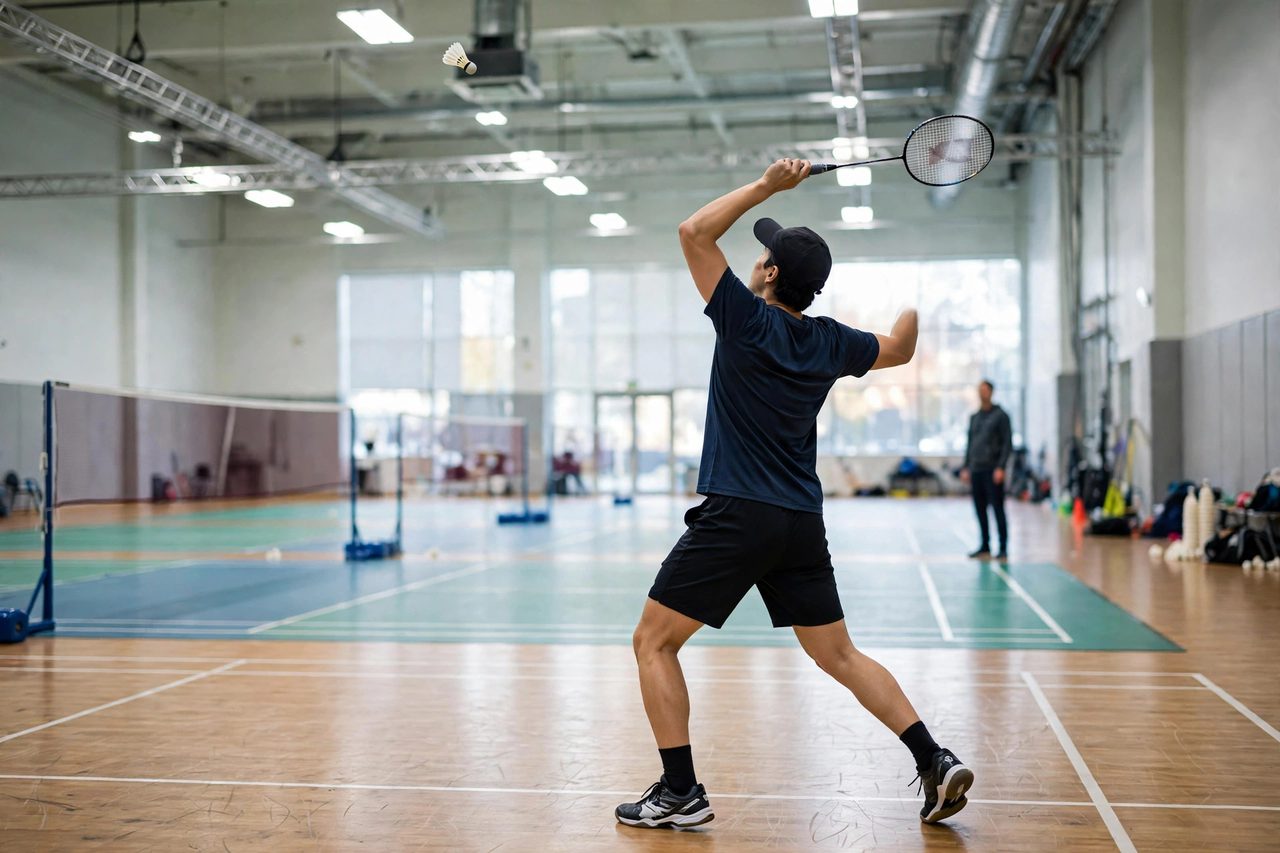
Watch any club game and you will see the same scene: a shuttle drops to the backhand corner, the player panics, and a weak midcourt lift comes back — followed immediately by a smash at their head. The backhand clear is the shot that prevents that. It is also the shot almost nobody trains properly.
A good backhand clear sends the shuttle high and deep to the opponent’s back line, turning defence into a neutral rally. Here is how to build one.
Start with the grip
The forehand grip will not do. For the backhand, rotate the racquet slightly so the thumb presses flat against the wide bevel of the handle — the “thumb grip.” The thumb becomes the lever that generates power, and the fingers stay relaxed until the moment of contact. Too many players strangle the handle; tension kills wrist speed, and wrist speed is everything on this shot.
Footwork: get there early
The backhand clear is a footwork shot before it is an arm shot. As the shuttle heads to your backhand corner, pivot on your racquet foot and turn your body sideways to the net, weight on the back foot. Your non-racquet arm points toward the shuttle for balance, like a thrower aiming.
The single most common error is arriving late and hitting the shuttle behind the body. If the shuttle has passed your shoulder, you have already lost the rally — reset and defend instead. Arrive early enough that contact happens slightly in front of your shoulder, with your weight ready to transfer forward.
The stroke: rotation, not muscle
Power on the backhand does not come from the forearm — it comes from the rotation of the whole body. Drop the racquet head behind your back in a relaxed backswing, elbow high. Then, in one motion: rotate the hips and shoulders toward the net, snap the wrist through contact, and let the racquet finish across the body.
The wrist snap is the difference between a clear that lands midcourt and one that reaches the back line. Think of flicking a towel: the looseness before contact creates the speed at contact.
Contact point
Hit the shuttle at the highest comfortable point, slightly in front of the body. A backhand clear hit too low becomes a flat lift that sits up for the opponent. Hit it slightly above the tape trajectory — the shuttle should leave the racquet climbing, peak over your opponent’s head, and drop into the back tramlines.
Three drills that actually work
- Corner to corner. Stand in one backhand corner, have a partner feed shuttles to it, and hit backhand clears to the diagonal back corner. Ten in a row without a miss is the benchmark.
- The recovery ladder. Hit a backhand clear, recover to base position, then shadow-footwork to the corner again before the next feed. This trains the part most players skip: getting back.
- Target zones. Lay down two markers at the back tramlines. Score a point for every clear that lands between them. Club players who can hit 7 out of 10 deep have a usable shot; tournament players need 9.
Common mistakes to fix
- Hitting with a forehand grip — costs you power and strains the wrist.
- Dropping the elbow — the stroke collapses into a scoop. Keep the elbow up through the backswing.
- Standing square to the net — no rotation means no power. Always turn sideways first.
- Trying to smash from the backhand — ambition is not technique. A deep clear is a win; a failed backhand smash is a point lost.
When NOT to play it
The backhand clear is a defensive-to-neutral tool, not an attacking one. If you are under real pressure — stretched wide, off balance, late — a high, deep clear is still usually better than a panicked drive into the net, but recognise the situations where a simple block to the front is the smarter survival shot.
Train it for fifteen minutes a session, twice a week, and within a month your backhand corner stops being the place where your rallies go to die.
Related articles
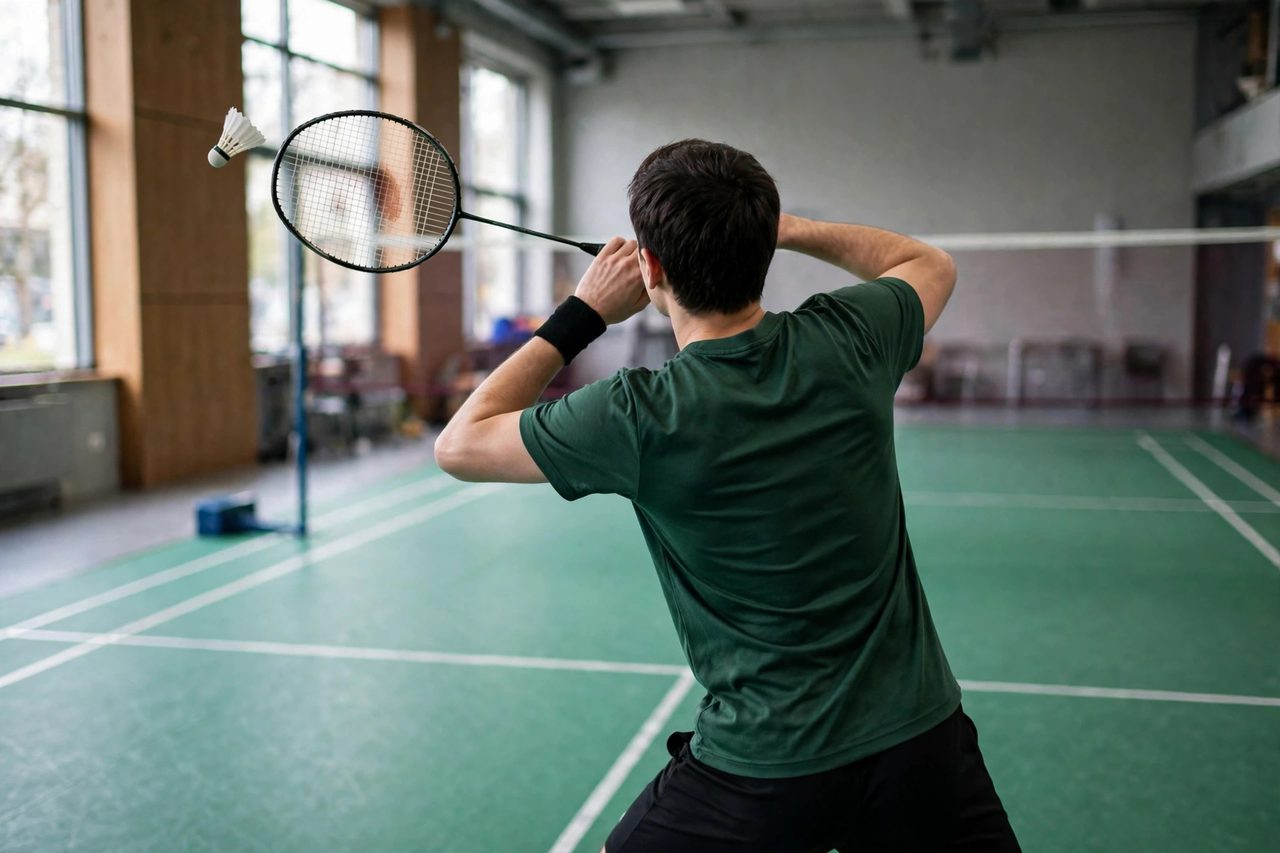
The Backhand Smash: Badminton's Power Shot From the Wrong Side, Step by Step
The shuttle is high on your backhand side and you want to attack, not just survive. The backhand smash lets you hit down hard from the wrong side. Here is how it works, step by step.
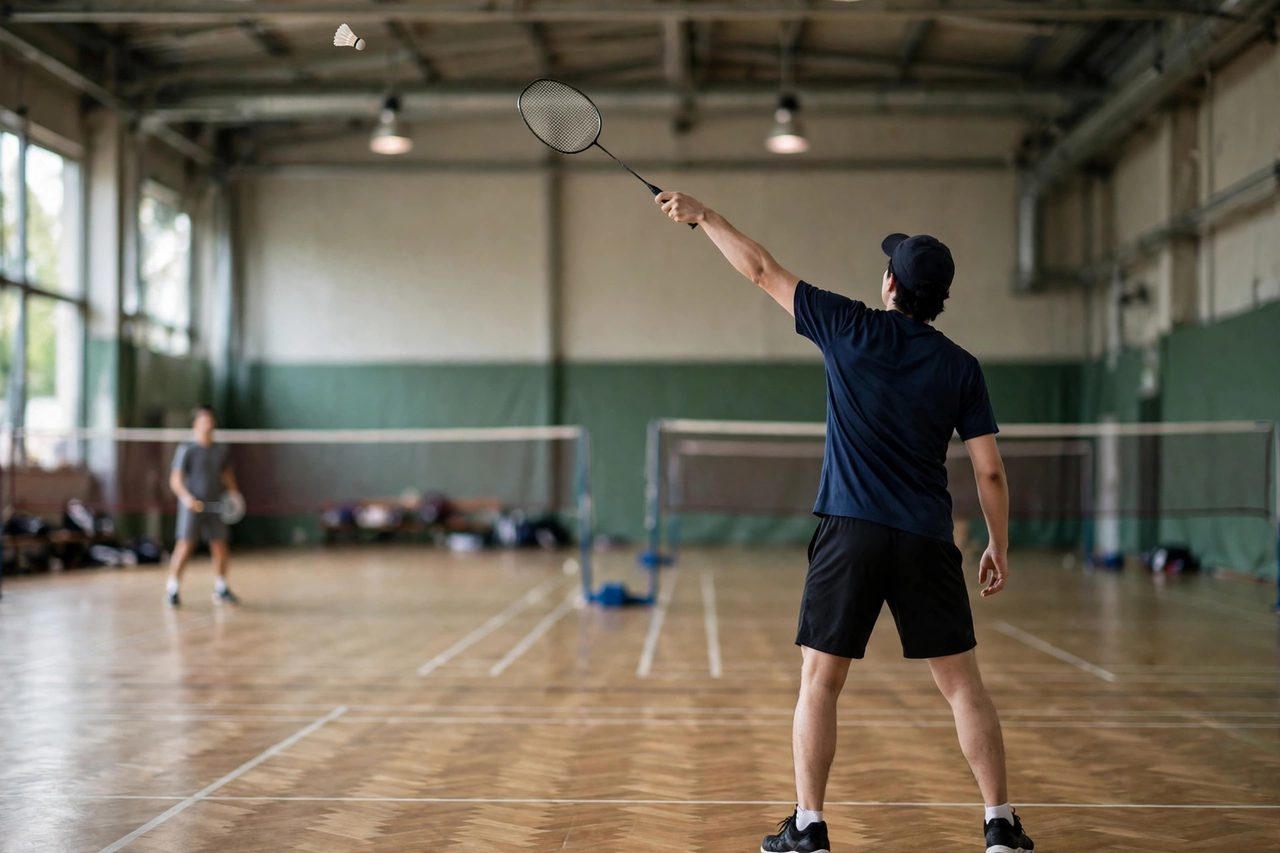
The Forehand Clear: Badminton's Most Basic Shot, Done Right, Step by Step
The clear is the first shot every badminton player should learn — a high, deep shot that buys you time and space. Here is the grip, footwork and throwing motion, step by step.
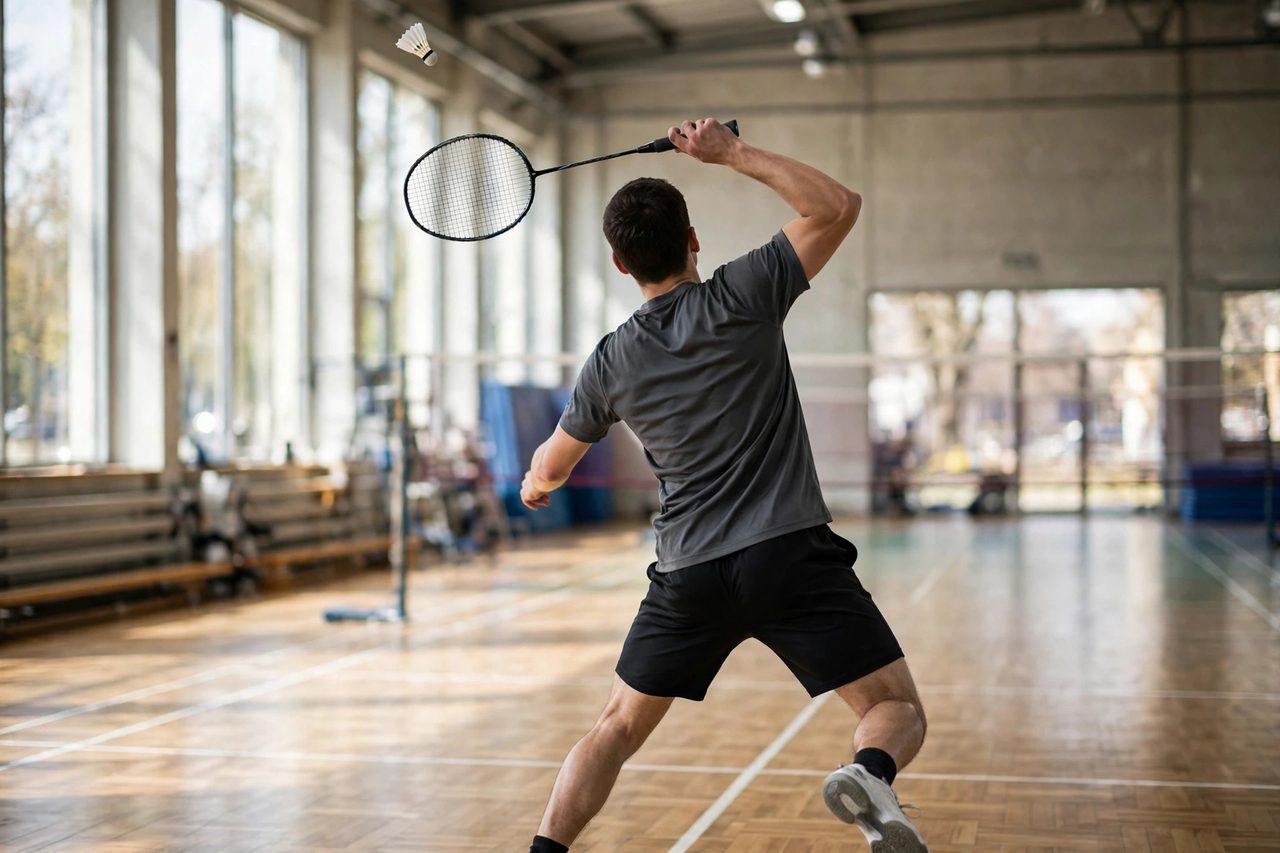
The Around-the-Head Shot: Badminton's Trickiest Reach, Step by Step
The shuttle is over your left shoulder, but your forehand is your best shot. The around-the-head shot lets you reach across and hit it anyway. Here is how it works, step by step.