
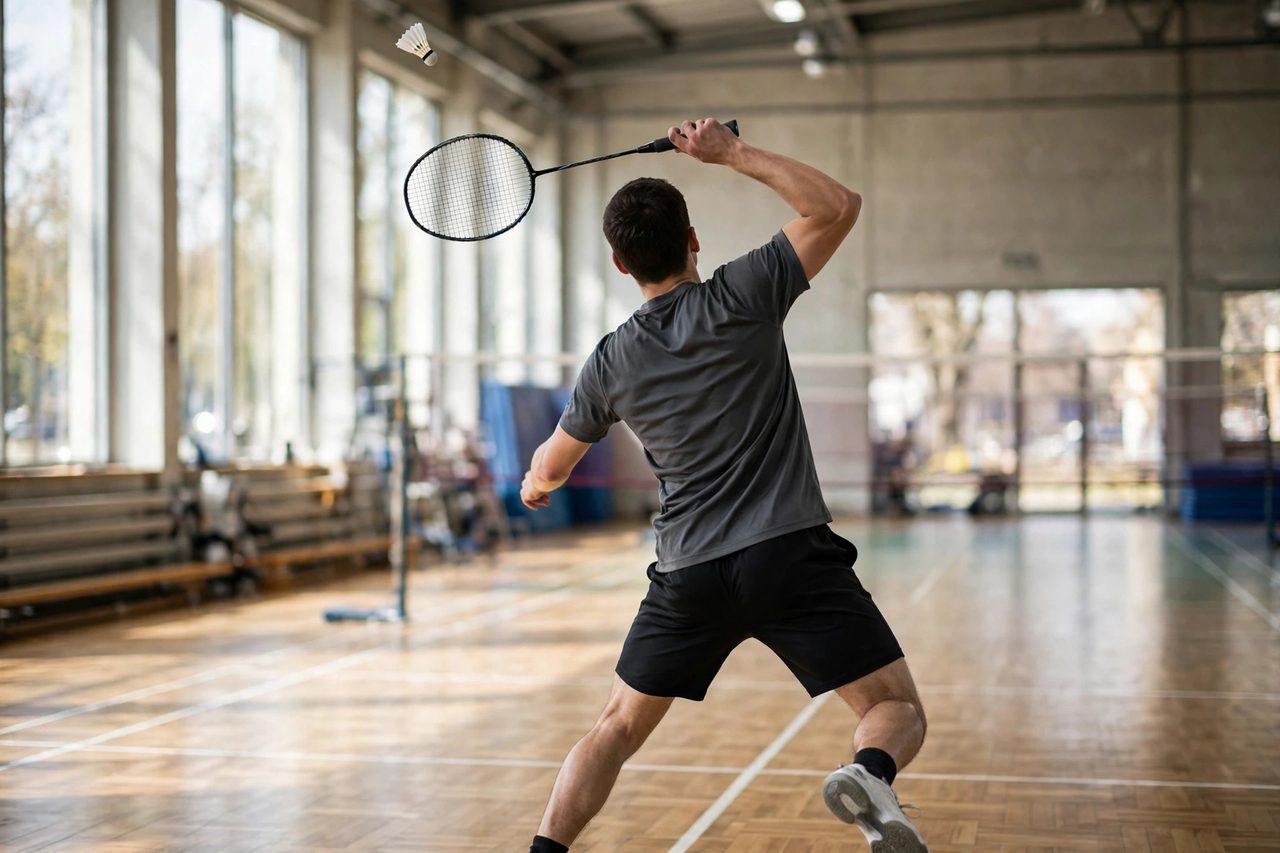
Picture this. You are right-handed, and the shuttle is coming down high over your left shoulder. The shuttlecock is the small feathered object you hit. It is on your backhand side, and your backhand is not your strongest shot.
So reach around your head and hit a forehand instead. That is the around-the-head shot. Strange at first, it saves you points once it clicks.
What the shot actually is
The around-the-head shot is a forehand hit on your backhand side. Your forehand is the shot on the same side as your racquet hand; your backhand is the shot on the other side. When the shuttle is high on your backhand side, you turn your body, bring your racquet arm up and around your head, and hit a forehand anyway.
Why bother? For most players, the forehand is much stronger than the backhand. It hits harder and higher, with more choice. It keeps you attacking when a backhand would only let you defend.
When to use it instead of a backhand
Use it when the shuttle is high on your backhand side, but not too far behind you. If it is at shoulder height or above and you have time to get under it, go around the head. If it is low or already past you, play a backhand or a defensive lift instead.
It is at its best when you want to attack. A clear is a high shot that flies deep to the back of the court. A smash is a hard shot hit steeply down. A drop shot is a soft shot that falls just over the net. You can hit all three around the head.
Step 1: Get under the shuttle early
Everything starts with your feet. As soon as you see the shuttle heading high to your backhand side, move behind it, or at least level with it, before it drops.
Most players skip this step. They stand still, watch the shuttle, and stretch at the last second. By then it is too late. Move early, so the shuttle ends up above you and slightly in front of your body, not behind your head.
Step 2: Turn your body sideways
Now turn. Bring your left shoulder forward and your right shoulder back, so your chest faces the side wall. For left-handed players, it is the other way round.
Turning sideways gives your racquet arm room to come around your head. It also loads your body like a spring, so you can rotate into the shot for power. Keep your knees bent and stay light on your feet.
Step 3: Use your normal forehand grip
Good news: you do not need a special grip. The grip is the way you hold the handle of your racquet. Use your normal forehand grip, the same one you use for an overhead clear.
Hold the handle loosely. A tight grip locks your wrist, and your wrist is where most of the power and control comes from. Hold the racquet a little further down the handle, for a touch more reach.
Step 4: Bring the racquet up and around
Lift your racquet arm up, bend your elbow, and let the racquet drop behind your head, as for a normal overhead shot. The difference: your arm crosses over, so the racquet comes up on the far side of your head.
As you swing, rotate toward the net and snap your wrist through the shuttle. The wrist snap is a quick flick at the moment of contact. It gives the shot its speed and direction.
Hit the shuttle as high as you can reach, then follow through across your body.
Step 5: Choose your placement
Beginners aim for power and hope for the best. Better players pick a spot.
The easiest option is a straight clear or smash down the line, back where the shuttle came from. It is fast and hard to read.
The cleverer option is cross-court, diagonally across the net to the far corner. It travels further, so it is riskier, but it forces your opponent to run.
The softest option is a drop shot to the front of the court, when your opponent is standing deep and expecting a hard shot. Pick a target before you hit. Indecision sends this shot into the net.
Common mistakes
The biggest mistake is going around the head when you are too late. If the shuttle is already dropping behind you, stop. Play a backhand or lift it high and reset the rally.
The second mistake is swinging only with your arm. If your body stays still, the shot will be weak and your shoulder will hurt. Turn and rotate, and let your body do the work.
The third mistake is hitting it flat every time. If your opponent reads it, they will be waiting. Mix in a drop shot or a high clear now and then.
Two simple drills
You do not need a partner to start. Stand mid-court and throw a shuttle up high over your backhand shoulder. Move under it, turn sideways, and practise the swing without hitting anything. This is called shadow practice. Do it ten times, rest, and repeat.
Then grab a partner. Ask them to feed high lifts to your backhand corner. A lift is a shot hit high to the back of the court. Start slow, hit gentle around-the-head clears, and once you can land ten in a row, try smashes and drop shots too.
When to use it in a match
Use it whenever a high shuttle lands on your backhand side and you have time. In singles, it keeps you attacking. In doubles, it keeps the pressure on from the back.
But remember: it is a tool, not a rule. If you are late, stretched, or off balance, play a backhand and live to fight the next shot. Practise it a little each session, and in a few weeks this strange reach will feel natural.
Related articles
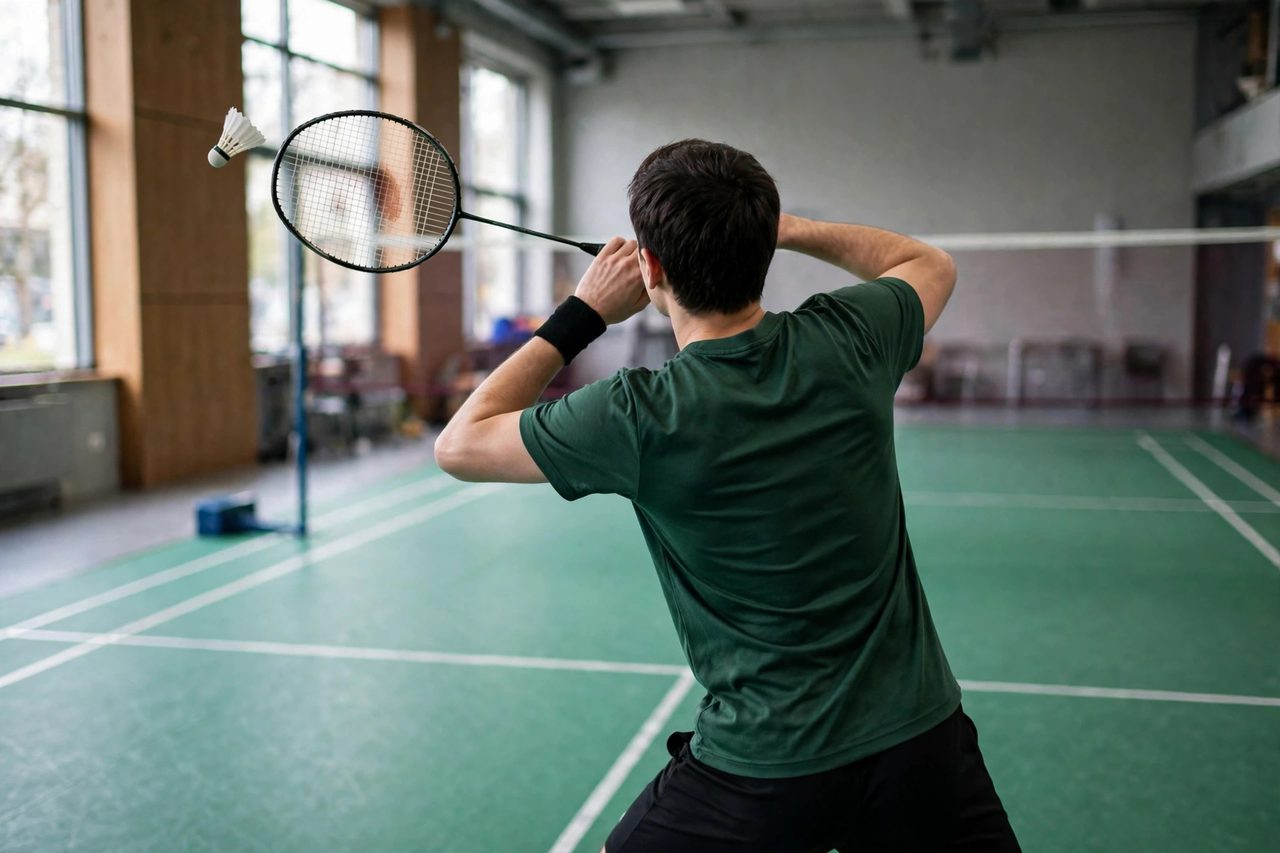
The Backhand Smash: Badminton's Power Shot From the Wrong Side, Step by Step
The shuttle is high on your backhand side and you want to attack, not just survive. The backhand smash lets you hit down hard from the wrong side. Here is how it works, step by step.
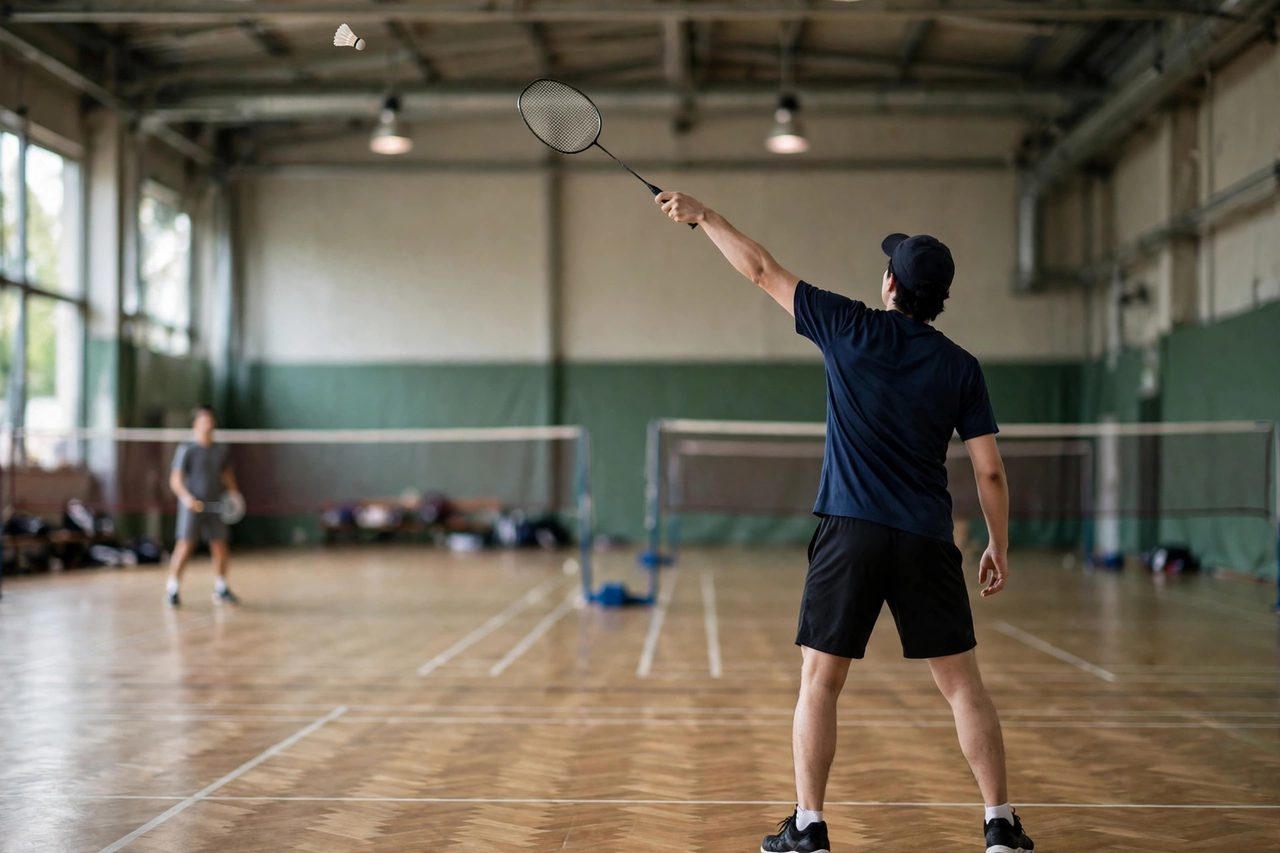
The Forehand Clear: Badminton's Most Basic Shot, Done Right, Step by Step
The clear is the first shot every badminton player should learn — a high, deep shot that buys you time and space. Here is the grip, footwork and throwing motion, step by step.
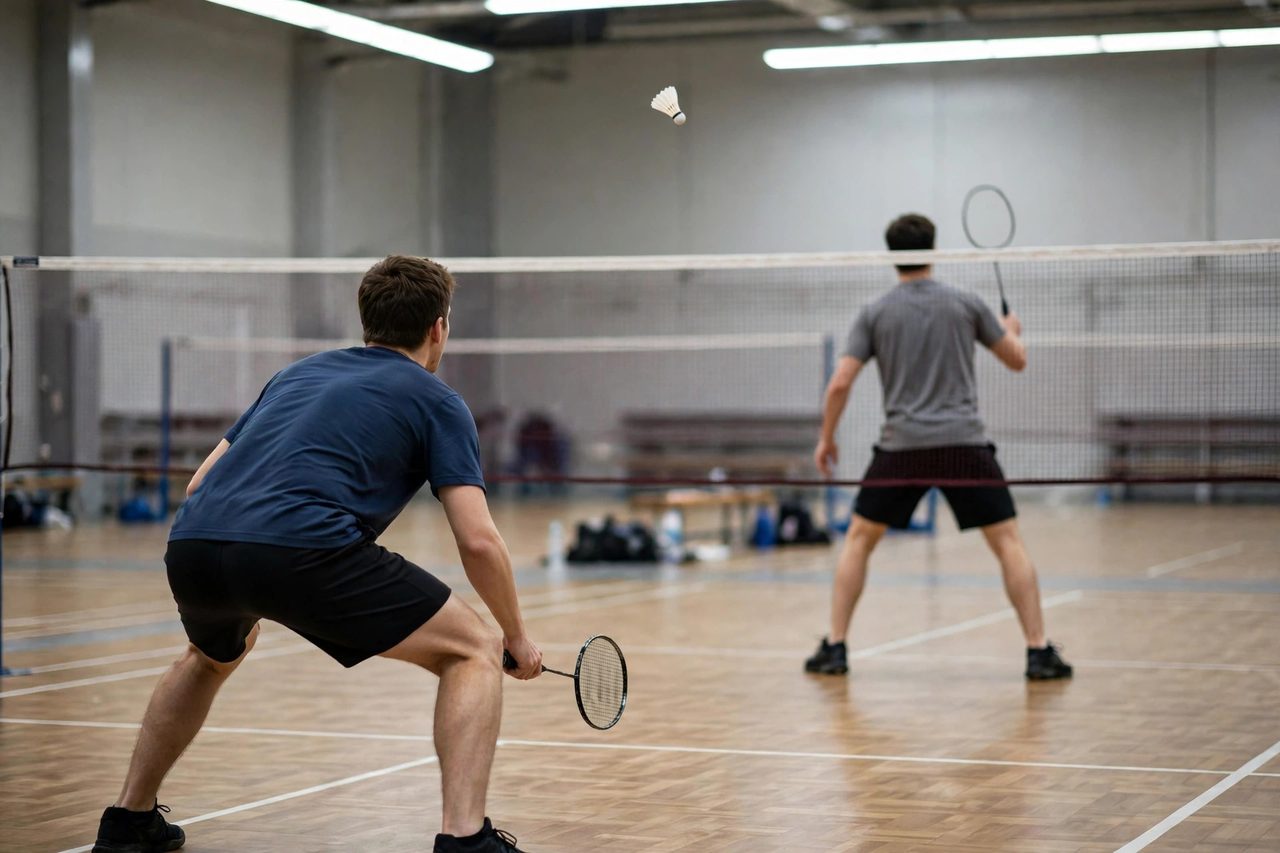
Badminton Doubles Rotation: Who Covers What, Step by Step
Doubles is a team job. One player covers the front, the other covers the back, and you swap when the rally changes. Here is who goes where, what triggers a switch, and how to practise it with your partner.