
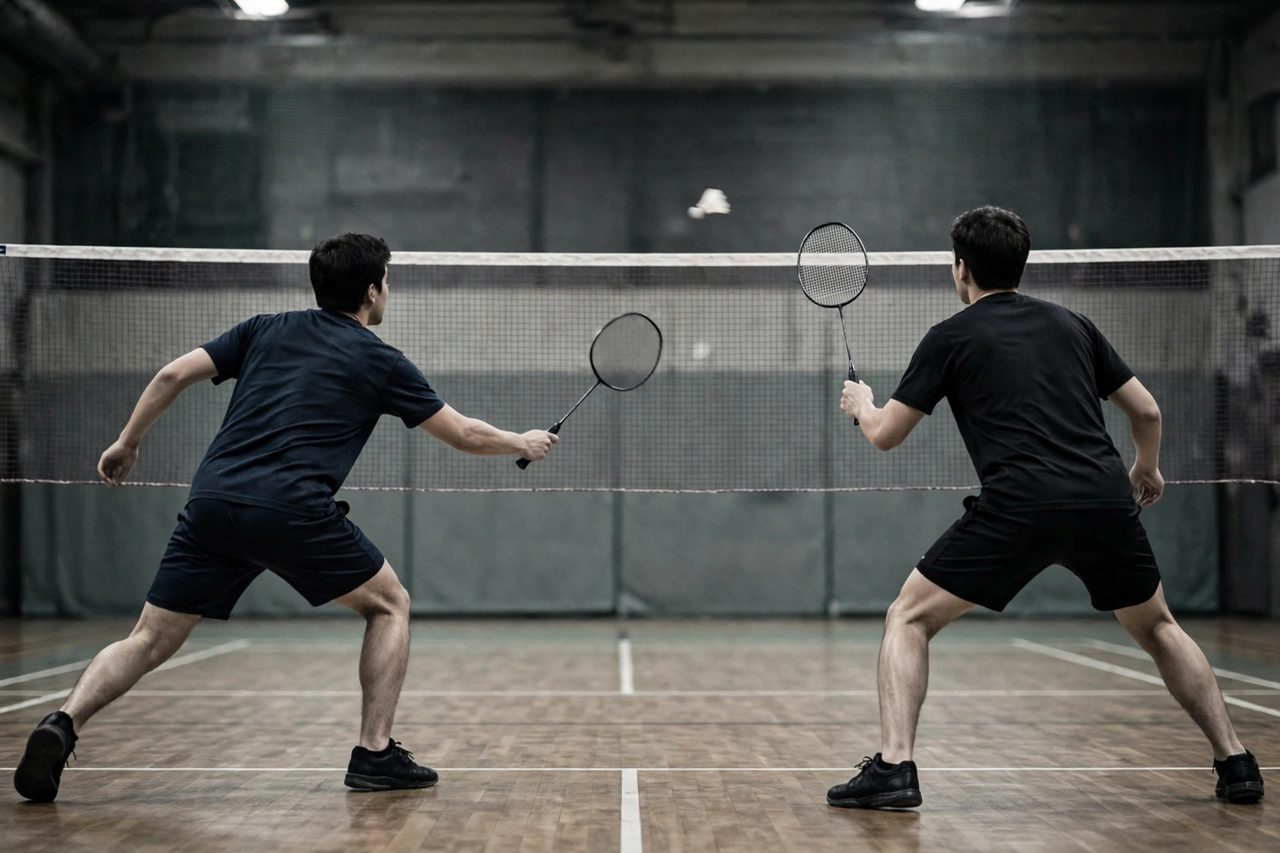
There is a moment in every doubles match when the rally suddenly speeds up. The shuttle stops going high. It starts flying flat and fast, back and forth, like a bullet. That is the drive game, and the drive is the shot that runs it.
The drive is a flat, fast shot hit at about net height or just above it. It is not a smash — a smash dives down steeply from above. It is not a clear — a clear goes high to the back. A drive travels in a straight line, fast, usually aimed at your opponent’s body or into a gap.
Learn the drive and you will win more of the fast exchanges. Here is how to do it, step by step.
Why the drive matters
Most rallies start slow. Someone serves, someone lifts, someone clears. But sooner or later, the shuttle comes flat. In doubles especially, the team that controls the flat exchanges controls the match.
A good drive does two things. It puts your opponent under time pressure, because the shuttle arrives so quickly. It keeps the shuttle low, so they cannot smash it.
Step 1: Get your racquet up early
Everything starts before you hit. As soon as you see the shuttle coming flat, get your racquet up in front of you, at about chest height, with the head pointing forward.
This is the single biggest beginner mistake. If your racquet is down by your waist, you have to lift it before you can hit, and by then the shuttle is past you. Racquet up early, always.
Hold the racquet with a relaxed grip. A tight grip slows your wrist down, and the drive is all about quick wrist speed.
Step 2: Stand sideways, knees bent
Turn your body slightly sideways to the net, with your racquet-side shoulder pointing toward the shuttle. Bend your knees and stay light on your feet.
Why sideways? Because it lets you swing across your body in a short, compact motion. A big wind-up is too slow for a drive. You need a short swing, and a sideways stance gives you that.
Stay on the balls of your feet. The drive game is fast, and flat-footed players lose it.
Step 3: Meet the shuttle in front of you
Contact point is everything. The contact point is where your racquet meets the shuttle. For the drive, you want to meet it in front of your body, at about net height or a little above.
If the shuttle gets past you, level with your body or behind it, you are in trouble. You will either hit it into the net or pop it up high, which invites a smash. So move to the shuttle early and take it in front.
Step 4: Use a short, punchy swing
The drive swing is short. Start with the racquet back just a little, then punch forward through the shuttle with a quick snap of the wrist and forearm.
Think punch, not swing. A long swing looks powerful but it is slow, and in a drive battle slow loses. The power comes from the snap, not from a big arm movement.
Follow through only a short way. Your racquet should finish pointing roughly where you aimed. A huge follow-through means you swung too big, and you will be late for the next shot.
Step 5: Aim smart, not just hard
Beginners aim drives as hard as they can, usually straight back at their opponent’s racquet. That is the easiest shot for them to return.
Better targets: at your opponent’s body, especially their racquet shoulder, where it is awkward to defend. Into the gap between two doubles opponents. Or cross-court, diagonally across the net, to change the angle and force them to move.
A cross-court drive is a diagonal shot from one side of the court to the other. It is riskier because it travels further, but it opens up the court beautifully.
Change direction, change height slightly, and keep them guessing.
Step 6: Recover instantly
The drive battle is not one shot. It is five, six, seven shots in a row, each one faster than the last. After you hit, get your racquet straight back up in front of you.
This is where matches are won. The player who recovers fastest wins the drive exchange, because eventually someone is late, and late means a weak return or a mistake.
Common mistakes
Hitting too hard is the classic error. A drive at 80 percent power that lands in is worth far more than a drive at 100 percent that flies out the back. Control first, power second.
Swinging too big is the second error. If your swing looks like a tennis forehand, it is way too long. Shorten it until it feels almost too small. That is about right.
A simple drill to practise
Grab a partner and stand on opposite sides of the net, about a metre behind the service line. The service line is the line near the front of the court that marks where serves must land past.
Hit drives back and forth to each other, aiming at the body, keeping the shuttle flat. Start slow. Count how many drives you can keep going without a mistake. When you can hold 20 in a row comfortably, speed it up a little.
When to use the drive in a match
Use the drive when the shuttle is already flat and fast. Use it in doubles when both teams are attacking the mid-court. Use it to punish a weak lift that does not go high enough — a lift is a shot hit high to the back, and if it is too low, drive it instead of clearing.
The drive is not the most glamorous shot in badminton. But matches are won in the flat exchanges, and the player with the better drive wins more of them. Practise it, trust it, and watch your doubles game change.
Related articles
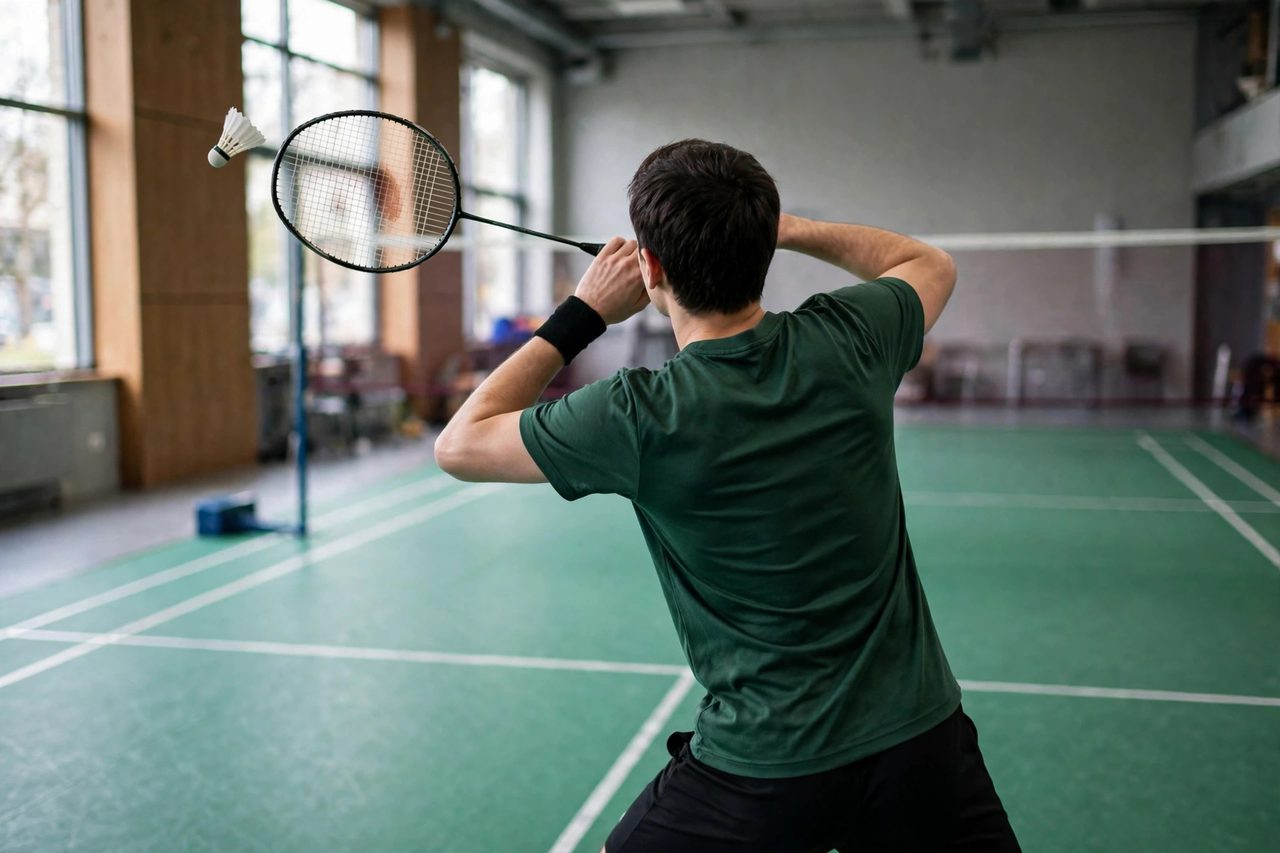
The Backhand Smash: Badminton's Power Shot From the Wrong Side, Step by Step
The shuttle is high on your backhand side and you want to attack, not just survive. The backhand smash lets you hit down hard from the wrong side. Here is how it works, step by step.
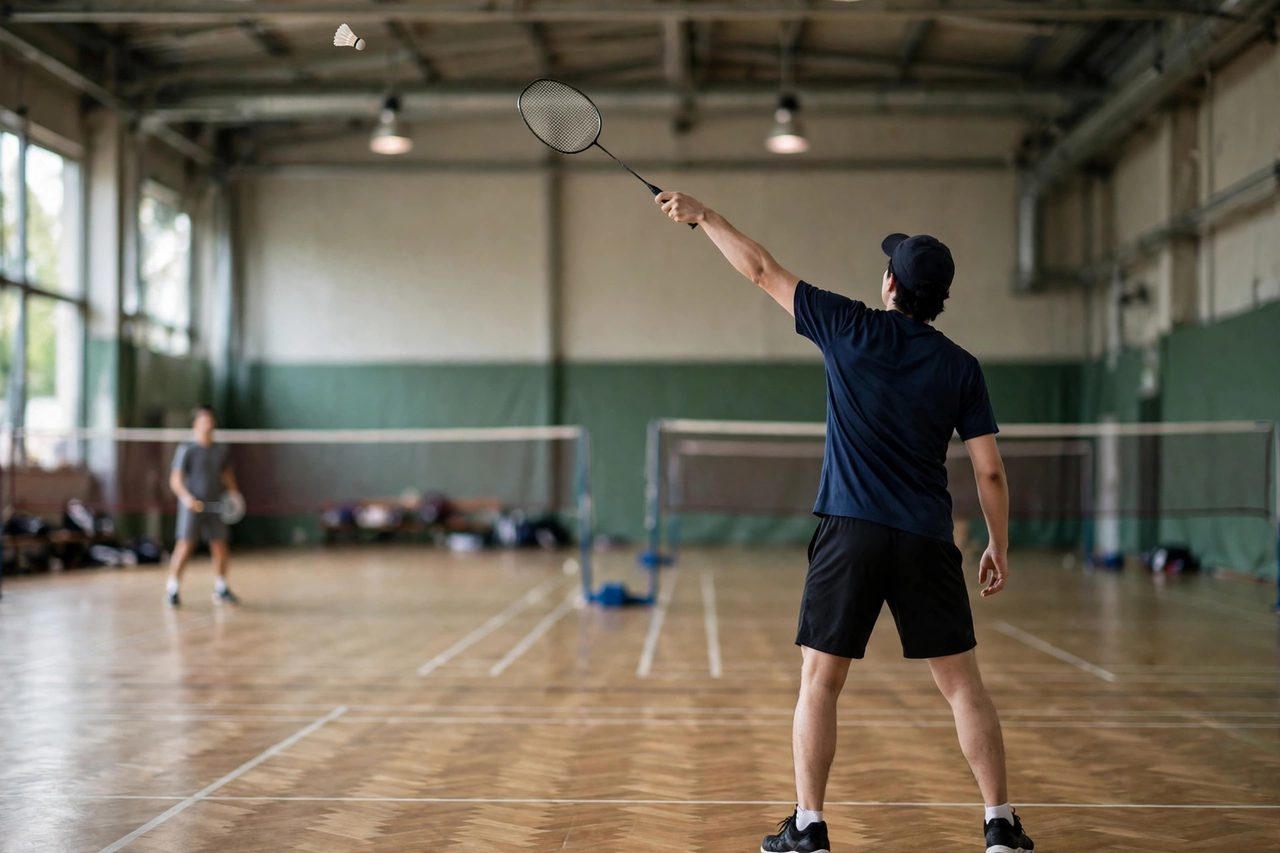
The Forehand Clear: Badminton's Most Basic Shot, Done Right, Step by Step
The clear is the first shot every badminton player should learn — a high, deep shot that buys you time and space. Here is the grip, footwork and throwing motion, step by step.
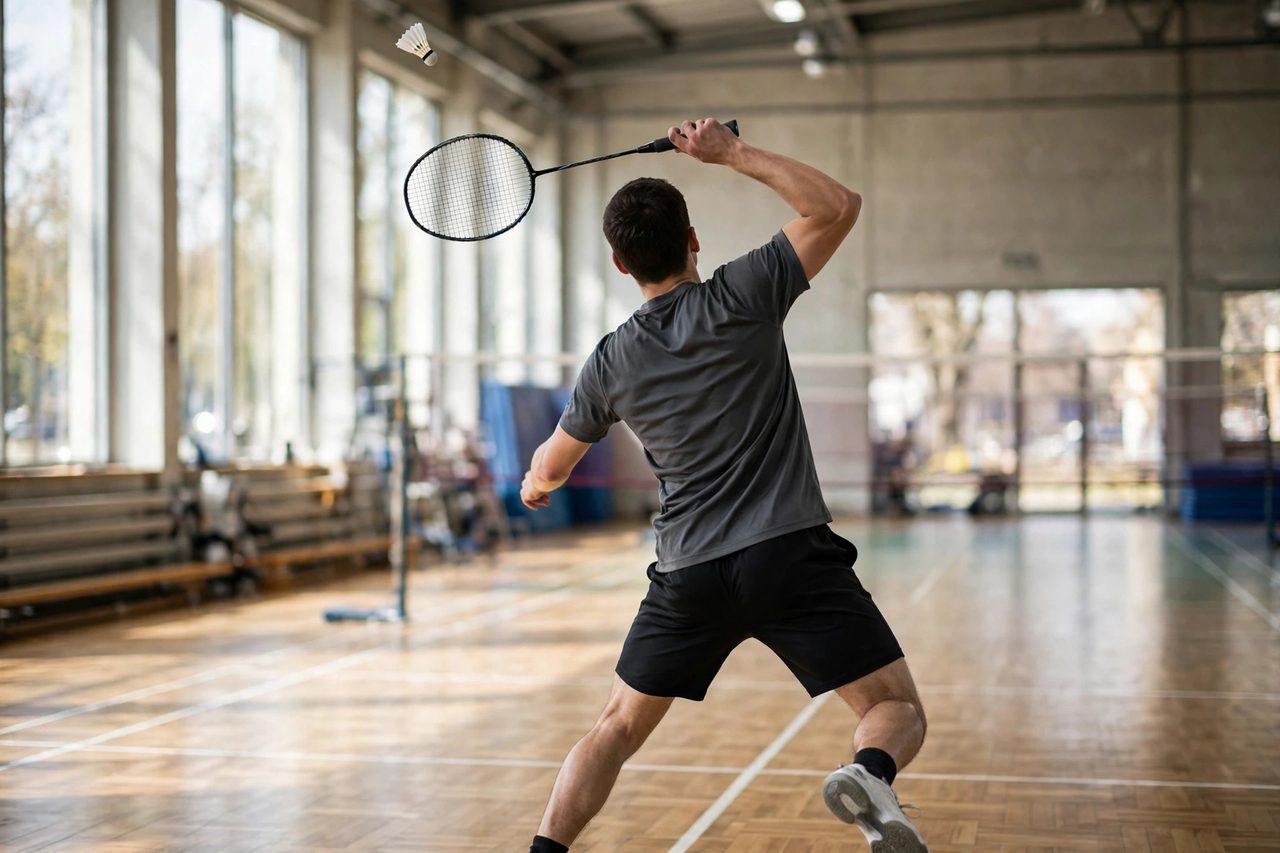
The Around-the-Head Shot: Badminton's Trickiest Reach, Step by Step
The shuttle is over your left shoulder, but your forehand is your best shot. The around-the-head shot lets you reach across and hit it anyway. Here is how it works, step by step.