
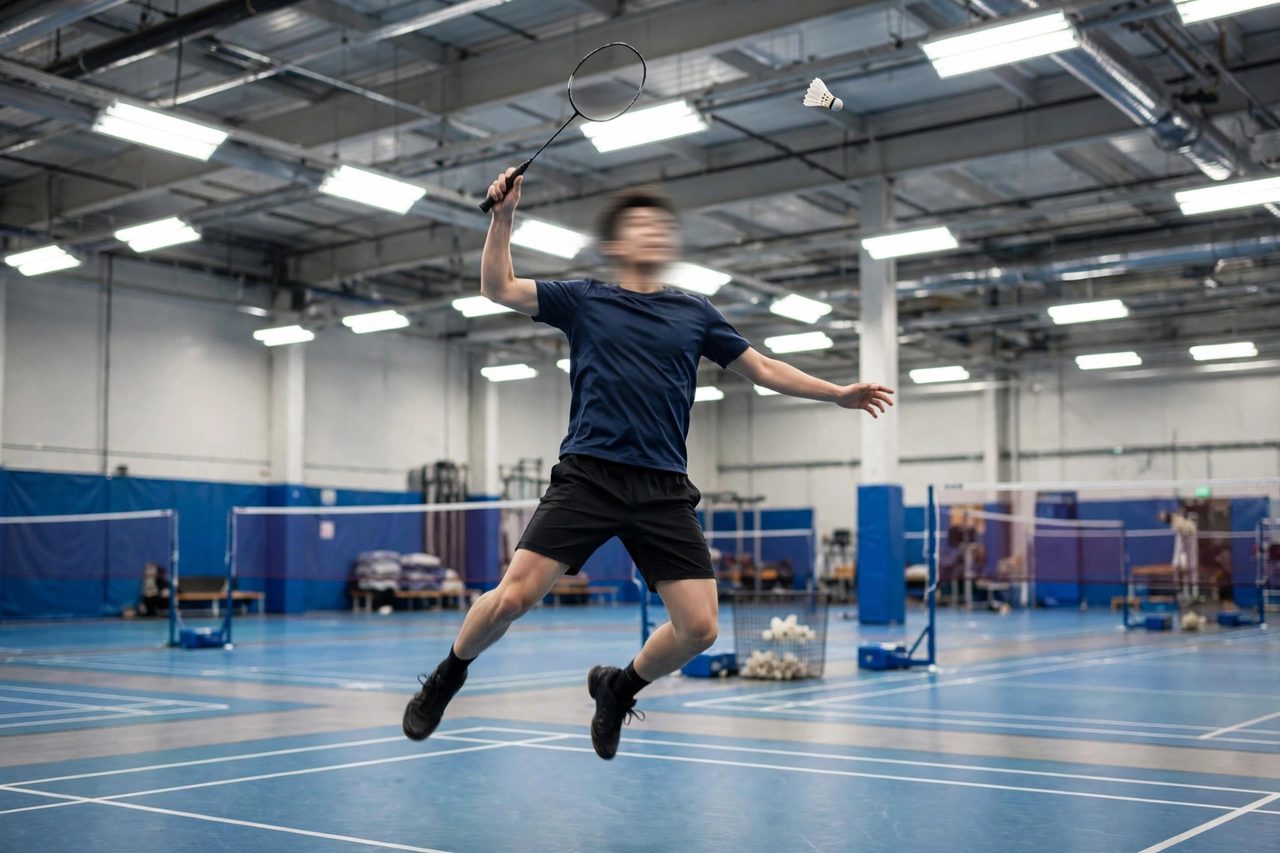
The badminton smash is widely considered the fastest shot in racquet sports — the shuttle leaving the racquet at speeds no tennis serve can match. The jump smash, where the player leaves the ground to meet the shuttle at maximum height, is its most devastating form. It is also one of the hardest shots to execute well. Here is how to build it.
1. The footwork: getting behind the shuttle
Everything starts with positioning. As the high clear or lift comes toward your backhand or forehand rear corner, move with chasse steps or a crossover step to get your body behind the shuttle’s line of flight — not beside it, behind it.
The classic preparation is the “scissor” setup: as you prepare to jump, your racquet-side leg is forward and your non-racquet leg back. This loaded position is what you will explode from.
2. The jump
Push off primarily from your racquet-side leg, driving upward rather than forward. The goal is height and balance, not distance — you want to meet the shuttle at the highest point you can control, with your body stable in the air.
Keep your non-racquet arm up, pointing at the shuttle like a tracker. It stabilizes your rotation and times the shot: when the shuttle arrives, that arm pulls down as the racquet arm fires.
3. The strike
At the peak of the jump, rotate your hips and shoulders explosively while the racquet arm whips through in a compact, violent arc. Contact the shuttle as high as possible, slightly in front of the body, with the racquet face angled downward.
The power comes from the kinetic chain — legs, hips, trunk, shoulder, forearm, wrist — in that order. The wrist snaps through last, adding the final burst of racquet-head speed. Players who try to muscle it with the arm alone get a fraction of the power and all of the shoulder pain.
Aim the smash steeply downward: at the opponent’s feet, into the body, or into the open court. A smash hit flat is a smash returned.
4. The scissor and the landing
In the air, your legs scissor: the racquet-side leg that was forward swings back as the non-racquet leg comes forward. You land on the non-racquet leg, already facing the net and ready to move.
Landing matters as much as the hit. Land softly on the balls of your feet with knees bent, weight forward. Stiff landings are how ankles and knees get injured — and a jump smash you cannot recover from is a point you gave away.
5. When to jump — and when not to
The jump smash is a finishing shot, not a rally shot. Use it when the shuttle is high and you are balanced behind it. If you are stretched, off-balance or late, play a drop shot or a clear instead — a desperate jump smash from a bad position is an invitation to counter-attack.
The best smashers are patient. They wait for the right shuttle, then end the rally in one stroke.
Common mistakes
- Jumping forward instead of up: you drift into the net area and lose balance. Jump vertically.
- Hitting flat: without a downward angle, the smash comes back. Steepen it.
- Late timing: meeting the shuttle on the way down instead of at the peak. The footwork was too slow — fix the approach, not the swing.
- No recovery: landing stiff and watching. Land ready, always.
The drill that builds it
Have a partner feed high lifts to your forehand rear corner. Start without jumping: practice the scissor footwork and the compact swing, smashing 20 in a row with control. When the motion is clean, add the jump — but only on every third feed at first. Build the timing before the height. The jump smash is assembled in layers: feet, then swing, then elevation. Rush the layers and the whole shot collapses.
Related articles
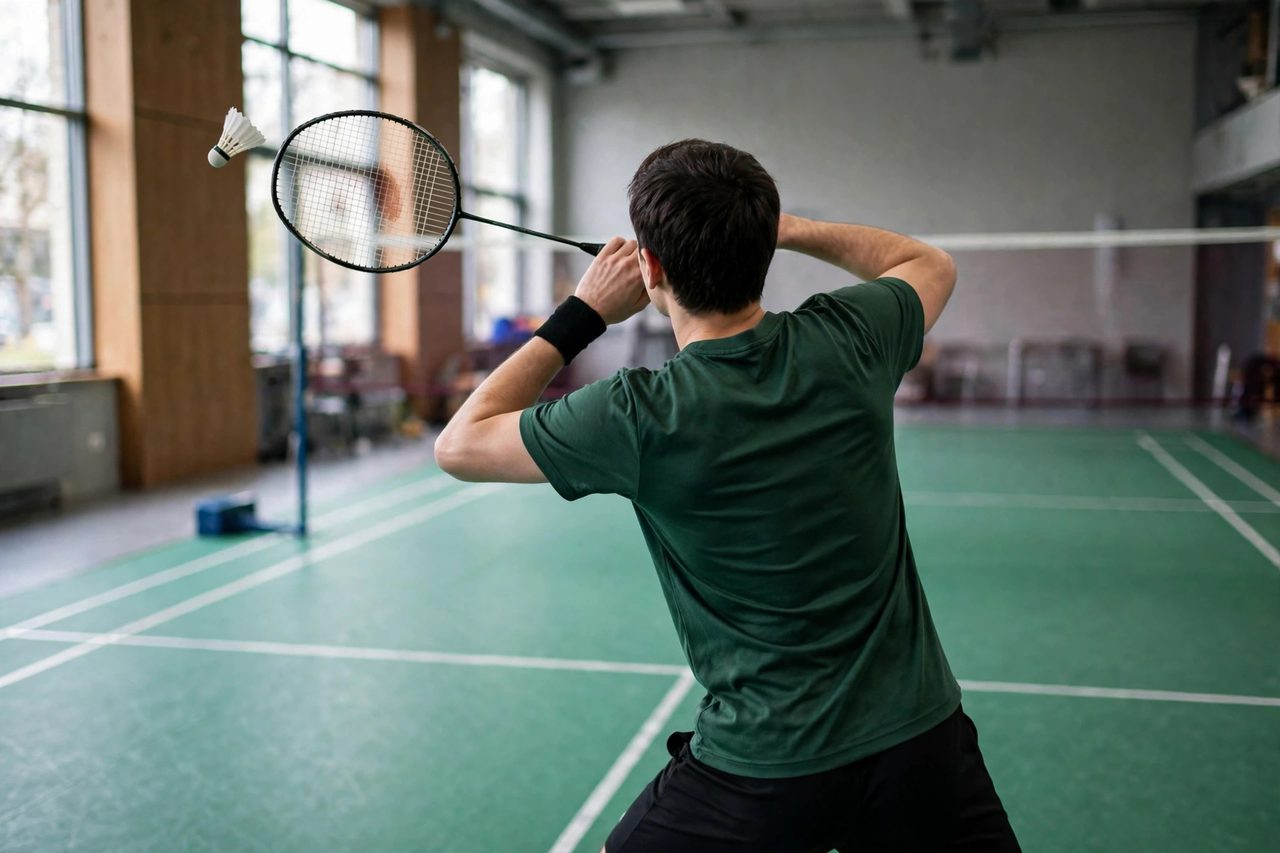
The Backhand Smash: Badminton's Power Shot From the Wrong Side, Step by Step
The shuttle is high on your backhand side and you want to attack, not just survive. The backhand smash lets you hit down hard from the wrong side. Here is how it works, step by step.
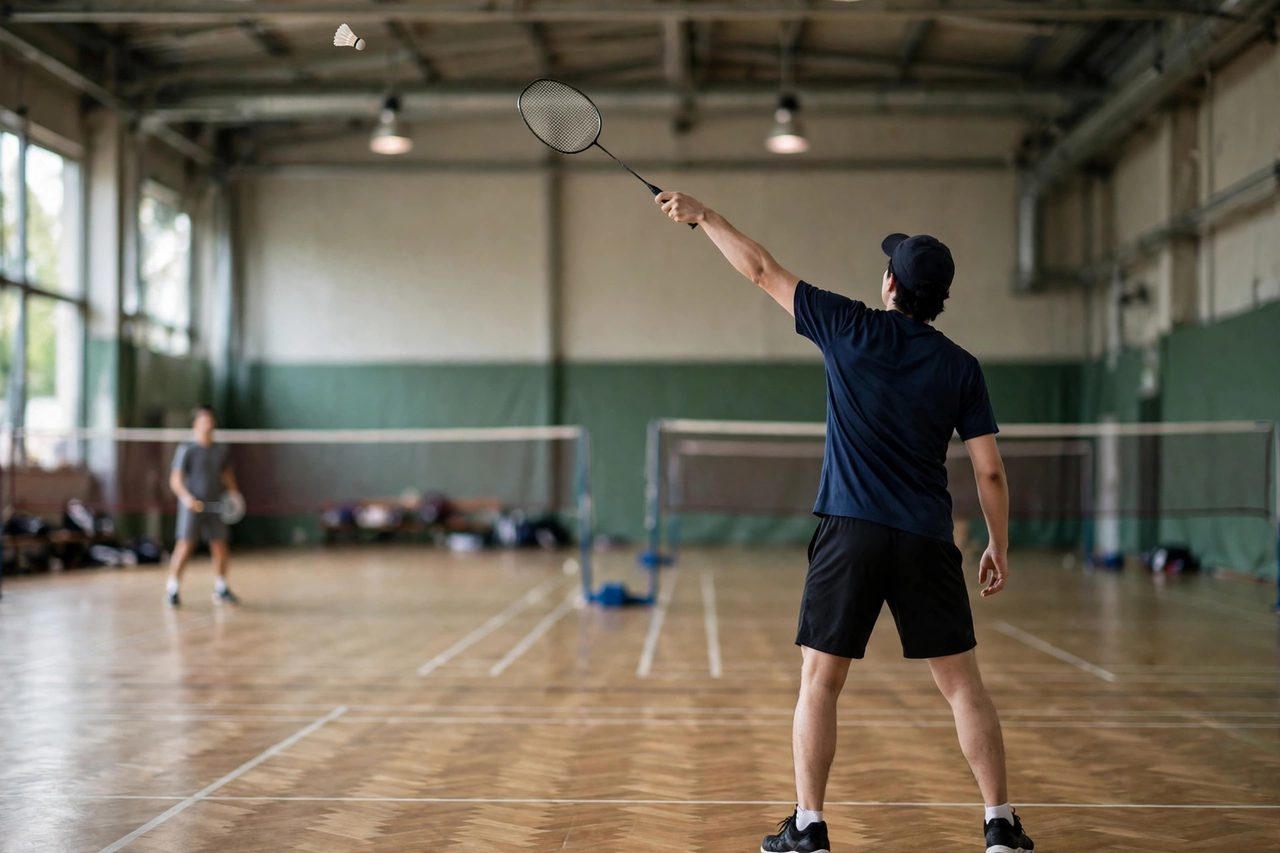
The Forehand Clear: Badminton's Most Basic Shot, Done Right, Step by Step
The clear is the first shot every badminton player should learn — a high, deep shot that buys you time and space. Here is the grip, footwork and throwing motion, step by step.
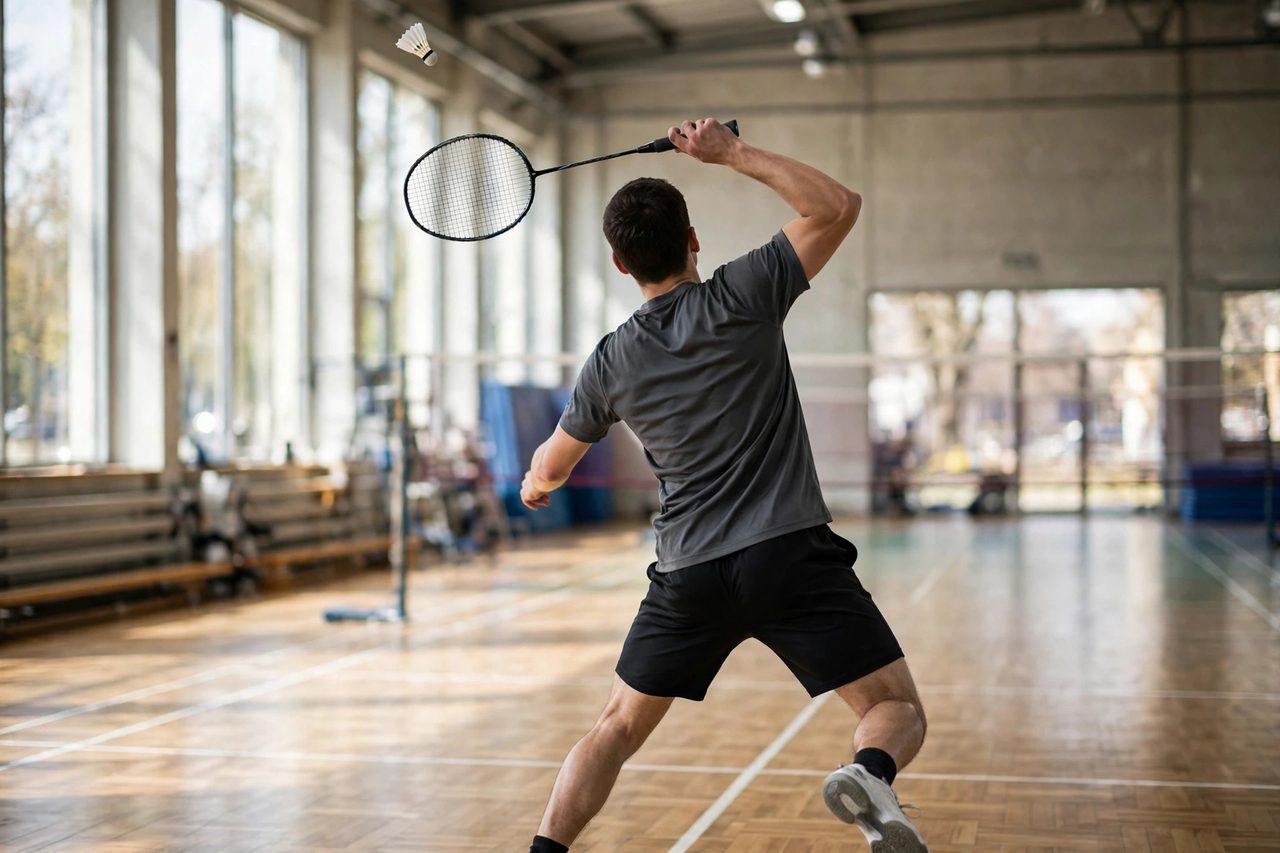
The Around-the-Head Shot: Badminton's Trickiest Reach, Step by Step
The shuttle is over your left shoulder, but your forehand is your best shot. The around-the-head shot lets you reach across and hit it anyway. Here is how it works, step by step.