
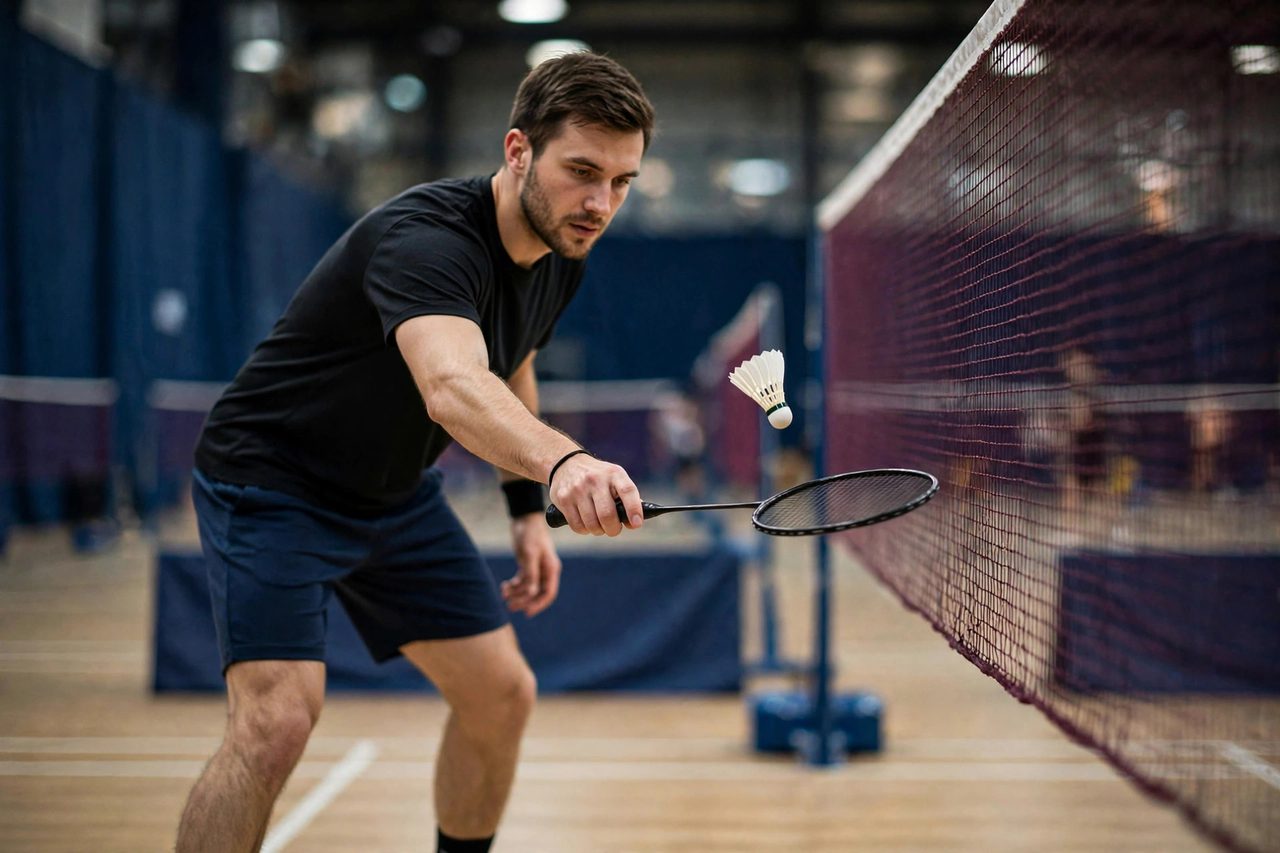
Every badminton player knows the feeling: you have just played a deep clear, your opponent is camped on the baseline expecting another one, and you know that the court in front of them is completely empty. The drop shot is the shot that punishes that expectation — a soft, steep shot that dies just over the net and forces a lunging, desperate reply. It is also the shot that separates players who can hit hard from players who can think. Here is how to build it, step by step.
What the drop shot actually is
A drop shot is an overhead shot played with a full or near-full swing that sends the shuttle steeply downwards, landing close to the net on your opponent’s side. It looks like a smash or a clear until the last possible moment — and that disguise is the whole point. Played well, it turns a defensive position into an attacking one: your opponent, stranded deep, must sprint forward and lift, and the lift is yours to kill.
There are two main types. The fast drop travels flatter and quicker, skimming the net and landing a little deeper; it is the aggressive option, best when you want to keep the rally moving at pace. The slow drop is softer and steeper, dropping almost vertically just past the net; it buys you more time but gives your opponent more time too. Learn the slow drop first — the fast drop is the same movement with more pace.
Step 1: The grip and the preparation
Use the same grip you use for a clear — the basic forehand grip, with the racquet face slightly open. This is non-negotiable: if you change your grip for a drop, your opponent will read it instantly. Your preparation should be identical to a clear or a smash — racquet up behind the shoulder, body sideways, weight on the back foot. The deception lives in the sameness.
As the shuttle comes over, move to it the same way you would for any overhead: side-on, elbow high, racquet head up. The only difference from a clear comes at contact, and it comes late.
Step 2: Contact — slice, don’t push
Here is where most club players go wrong. They try to guide the shuttle gently over the net with a pushing motion, and the result is a slow, floating shot that sits up and begs to be killed. A good drop is not pushed. It is sliced.
At the moment of contact, brush across the shuttle with a slicing action — the racquet face cutting underneath and across the base of the shuttle rather than hitting through it flat. The slice kills the shuttle’s forward speed while keeping its downward angle steep. Contact should be slightly in front of your body and above your head, at the same height as a clear. If you contact the shuttle late, behind you, the shot will float long.
Think of it this way: the swing looks like a clear, but the last few inches of racquet travel are a cut, not a drive. The harder you slice, the steeper the drop — but slicing too hard sends the shuttle into the net. Start soft and add slice as your control improves.
Step 3: The follow-through and recovery
Follow through naturally, letting the racquet finish across your body, and — this is the part players forget — recover immediately. A good drop invites a net reply, and the player who gets to the net first after playing a drop wins the next shot. Split-step as you land, racquet up in front of you, and be ready to pounce on the lift or kill the weak return.
Footwork matters as much as the racquet work. The best drops are played when you are balanced and early to the shuttle, not when you are stretched and late. If you are off balance, play the clear and wait for a better chance.
The three mistakes that give it away
First, changing your preparation. If your racquet drops or your body opens up early, a decent opponent reads “drop” before you hit it. Keep everything identical until contact.
Second, hitting it too flat. A drop that travels flat over the net and lands mid-court is not a drop at all — it is an invitation. Aim to land the shuttle within a metre of the net, and accept that some will hit the tape. The net is the price of a good drop.
Third, playing it from a bad position. A drop played when you are under pressure, late to the shuttle, or deep behind the baseline will float and die. The drop is an attacking shot, not an escape. Play it when you have time, when your opponent is deep, and when the rally has given you the initiative.
Drills to build it
Start with the wall drill: stand close to a wall and practise the slicing contact, aiming to make the shuttle drop steeply rather than rebound far. Then move to a partner drill — one player clears deep, the other alternates clear and drop without changing preparation, and the partner must guess which is coming. When your partner stops guessing right, the disguise is working.
Finally, play the drop-and-follow drill: play a drop, then sprint to the net and kill the reply. Do it until the recovery is automatic, because the drop is only half the shot — the kill that follows is the point.
Learn the drop and you learn to think in two dimensions: deep and short, fast and slow. It is the softest shot in badminton, and one of the most dangerous.
Related articles
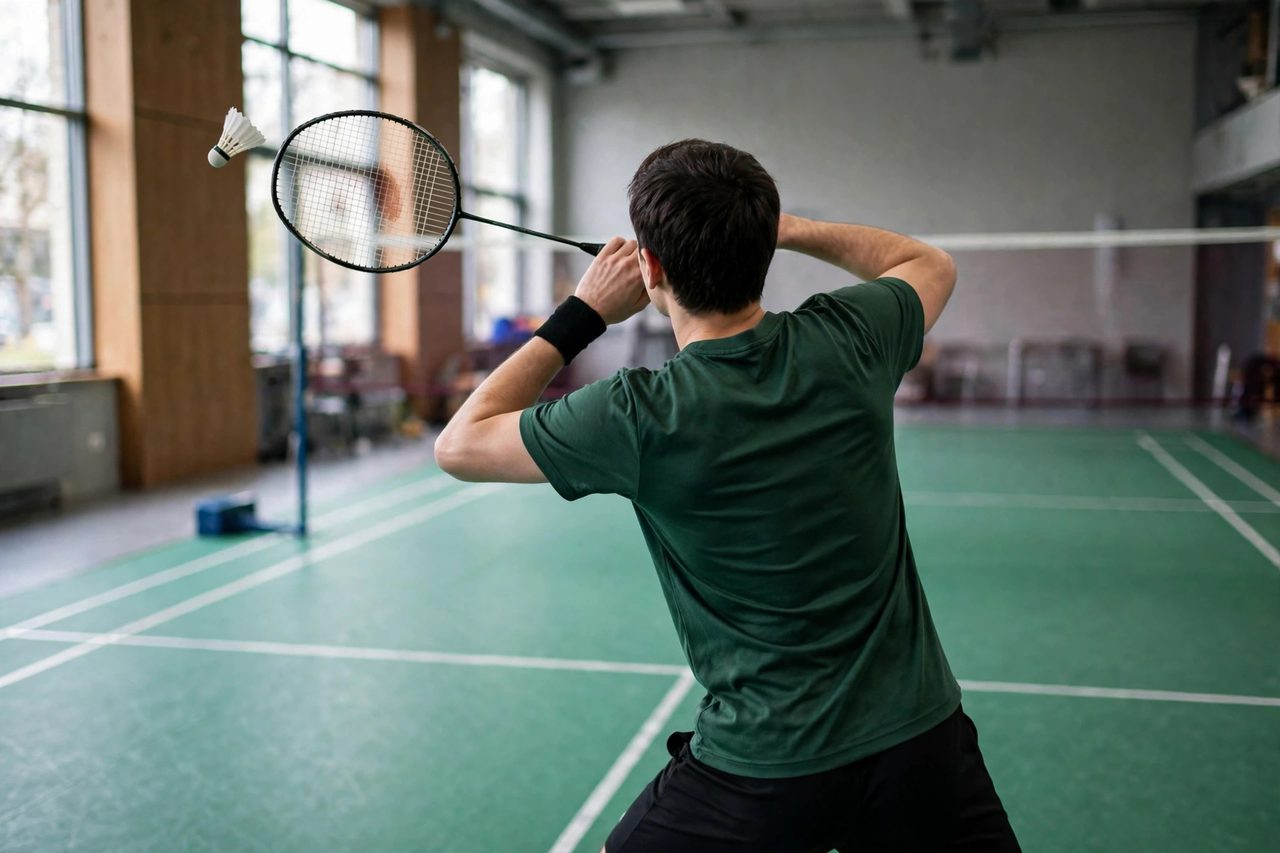
The Backhand Smash: Badminton's Power Shot From the Wrong Side, Step by Step
The shuttle is high on your backhand side and you want to attack, not just survive. The backhand smash lets you hit down hard from the wrong side. Here is how it works, step by step.
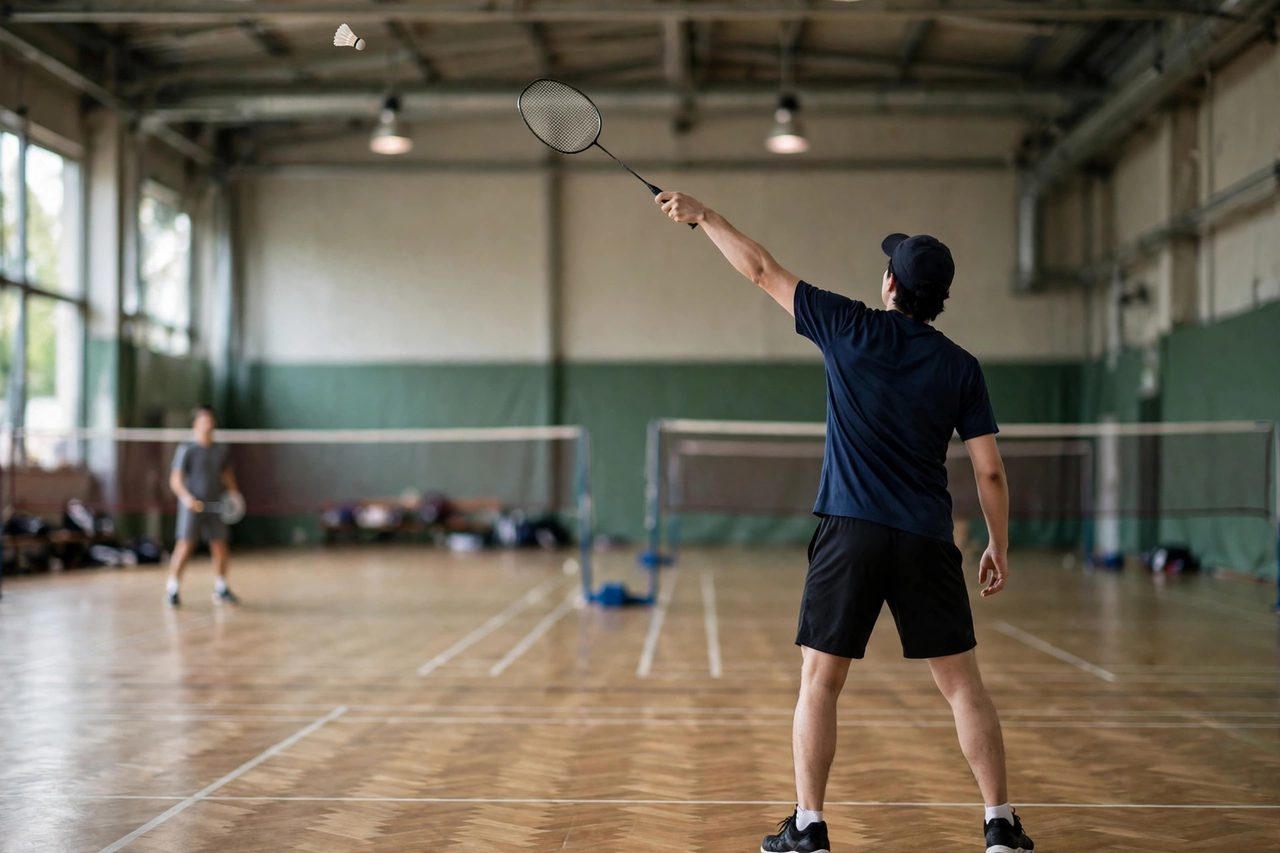
The Forehand Clear: Badminton's Most Basic Shot, Done Right, Step by Step
The clear is the first shot every badminton player should learn — a high, deep shot that buys you time and space. Here is the grip, footwork and throwing motion, step by step.
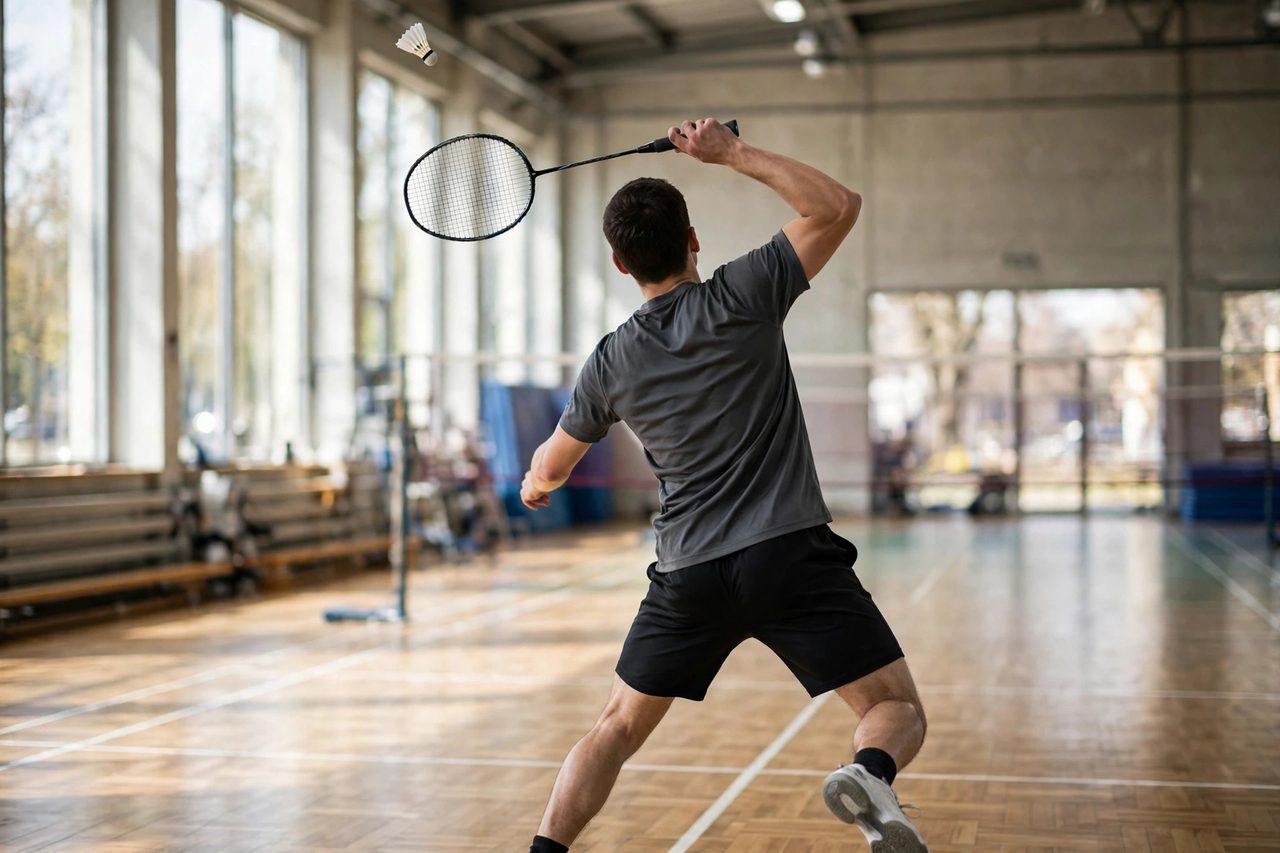
The Around-the-Head Shot: Badminton's Trickiest Reach, Step by Step
The shuttle is over your left shoulder, but your forehand is your best shot. The around-the-head shot lets you reach across and hit it anyway. Here is how it works, step by step.