
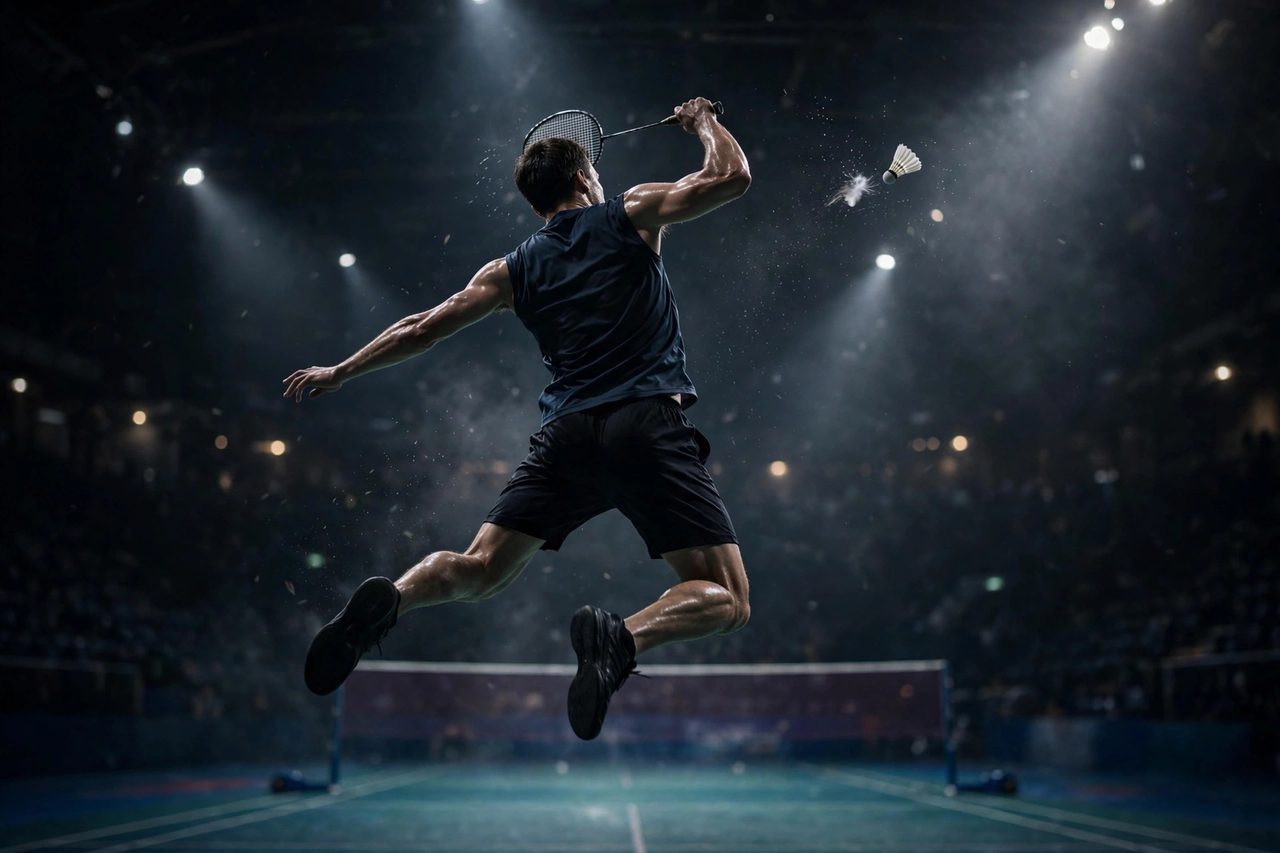
On 14 April 2023, in a factory gymnasium in Soka, Japan, the Indian doubles player Satwiksairaj Rankireddy hit a badminton smash that was measured at 565 km/h. Guinness World Records officials verified the attempt, run by the racquet maker Yonex under laboratory conditions, and the number rewrote the record books: it smashed a record that had stood for a decade, and it remains the fastest recorded hit in any sport. No tennis serve, no golf drive, no ice hockey slapshot has ever been clocked so fast.
And yet the strangest thing about the badminton smash is not the number. It is that players return these shots for a living. A projectile launched at speeds beyond a Formula 1 car’s maximum can cross the net and still come back, rally after rally, because the feather shuttle obeys a set of physical rules unlike anything else in sport. Understanding the smash means understanding both halves of that paradox: how a human body can launch five grams of cork and goose feather at such violence, and why the shuttle then slows down so dramatically that a defender standing a few metres away has any chance at all.
This is the science and the craft of the fastest shot in sport.
The record book: 565 in the lab, 426 in a match
Speed records in badminton come in two kinds, and the gap between them tells you a lot about the sport. The laboratory record is the 565 km/h hit by Rankireddy in Soka. The conditions were controlled: fresh shuttles, no opponent, no rally, nothing to think about except swinging as hard as humanly possible at a shuttle fed into the perfect hitting zone. On the same day, Malaysia’s Pearly Tan set the women’s laboratory record at 438 km/h, the first women’s mark recognised by Guinness.
Before Rankireddy, the laboratory benchmark belonged to another Malaysian, Tan Boon Heong, whose 493 km/h effort in a Yonex test session in May 2013 stood for ten years. These testing numbers matter because they show the ceiling of the equipment and the human arm. They are not, however, what happens in a match.
In competition, the fastest smash ever recorded belongs to Denmark’s Mads Pieler Kolding, who was clocked at 426 km/h playing for the Chennai Smashers in India’s Premier Badminton League in January 2017. Kolding, a 6-foot-9 doubles specialist, had a rally to win, a defence to beat and a shuttle arriving at an inconvenient height — and still produced a number most sports never reach. The fastest smash in a BWF-accredited event is Lee Chong Wei’s 408 km/h at the 2015 Hong Kong Open, measured by the Hawk-Eye system and recognised by Guinness. Elite men’s doubles players regularly produce match smashes between 350 and 420 km/h; in the women’s game, tournament speed charts at major events are topped by smashes above 400 km/h, with P.V. Sindhu clocking 411.4 km/h at the 2026 World Championships in New Delhi.
So the honest summary is this: in the lab, the smash lives beyond 500 km/h. In the heat of a rally, it lives around 400. Both numbers make it the fastest shot in sport.
Five grams and a wall of air
Why does the match number fall so far below the laboratory number? Because of the shuttle itself. A feather shuttlecock weighs between 4.74 and 5.50 grams — about as much as a sheet of paper — and most of that tiny mass sits in a cork tip barely wider than a coin. Trailing behind the cork is a skirt of sixteen goose feathers. That skirt is what makes the shuttle fly straight and spin true. It is also, in aerodynamic terms, a parachute.
A tennis ball is dense and smooth; it punches through the air and keeps most of its speed. A shuttle is the opposite: an extremely light object with a huge drag surface relative to its weight. The moment it leaves the strings, the air attacks it. Drag rises with the square of speed, which means the faster the smash, the harder the air pushes back. A smash launched at 420 km/h does not travel to the other side at anything like 420 km/h. It sheds speed violently from the first instant, and by the time it crosses the net it has lost a large share of its pace. The recorded number, remember, is measured at the strings — the first fraction of a metre of flight. What the receiver faces is a much slower, but still extremely quick, object.
This is the shuttle’s great gift to the sport. If it kept its speed like a ball, defence would be impossible and badminton would be a one-shot game. Because it brakes so hard, the smash is a weapon with a built-in limit: devastating from close range, merely dangerous from the back of the court. The whole geometry of elite badminton — where players stand, how deep they lift, when they dare to attack — is built around that deceleration curve.
It also explains the paradox of the laboratory record. In Soka there was no rally, but there was also nothing unusual about the physics: the same shuttle, the same drag. The 565 km/h existed for a few centimetres of flight before the air began its work. Every smash, record-breaking or ordinary, is fastest at the exact moment it is born.
The kinetic chain: power from the floor up
A smash that speed does not come from a strong arm. It comes from a chain of movements that begins in the feet and ends in the fingers, each link adding speed to the next, like a whip cracking in sequence.
It starts with position. The attacker must get behind the shuttle, which at elite level usually means a jump: the famous scissor-kick, where the legs swap in mid-air as the body rotates. The jump is not mainly about height, though height buys a steeper angle. It is about loading the legs and hips so that the rotation of the trunk can be violent. Legs drive, hips turn, the chest opens and follows, and only then does the arm come through.
Once the trunk has turned, the shoulder takes over. The biggest single contributor to racquet-head speed is the internal rotation of the upper arm — the same movement a baseball pitcher uses — followed immediately by pronation, the rotation of the forearm that turns the racquet face square to the shuttle at the last moment. Coaches used to teach the smash as a throwing action, and they were right, but the throw is only the middle of the story.
The end of the story is the fingers. In the split second before contact, the grip is loose, almost relaxed. At contact, the fingers squeeze — players call it finger power — and that final clench snaps the racquet head through the last few degrees of its arc. It is a small movement that adds a disproportionate amount of speed, and it is why the best smashers look so unhurried. The arm is not muscling the shuttle. The whole body is unwinding, and the fingers simply close the gate at the perfect instant.
Timing binds it all together. Contact must happen at full reach, slightly in front of the body, with the shuttle met at the very top of the swing’s arc. A few centimetres late, and the chain leaks power; a fraction early, and the steep angle is lost. This is why smash speed in matches is lower than in the lab: the lab offers the same perfect feed every time, while a match offers a shuttle arriving too low, too wide, too fast, with an opponent’s deception to read first.
Strings, tension and the last link
Between the body and the shuttle sits the racquet, and its setup fine-tunes how much of the chain’s energy survives the transfer. Power racquets are head-heavy, with weight toward the top of the frame, and use stiff shafts that bend less and return energy faster. A flexible shaft stores and releases energy on its own schedule, which suits slower swings; at elite swing speeds, stiffness keeps the head stable and the transfer direct.
String tension is the detail amateurs love to copy and often get wrong. Many top professionals string at 30 pounds of tension and above, some well into the mid-thirties. A tighter string bed deforms less, so the shuttle leaves more precisely and the player feels exactly where contact happened — but the sweet spot shrinks, and the strings return less free energy. The pros accept that trade because their swing speed supplies the power and they need the control. A club player copying 35 pounds with a slower swing usually gets the worst of both worlds: less power and a smaller margin for error. The lesson of the record books is not maximum tension. It is that the string bed must match the speed of the swing feeding it.
It is worth remembering what the equipment is asked to survive. Every smash asks a frame weighing around 85 to 90 grams, strung with string a fraction of a millimetre thick, to accelerate a shuttle past 400 km/h without breaking. The 565 km/h record was, among other things, an equipment test — the ceiling of what carbon fibre and modern string can transfer in a single instant.
Training the weapon
Nobody stumbles into a 400 km/h smash. The shot is built, over years, in a specific order: movement first, then technique, then strength, then speed.
Coaches start with the pattern, not the power. Shadow smashing — repeating the full jump-and-swing sequence without a shuttle — builds the chain until rotation, pronation and the finger squeeze happen as one reflex. Multi-shuttle drills follow: a feeder fires shuttle after shuttle into the rear court, and the player smashes each one, grooving the timing under growing fatigue. Only when the technique holds together at speed does the strength work take centre stage: rotational medicine-ball throws for the trunk, resistance-band work for the shoulder’s rotator cuff (the small muscles that must decelerate the arm after every smash, and the ones most often injured), forearm and grip work for the final snap, and plyometric jumping for the legs.
The shoulder deserves special respect. The internal rotation that powers the smash is one of the fastest movements in all of sport, and the structures that brake it are small and vulnerable. Elite programmes treat shoulder care as part of smash training, not as rehab: daily mobility work, eccentric strengthening, and careful management of how many maximum-effort smashes a player hits in a week. The players with the longest careers are rarely the ones who smashed hardest in practice. They are the ones whose shoulders survived the practice.
For club players, the transferable lessons are simpler and safer. Get behind the shuttle before you think about swinging. Rotate the body instead of slapping with the arm. Keep the grip loose until contact, then squeeze. And practise the shot at eighty percent until the pattern is automatic — speed is the last thing to add, never the first.
The other half of the rally: surviving it
For all the science of hitting the smash, the defender’s problem is simpler to state and harder to solve: a shuttle leaving the strings at 400 km/h and decelerating hard still crosses the hitting zone in a blink. Against a steep smash from mid-court, the receiver has on the order of two-tenths of a second to react, move and swing. Pure reaction is not enough. Nobody’s reflexes are that fast. Defence at the highest level is therefore not reaction at all — it is anticipation built on reading.
Defenders read the smasher’s body: the shape of the preparation, the angle of the racquet, the position of the non-racquet arm, the split second when the shoulder commits. They hold a low, balanced stance with the racquet up and in front, because a smash defence is played with a short swing — there is no time for anything longer. And they manage the rally before the smash happens: good defenders lift deep and flat enough to push the attacker to the very back of the court, where deceleration has already robbed the shot of its worst violence before it arrives.
The great defensive players turn survival into counterattack. A blocked smash, taken early and angled cross-court, can win the rally outright, which is why the best smashers vary their targets obsessively: at the body, down the line, cross-court, and the sudden slower stick smash that trades pace for angle. Pure speed is the headline number, but at the top of the game the smash that wins the point is usually the one the defender did not expect, not the one the radar gun liked most.
That, in the end, is the full picture of the fastest shot in sport. A chain of muscles firing in sequence, a frame of carbon fibre, a five-gram feather parachute that breaks every record on the speed gun and then brakes hard enough to keep the rally alive. The 565 km/h smash in a quiet gym in Soka showed what the shot can be. The 400 km/h smashes traded under pressure every week show what it is: the violent, beautiful engine of the fastest game on earth.
Related articles
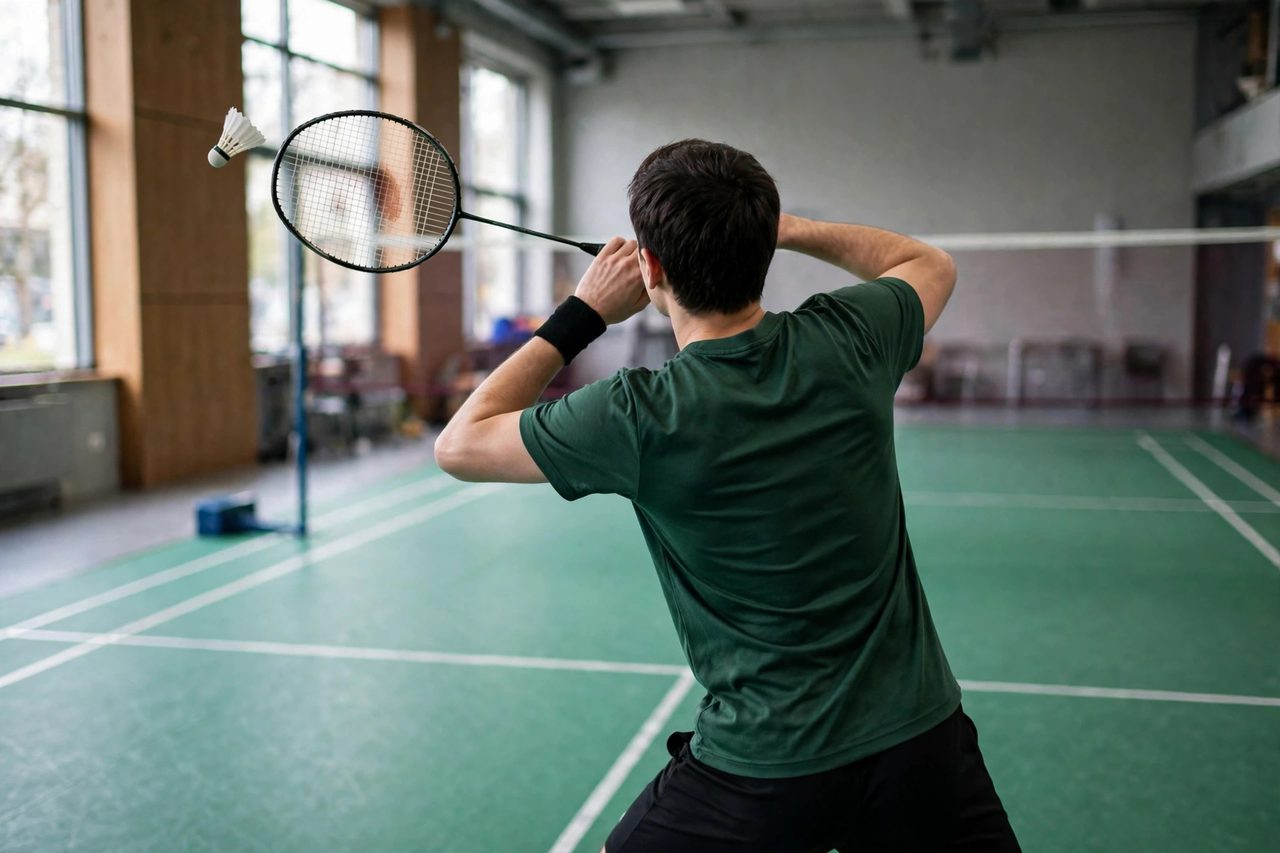
The Backhand Smash: Badminton's Power Shot From the Wrong Side, Step by Step
The shuttle is high on your backhand side and you want to attack, not just survive. The backhand smash lets you hit down hard from the wrong side. Here is how it works, step by step.
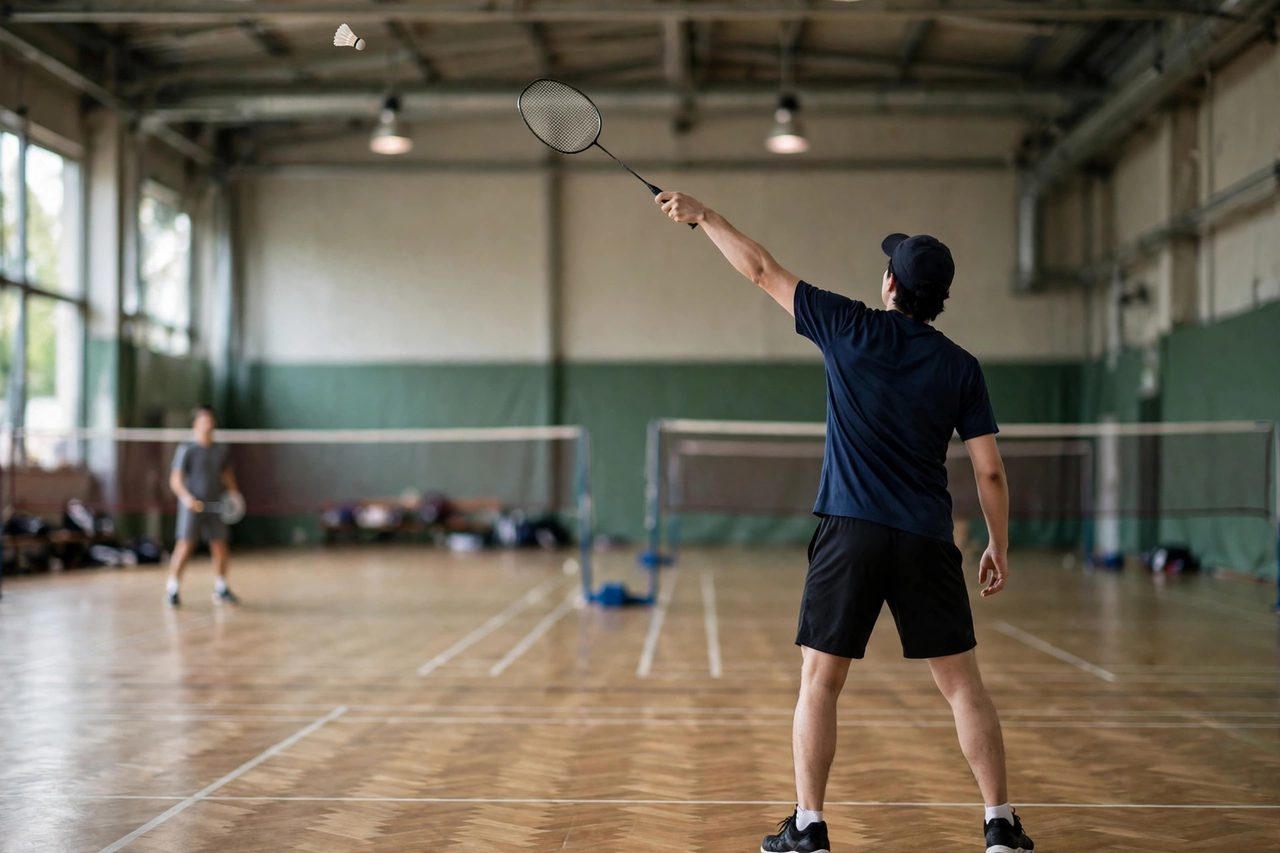
The Forehand Clear: Badminton's Most Basic Shot, Done Right, Step by Step
The clear is the first shot every badminton player should learn — a high, deep shot that buys you time and space. Here is the grip, footwork and throwing motion, step by step.
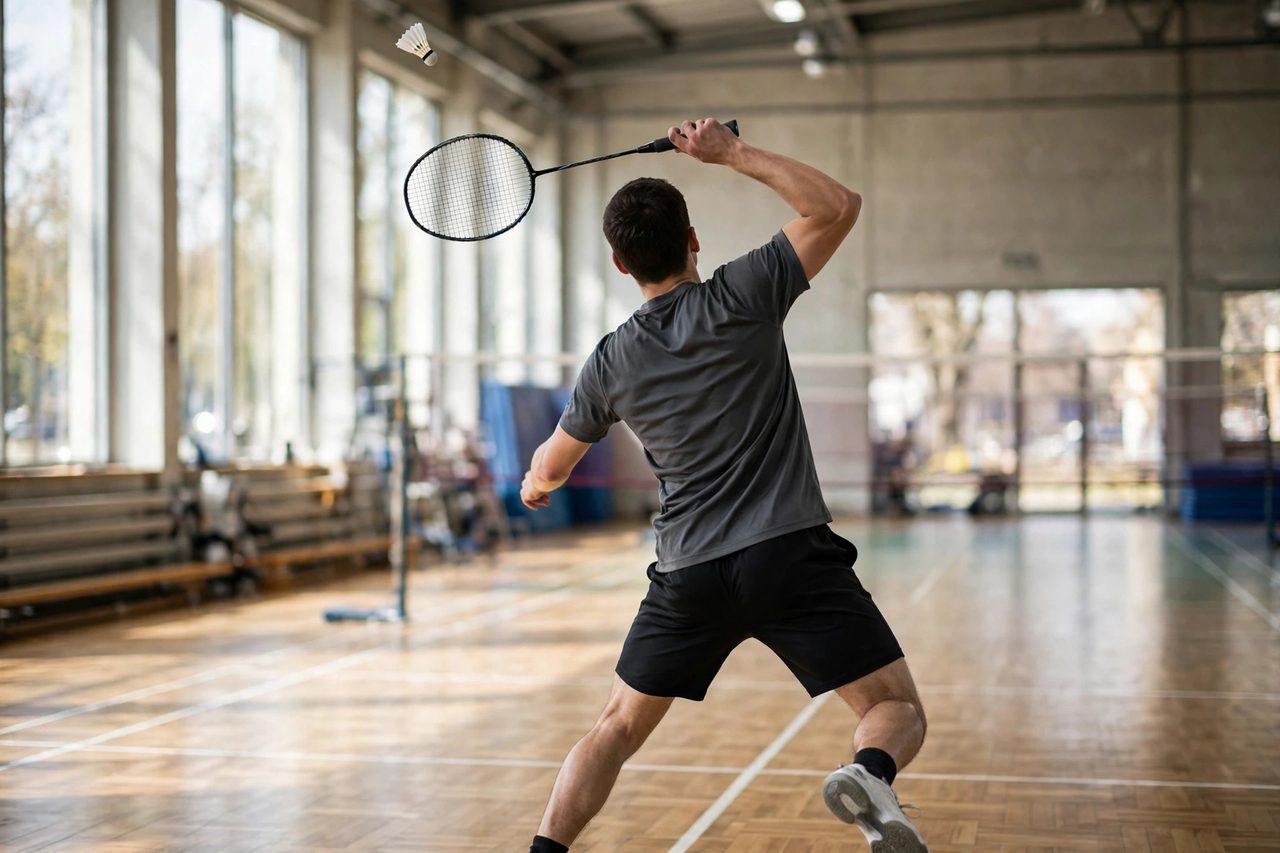
The Around-the-Head Shot: Badminton's Trickiest Reach, Step by Step
The shuttle is over your left shoulder, but your forehand is your best shot. The around-the-head shot lets you reach across and hit it anyway. Here is how it works, step by step.