
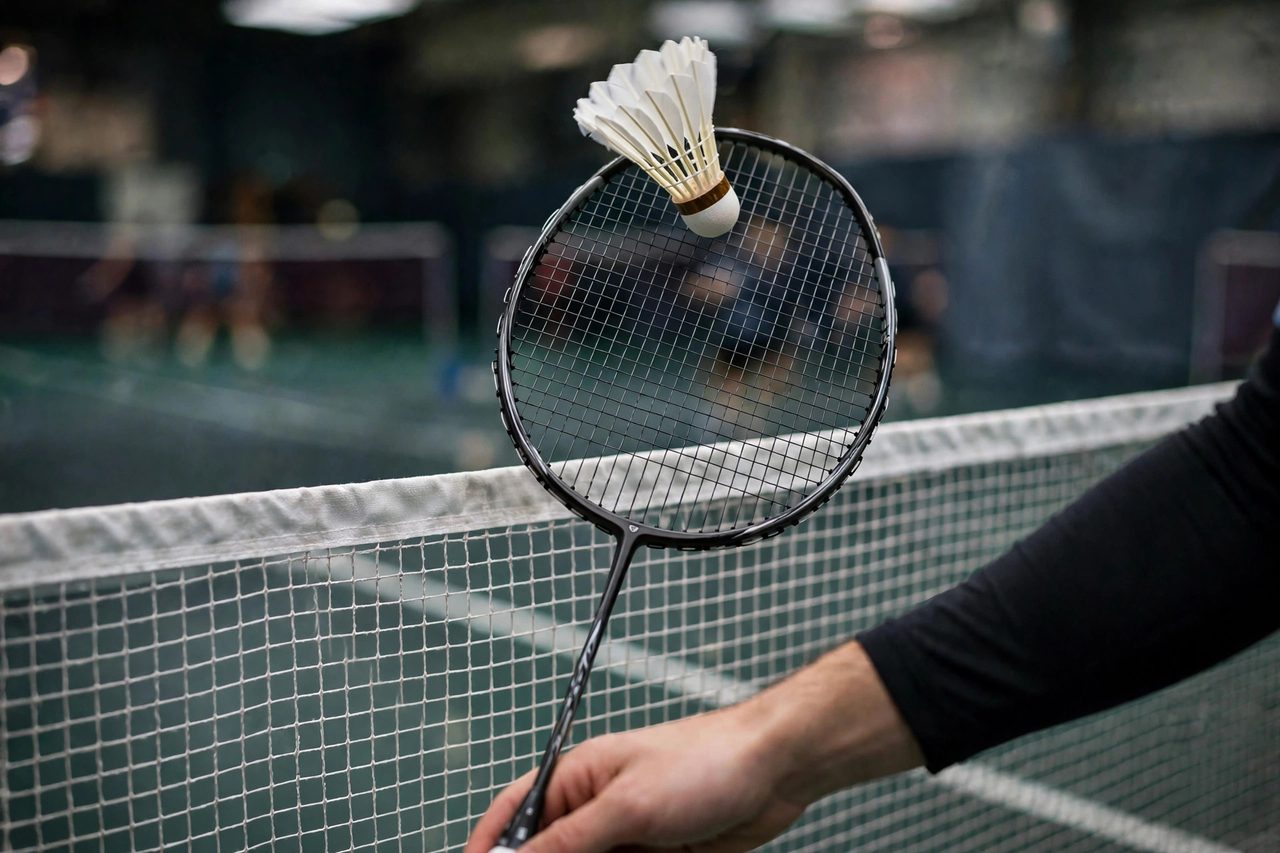
The net kill is the most satisfying shot in badminton and the most feared. A loose net shot from your opponent floats an inch too high, and in the blink of an eye the rally is over — the shuttle punched down so steeply there is nothing to do but watch. At the top level, professionals will kill anything above tape height without thinking. The good news: it is one of the most learnable shots in the game. Here is the complete recipe.
Step 1: Read it early
The net kill starts before the shuttle arrives. Watch your opponent’s racquet face at the moment of contact: if their net shot is played late, under pressure, or with an open face, the shuttle will pop up. As soon as you see it climb above tape height, you are on. The professionals begin moving before the shuttle peaks — anticipation is the whole shot.
Step 2: Racquet up, always
Your racquet head should live above net height whenever the shuttle is in the front third of the court. Keep the elbow bent and the racquet head high, around forehead level, angled slightly forward. If your racquet is hanging by your hip when the loose net shot comes, you have already lost the half-second the kill needs.
Step 3: Move in, don’t reach
Footwork is where most club players get it wrong. You don’t lean and stretch for the kill — you step in. Push off the back foot and lunge with the racquet-side foot toward the net, lowering your body so your eyes are close to shuttle height. The lunge does two jobs: it gets you close enough to hit down rather than forward, and it keeps you balanced for the next shot if something goes wrong.
Step 4: Shorten the grip
Choke up slightly on the handle — a shorter grip gives you finer control for the small, fast movement the kill needs. Your grip itself stays relaxed; tension in the forearm is the enemy of racquet-head speed. Tighten only at the moment of contact.
Step 5: The hit — wrist, not arm
This is the golden rule: the net kill comes from the wrist and forearm, never from the arm. There is no backswing — the racquet is already up. You simply snap the wrist forward and down through the shuttle, contacting it slightly in front of your body and above the net tape. Think of it as a punch with the racquet face, angled down into the court. The shuttle should cross the net on a downward trajectory within the first metre.
Step 6: Aim smart
Don’t aim for the lines. A steep kill aimed at the middle of the court, roughly a metre inside the lines, is unreturnable and almost never misses. The most common club-player error is trying to be too precise and dumping the shuttle into the net or spraying it wide. Margin is your friend.
Step 7: Recover immediately
The follow-through is tiny — your racquet barely moves past the net. The instant you have hit, push back off the lunge to your ready position, racquet back up. A kill that doesn’t quite finish the point is just another net shot, and you need to be ready for the block.
Three mistakes to fix
Hitting forward instead of down. If your contact point is below the tape, you cannot kill — push or lift instead. Forcing it is how shuttles end up in the net.
The big swing. A full arm swing at the net is slow, telegraphed and inaccurate. If your elbow is moving more than your wrist, shrink the motion.
Standing still. Killing from flat feet leaves you stranded if the block comes back. Always step in, always push back.
A drill to build it
Have a partner feed loose net shots — deliberately popped up — and practise killing ten in a row aiming for the same spot in the middle of the court. Count how many land in. When you can make nine out of ten, have your partner vary the height and placement. The moment the kill becomes boring, it has become a weapon.
Related articles
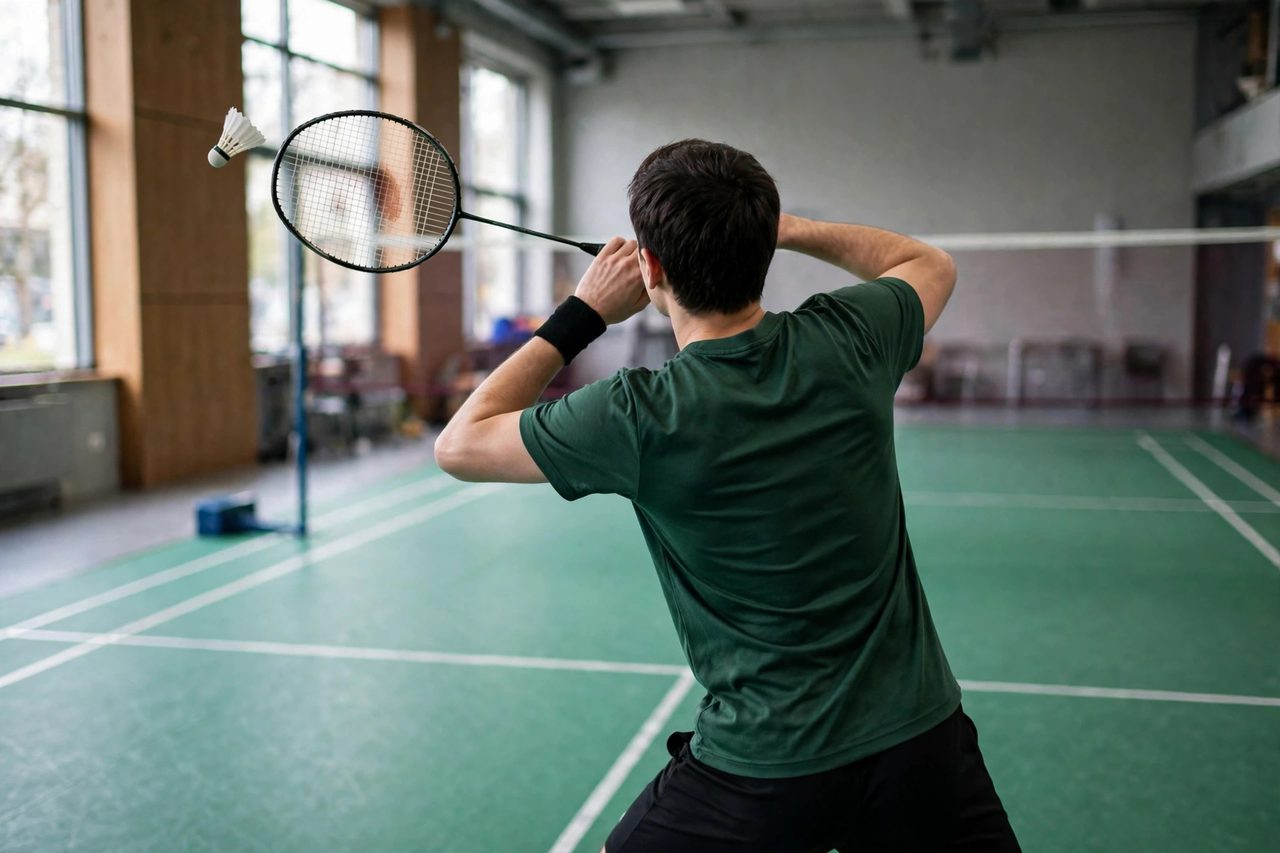
The Backhand Smash: Badminton's Power Shot From the Wrong Side, Step by Step
The shuttle is high on your backhand side and you want to attack, not just survive. The backhand smash lets you hit down hard from the wrong side. Here is how it works, step by step.
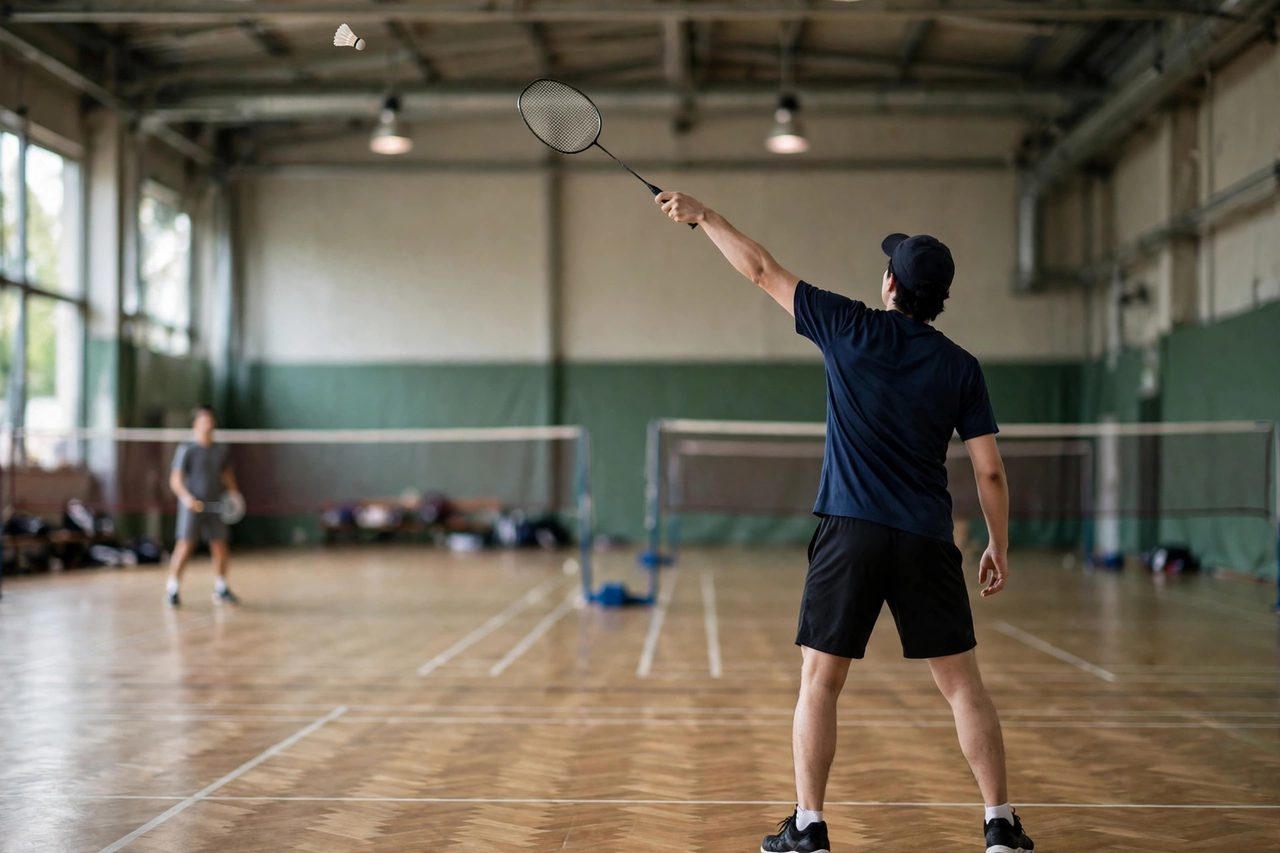
The Forehand Clear: Badminton's Most Basic Shot, Done Right, Step by Step
The clear is the first shot every badminton player should learn — a high, deep shot that buys you time and space. Here is the grip, footwork and throwing motion, step by step.
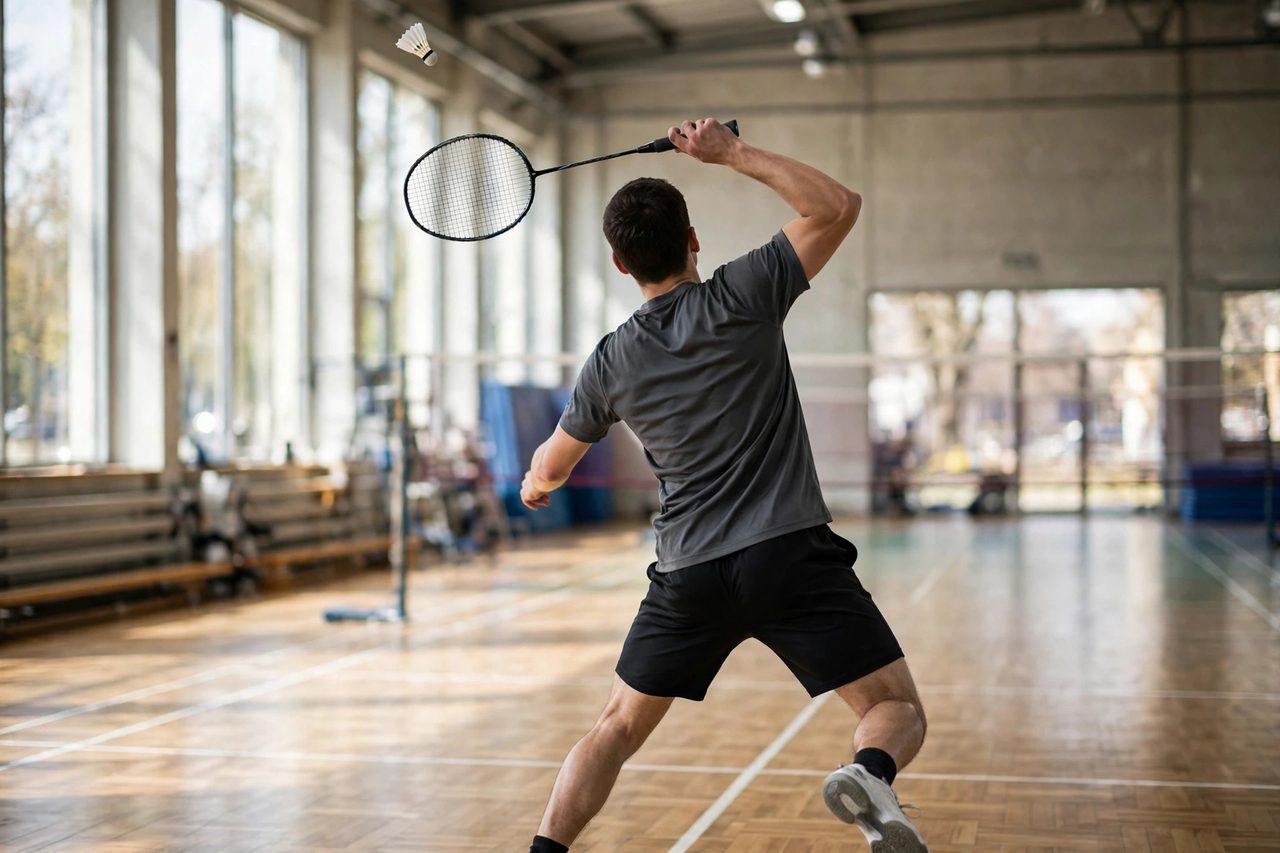
The Around-the-Head Shot: Badminton's Trickiest Reach, Step by Step
The shuttle is over your left shoulder, but your forehand is your best shot. The around-the-head shot lets you reach across and hit it anyway. Here is how it works, step by step.