
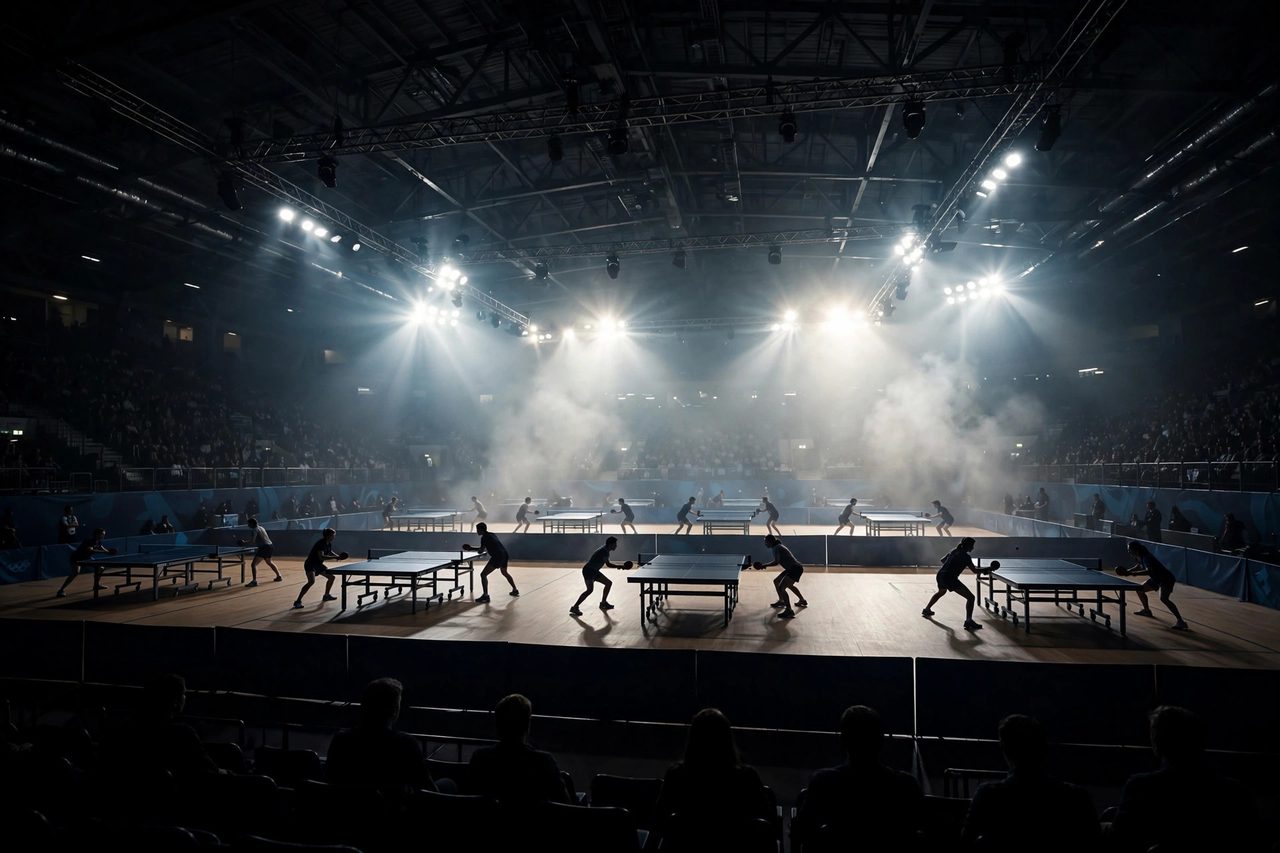
Olympic table tennis looks simple on television — two players, a small table, impossibly fast rallies. The competition structure behind it is a little more involved, with five medal events and three different formats. Here is how it all works.
The five events
Olympic table tennis contests five events: men’s singles, women’s singles, men’s team, women’s team, and mixed doubles. The singles events are the blue-riband competitions; the team events are national showdowns; the mixed doubles, added to the programme in Tokyo, is the sport’s newest Olympic discipline.
Singles: the classic bracket
The singles draws work like most major tournaments: a single-elimination bracket, with matches played best of seven games to 11 points. Win four games and you take the match.
Seeding follows the world rankings, so the top players are kept apart until the later rounds. One Olympic particularity: losing semi-finalists play a bronze-medal match, so third place is decided on the table rather than shared.
Mixed doubles: one pair per nation
The mixed doubles event is smaller and more volatile. Each nation may enter a limited number of pairs, which keeps the draw compact and means there are no easy matches. The format is the same — best of seven, single elimination — but doubles table tennis is a different tactical game: alternating shots, choreographed movement, and partnerships built over years.
Team events: the tie format
The team competition is where Olympic table tennis gets distinctive. Each tie between two nations is contested as a best-of-five series of matches: two singles, one doubles, then two more singles if needed.
The order matters enormously. Captains nominate their lineups strategically — hiding a weaker player, protecting a star for the decisive fifth match, or gambling on the doubles to swing the tie. A team with one superstar and little depth can be beaten by a balanced squad, which is why the team event produces some of the Games’ great upsets.
Qualification
Spots are earned through a mix of world rankings, continental qualification tournaments and host-nation places, with strict limits on how many players each country can enter per event. The per-nation caps are deliberate: without them, the deepest nations would fill half the draw. Even so, the fields remain the strongest assembled anywhere in the sport.
Five events, one table, the fastest rallies in the Olympic programme — and a format that rewards individual brilliance, partnership chemistry and national depth in equal measure.
Related articles
How the WTT Finals Work: Table Tennis's Season-Ending Showdown
Sixteen men, sixteen women, eight mixed doubles pairs, five days in Hong Kong. The WTT Finals is where the table tennis season is decided — here is how it works.
How the Tournament of Champions Works
Squash's grandest stage, inside New York's Grand Central Terminal: a simple guide to the format, the history and the magic.
How the US Open Squash Championships Work
The US Open is the biggest squash event in America. Here is how it works, from the glass court in Philadelphia to the prize money and the history behind it.