
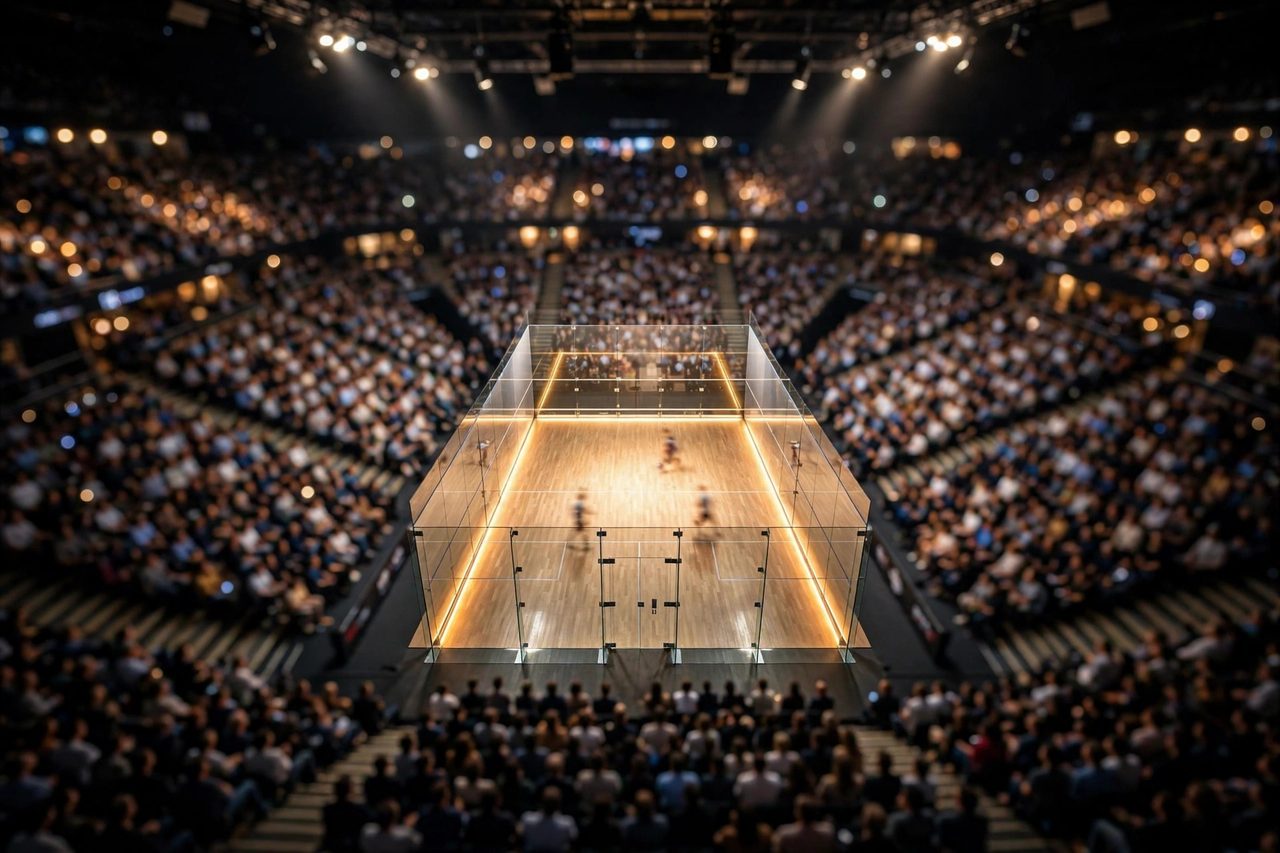
Every sport has one trophy that defines careers. In squash, it is the PSA World Championship — the title every great player is ultimately judged by. Winning in Chicago or Cairo or Kuala Lumpur does not just add ranking points; it rewrites a legacy.
Here is how the sport’s biggest event actually works.
The format
The World Championships feature two draws — men’s and women’s — of 64 players each, played as straight single elimination. Lose once and you are out. Matches are best of five games to 11 points, using point-a-rally scoring, exactly as on the regular PSA tour.
There are no round-robin safety nets and no second chances. That purity is part of the event’s mystique: to be world champion, you must win six consecutive matches, often against five or six of the best players on the planet.
Unlike the Olympics, there is no bronze-medal playoff. Both losing semi-finalists are credited with a semi-final finish and go home.
How players qualify
The bulk of each 64-player draw comes from the PSA world rankings, with the top players earning direct entry. The remaining spots are filled through a qualifying competition held in the days before the main draw, plus a small number of wildcards typically awarded to players from the host nation.
Seeding follows the rankings, which means the draw is structured so the top seeds cannot meet until the later rounds — the No. 1 and No. 2 seeds are placed in opposite halves, kept apart until a potential final.
What’s at stake
Beyond prestige, the World Championships carry the largest prize fund in squash and the biggest single ranking-points allocation of the season. A deep run can transform a player’s ranking; winning it can define a career.
But the real currency is historical. Squash’s all-time greats are counted in world titles: the eras of Jahangir Khan, Jansher Khan and Nicol David are measured in championships won. In a sport without Olympic gold — at least until Los Angeles 2028 — the World Championship has been the ultimate prize, and it will remain so even after the Games arrive.
Where it’s played
The event moves around the world, and recent editions have been staged in striking venues: Chicago’s Union Station, the pyramids of Giza, Kuala Lumpur. The PSA has leaned into spectacle for its flagship, building glass show courts in iconic locations — a strategy that has given the championships some of the most memorable backdrops in racquet sports.
For a new fan, it is the perfect entry point: one week, the best 64 men and 64 women in the world, winner takes the crown that matters most.
Related articles
How the WTT Finals Work: Table Tennis's Season-Ending Showdown
Sixteen men, sixteen women, eight mixed doubles pairs, five days in Hong Kong. The WTT Finals is where the table tennis season is decided — here is how it works.
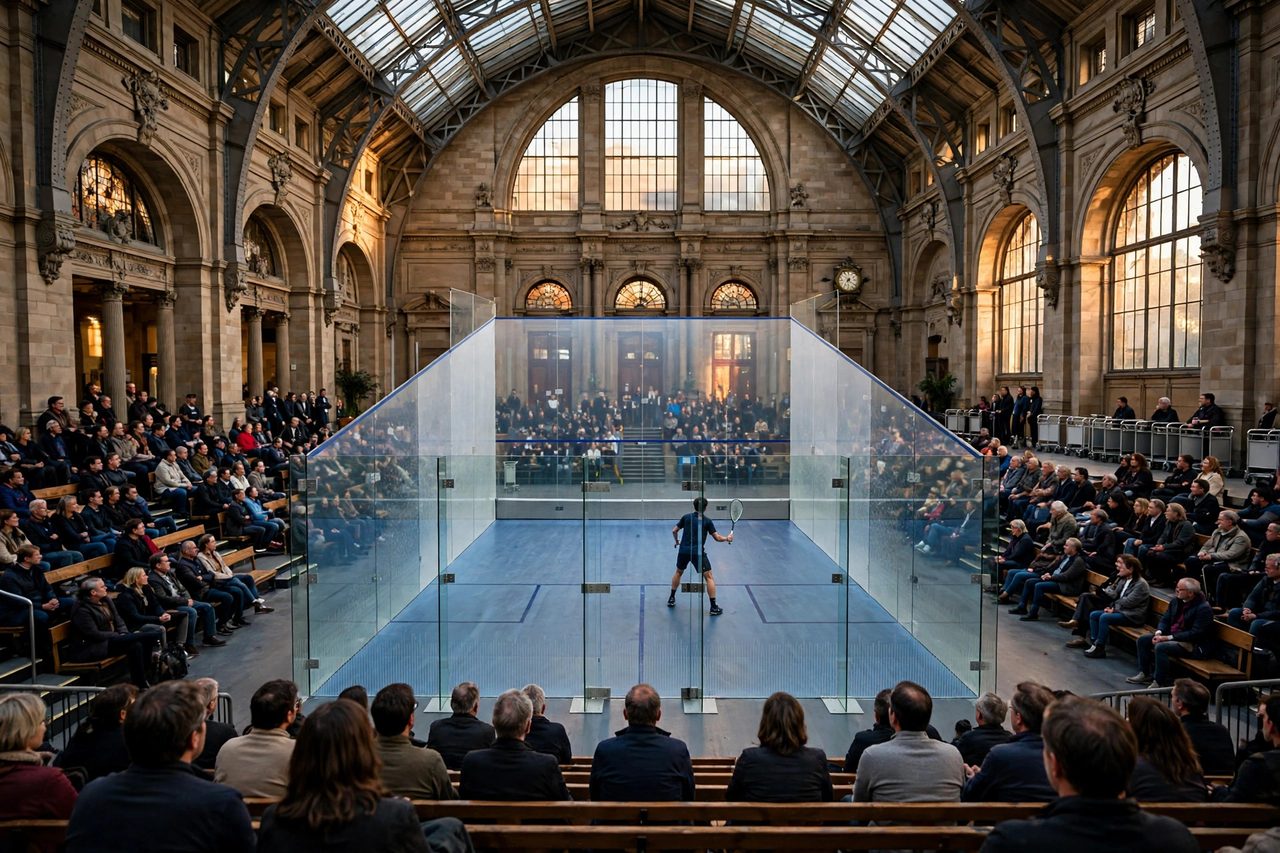
How the Tournament of Champions Works
Squash's grandest stage, inside New York's Grand Central Terminal: a simple guide to the format, the history and the magic.
How the US Open Squash Championships Work
The US Open is the biggest squash event in America. Here is how it works, from the glass court in Philadelphia to the prize money and the history behind it.