
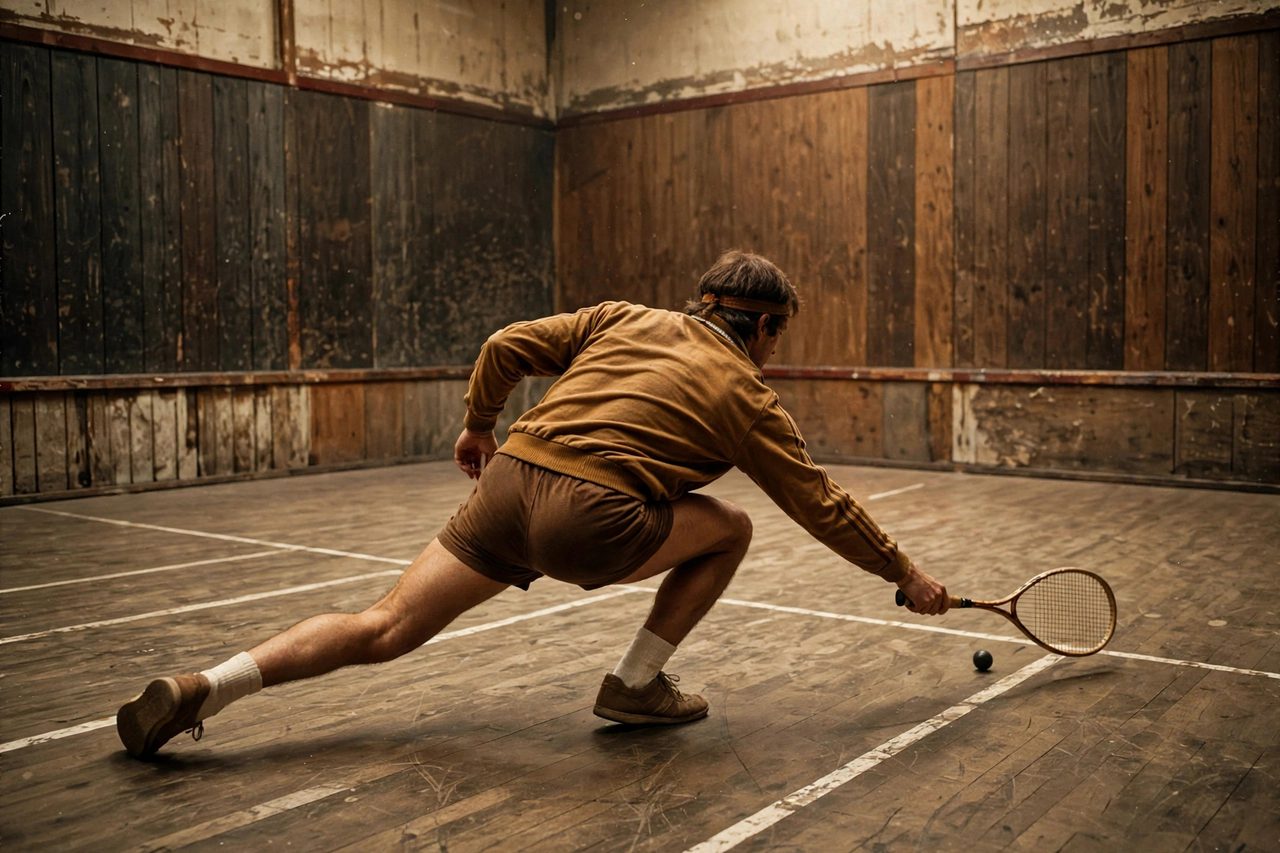
There is dominance in sport, and then there is what Pakistan did to squash. From the early 1980s to the late 1990s, the men’s game belonged to one country — and largely to two men who shared a surname, a hometown region, and almost nothing else. Jahangir Khan and Jansher Khan were not, as many assumed, directly related. But for nearly two decades they made Pakistan the capital of world squash.
Jahangir: 555 matches without defeat
Jahangir Khan was born on 10 December 1963 in Karachi, into a squash family — his father Roshan had won the British Open in 1957. As a boy he was physically frail; doctors advised against strenuous activity after hernia operations. He answered by becoming, at 15, the youngest ever winner of the World Amateur Championship in 1979, and at 17 the youngest World Open champion, beating Australia’s Geoff Hunt in the 1981 final.
What followed is the most famous unbeaten run in professional sport. From 1981 to 1986 — five years and eight months — Jahangir Khan did not lose a competitive match. The Guinness-recorded figure is 555 consecutive victories, a streak longer than any recorded in top-level professional sport, built on panther-like movement, relentless fitness drilled under his cousin and coach Rehmat Khan, and a mental discipline that turned pressure into fuel.
The titles piled up: six World Opens and a record ten consecutive British Opens from 1982 to 1991. His rivals were reduced to footnotes in finals that were often embarrassingly one-sided. The streak finally ended in Toulouse in 1986, when New Zealand’s Ross Norman beat him in the World Open final — an event so seismic that the squash world spent weeks trading theories about it.
Jansher: the rival who took the throne
At the end of 1986, a new Pakistani appeared on the international scene. Jansher Khan — no direct relation to Jahangir, though their families came from the same village near Peshawar — played a more aggressive, power-based game where Jahangir’s was built on defence and endurance. Their rivalry, dubbed the “Battle of the Kings,” consumed the sport for a decade.
Jansher won their first meeting in September 1987 and took the next eight in a row, capturing the 1987 World Open. Jahangir hit back in March 1988 and beat him in that year’s World Open final. Across nearly 40 tournament meetings, Jansher edged it 19-17. His own trophy haul was staggering: eight World Opens and six British Opens, with a decade as world No. 1 from 1988 to 1998. Jahangir, meanwhile, kept his iron grip on the British Open, winning it ten years running until 1991, and retired in 1993 after helping Pakistan win the World Team Championship in Karachi.
Between them, the two Khans won 14 World Opens and 16 British Opens. For a generation, the sport’s biggest prizes travelled to Peshawar.
What made the era possible
The Khan years were not an accident of genetics; they were the product of a system. Peshawar’s squash culture ran deep — club courts, family dynasties, and a coaching lineage that passed knowledge down through generations. Jahangir’s father had won the British Open; his brother Torsam coached him before his sudden death; his cousin Rehmat Khan then guided him through the unbeaten years. Jahangir’s training volumes became legendary — hours of ghosting and tactical drills that built the endurance base no opponent could match.
Jahangir stayed in the game after retiring, serving as president of the World Squash Federation from 2002 to 2008, and the sport he left behind was more professional, more global and more televised than the one he had conquered. What neither Khan could pass on was the aura: the sense, shared by every player who walked onto court against them, that the match was already lost. That is the part no training system can manufacture.
The long silence — and the first shoots of revival
After Jansher’s retirement, Pakistan’s golden age faded into a long lean period with no major titles. But the last few years have offered genuine hope. Humza Khan ended a long drought by winning the 2023 World Junior Championship in Melbourne. Noor Zaman — the grandson of former champion Qamar Zaman, squash royalty of an older generation — won the 2025 Under-23 World Championship in Karachi and now sits inside the world’s top 40.
Squash is an Olympic sport now, debuting at Los Angeles 2028, and Pakistan’s federation talks openly about rebuilding the pipeline that once produced the Khans. The 555-match streak will almost certainly never be broken — no athlete in any sport has come close. But the deeper legacy is simpler: for twenty years, two players from one country showed the world what total mastery of a sport looks like. The dynasty may be history. The standard it set is not.
Related articles
The Squash Ball: Why the Ball That Barely Bounces Makes Squash So Hard
A cold squash ball drops like a stone. Warm it up, and it comes alive. Here is the strange science behind the smallest, quietest ball in racquet sports — and the coloured dots that tell you which one to play with.
From Celluloid to Plastic: The Little Ball That Changed Table Tennis
The table tennis ball is smaller than a golf ball and weighs less than a coin — yet it has been changed twice in 25 years, and players still argue about it.
Ping Pong vs Table Tennis: One Sport, Two Names, One Big Argument
Ping pong and table tennis are the same sport, so why do we argue about the name? The answer starts with a trademark from 1901.