
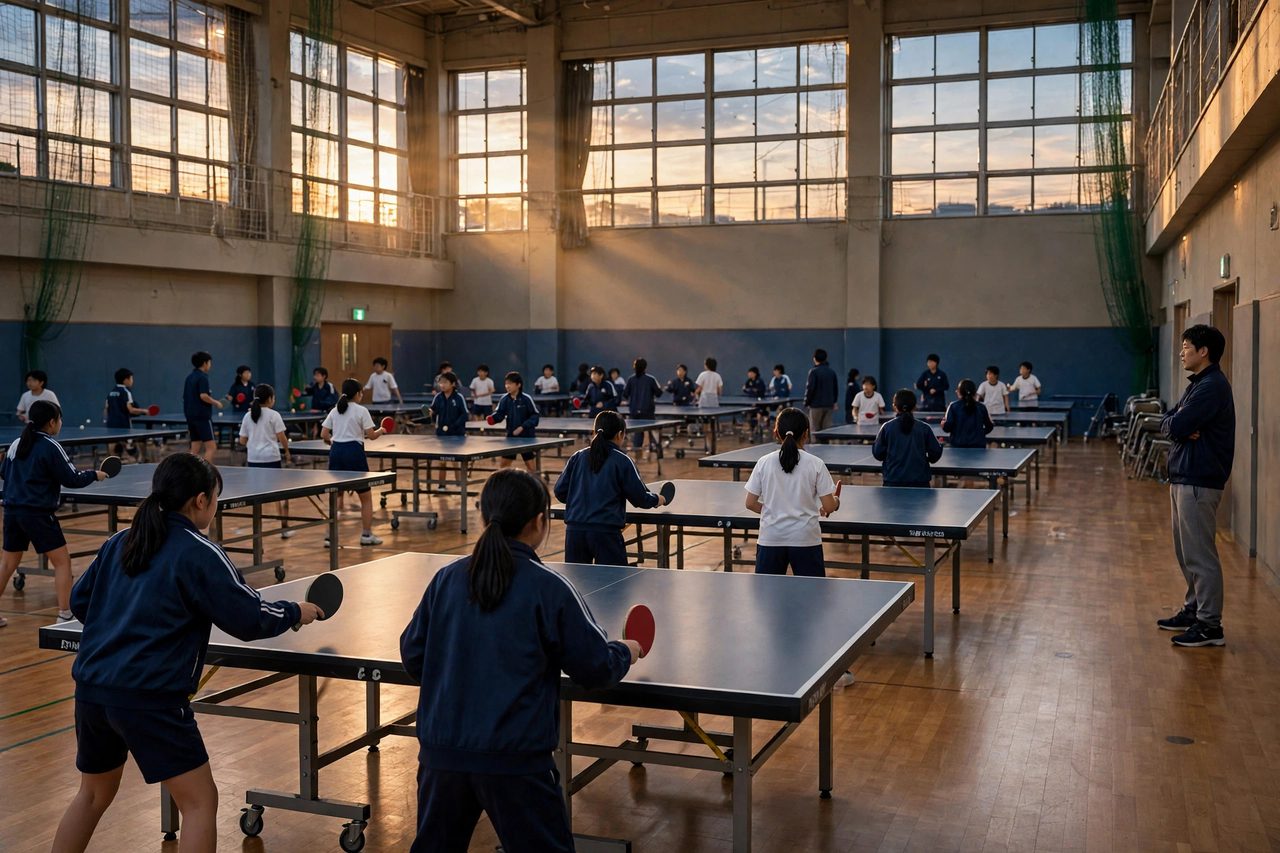
Walk into a Japanese school gym after classes end and you will probably hear it: the quick tick-tock of a table tennis ball, bouncing back and forth, faster than seems possible. Table tennis, called “takkyu” in Japanese, is one of the most popular school sports in the country. It is cheap, it fits in a small gym, and anyone can play it. But in Japan it is much more than a way to pass the time. It is a pathway from childhood to the world stage, and a sport the whole country follows.
It starts at school
The heart of Japanese table tennis is the school club system. In Japan, most students join a club after school, and those clubs are called “bukatsu”. A bukatsu is a school sports or culture club that meets almost every day, with a coach and a strict training routine. Table tennis clubs are among the most popular. They are open to boys and girls, they do not require expensive equipment, and they work in any weather, since the sport is played indoors.
For talented kids, the school system is just the start. Japan has a network of junior academies and regional training centres, and the Japanese Table Tennis Association runs national age-group competitions that are fiercely contested. The All Japan Championships, the country’s national championships, are a huge event. Winning a junior title there can make a young player famous overnight.
The system is demanding. Training is daily, discipline is strict, and the pressure can be intense. But it also produces players with superb technique and mental toughness. Japanese players are known for their footwork, their speed around the table, and their ability to stay calm in long rallies. Those qualities are drilled into them from a young age.
The stars who changed everything
Every sport needs heroes, and Japanese table tennis has had a golden generation of them. The biggest name is Tomokazu Harimoto. Harimoto started playing at the age of two, because his parents coached at a table tennis club in Sendai and simply brought him along. He became a Japanese citizen in 2014, when he was in fourth grade, so he could compete in the national championships. At 14, he became the youngest player ever to win a senior international title, at the Czech Open in 2017. A year later, still a teenager, he beat China’s Ma Long and Zhang Jike, two Olympic champions, on his way to winning the Japan Open. It was one of the great shocks in the sport’s history.
His younger sister Miwa Harimoto is now a star in her own right, and one of the best women’s players in the world. The two siblings are the faces of Japanese table tennis today, and their story — a family that built its life around the sport — is well known across Japan.
Before the Harimotos, there was Mima Ito. Ito won the mixed doubles gold medal at the Tokyo Olympics in 2021, playing with Jun Mizutani. That was Japan’s first ever Olympic gold medal in table tennis, and it came against a Chinese pair in the final, which made it even sweeter. Ito is famous for her aggressive style and her short-pimpled backhand rubber, an unusual equipment choice that gives her shots a flatter, trickier bounce. A pimpled rubber is one where the small pimples point outward instead of inward, which changes how the ball grips and spins.
And before Ito, there was Ai Fukuhara, known to everyone as “Ai-chan”. Fukuhara was a child star in the 2000s who grew up on television, and she helped make table tennis a mainstream sport in Japan. When she played, the ratings went up. She showed a generation of Japanese kids, especially girls, that table tennis could be a path to fame.
The professional league and the fans
In 2018, Japan launched the T.League, its own professional table tennis league. A professional league is a competition where players are paid salaries and teams represent cities or companies, like a football league. The T.League brought the sport to bigger arenas, with music, lights and television coverage, and it gave Japanese players a home base instead of spending the whole year travelling abroad.
Table tennis is also a huge recreational sport in Japan. Community centres, company teams and senior clubs all play regularly. It is common to see older players, some in their seventies and eighties, playing serious, competitive matches at local halls. The sport’s low impact and small court make it a lifetime game. You can play it at five and at eighty-five.
Television plays a big part too. Major matches are shown on prime-time TV, and the top players are genuine celebrities. When Japan plays China in a team final, the whole country seems to watch. China is still the dominant force in world table tennis, and beating China is the dream that drives the entire Japanese system. Japan’s women have come closer than anyone, and the men’s team has pushed China hard as well.
Why it matters
Japan’s table tennis story is really a story about patience. The country did not become a table tennis power overnight. It built school clubs, trained coaches, supported young players, and waited for a generation to grow up. Now that generation is here, led by the Harimoto siblings, and Japan is the second force in world table tennis behind China.
For the rest of the world, Japan is proof that a country does not need to be the biggest to challenge the best. It needs a system, a culture, and a ball that keeps bouncing in school gyms long after the last lesson ends. In Japan, that ball has been bouncing for decades. And it is not stopping any time soon.
Related articles
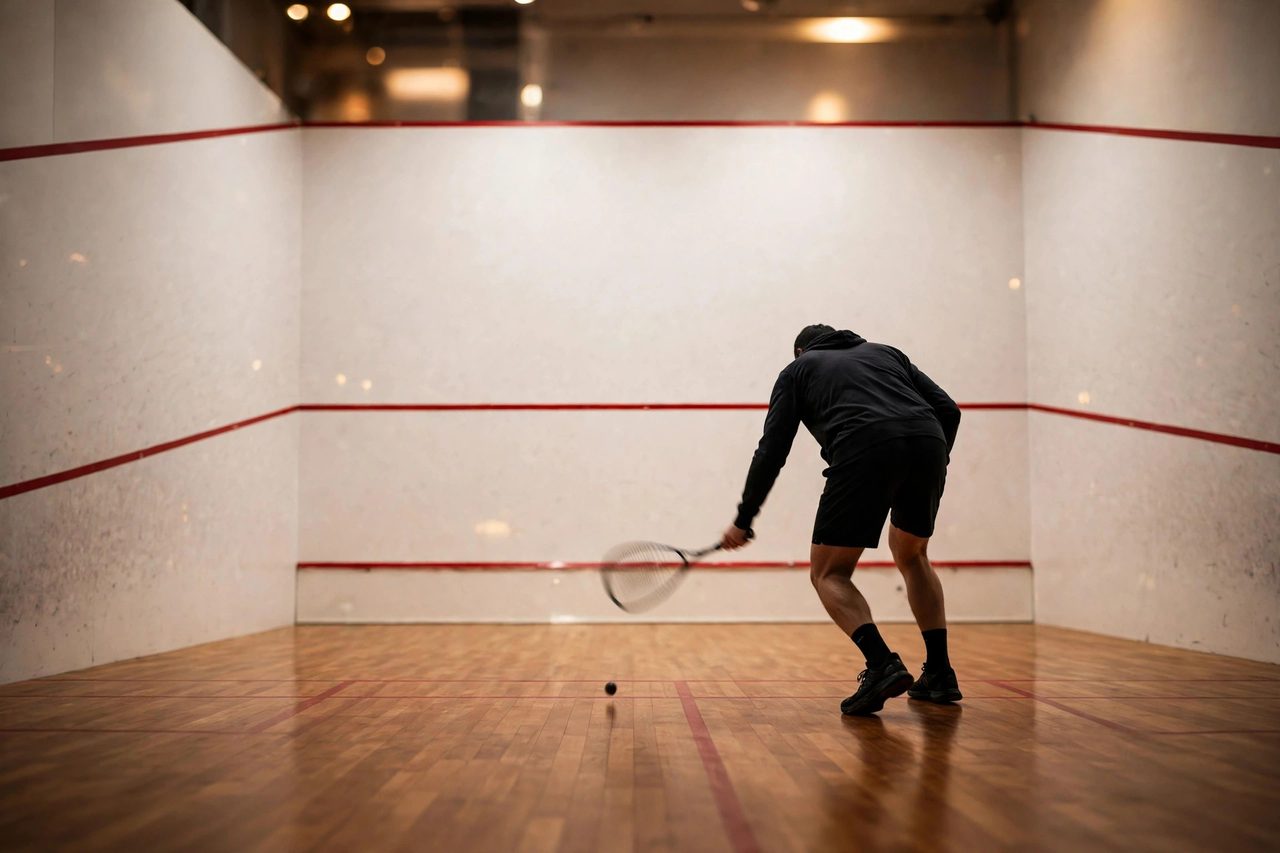
The Squash Ball: Why the Ball That Barely Bounces Makes Squash So Hard
A cold squash ball drops like a stone. Warm it up, and it comes alive. Here is the strange science behind the smallest, quietest ball in racquet sports — and the coloured dots that tell you which one to play with.
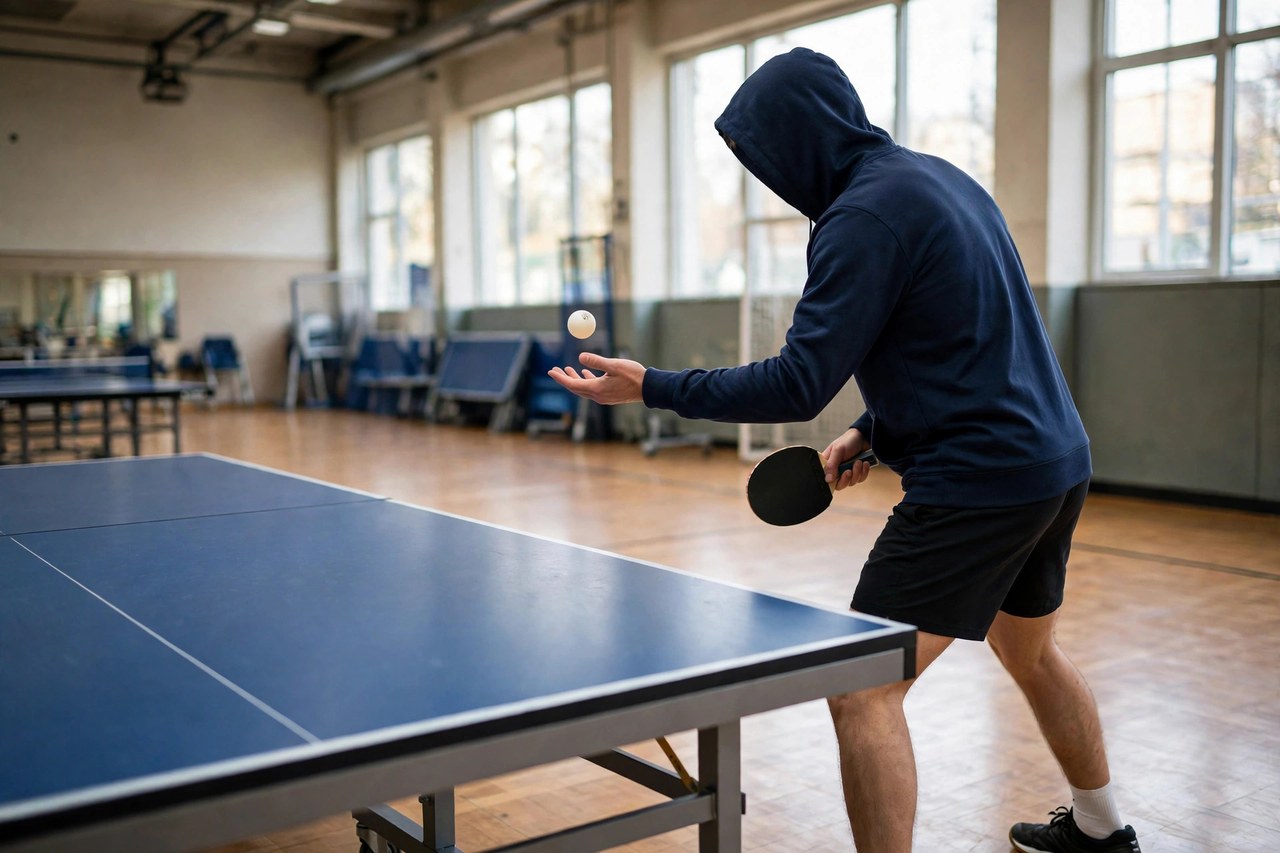
From Celluloid to Plastic: The Little Ball That Changed Table Tennis
The table tennis ball is smaller than a golf ball and weighs less than a coin — yet it has been changed twice in 25 years, and players still argue about it.
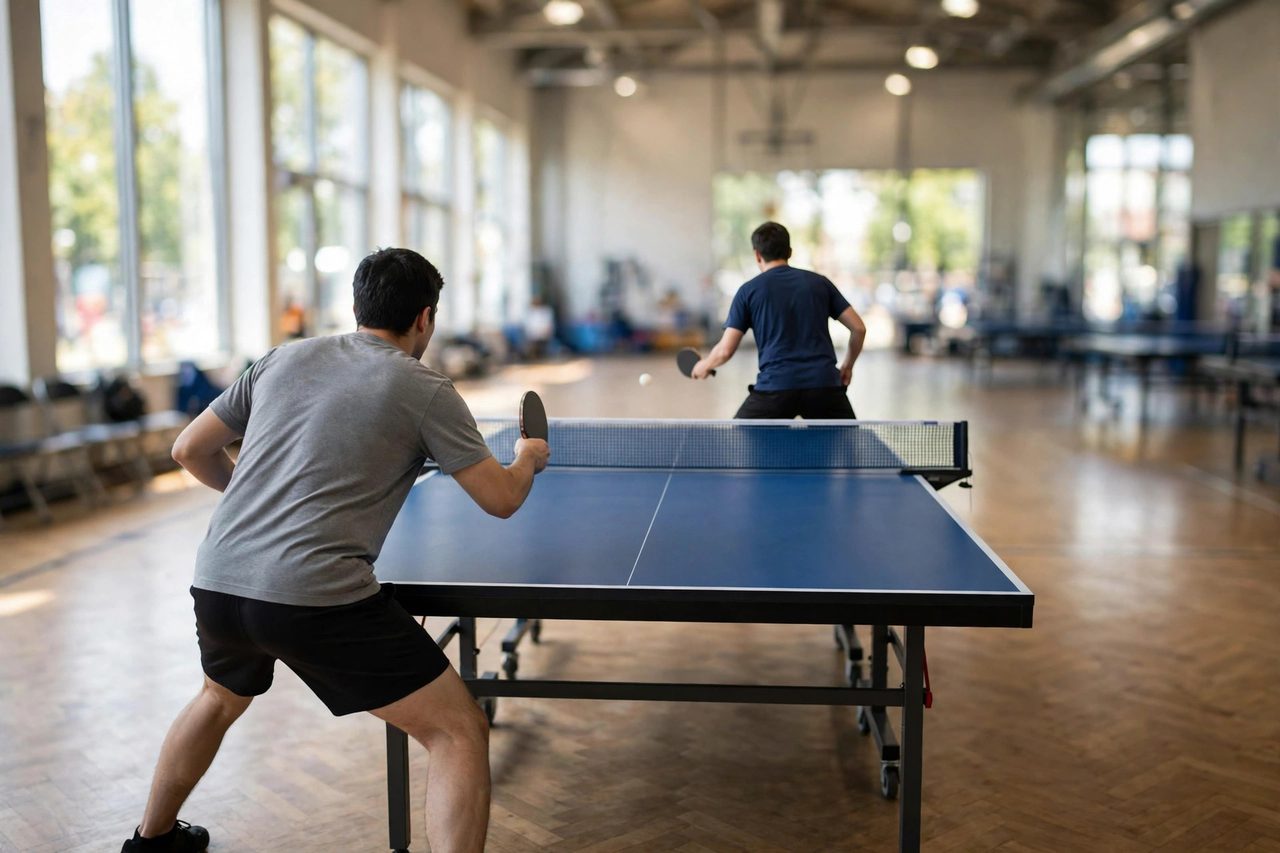
Ping Pong vs Table Tennis: One Sport, Two Names, One Big Argument
Ping pong and table tennis are the same sport, so why do we argue about the name? The answer starts with a trademark from 1901.