
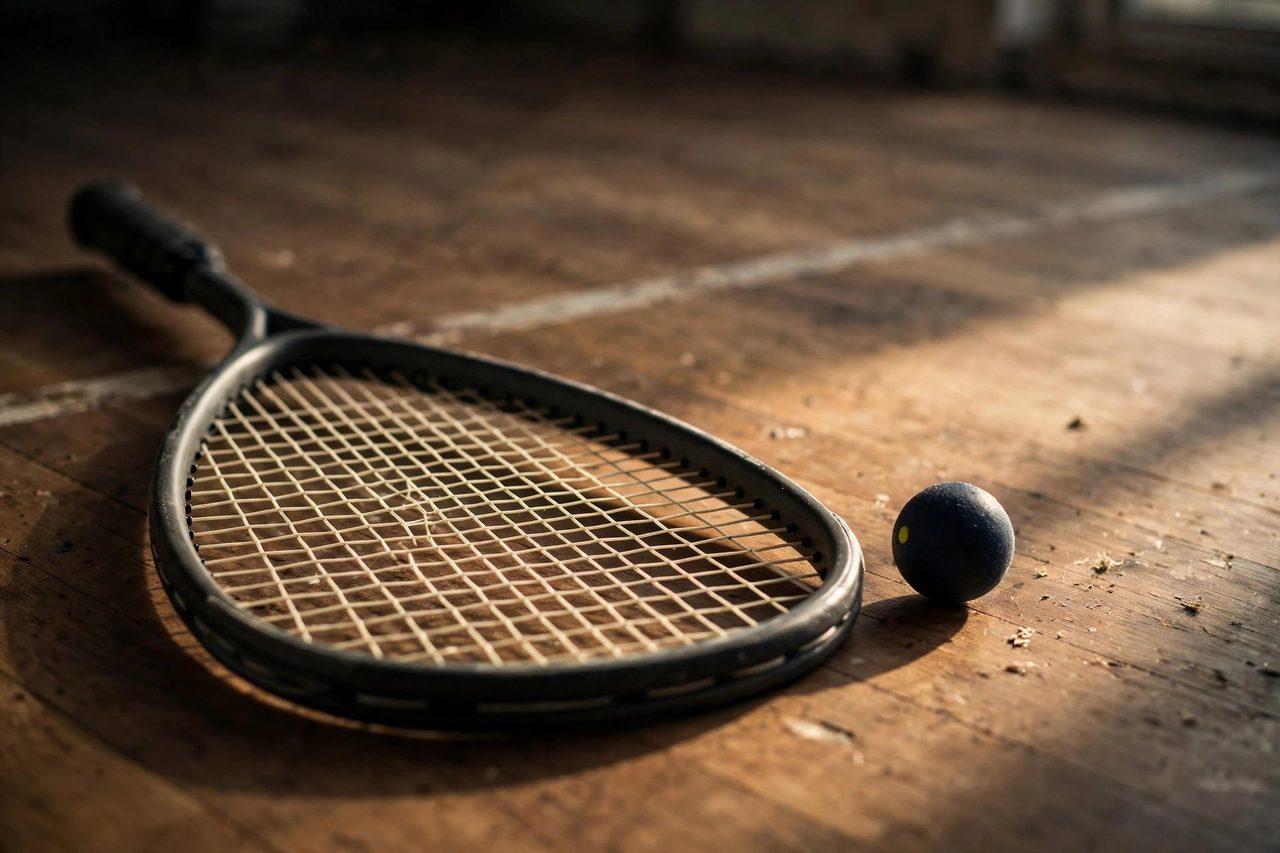
Some racquets are built for power. Some are built for control. The Head Speed 120 Slimbody is built for speed — the kind of speed that lets you volley a ball at the front of the court before your opponent has even finished their swing.
It weighs 120 grams before strings. That is light. Most squash racquets sit between 110 and 140 grams, and every gram matters when you are trying to react in a split second. Once strung and gripped, expect it to play closer to 140 grams in your hand, which is still light by any standard.
So what do you actually get for your money? The current model lists at $219.95 on Head’s own site. Here is the honest breakdown.
The specs, in plain English
The head size is 500 square centimetres, or 78 square inches. That is a standard modern squash head — big enough to give you a decent margin for error, small enough to stay quick through the air.
The shape is a teardrop. A teardrop head is wider at the top than at the bottom, which gives you a bigger sweet spot — the part of the strings where the ball comes off cleanly — up where you volley and hit attacking shots. It is the shape most attacking players prefer.
“Slimbody” is Head’s name for a thinner frame. A thinner beam cuts through the air faster, so the racquet feels quicker in your hand. The trade-off is a little less raw power than a thicker, stiffer frame. You get feel instead of force.
The frame uses Auxetic 2.0, Head’s latest material technology. In simple terms, parts of the frame are designed to get slightly wider, not narrower, when they are stretched on impact. Head says this gives a softer, more connected feel when you hit the ball. In practice, players describe it as the ball staying on the strings a fraction longer, which helps with touch shots like drops and volleys.
The clever trick: two racquets in one
The Speed 120’s best feature is the Adaptive Fan Pattern. This is Head’s system that lets you string the racquet in two different patterns without changing the frame.
String it 12 x 17 — 12 main strings running lengthwise, 17 cross strings — and you get more power, because the strings can move more and trampoline the ball. String it 16 x 17 and you get more control, because the denser pattern holds the ball tighter. It comes strung for power from the factory, so if you want the control set-up, ask your stringer for the fan pattern.
This is genuinely useful. Most racquets lock you into one character. The Speed 120 lets you change your mind.
Who should buy it
This racquet is for the attacking player. If your game is built around volleys, drops, and taking the ball early at the front of the court, the light weight and thin frame will feel like they were made for you. It is also a great choice if you have a fast swing but a smaller build, because you do not need brute strength to get pace out of it.
It is endorsed on the tour by players including American star Olivia Weaver, which tells you plenty about the level it is aimed at: this is an expert-level frame, not a beginner racquet.
Who should skip it
If your game is built on hitting hard from the back of the court, look elsewhere. A 120-gram frame will not give you the free power of a heavier, head-heavy racquet, and you will have to generate the pace yourself. Beginners, too, may find it unforgiving: light racquets punish mishits more, because there is less mass to carry the ball through.
And if you are on a tight budget, there are cheaper ways to get a good racquet. The Speed 120 is a premium frame at a premium price, and its last-generation version often sells for far less while offering most of the same feel.
The verdict
The Head Speed 120 Slimbody does exactly what its name promises: it is fast, light, and full of touch. It will not hit the ball for you, but if you already know how to play attacking squash, it will get out of your way and let you play it faster. For front-court players, that is the whole point.
Related articles
Butterfly Tenergy 05 Review: The Spin Classic That Still Sets the Standard
Launched in 2008 and still the most trusted rubber in table tennis: the Butterfly Tenergy 05 pairs a grippy topsheet with Spring Sponge for huge spin and a high, safe arc. What it does well, who it suits, and who should skip it.
Tecnifibre Slash 125 Review: Light, Fast and Built to Attack
The Tecnifibre Slash 125 is the power frame of the Slash range: 125 grams, a big 485 cm² head, a bumperless X-TOP design and the open-core build made with Mostafa Asal. We put it to the test.
Butterfly Dignics 09C Review: The Spin Monster That Rewards Big Swings
Tacky topsheet, hard 44-degree sponge, huge spin: the Butterfly Dignics 09C is a premium forehand rubber for players who loop hard. What it does well, who it suits, and who should skip it.