
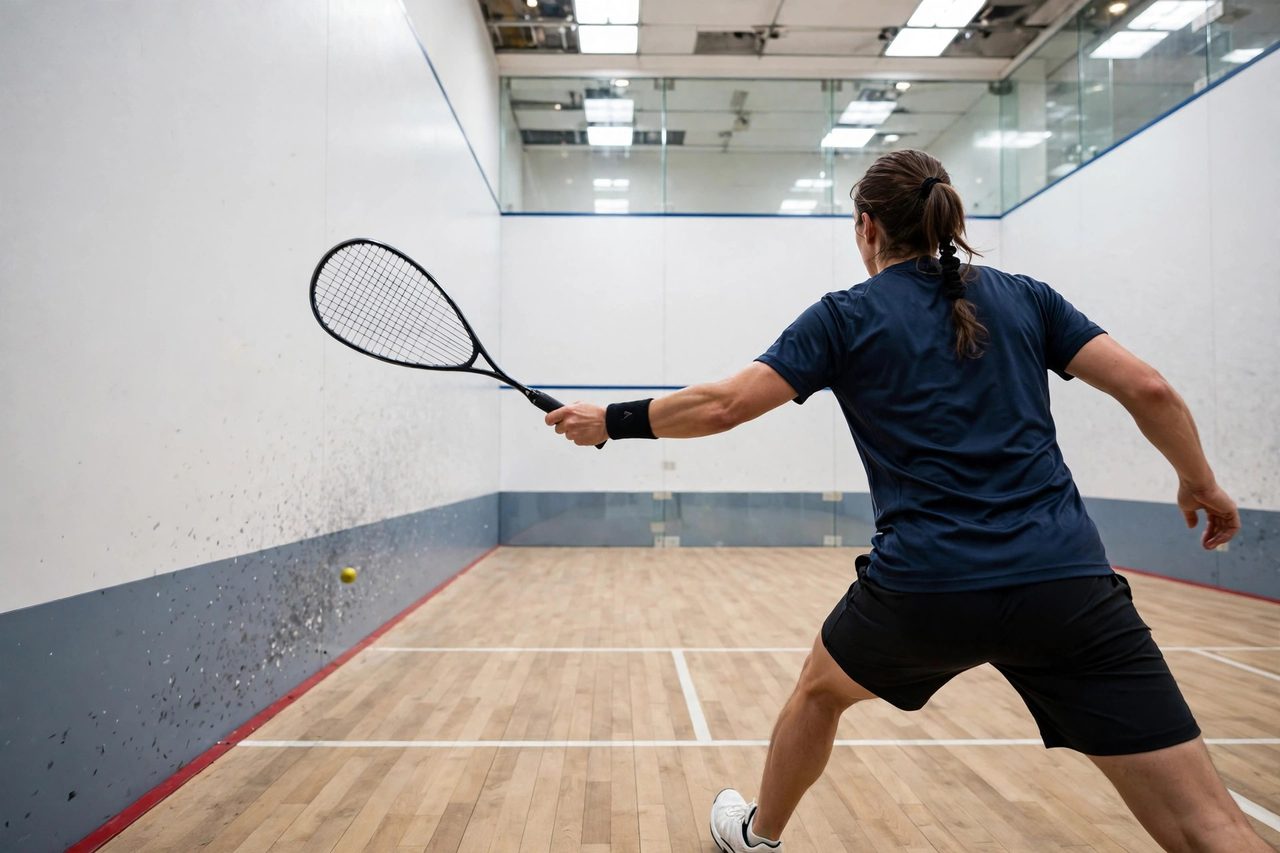
The straight drive wins matches, but the boast wins rallies you had no business winning. It is the shot where the ball hits the side wall first, then the front wall, and lands in the opposite front corner — dragging your opponent one way while the ball goes the other. Done well, it is the most disorienting shot in squash. Done badly, it is a gift.
What the boast actually is
A boast is any shot played into the side wall (or occasionally the back wall) before it reaches the front wall. The classic two-wall boast is struck from one front corner, clips the side wall, crosses to the front wall, and dies in the opposite front corner. The three-wall boast — side wall, back wall, then front — is the defensive version, played from deep when you are in trouble.
The magic is deception. Your swing shape, your body position and the early part of the ball’s flight all tell your opponent you are hitting straight or cross-court. By the time the ball kisses the side wall and changes direction, they are already moving the wrong way.
When to use it
The attacking boast is a front-court weapon: when you are up near the front and the ball is loose, a tight two-wall boast into the nick (the floor-wall junction) of the opposite corner is one of the hardest shots in the game to retrieve. The defensive boast is a get-out-of-jail card from the back corners: when you are stretched and cannot play a quality straight drive, a high three-wall boast buys you time to recover to the T.
The rule of thumb: boast from a position of choice, not desperation — except when desperation is all you have. The defensive boast exists precisely for those moments.
The technique, step by step
1. Set up early. Get your racquet up and your body side-on, exactly as if you are going to drive straight. The deception starts here: if your preparation screams “boast,” it does not work.
2. Contact point. Strike the ball at roughly the same height and position as your normal drive — but aim it to contact the side wall first. The target is a spot on the side wall level with, or slightly behind, the service line. The higher and deeper the contact on the side wall, the wider the angle on the front wall and the deeper the ball lands.
3. The swing. Keep the swing compact and wristy. A big wind-up telegraphs the shot and, worse, makes the timing harder. Think of brushing across the ball rather than hammering through it — the side wall does the work of changing the angle.
4. Follow-through and disguise. Finish the swing along the same line as your straight drive for as long as possible. The later the ball deviates from the “expected” path, the later your opponent reads it.
5. Recover. A boast that does not hit the nick can sit up and invite a counter-attack. Move straight back to the T after playing it — do not stand and admire it.
The common mistakes
- Hitting it too hard. Power makes the ball rebound off the front wall and sit up. Pace is the side wall’s job; yours is placement.
- Contacting the side wall too low or too close to the front. The ball dies before reaching the front wall and the referee’s hand goes up: not up.
- Telegraphing. Dropping the racquet head, opening the body, looking at the target corner — any of these kills the deception.
- Overusing it. A boast every rally becomes readable. The great boast players use it sparingly enough that it stays a surprise.
Drills that build it
Target boast: from the forehand front corner, hit ten consecutive two-wall boasts aiming for the opposite nick. Count how many land within a racquet’s length of the corner. Then switch sides.
Deception game: play a conditioned game where your straight drive and your boast must start from the identical preparation. Have a partner call out which shot they think is coming after contact — your score is how often they are wrong.
Boast and recover: hit a three-wall boast from deep in the backhand corner, then sprint to the T before the ball bounces twice on the front wall. Repeat until your lungs object.
The boast will never be your most-played shot. But it might be your most enjoyable — and on the days when your drives are not quite landing, it is the shot that keeps you in matches you are losing. Learn the angles, hide the swing, and let the side wall do the lying for you.
Related articles
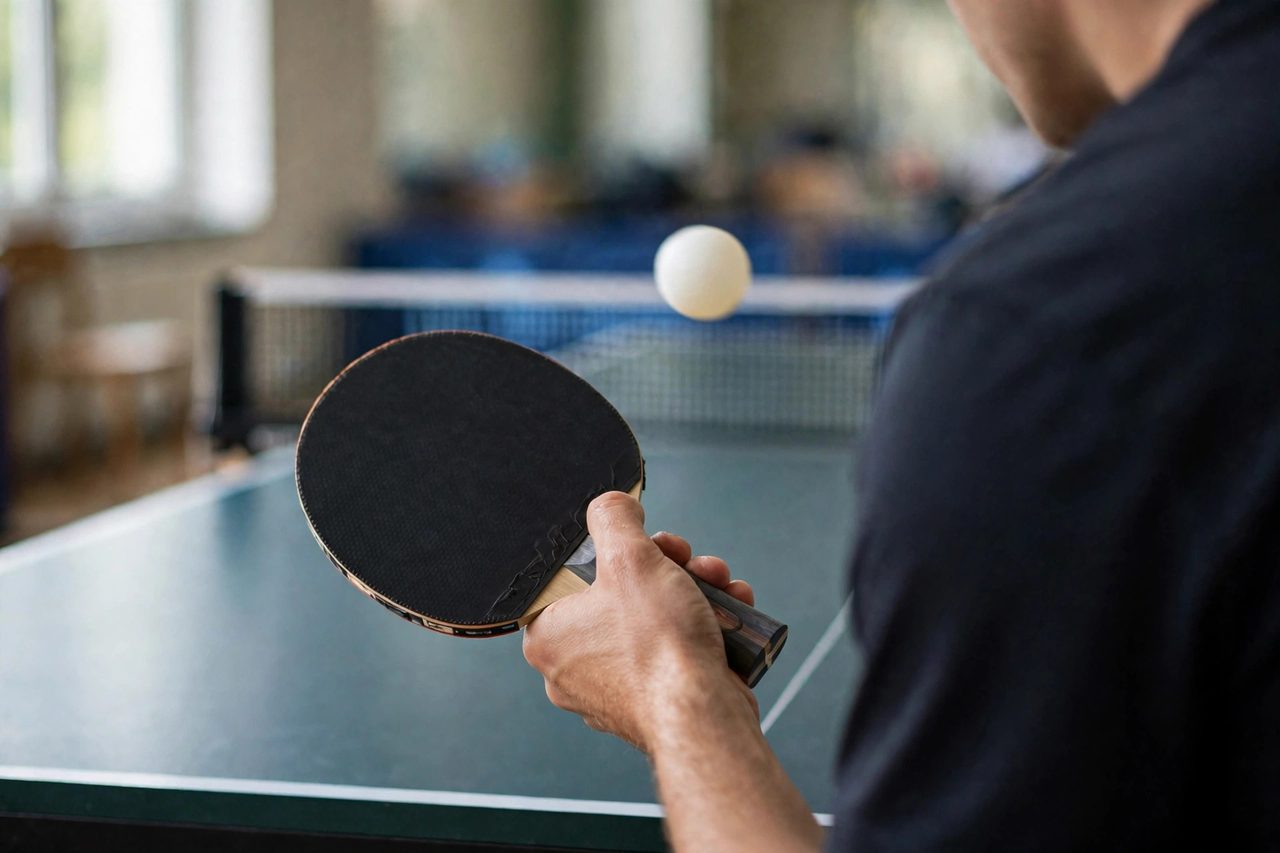
The Forehand Block: How to Turn Defence Into Attack in Table Tennis, Step by Step
A fast ball is coming at you and you have no time to swing. The forehand block is the answer: a short, firm return that uses your opponent's speed against them.
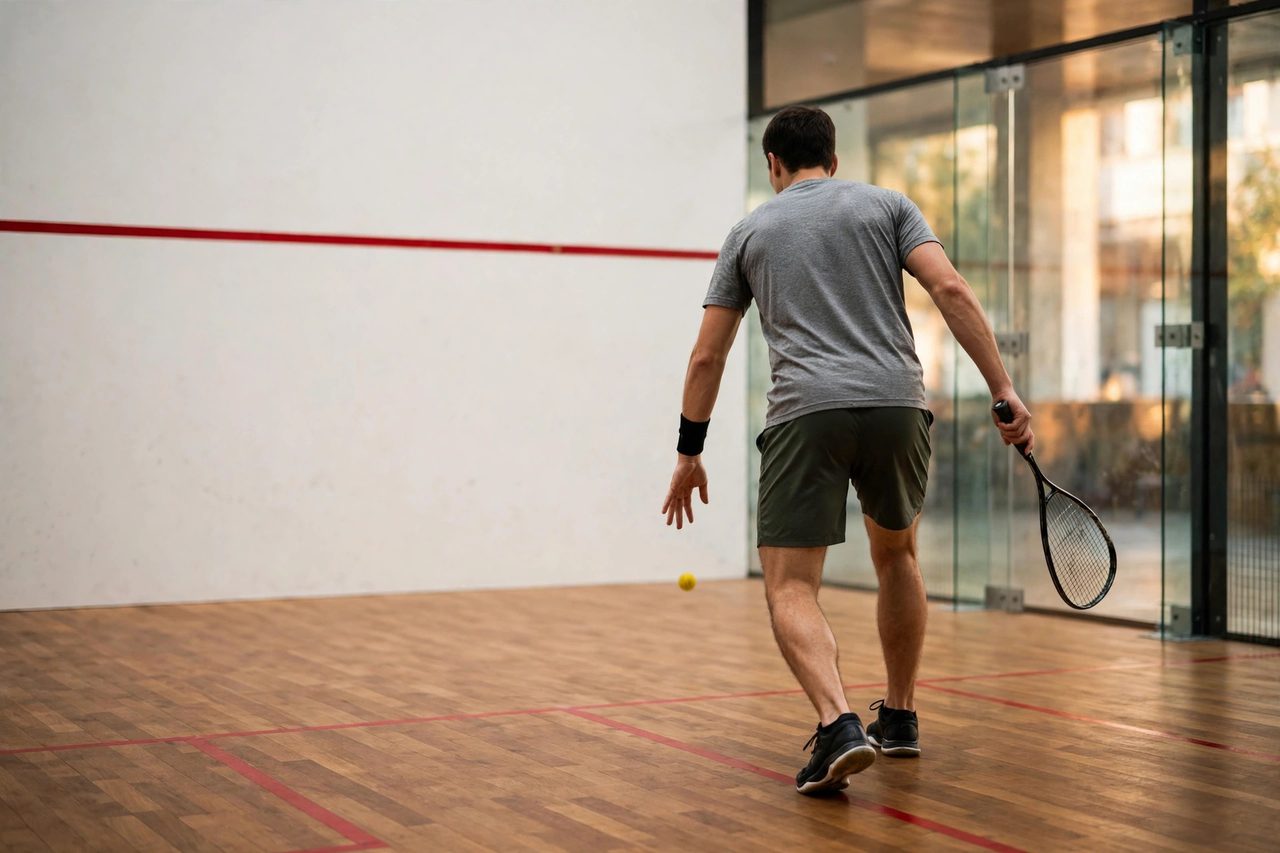
The Squash Serve: How to Start Every Rally With an Advantage, Step by Step
The serve is the one shot in squash you fully control. Here is how it works: the rules, the lob serve, the hard low serve, where to aim, and the drills that make it reliable.

The Squash Cross-Court: How to Stretch Your Opponent and Open the Court, Step by Step
The cross-court sends the ball diagonally across the court and drags your opponent out of position. Here's when to use it, how to hit it, and the drills that make it reliable.