
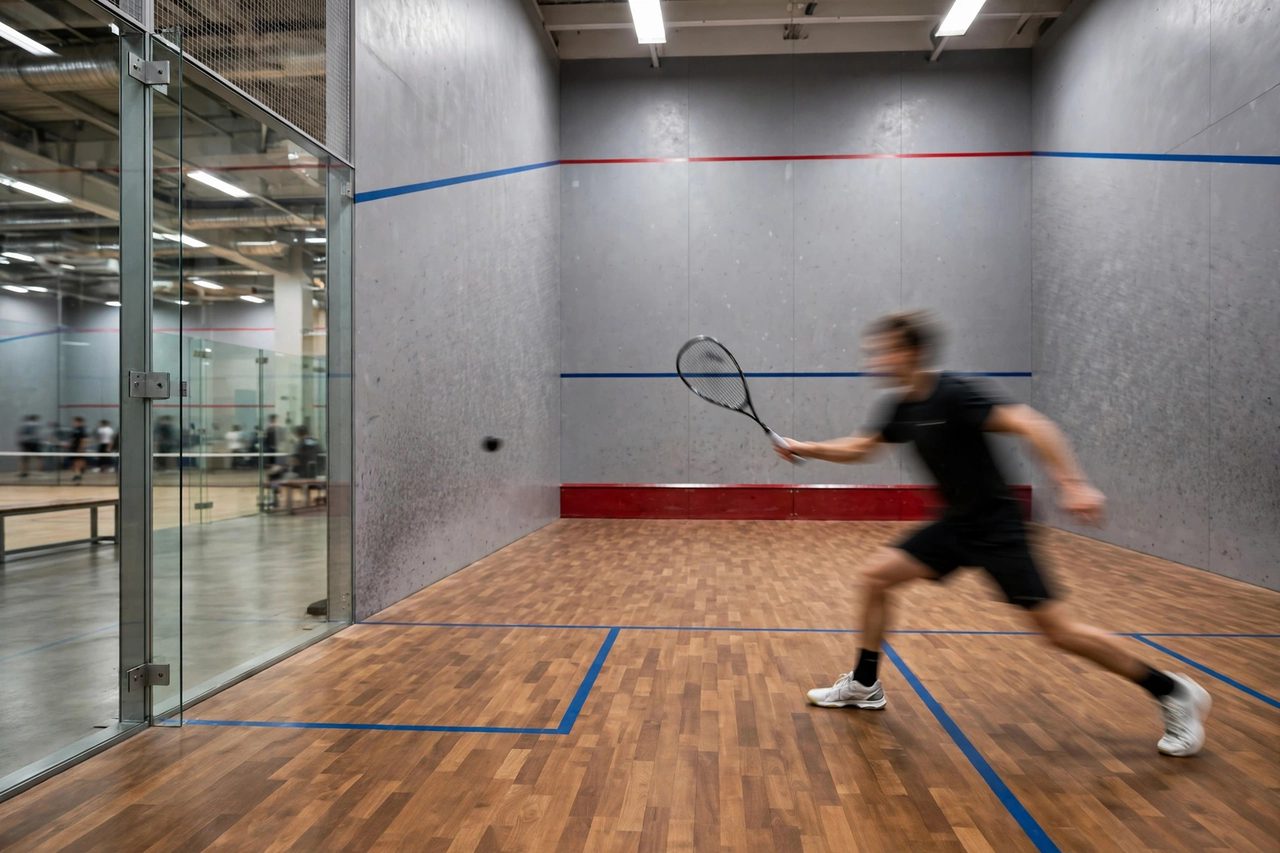
If squash had only one shot, it would be the straight drive. Hit hard and straight down the wall into the back corners, it is the shot that moves your opponent, buys you time, and sets up everything else. Professionals hit thousands of them in practice because matches are won on the quality of the basics.
Here is how to build a reliable straight drive, step by step.
1. The grip
Use the standard squash grip: hold the racquet as if shaking hands with it, with the V between thumb and forefinger sitting on top of the handle. The grip should be firm but relaxed — white knuckles are the enemy. A death grip kills wrist snap and touch, and tires the forearm within minutes.
2. The stance and preparation
As the ball travels to the back, turn sideways to the front wall, feet roughly shoulder-width apart, knees soft. Take the racquet back early with a short, compact backswing — the elbow stays close to the body, the racquet head up behind you.
The most common amateur mistake happens here: players arrive late and swing from an open stance, which sends the ball across the court instead of straight. If your preparation is late, the drive is already lost.
3. The swing
Swing through the ball in a smooth, level arc, contacting it slightly in front of your front foot and at a comfortable height — roughly knee to waist. The power comes from the rotation of the hips and shoulders plus a late snap of the wrist, not from a big arm swing.
Think “through the ball, not at it”: the follow-through should finish high and across, with the racquet ending up pointing toward the front wall.
4. The target
Aim for a spot on the side wall about a racquet’s length above the floor, so the ball dies in the back corner — ideally bouncing twice before your opponent can reach it. The perfect straight drive hugs the wall so tightly that it is nearly unplayable, forcing a weak return or a desperate boast.
Height matters as much as line. Too high and the ball sits up, inviting the volley; too low and you risk the tin. The classic target: firm, straight, dying in the back.
5. Common mistakes
- Cross-courting by accident: caused by an open stance or late preparation. Fix the feet first.
- Hitting too hard: beginners equate pace with quality. A medium-paced drive that hugs the wall beats a wild rocket every time.
- Standing too close to the ball: gives you no room to swing. Let it come to you, then step in.
- Forgetting to recover: after every drive, get back to the T. The shot only works as part of a system.
The drill that builds it
Stand in the back corner and hit 50 straight drives in a row, alternating forehand and backhand, counting only the ones that land in the back quarter. When you can hit 40 out of 50, move the target tighter to the wall. Professionals do this drill weekly. There is no shortcut — but there is also no better investment of practice time in squash.
Related articles

The Forehand Block: How to Turn Defence Into Attack in Table Tennis, Step by Step
A fast ball is coming at you and you have no time to swing. The forehand block is the answer: a short, firm return that uses your opponent's speed against them.

The Squash Serve: How to Start Every Rally With an Advantage, Step by Step
The serve is the one shot in squash you fully control. Here is how it works: the rules, the lob serve, the hard low serve, where to aim, and the drills that make it reliable.

The Squash Cross-Court: How to Stretch Your Opponent and Open the Court, Step by Step
The cross-court sends the ball diagonally across the court and drags your opponent out of position. Here's when to use it, how to hit it, and the drills that make it reliable.