
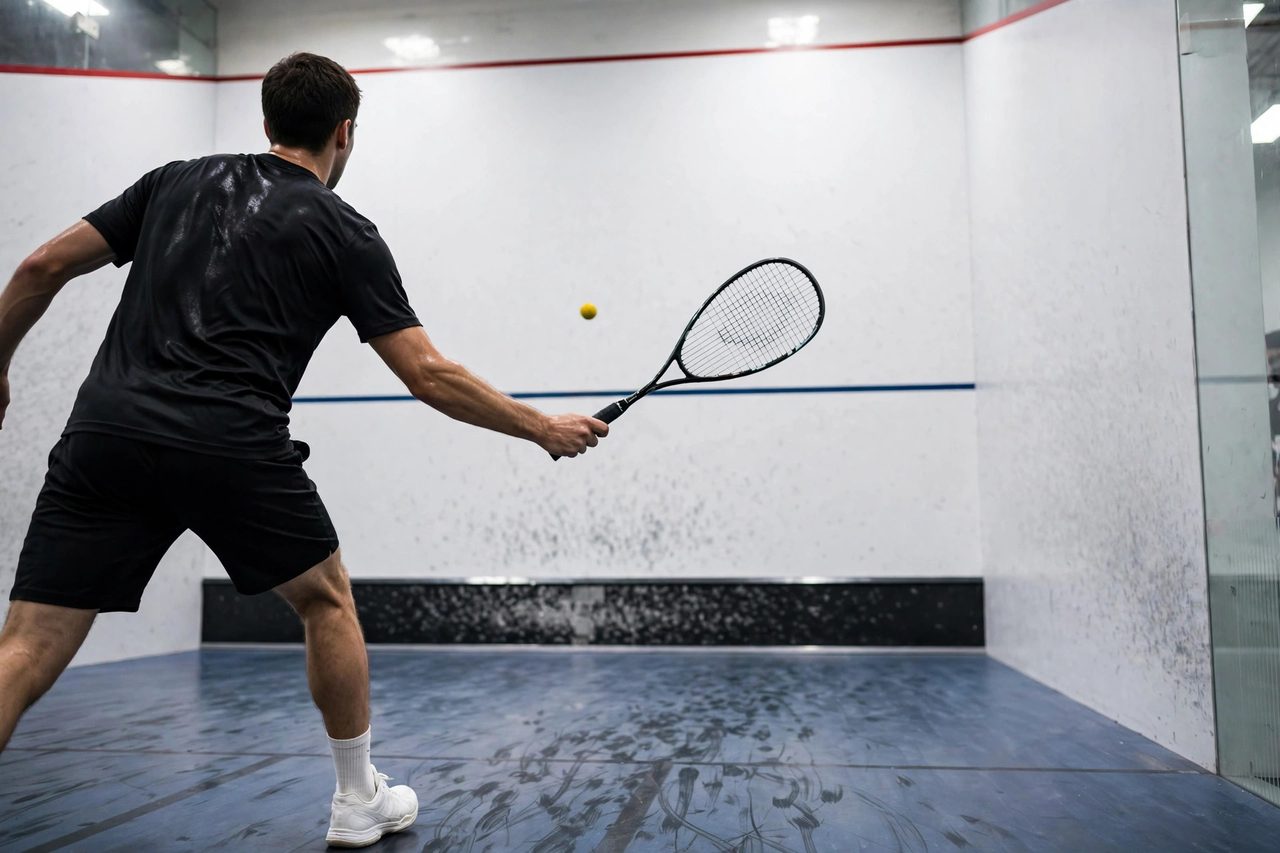
There is a moment in squash that every player dreams about. Your opponent hits a loose ball. You step in, take it early, and play it so softly that it dies in the front corner. Your opponent is still standing at the back of the court. The rally is over before they move.
That shot is the volley drop. It is one of the most satisfying shots in the sport, and one of the most useful. Here is how to learn it, step by step.
First, the words. A volley is when you hit the ball before it bounces. A drop shot is a soft shot that lands near the front wall and dies quickly, so your opponent has to sprint forward to reach it. Put them together, and a volley drop is a soft shot played before the ball bounces. Because you take it early, your opponent has even less time to react than they would against a normal drop.
Step 1: Get into position early
The volley drop starts with your feet, not your racquet. You need to be in the middle of the court, around the T. The T is the spot where the lines on the floor form a T shape, roughly in the centre of the court. From the T, you can reach every corner. If you are stuck at the back of the court, you cannot volley. The ball will bounce before you get to it.
Watch your opponent’s shot as soon as they hit it. If the ball is loose — meaning it is not tight to the side wall and not deep in the back corner — that is your chance. Move toward it quickly, but stay balanced. Short, quick steps are better than one big lunge.
Step 2: Take the ball in front of you
Meet the ball in front of your body, not beside it. If the ball gets past your shoulder, you have waited too long, and the volley drop becomes much harder. Your racquet should be up and ready before the ball arrives. A common mistake is to keep the racquet down by your waist and then rush it up at the last second. That rush makes the shot wild.
Keep your swing short. This is the most important rule of the volley drop. A normal drive uses a big swing. A volley drop uses almost none. Think of it as a gentle push with a short, controlled swing. The power comes from your opponent’s shot, not from you. Your job is to take that pace off the ball, not add to it.
Step 3: Open the racquet face
The racquet face is the flat hitting surface of the racquet. For a volley drop, you want it slightly open. That means the face tilts upward a little, like you are holding a tray. An open face lifts the ball softly over the tin and onto the front wall. The tin is the strip at the bottom of the front wall. If your shot hits the tin, you lose the point, so the ball must go above it — but only just.
If your racquet face is closed, meaning it tilts downward, the ball will go straight into the tin or into the floor. If it is too open, the ball will float high and sit up nicely for your opponent. You want a gentle angle: just open enough to lift the ball, not so open that it floats.
Step 4: Soften your grip and your wrist
Here is the secret of the shot. Loosen your grip at the moment you hit the ball. A tight grip sends the ball flying. A soft grip absorbs pace. Think of catching an egg: if your hand is stiff, the egg breaks. If your hand gives a little, the egg survives. Your racquet hand should give a little too.
Let your wrist stay relaxed. A stiff wrist pushes the ball too hard. A soft wrist lets the ball drop off the racquet like it has run out of energy. That dead feeling is exactly what you want. The ball should hit the front wall softly, drop to the floor close to the wall, and then barely bounce. The perfect volley drop bounces twice before your opponent can reach it. In squash, the ball is allowed to bounce once before it must be hit, so a second bounce means the rally is over.
Step 5: Aim for the corner, not the middle
Aim at the front corner on the same side as you are playing, or across to the far corner if you have the angle. The corner is your friend, because the side wall traps the ball. A drop played to the middle of the front wall gives your opponent a straight run at it.
Do not try to hit the nick. The nick is the tiny gap where the wall meets the floor, and a ball that hits it barely bounces at all. It is the perfect shot, but it is also a low-percentage shot, which means it rarely works even for professionals. Aim a little above the nick, and let the ball die naturally.
Step 6: Get back to the T
The moment you play the shot, move back to the T. Do not stand and admire it. Good opponents will sometimes reach a volley drop, and if they do, they will usually flick it somewhere awkward. If you are already back in position, you can deal with whatever comes back. If you are still standing near the front wall watching your shot, you are out of the rally.
Common mistakes
The biggest mistake is hitting too hard. Almost every beginner volley drop fails because the player swings too much. If your drops keep reaching the back of the court, shorten your swing and soften your grip.
The second mistake is volleying balls you should let bounce. If the ball is tight to the side wall or very low, let it bounce and play a normal drop instead. Volleying a bad ball usually ends in the tin.
A drill to try
Stand at the T with a partner. Have them feed you loose balls from the back of the court, one at a time. Your only job is to volley drop each one into the front corner. Ten minutes of this, twice a week, will change your game faster than any new racquet.
The volley drop is not a power shot. It is a touch shot, a thinking shot, and a confidence shot. Learn it, and you will win points that used to be lost causes. Your opponent will still be at the back of the court, wondering what just happened.
Related articles
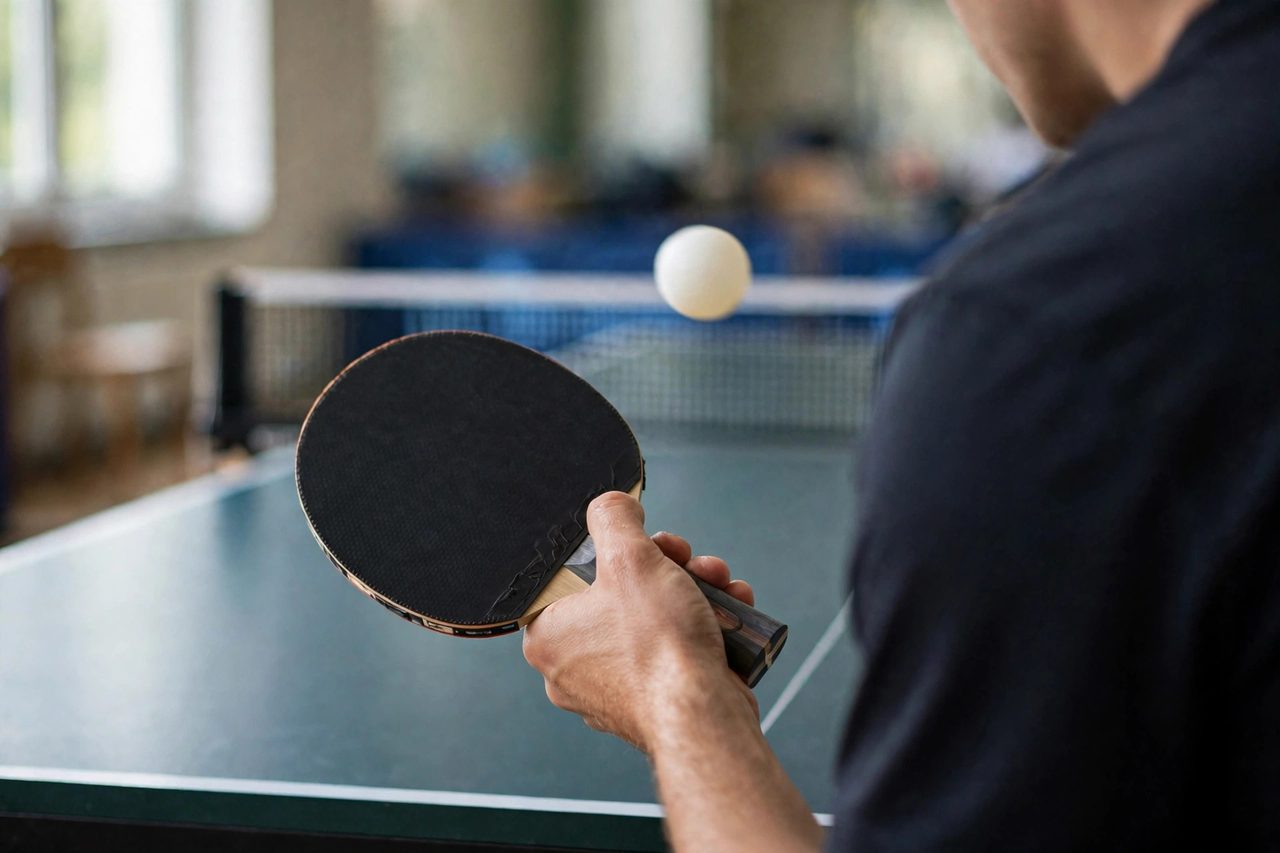
The Forehand Block: How to Turn Defence Into Attack in Table Tennis, Step by Step
A fast ball is coming at you and you have no time to swing. The forehand block is the answer: a short, firm return that uses your opponent's speed against them.
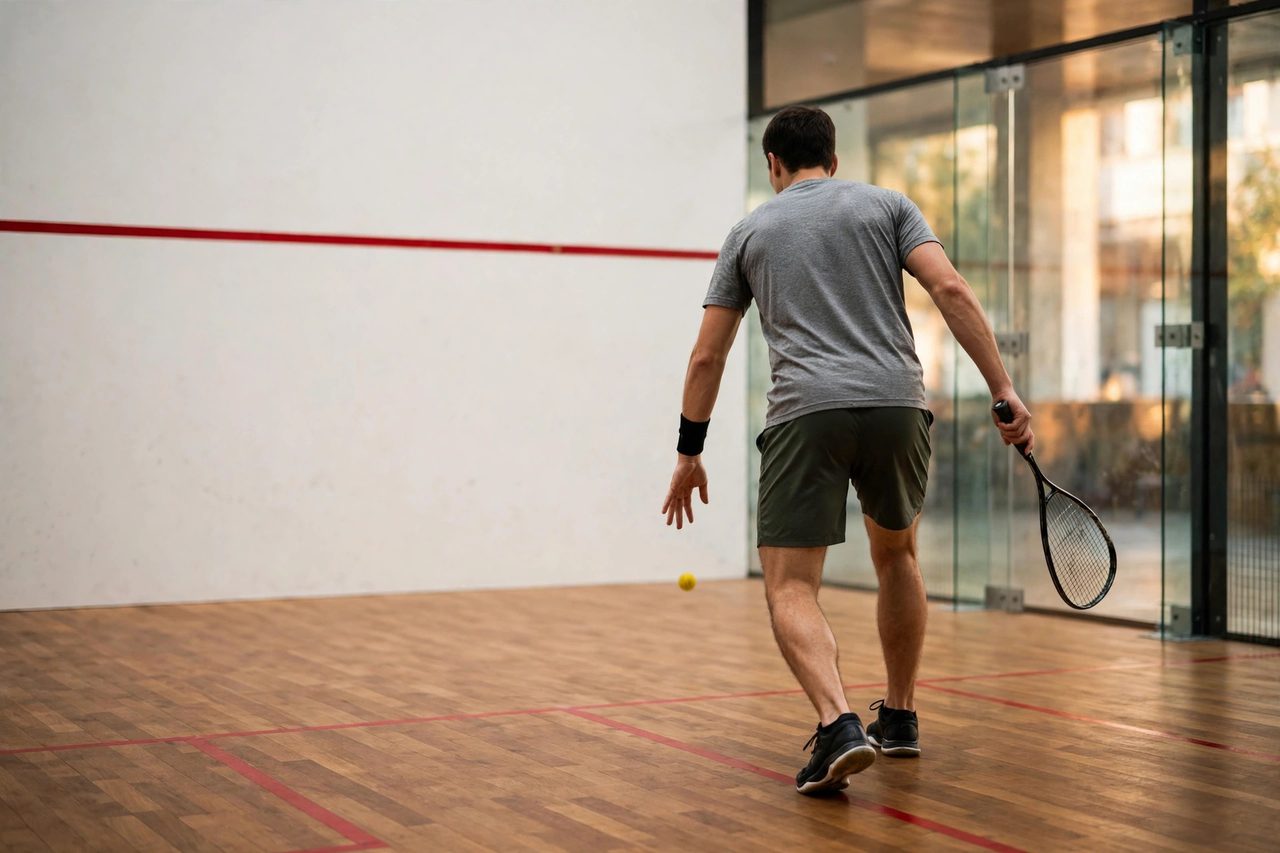
The Squash Serve: How to Start Every Rally With an Advantage, Step by Step
The serve is the one shot in squash you fully control. Here is how it works: the rules, the lob serve, the hard low serve, where to aim, and the drills that make it reliable.
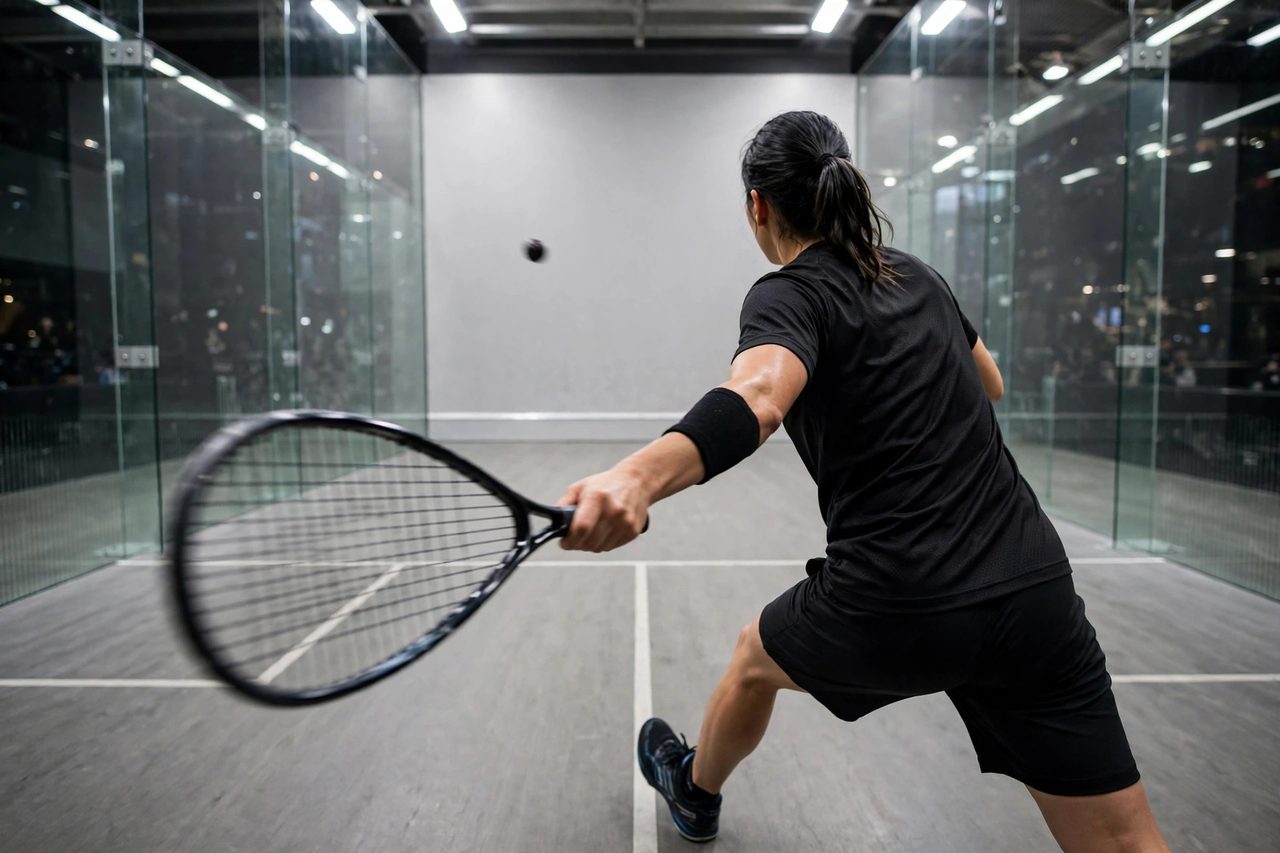
The Squash Cross-Court: How to Stretch Your Opponent and Open the Court, Step by Step
The cross-court sends the ball diagonally across the court and drags your opponent out of position. Here's when to use it, how to hit it, and the drills that make it reliable.