
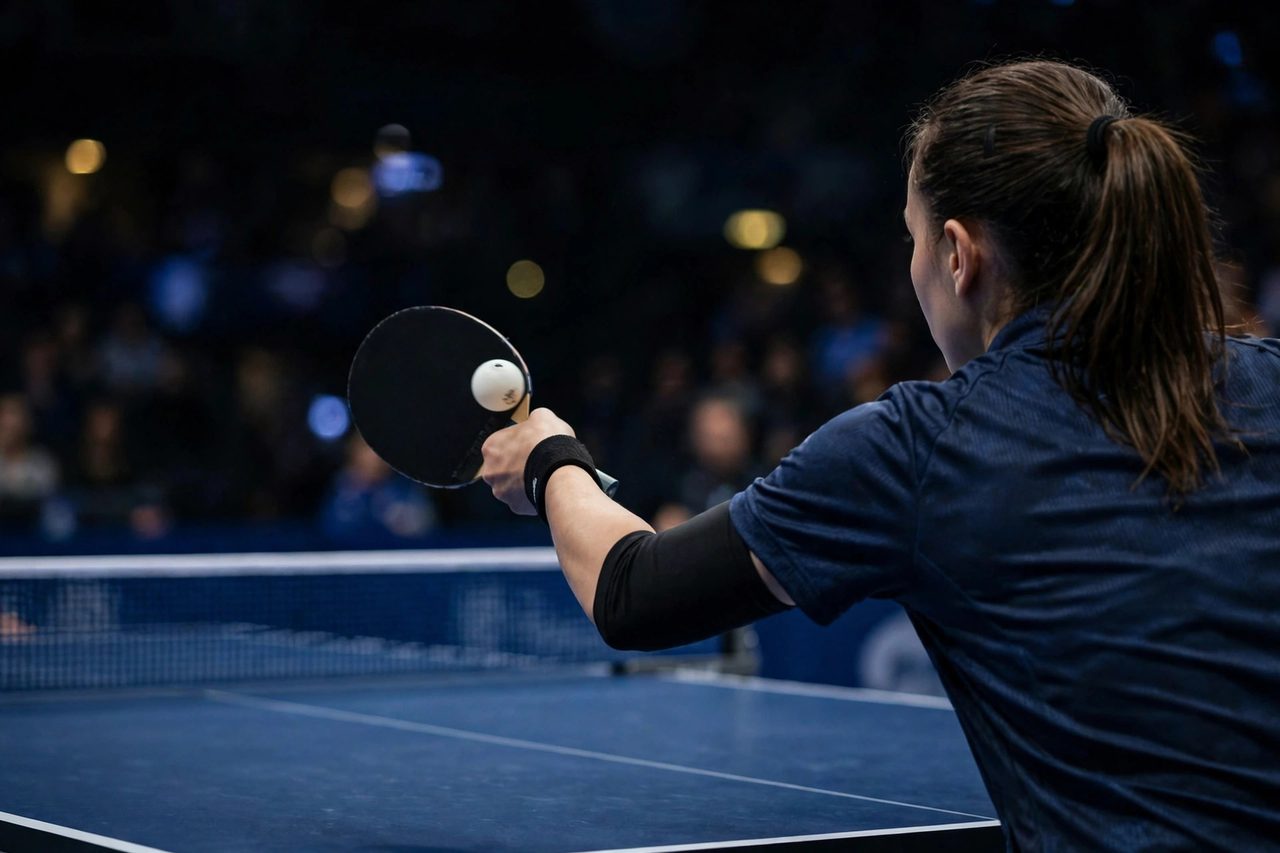
Japan’s women’s team pulled off the result of the week in Tashkent on Thursday, beating China 3-2 in the final of the 2026 ITTF-ATTU Asian Table Tennis Championships to take the women’s team crown.
Trailing 2-1 and one match from defeat, Japan won the last two rubbers to turn the final on its head. Defensive specialist Honoka Hashimoto did the damage at both ends of the tie: she swept China’s Chen Yi in straight games to open the scoring, then returned to win the deciding fifth match 3-1 over Wang Yidi and seal the title.
How the final unfolded
Hashimoto’s chop-heavy game gave Japan a dream start against Chen Yi. But China hit back through Wang Yidi, who edged Miwa Harimoto in a five-game contest to level the tie at 1-1. When Kuai Man then beat Hina Hayata 3-0, China stood one win from the title.
Miwa Harimoto kept Japan alive, beating Chen Yi in straight games to force a decider — and Hashimoto finished the job, completing the comeback against Wang Yidi and sparking Japanese celebrations.
Both teams had cruised through the semi-finals with 3-0 wins, China over South Korea and Japan over Chinese Taipei, setting up the heavyweight final the draw had promised.
A weakened China, but a real scalp
Context matters: China sent a youthful squad to Tashkent as part of a generational transition aimed at the 2028 Los Angeles Olympics, with established stars Wang Chuqin, Sun Yingsha and Wang Manyu all absent. Even so, beating China in a team final — at any strength — is a statement. China’s depth has been the sport’s defining fact for decades, and Japan’s women needed every bit of nerve to get past them.
It also underlines how the balance of power on the women’s side is shifting. Japan’s top end — built around the Harimoto siblings and a generation raised on high-tempo attacking table tennis — has been closing the gap for years. A 3-2 team-final win over China, sealed by a defensive specialist in the decider, is the kind of result that makes the rest of the world believe the gap is genuinely closable.
China still rules the men’s draw
There was no such drama in the men’s final. China beat South Korea 3-0 to claim a fourth consecutive men’s team title, having also won in 2023, 2024 and 2025.
Zhou Qihao gave China the lead with a 3-1 win over South Korean defensive specialist Kang Dong-soo, Lin Shidong swept Park Gyu-hyeon 3-0, and Xiang Peng sealed it 3-1 over Park Gang-hyeon. China had reached the final with a 3-1 semi-final win over Chinese Taipei, while South Korea had sprung a surprise by beating Japan 3-1 in the other semi — despite Japan fielding world No. 1 Sora Matsushima and third-ranked Tomokazu Harimoto.
China also enjoyed a productive day in the doubles events, with all six of its pairs advancing.
A pecking order in motion
Look past the single result and the shape of the women’s game is changing in plain sight. Japan’s depth is no longer a one-player story: Miwa Harimoto, still only a teenager, played two rubbers in the final and split them; Hina Hayata and the veteran defensive craft of Hashimoto give the team three genuinely different looks. That variety is what team events reward, and it’s what made the 3-2 scoreline possible.
China, meanwhile, is openly rebuilding. Sending a young squad to Tashkent — without Wang Chuqin, Sun Yingsha and Wang Manyu — was a deliberate choice with Los Angeles 2028 in mind. The men’s title showed the conveyor belt is still working. But the women’s final showed something else: the gap that used to make Chinese victories feel inevitable is now small enough for a disciplined, well-drilled Japan to cross on the right night.
What comes next
The championships run through Sunday in Tashkent, with the singles and doubles titles still to be decided. Japan’s women will arrive at those events with the wind at their backs — and China’s men, untroubled again, will expect to keep collecting. But Thursday belonged to Hashimoto and Japan: a 3-2 win that will be remembered as the night the women’s team order in Asia got a serious shake.
Related articles
Asal Survives a Wild Final to Win His First China Open as Sivasangari Takes the Title Without Playing
Mostafa Asal beat Mohamad Zakaria in a stop-start 108-minute final in Shanghai, while Sivasangari Subramaniam won the women's title after Satomi Watanabe fell ill.
Five Seeds Fall in One Wild Night at the China Open
Defending champion Mohamed Abouelghar lost 3-0 to world No. 56 Simon Herbert, former world No. 1 Mohamed ElShorbagy went out 3-0 too, and three more seeds fell on a chaotic second-round day at the China Open in Shanghai.
Makin Fights Back From Two Games Down to Keep His Pittsburgh Crown
Top seed Joel Makin lost the first two games of the Pittsburgh Open final, then won the next three to beat Marwan ElShorbagy 3-2 and defend his title.