
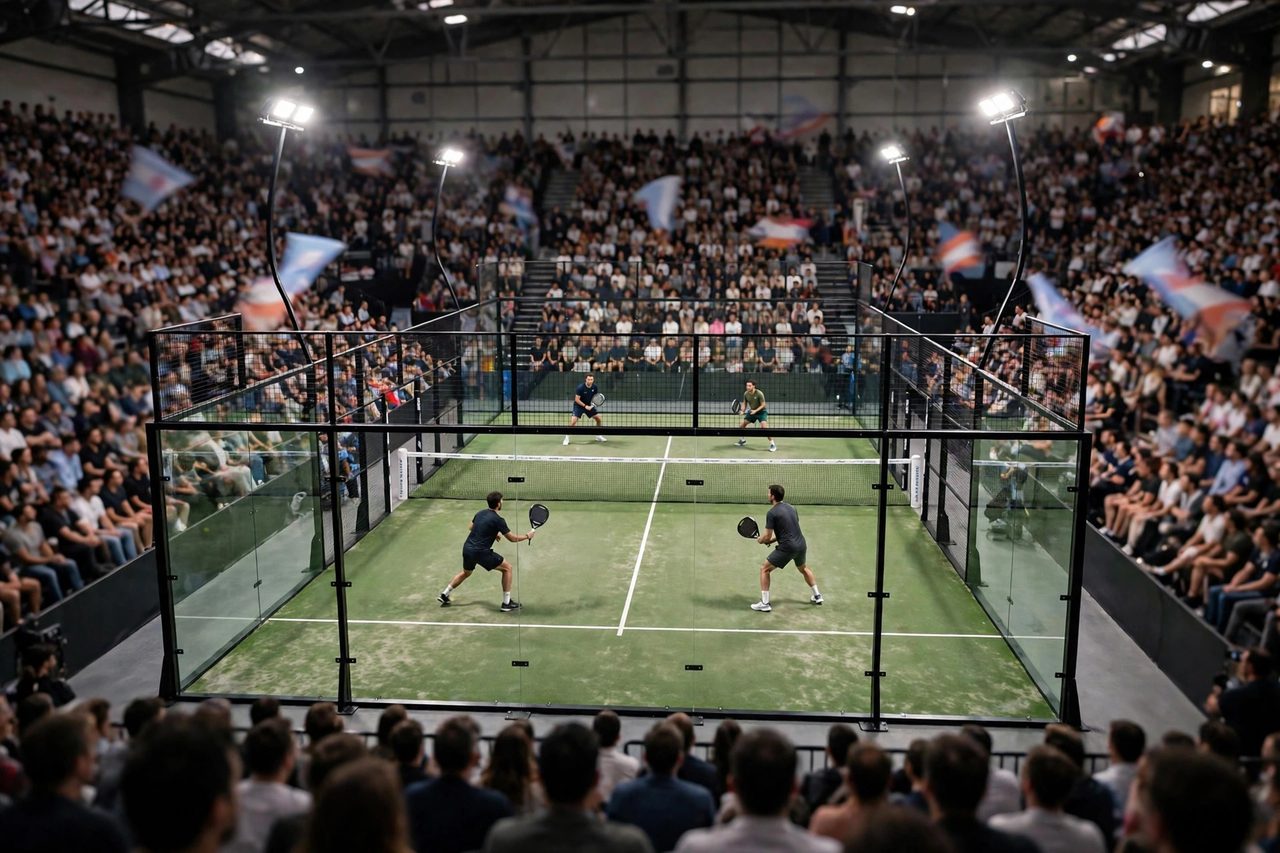
Padel’s biggest team event is nine days away. From 2 to 7 November 2026, the FIP World Cup takes over the Khalifa International Tennis and Squash Complex in Doha, where 32 national teams — 16 men’s and 16 women’s — will compete for the world titles. The prize fund is a record €1.2 million, split equally between the men’s and women’s competitions, the largest purse ever awarded in an official padel event. Here is how it works, and why it matters more than a normal tournament.
A World Cup, not a tour stop
The key difference is the format. Premier Padel events are individual: pairs enter, pairs win, pairs take the points. The World Cup is national teams. Each country fields a squad, and ties are decided across multiple matches between pairs from each team. That changes everything about how the week plays out: a country’s depth matters as much as its stars, captains make selection calls that become national talking points, and a lower-ranked pair can become a hero by winning the deciding rubber.
The FIP, padel’s world governing body, runs the event biennially — and it has now awarded both the 2026 and 2028 editions to Doha. The Qatari capital has become padel’s second home: it has hosted the Qatar Major on the Premier Padel circuit since 2022 and staged the last World Team Championships at the same Khalifa complex. The back-to-back award is a statement about stability — and about where the money in world padel now sits.
The favourites
The defending champions set the frame. Argentina’s men won the last edition and remain the team to beat: the country that invented modern padel’s professional structure produces depth no one else can match, and its pairs dominate both the Premier Padel rankings and the FIP circuit. On the women’s side, Spain are the defending champions, and with the deepest women’s player pool in the world — the Spanish domestic circuit alone could field two competitive teams — they start as favourites again.
But the chasing pack is closer than it has ever been. France’s men and women have both climbed rapidly on the back of the sport’s explosion at home — the country now counts hundreds of thousands of regular players — and the French federation has invested heavily in its national squads. Italy, Brazil, Portugal and Sweden all arrive with realistic ambitions of reaching the late rounds, and the format rewards depth: a country with three good pairs can beat a country with one great one.
Why the prize money matters
The €1.2 million purse — rising to €1.35 million for the 2028 edition — is more than a headline. It is distributed equally between the men’s and women’s events, a first at this level of padel and a deliberate signal from the FIP about the women’s game. For many of the players involved, national-team week is also one of the few times they are paid as representatives of their country rather than as independent professionals chasing tour points.
There is a longer game too. Padel’s leadership has made no secret of its Olympic ambitions, and a credible, well-funded, gender-equal World Cup is exactly the kind of event that strengthens that case. Doha 2026 is, in that sense, an audition as much as a championship.
What to watch
Watch the captains’ selections: which countries gamble on youth, and which stick with experience. Watch the doubles combinations — national teams often pair players who never play together on tour, and chemistry in a one-week event is unpredictable. And watch the crowds: the Khalifa complex has sold out for the Qatar Major, and a World Cup with flags in the stands brings a different atmosphere to padel — louder, more partisan, and closer to football than to tennis.
The World Cup starts on 2 November. For one week, padel stops being a tour and becomes a tournament of nations. That is when the sport is at its most emotional — and, often, at its best.
Related articles
Dubai P1: The Upset-Filled Week That Ended With Two New Champions
The Dubai P1 served up the wildest quarter-finals of the padel season, with the world No. 1s out and three first-time semi-finalists — then two new champions lifted the trophies.
How the FIP Tournament Ladder Works
Bronze, Silver, Gold and Platinum: a simple guide to padel's ladder below Premier Padel, and how players climb it.
Spain vs Argentina: The World Cup Final Padel Has Been Waiting For
Two finals, one rivalry, and a farewell: Spain and Argentina meet for both world titles in Doha, in a team event that turns padel's individual stars into national teammates.