
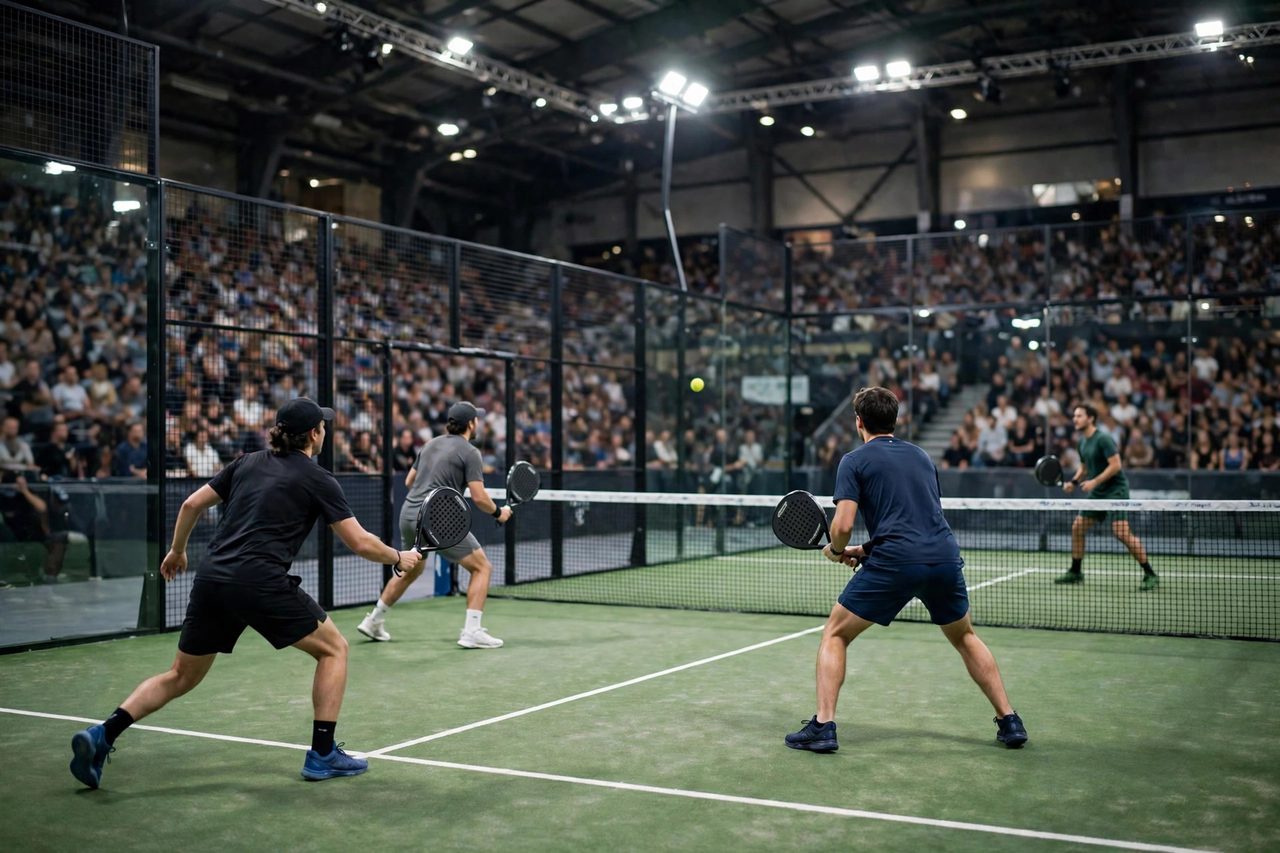
Every Monday, the International Padel Federation — the FIP, the sport’s world governing body — publishes a new ranking. It is a list of every professional player, ordered by points. It looks simple. Behind it sits a system that decides who gets into tournaments, who plays whom, and who ends the year as world No. 1. Here is how it works.
The basic idea
Players earn ranking points by winning matches in official tournaments. The further you go, the more points you get. Your ranking is the total of your best results over a rolling 52-week period. Rolling means old results drop off as new ones arrive: points from a tournament last for 52 weeks from the Monday after that tournament ends, then they disappear. Win the same event again and you defend your points. Lose early and your total falls.
In 2026, the ranking counts a player’s best 22 tournaments. From 2027, that number drops to 21, one of several changes the FIP and Premier Padel announced in June. The idea is to ease the pressure on players’ schedules. But the core stays the same: consistency over a full year beats one hot month.
The tournaments that count
Padel’s professional season has two layers, and both feed the same ranking.
The top layer is Premier Padel, the main world tour. Its events come in four sizes. A Major is the biggest — one of four per season, including Kuwait this week — and pays 2,000 points to the winners, 1,200 to the finalists, 720 to the semi-finalists and 360 to the quarter-finalists. A P1 is the next level down: 1,000 points to the winners, 600 to the finalists. A P2 pays 600 to the winners and 360 to the finalists. The season-ending Premier Padel Finals, contested by the year’s best players, pays 1,500 points to the winners.
The second layer is the CUPRA FIP Tour, the development circuit underneath Premier Padel. Its events are smaller and pay fewer points: a FIP Platinum pays 300 points to the winners, a FIP Gold 150, a FIP Silver 80 and a FIP Bronze 40. These are the events where young players and lower-ranked pairs earn their way up. A Gold title, like the one Lucas Bergamini and Jairo Bautista won in Melilla last weekend, is worth 150 points — small next to a Major, but enough to move a player ranked in the twenties up the ladder.
Even early-round wins pay. At a Major, reaching the round of 64 — the first full round of the main draw — is worth 35 points, and qualifying for the main draw earns a bonus on top. That is why players fight so hard in qualifying: every point counts, and a main-draw appearance at a Major is worth more than winning some smaller events outright.
What the ranking decides
The ranking decides three things that shape every tournament.
First, entry. The best-ranked pairs get straight into the main draw of big events. Lower-ranked pairs must play qualifying matches first, and the lowest-ranked do not get in at all. That is why a player ranked 71st in the world, like France’s Dylan Guichard, treats direct entry into a Major main draw as a career milestone.
Second, seeds. A seed is a ranking-based place in the draw. The top pairs are spread across the draw so they cannot meet each other early. At a Major, the top four seeds are kept apart until the semi-finals. That protects the best pairs — and it protects the tournament, because it keeps the biggest matches for the biggest stage.
Third, the race. The ranking is published weekly, but it also feeds the season-long race to the Finals. Only the year’s best players qualify for the Premier Padel Finals, where 1,500 points and the biggest prize money of the season are on offer. That is why the late-season Majors matter so much: with 2,000 points each, they can still change who qualifies.
Why it matters to fans
The ranking explains things that otherwise look strange. It explains why a pair ranked No. 2 can withdraw from a Major, as Galán and Chingotto did in Kuwait, and still stay near the top — their 52-week total absorbs one missed event. It explains why a pair ranked in the twenties celebrates a Gold title like a trophy — because 150 points can be the difference between qualifying and direct entry at the next big event. And it explains why the final weeks of the season feel so tense: points are expiring, places at the Finals are on the line, and every match moves someone up or down.
Follow the points and the sport starts to make sense. The ranking is not just a list. It is the map of padel’s season.
Related articles

Dubai P1: The Upset-Filled Week That Ended With Two New Champions
The Dubai P1 served up the wildest quarter-finals of the padel season, with the world No. 1s out and three first-time semi-finalists — then two new champions lifted the trophies.

How the FIP Tournament Ladder Works
Bronze, Silver, Gold and Platinum: a simple guide to padel's ladder below Premier Padel, and how players climb it.

Spain vs Argentina: The World Cup Final Padel Has Been Waiting For
Two finals, one rivalry, and a farewell: Spain and Argentina meet for both world titles in Doha, in a team event that turns padel's individual stars into national teammates.