
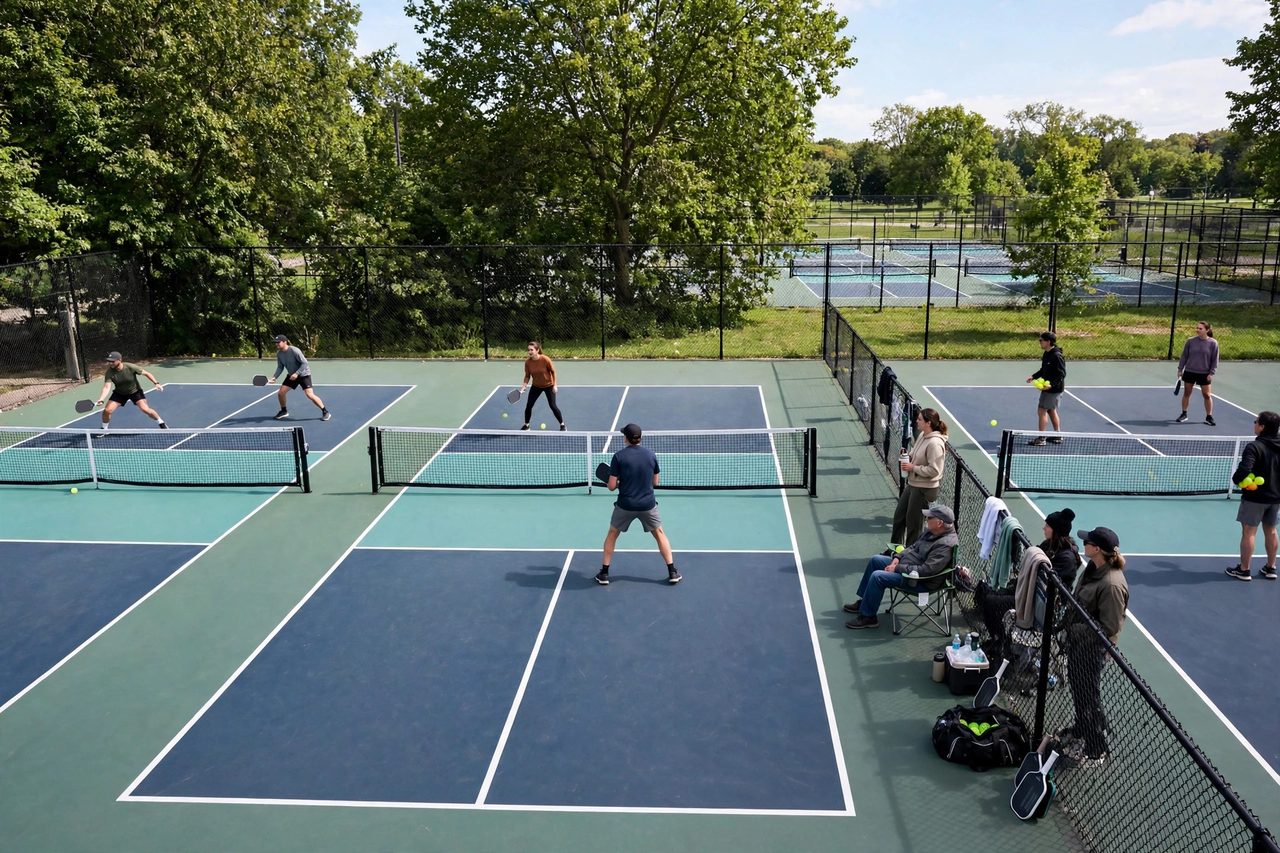
Every major sport has a minor league with a door to the big show. In pickleball, that door is the PPA Challenger Series, powered by JOOLA — the Professional Pickleball Association’s developmental circuit, built to turn ambitious amateurs and fringe pros into Carvana PPA Tour regulars. Here is how the machine actually works.
The concept: a Korn Ferry Tour for pickleball
The pitch is simple. The main PPA Tour is where the top 20 players in the world compete for the biggest purses and the television slots. The Challenger Series is the structured pathway underneath it — national, grassroots-flavored, and designed so that winning on it demonstrably earns you a shot at the top level.
“Our primary charge at the PPA is to grow the game,” said Connor Pardoe, the founder and CEO of the Carvana PPA Tour, at the series launch. “By creating more opportunities for amateur players as well as developing a structured pathway to the Carvana PPA Tour for aspiring professionals, the PPA Challenger Series powered by JOOLA is another avenue through which we can further this mission.”
Think of it as golf’s Korn Ferry Tour: the finishing school whose graduates earn playing privileges on the main circuit. Pickleball’s version even borrowed the mechanics — including, as of the latest season, the tour-card concept.
Who can play, and what it costs to win
The pro divisions are deliberately fenced. To enter a Challenger Series pro division, a player cannot be ranked in the PPA Tour’s top 20 at the close of entry — anyone outside the top 20 is eligible. That keeps the established stars out and the opportunity real for the next tier.
Each stop carries a $10,000 prize purse for the pro divisions, and the weekend format is standardized: Friday through Sunday, with singles on Friday, doubles on Saturday and mixed doubles on Sunday. Amateurs play on the same schedule as the professionals, at the same venues — dedicated pickleball facilities across the country — which is part of the appeal: you can watch the future of the pro game from the next court over.
The points ladder
The ranking system is where the pathway gets teeth. Points are awarded deep into every draw: 125 for the winner, 100 for the finalist, 75 for third, 50 for fourth, 25 for the quarter-finals, 12 for the round of 16, 6 for the round of 32 and 3 for the round of 64. A player’s best 16 Challenger Series pro events count toward their leaderboard ranking.
Crucially, the ladder points in both directions — but only one way each. Challenger Series points count in the Carvana PPA Tour rankings; points earned on the PPA Tour do not count toward Challenger Series standings. And every Challenger Series event winner earns the right to choose one PPA Tour Open event for direct entry into the main draw, with a maximum of two challenger winners per draw per tournament.
For 2026 the series spans more than 15 stops, and four of them — Punta Gorda, Newport Beach, Seattle and Grand Rapids — were elevated to 250-point events, designed to pull current PPA pros down into the field and let the prospects measure themselves against the real thing.
The Gold Card and the season showdown
The newest wrinkle is the Gold Card system, pickleball’s answer to golf’s tour card. The season builds toward the PPA Challenger Dallas Showdown, where the top finishers in each discipline become eligible for a Gold Card — the credential that governs main-tour access. Players without one must go through qualifying rounds no matter their ranking, a rule that has already created controversy: established pros ranked in the twenties have found themselves playing qualifiers because unsigned players hold the cards and they don’t.
The laboratory: narrower singles courts
The Challenger Series also serves as the PPA’s rules laboratory. In 2026 the tour began trialing narrowed singles courts at Challenger events — reducing the court width from the standard 20 feet to 17 feet for professional singles matches, starting with the Houston Challenger. The goal is to curb power-serving dominance and encourage longer, more tactical rallies. Reaction has been split: some see longer cat-and-mouse points, others see more missed shots and fewer rallies. Either way, the experiments happen here first, not on the main tour.
Why it matters
Before the Challenger Series, the route from good amateur to touring pro was informal — play everything, hope someone noticed. Now it is a system: win 125-point events, climb a published leaderboard, take your main-draw exemptions, and arrive at the Dallas Showdown with a Gold Card on the line. It is the least glamorous and most important innovation in professional pickleball’s structure — the part of the sport that decides who gets to be seen.
Related articles
Dubai P1: The Upset-Filled Week That Ended With Two New Champions
The Dubai P1 served up the wildest quarter-finals of the padel season, with the world No. 1s out and three first-time semi-finalists — then two new champions lifted the trophies.

How the FIP Tournament Ladder Works
Bronze, Silver, Gold and Platinum: a simple guide to padel's ladder below Premier Padel, and how players climb it.

Spain vs Argentina: The World Cup Final Padel Has Been Waiting For
Two finals, one rivalry, and a farewell: Spain and Argentina meet for both world titles in Doha, in a team event that turns padel's individual stars into national teammates.