
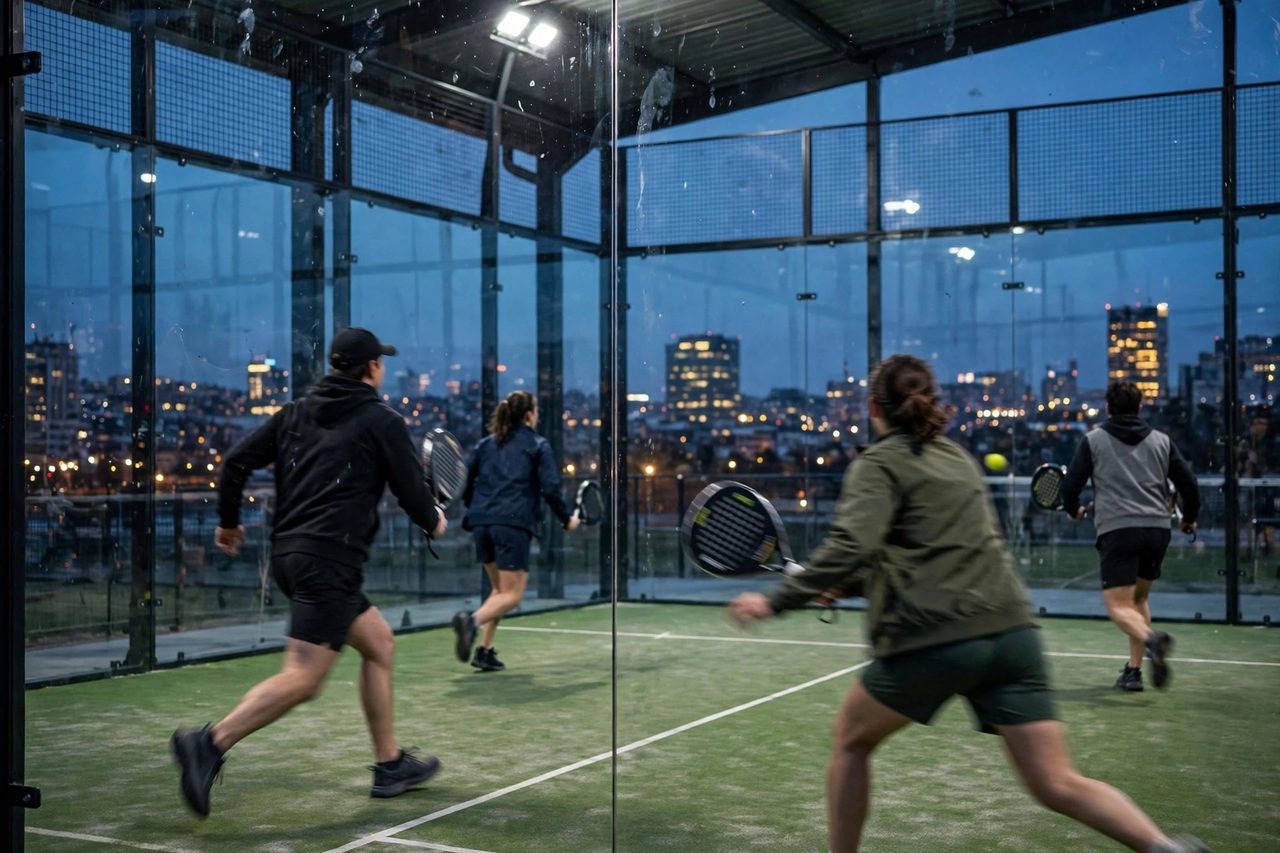
On a weekday evening in Madrid, four friends split the cost of a glass-walled court, play ninety minutes of padel, then stay for a drink at the club bar. On the same evening in Phoenix, a few dozen strangers rotate through free public pickleball courts, paddles lined up along the fence to mark whose turn is next. Both scenes repeat thousands of times a night. Both sports are booming at a speed racquet sports have never seen. And yet, until very recently, the two booms barely touched each other.
Padel and pickleball are the twin miracles of modern racquet sport: one conquered Europe, Latin America and the Middle East, the other conquered North America, and each did it with an almost opposite idea of what a sport should be. One is a business built on clubs, bookings and glass. The other is a movement built on park courts, open play and a paddle that costs less than a nice dinner. Understanding how they split the world explains a great deal about where racquet sports go next.
Two inventions, two temperaments
The sports were born four years and a continent apart. Pickleball came first, in the summer of 1965, on Bainbridge Island in Washington state, where congressman Joel Pritchard and his friends Bill Bell and Barney McCallum improvised a game to entertain bored families, using a badminton court, table-tennis paddles and a perforated plastic ball. It was a backyard pastime, and for half a century that is mostly what it remained.
Padel arrived in 1969, in Acapulco, where businessman Enrique Corcuera built a walled court in his garden. In 1974 his friend Alfonso de Hohenlohe carried the game to his Marbella hotel, and Spain adopted it with an enthusiasm that never cooled. Argentina took it up in the 1980s and turned it into a national obsession before an economic crash deflated the bubble there. The Spain–Argentina axis still supplies most of the professional game’s stars.
So the temperaments were set early. Pickleball was a folk game that spread by word of mouth and cost almost nothing to start. Padel was a club game from birth: it needed a purpose-built cage of glass and mesh, and whoever built the cage needed customers to pay for it.
The map, in numbers
The split is stark in the data. The International Padel Federation’s 2025 world report counts more than 35 million padel players, over 77,000 courts and more than 24,600 clubs across 150 countries. Spain alone has roughly 17,000 courts — more than the country has tennis courts, by some counts — while France has passed 4,500 courts and some 850,000 players. Stricter counts that only include regularly active players put padel’s global playing base closer to 20 million, but by any measure the centre of gravity sits in Europe and Latin America, with the Gulf states building courts at a furious pace.
The construction numbers underline how young this industry still is. The same federation report counted more than 14,000 new padel courts built worldwide in a single year, 2025 — a building rate that took tennis a century to match at its peak. The professional circuit follows the money: Premier Padel stages events in Riyadh and Doha as well as Madrid and Buenos Aires, and new clubs are opening from Stockholm to São Paulo to Dubai, often in converted warehouses and retail parks rather than traditional sports grounds.
Pickleball’s numbers are narrower geographically and bigger at home. The Sports & Fitness Industry Association (SFIA) counted 19.8 million American players in 2024 and 24.3 million in 2025, naming pickleball the fastest-growing sport in the United States for the fifth straight year. USA Pickleball’s database listed more than 68,000 known courts by the end of 2024. Outside North America, pickleball exists — there are growing scenes in Britain, Australia and parts of Asia — but it remains a niche pursuit in most of the world.
The crossover has begun, though. The SFIA also counted just over a million Americans playing padel in 2025: a small number next to pickleball’s, but unthinkable a decade ago, and concentrated in exactly the affluent urban markets where American clubs are now racing to build glass courts.
Why the models diverged
Geography did some of the work — padel had a fifty-year head start in the Spanish-speaking world, pickleball in the American suburbs — but economics did the rest. A padel court is infrastructure. The glass, steel and artificial turf cost real money, so padel grew through private clubs that sell court time, usually in ninety-minute blocks, booked through apps and split four ways. The club adds coaching, leagues, a bar and a social calendar, and the sport becomes an evening out as much as a workout. Spain’s tennis and sports-club culture was ready-made soil for that model.
Pickleball needed almost nothing: a flat surface, painted lines, a portable net. American parks departments could convert a tired tennis court in a weekend, and did, by the thousand. Around those free courts grew pickleball’s defining institution, open play — turn up alone, put your paddle in the rack, rotate in. No membership, no booking, no dress code. Where padel sells a product, pickleball built a commons.
Each model has a shadow side. Padel’s pay-per-play clubs can price out the casual curious, and the sport’s growth depends on investors continuing to build expensive cages. Pickleball’s free-court commons is permanently short of courts, which means queues, crowded sessions and fights over who the public courts are really for.
The pandemic poured the fuel
Neither boom is new — both sports were growing steadily through the 2010s — but the pandemic years were the accelerant, in opposite ways on opposite sides of the Atlantic. In Europe, padel was almost perfectly designed for lockdown-era rules: outdoors or airy indoor halls, four players, natural distance between them, and a social format that replaced every other cancelled plan. Courts that had been a Spanish specialty suddenly appeared across Sweden, Italy, the Netherlands and France, as investors rushed to meet demand from people desperate for exercise that felt like a night out.
In the United States, the same years emptied the gyms and filled the driveways and cul-de-sacs. Pickleball could be played in a street, a parking lot or a park with a portable net, and it spread the way neighbourhood crazes spread — one converted sceptic at a time, each dragging friends and family along. Sports retailers sold out of paddles. By the time normal life resumed, both sports had crossed the line from novelty to habit, and habits are what the numbers since then have measured.
Two crowds
The demographics tell the same story of opposites converging. Pickleball spent decades stereotyped as a retirement-community pastime, and its early growth really was driven by older players. That picture is now badly out of date: the SFIA’s data puts the largest group of players in the 25-to-34 bracket, with the average player in their mid-thirties. The pandemic pulled younger, sportier players in, and they stayed.
Padel’s core crowd was always the after-work generation: urban professionals in their twenties, thirties and forties who wanted competitive sport that doubled as a social life. It is almost always doubles, it is easy to be decent at it quickly because the walls forgive bad shots, and in Spain and increasingly in France it functions as a standing weekly appointment — the match, then the drink, then the group chat about the match.
Both sports are also notably balanced between men and women by racquet-sport standards. Industry figures put women at more than 40 percent of pickleball’s American player base, and padel’s club scene across Europe draws a similarly mixed crowd, with women’s leagues and social sessions among the fastest-filling slots on club calendars. At the junior end, pickleball organisers counted more than a million American children taking up the game in a single recent year — a pipeline neither sport has ever had before.
Both sports, notably, pull in people who never played racquet sports at all. That may be their deepest shared trait: each lowered the embarrassment barrier that tennis never could. A beginner can rally in their first padel or pickleball session. A beginner at tennis mostly practises picking up balls.
Friction: noise, courts and the tennis question
Success has made both sports enemies. Pickleball’s enemy lives next door. The hard paddle striking a plastic ball makes a sharp pop that carries, and courts installed near homes have triggered years of noise complaints, restricted hours, lawsuits and, in some places, closures. Manufacturers now sell quieter paddles, and governing bodies have created quiet-equipment categories — an industry quietly admitting the sound is a genuine problem. Padel is not immune: outdoor courts in Spanish residential areas have drawn their own noise battles, though glass walls and club settings contain much of it.
The bigger fight is with tennis, the sport both are accused of eating. At Wimbledon in 2024, Novak Djokovic warned that at club level “tennis is endangered,” pointing out the simple maths: you can fit three padel courts in the space of one tennis court, so clubs make more money converting. Thousands of American tennis courts have been repainted for pickleball, and tennis federations have begun answering back — the USTA, for instance, promotes a gentler entry game called Red Ball Tennis, a defensive move that would have been unthinkable ten years ago.
Yet the traffic runs both ways. Plenty of tennis players now play both, retired tennis pros have crossed over — former top-ten player Jack Sock retired from the tennis tour in 2023 and turned professional at pickleball — and tennis clubs that add padel or pickleball courts often find their tennis membership stabilises rather than shrinks. The pie, it turns out, can grow.
The money behind the glass
Booms attract capital, and the two sports attracted different kinds. Padel’s professional game was consolidated from above: Qatar Sports Investments launched Premier Padel in 2022, bought the rival World Padel Tour in 2023, and from 2024 the sport has had a single global circuit backed by sovereign money. Underneath it sits a property business — clubs, franchises and court builders — that boomed so hard in Sweden after the pandemic that the market overheated and clubs closed, a cautionary tale the industry now studies carefully.
Pickleball’s money arrived from below and fought a civil war on the way in: celebrity team owners, rival leagues and a merger saga that deserves its own article. The contrast is typical. Padel behaves like European football — federations, clubs, a single tour. Pickleball behaves like an American start-up — leagues, franchises and valuations. Both approaches have produced the same result: serious money betting that the boom is permanent.
Where each goes next
The obvious next chapter is invasion. Padel is pushing hard into the United States, with clubs opening in Miami, New York, Texas and California, targeting exactly the young professional crowd that made it in Madrid and Paris. Pickleball is pushing outward, planting federations and tournaments in Europe and Asia, where it starts from a tiny base but grows quickly wherever courts appear. Each sport is expanding into the other’s fortress — and discovering that the fortress was built for a different game. American players expect pickleball to be nearly free; European players expect padel to come with a clubhouse.
Neither sport is on the Olympic programme, though both want to be. Padel, with its federation structure and a place at the 2023 European Games, looks institutionally closer; pickleball has the bigger participation story to tell. Whoever gets there first will claim the other’s territory is next.
For now, the net in the middle of both courts neatly divides the planet. On one side, glass walls, booking apps and the third half at the club bar. On the other, painted lines, a paddle in the rack and a game with whoever shows up. The two booms split the world because they answered the same question — how do you make racquet sport easy, social and habit-forming? — in opposite ways. The race of the next decade is which answer travels better.
Related articles
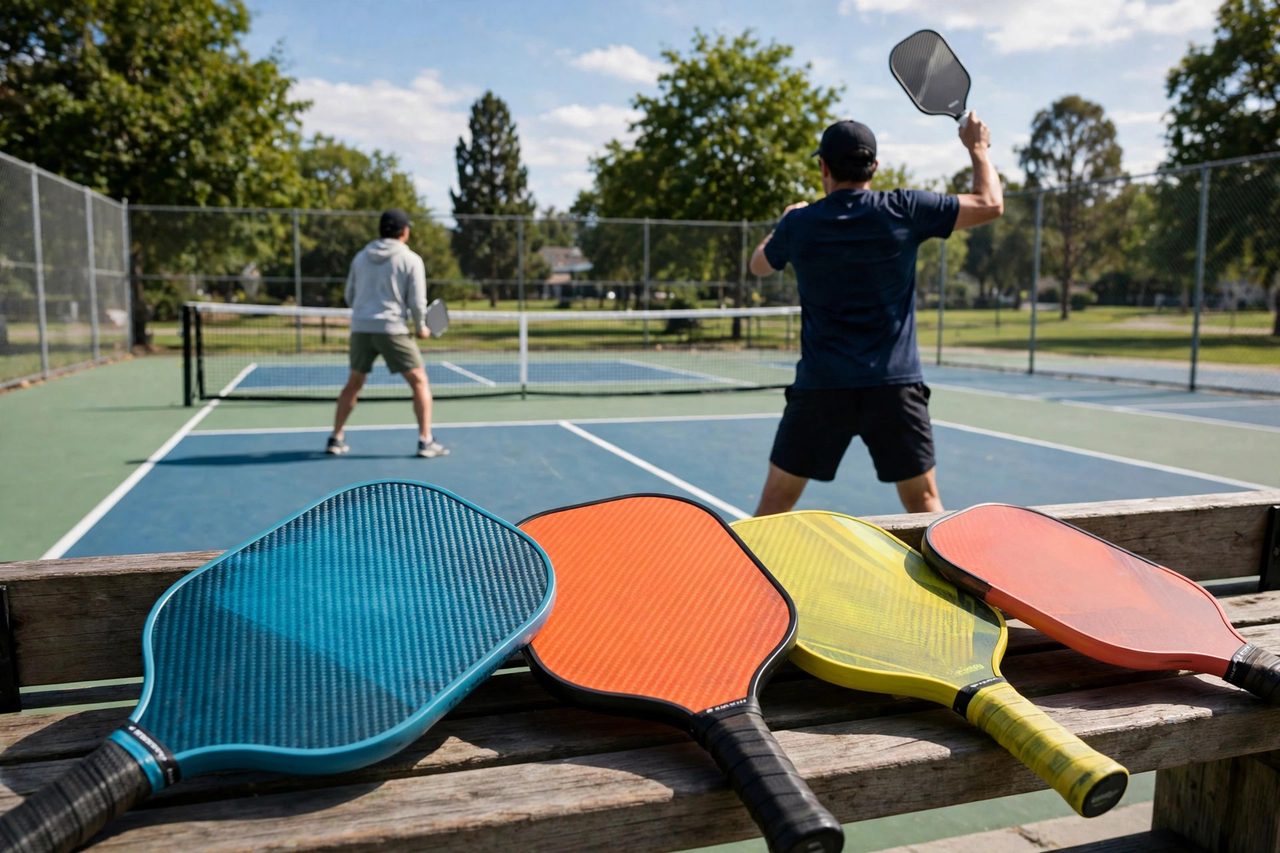
Pickleball's Billion-Dollar Paddle Boom: How a Backyard Game Became Big Business
Sixty years ago, the first pickleball paddles were plywood boards cut in a basement. Today they are $200 carbon-fibre pro gear, and the paddle business is worth about a billion dollars a year.
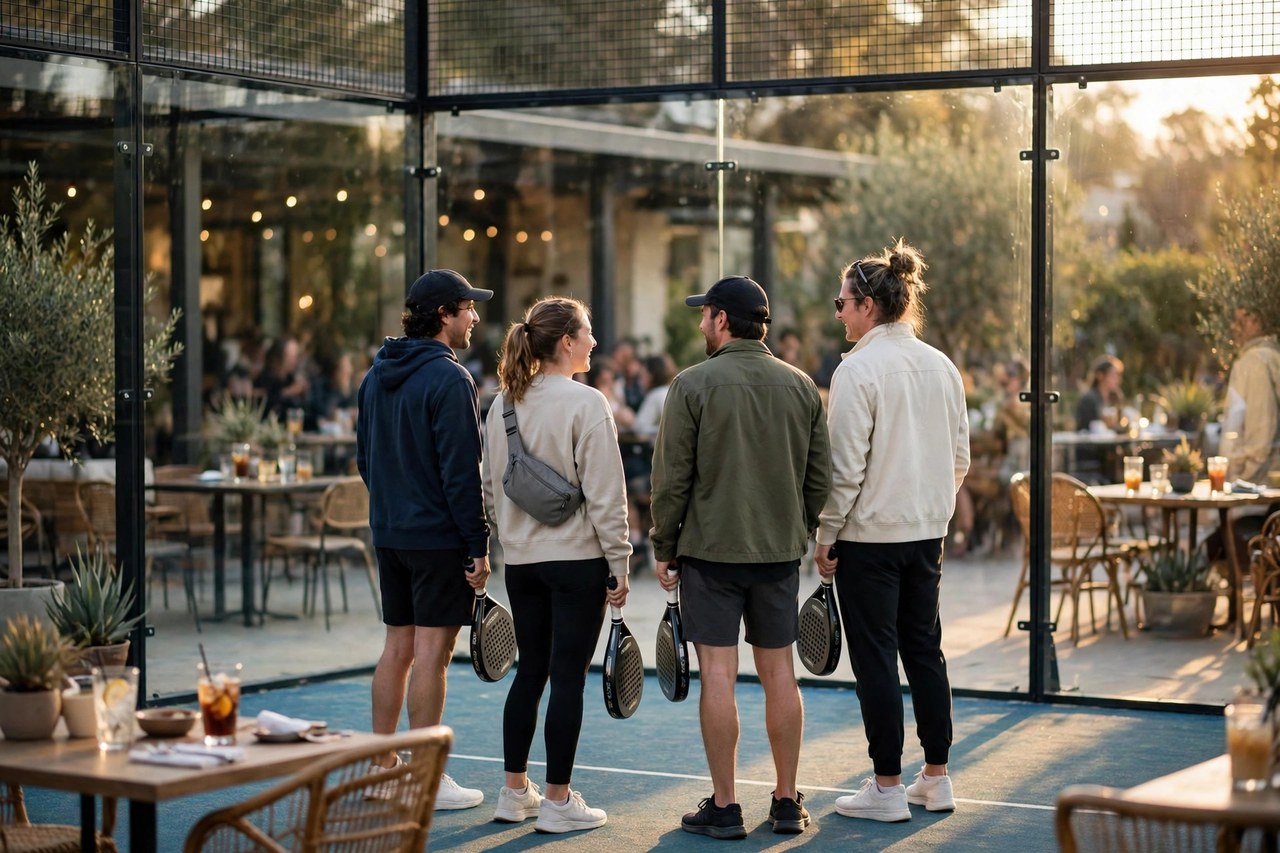
Padel Is a Social Club First, a Sport Second
After-work games, club bars, mixed doubles nights and team outings: padel grew so fast because the game is built around people, not just points.
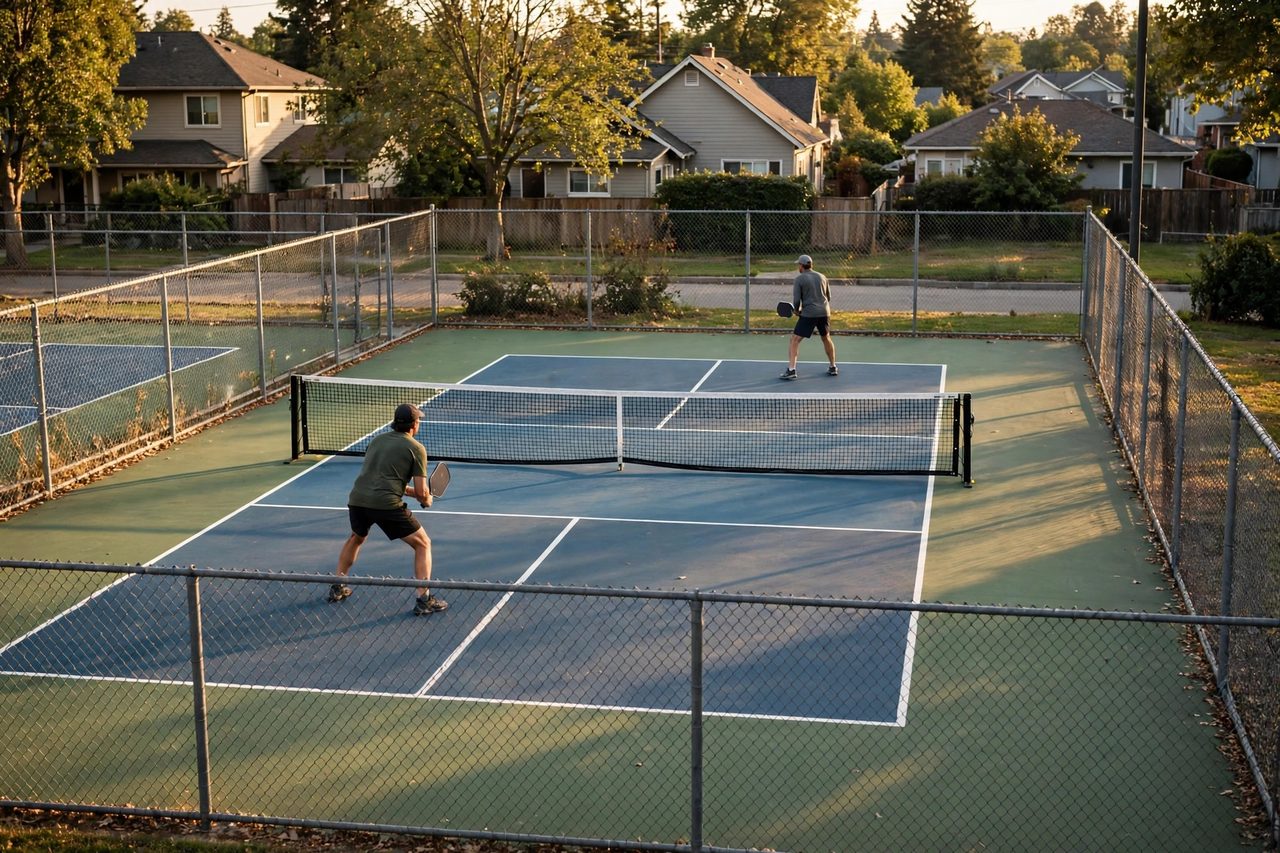
Pickleball's Noise Problem: The Sport the Neighbours Love to Hate
Pickleball is the fastest-growing sport in America, but its sharp pop is driving neighbours to court, closing courts and forcing the sport to get quieter.