
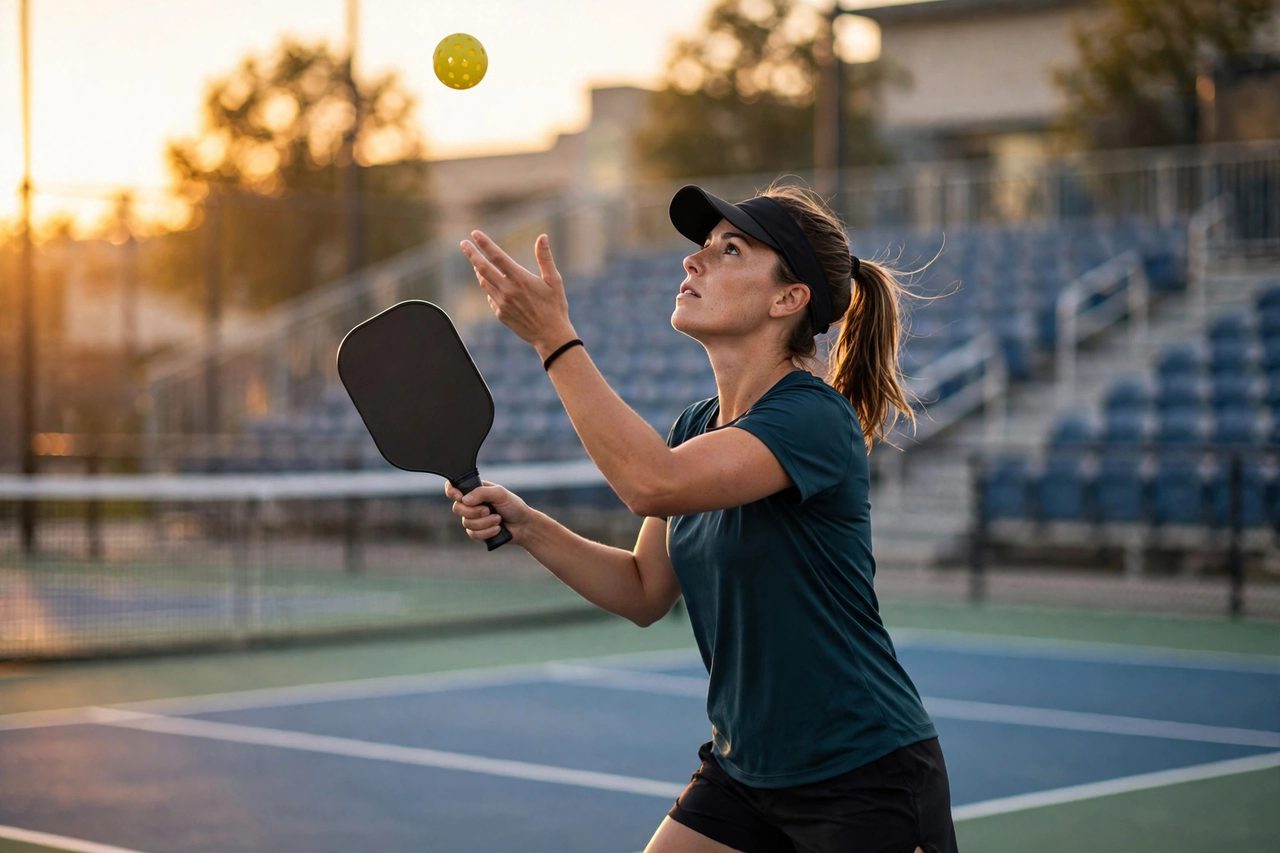
Pickleball is the fastest-growing sport in America, played by more than 24 million people in the United States alone. It has professional tours, television deals, and a fan base that fills arenas. And it is not an Olympic sport — not in Paris 2024, not in Los Angeles 2028, and, as things stand, probably not in Brisbane 2032 either. The reason has almost nothing to do with popularity. It has everything to do with governance.
The one-federation rule
The International Olympic Committee recognises one international federation per sport. That single body must run the sport worldwide, enforce the World Anti-Doping Code, accept the Court of Arbitration for Sport, and demonstrate a genuine global footprint — the IOC’s benchmark is participation in at least 75 countries for men and 40 for women, across multiple continents.
Pickleball, for most of its history, has failed the first test. Instead of one federation, it has had several competing bodies claiming the role, each with its own events, rankings and rulebooks. In November 2025 the Global Pickleball Federation and the Unified World Pickleball Federation announced a joint task force to build a single governing entity, and the GPF’s secretary general called completion by July 2026 a “realistic aspirational goal.” That date has passed with no announcement of a completed merger or a combined body name. As of autumn 2026, the sport still has no IOC-recognised federation.
That is the bottleneck. Everything else — the players, the money, the television audience — is ready. The institution is not.
Why Los Angeles 2028 was never going to happen
The LA28 programme is locked: cricket, baseball and softball, flag football, lacrosse and squash were added, and pickleball was not among them. That stings in a particular way, because squash — a fellow racquet sport, smaller in American participation — got in. But squash arrived with a single, long-recognised federation and decades of anti-doping records. Pickleball arrived with momentum and a governance dispute. The IOC chose the institution.
There is a lesson in that which pickleball’s leaders have clearly taken to heart: the Olympic question is not “is the sport popular enough?” but “is the sport organised enough?”
Brisbane 2032: possible, but unlikely
Brisbane is the first plausible target, and the Global Pickleball Federation names it as such. Australia has a growing pickleball scene, and host cities get a say in proposing additional sports — a mechanism that could favour a locally popular game. But the timeline is brutal. Working back from the LA28 precedent, where additional sports were locked in roughly five years out, a 2032 bid needs a recognised federation, an anti-doping programme with years of testing history, and a unified global calendar well before the end of this decade. The GPF only partnered with the International Testing Agency in December 2025 to build an anti-doping programme; on that timeline alone, the sport is unlikely to meet the criteria until around 2029.
Most insiders therefore point to 2036 as the realistic debut — with the host city still to be decided, and with the caveat that predictions about 2036 are not official, just the consensus of people watching the process closely.
What the wait is costing — and what it is building
The delay has a cultural cost. Pickleball’s community-first identity — open play, mixed ages, low barriers — is part of what made it grow, and some in the sport worry that chasing Olympic status will professionalise away the very thing people love. Others argue the opposite: that Olympic inclusion would bring funding for facilities, youth development and global growth that the sport cannot generate on its own.
But the wait is also building something real. The sport has already appeared in multi-sport events — the Maccabiah Games, the African Games, the World Senior Games — and is slated for the 2027 African Games and Invictus Games. Those appearances are proving grounds: they test formats, build officiating pools, and give the IOC evidence that pickleball can work inside a multi-sport programme.
Pickleball will almost certainly be an Olympic sport one day. The question is whether its leaders can finish the unglamorous work — one federation, one rulebook, one clean testing record — fast enough to make Brisbane, or whether the rings will have to wait for 2036. The sport’s growth bought it the world’s attention. Only its governance can buy it the Games.
Related articles
Pickleball's Billion-Dollar Paddle Boom: How a Backyard Game Became Big Business
Sixty years ago, the first pickleball paddles were plywood boards cut in a basement. Today they are $200 carbon-fibre pro gear, and the paddle business is worth about a billion dollars a year.
Padel Is a Social Club First, a Sport Second
After-work games, club bars, mixed doubles nights and team outings: padel grew so fast because the game is built around people, not just points.
Pickleball's Noise Problem: The Sport the Neighbours Love to Hate
Pickleball is the fastest-growing sport in America, but its sharp pop is driving neighbours to court, closing courts and forcing the sport to get quieter.