
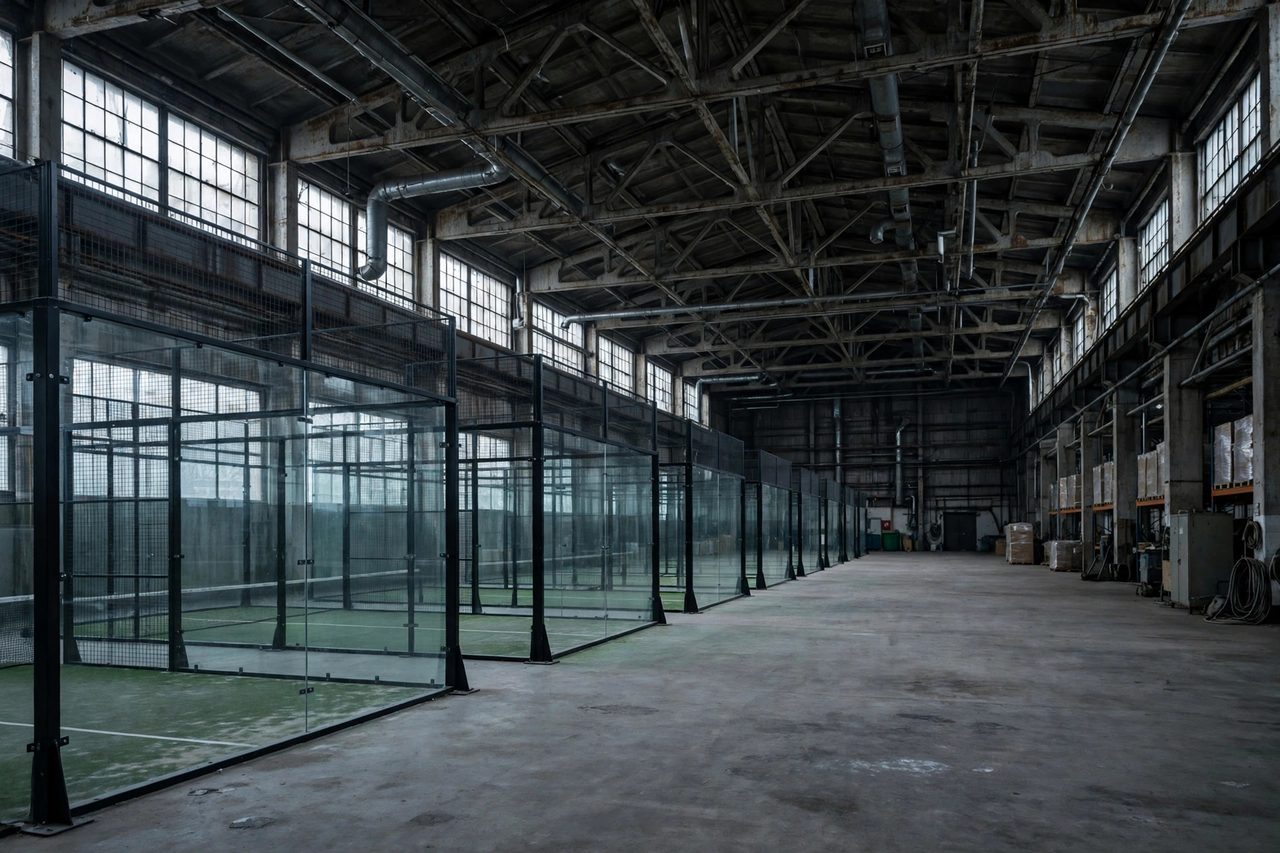
No country loved padel harder, faster, or more expensively than Sweden. Between 2019 and 2022, the country went from a few hundred courts to more than 4,200 — the densest padel infrastructure on earth, built for a nation of 10 million people. Then the bubble burst. By the end of 2024, around 90 padel companies had gone bankrupt, more than 100 facilities had closed, and industry estimates put the capital destroyed at close to €500 million.
It is the most instructive episode in the sport’s short commercial history. And its punchline is not what most people expect: the sport never died. More than 600,000 Swedes were still playing in 2024. What died was the business model.
The boom: sheds, debt and a pandemic
Sweden’s padel fever had a simple recipe. The sport arrived as a fashionable, social, easy-to-learn game just as the pandemic emptied offices and filled leisure hours. Investors — from local entrepreneurs to private equity — saw a land grab. Courts went up in converted industrial sheds on the edges of cities, financed with borrowed money at pandemic-era interest rates. One city went from 14 courts to roughly 100 in a single year: about five times what its population could support.
The logic felt airtight. Every new club filled up on opening weekend. Waiting lists stretched for weeks. If demand looked like this with 1,000 courts, imagine 4,000. So they built 4,000 — often within a few kilometers of each other, chasing the same customers.
The bust: electricity, interest rates and arithmetic
What went wrong was not the sport; it was the spreadsheet. Heating and lighting giant industrial sheds through the Swedish winter is brutally expensive, and when electricity prices soared in the winter of 2022, margins evaporated. Borrowing costs rose at the same time, punishing every operator that had built on debt. And the post-pandemic return to offices drained the off-peak hours that clubs had counted on to pay the rent.
Competition did the rest. Too many courts chased the same players, prices fell, and the weakest locations bled out. We Are Padel — backed by private equity firm Triton — shut 50 of its 63 Swedish clubs. CreditSafe’s bankruptcy data told the story in numbers: nearly 90 padel-related companies filed in a single year. Bloomberg warned that Sweden held a lesson for the entire padel craze.
The physical aftermath is the eeriest part. In Västerås, west of Stockholm, a former padel center reopened as a Willys grocery store. Others became warehouses for solar panels and tires. The glass boxes that were supposed to be Sweden’s new folkhemmet — the people’s home — now store other people’s inventory.
The lesson every market is now studying
Sweden’s crash has become the case study the global padel industry cannot stop citing. The 2026 Playtomic industry report found that the strongest venues earn as much as five times the revenue per court as the weakest — and concluded, bluntly: “The padel boom is real. We’re now starting to find out which businesses were built to last.”
The warning travels. Britain, where courts jumped from 1,553 at the end of 2025 to 1,825 by May 2026, is watching its leverage ratios. The Gulf states pouring money into mega-facilities are watching their utilization rates. The lesson is always the same: investors mistook a fast-growing sport for a guarantee of profitable facilities. Strong growth across the sport doesn’t mean every club is a good investment.
And yet — 600,000 Swedes still play. The courts that survived are busy. The sport turned out to be real; only the gold rush was fake. Sweden didn’t kill padel. It just paid half a billion euros to learn the difference between a sport people love and a business that works. Every market building courts today is spending that tuition secondhand — hopefully.
Related articles
Pickleball's Billion-Dollar Paddle Boom: How a Backyard Game Became Big Business
Sixty years ago, the first pickleball paddles were plywood boards cut in a basement. Today they are $200 carbon-fibre pro gear, and the paddle business is worth about a billion dollars a year.
Padel Is a Social Club First, a Sport Second
After-work games, club bars, mixed doubles nights and team outings: padel grew so fast because the game is built around people, not just points.
Pickleball's Noise Problem: The Sport the Neighbours Love to Hate
Pickleball is the fastest-growing sport in America, but its sharp pop is driving neighbours to court, closing courts and forcing the sport to get quieter.