
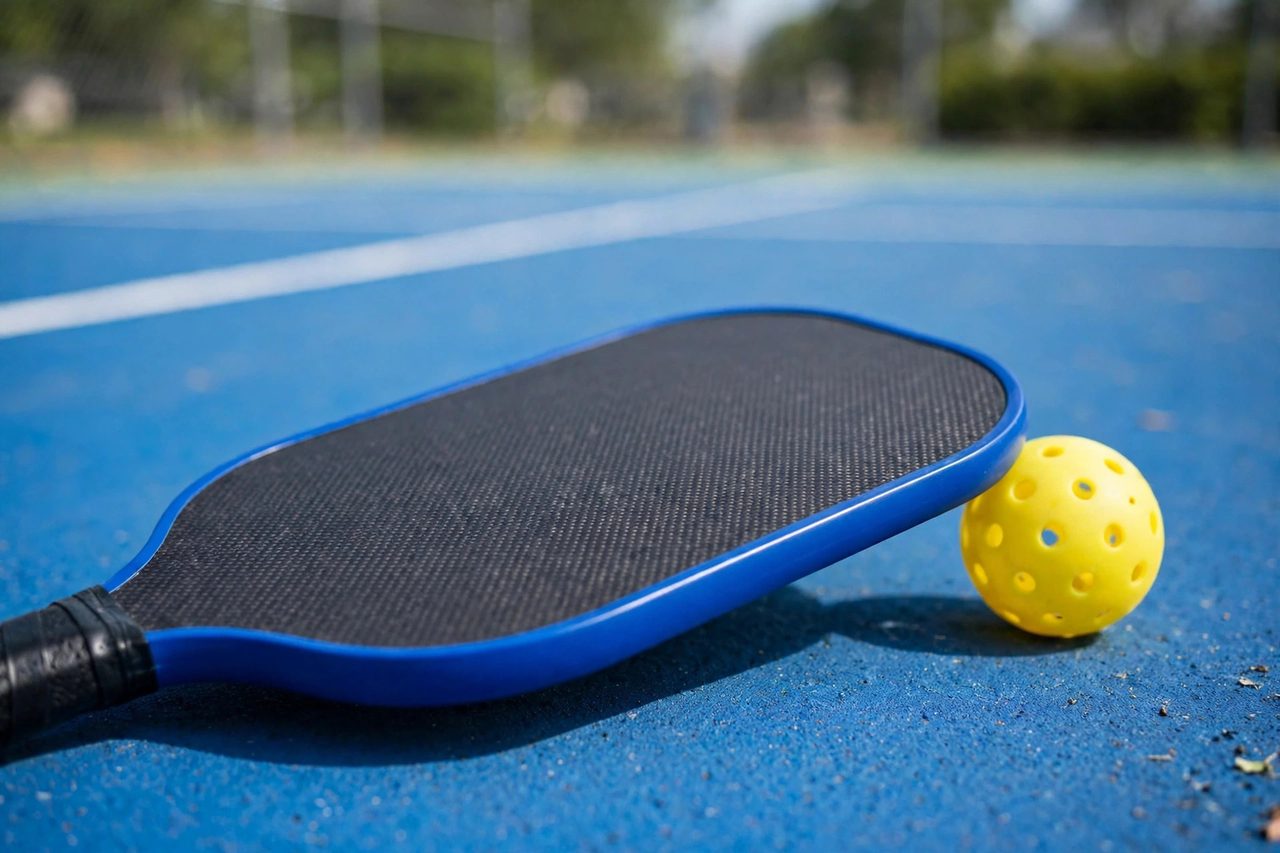
Andre Agassi never played pickleball on tour — he came from tennis, and his signature paddle shows it. The JOOLA Agassi Pro 16mm launched in spring 2025 as part of JOOLA’s Pro IV line, and it is built around one idea: a paddle that feels natural in the hands of a tennis player. It is long and narrow, the handle fits two hands, and the hitting area is biggest near the top of the face, right where a tennis player expects to meet the ball.
It launched at $279.99. As of November 2026, JOOLA and Pickleball Central list it at $149.95, now that the newer Pro V generation has arrived at $299.95. At launch this was a premium buy. Today it is one of the best-value pro-level paddles around.
The key specs, explained
- Shape: elongated, 16.5 by 7.5 inches, with a tapered throat. The throat is the narrow part just above the handle. Tapering it moves weight toward the top of the paddle, which stretches the sweet spot — the part of the face where the ball comes off cleanest — toward the tip.
- Core thickness: 16 mm. The core is the material inside the paddle. Pickleball paddles come in two main thicknesses: 14 mm is thinner, faster and livelier, while 16 mm is thicker, softer and more forgiving. The 16 mm version is the control option.
- Core: polypropylene honeycomb with an EVA foam wall. The honeycomb is a grid of tiny plastic cells that gives the paddle structure without much weight. EVA is a soft foam, and JOOLA puts a wall of it around the edge of the core. JOOLA calls the setup the Propulsion Core, with TechFlex Power foam placement meant to widen the sweet spot and add spring on hard shots.
- Face: textured carbon fiber. The face is the flat hitting surface. Carbon fiber is light and stiff, and the rough texture grips the ball, which helps you add spin — the ball curving or kicking after the bounce.
- Weight: 8.1 oz on average. That is normal for a performance paddle: light enough to move fast at the net, heavy enough to feel solid when the ball comes at you hard.
- Handle: 5.5 inches long, 4.25 inches around the grip, with JOOLA’s Feel-Tec grip. A 5.5-inch handle is long for pickleball, and it is the whole point of this paddle: it leaves room for a two-handed backhand, the shot tennis players bring with them.
- Swing weight: 117, as measured by Pickleball Studio. Swing weight is how heavy a paddle feels when you swing it, and 117 is on the higher side — the Agassi Pro carries real weight through the ball, but it will not feel as quick in your hand as a lighter paddle.
- Certifications: USA Pickleball approved and UPA-A certified, so it is legal in every sanctioned tournament, from local events to the pro tour.
- Extras: an NFC chip in the handle for authentication.
On the court
The Agassi Pro 16mm is a power paddle with manners. The 16 mm core gives it a softer, more forgiving feel than the 14 mm version, so the ball stays on the face a fraction longer. That extra moment — players call it dwell time — is what lets you place soft shots with touch instead of watching them fly long.
Drives are the standout. A drive is a hard, flat shot hit from the back of the court, and the long shape plus the 117 swing weight give this paddle real weight behind the ball. It punches through the court without needing a huge swing — the paddle does the work, the way a tennis racquet does.
At the kitchen line — the no-volley zone near the net, where most points are won and lost — the Agassi Pro is good, not great. The long shape and higher swing weight make it a touch slower in fast hand battles than a short, wide paddle.
The soft game is where the 16 mm core earns its keep. A dink is a soft, low shot that just clears the net and drops into the kitchen, and the thicker core makes dinks and resets — soft blocks that kill the pace of a hard shot — easier to control. The ball does not jump off the face the way it can on a thinner, livelier paddle. Spin is strong too: Pickleball Studio measured around 2,000 revolutions per minute on spin shots, plenty to make serves dip and passing shots curve away.
The two-handed backhand is the feature that sells this paddle. The 5.5-inch handle gives both hands real room, and testers at Pickleheads say it “provides plenty of room for two-handed backhands.” If you come from tennis and your two-hander is your best shot, this is one of the few paddles built for it.
Who should buy it
This is a paddle for intermediate and advanced players, and especially for tennis converts. If you play regularly, you hit a two-handed backhand, and you want power with enough control to keep the ball in, the Agassi Pro 16mm fits.
It is not a first paddle: beginners will find it long and firm, and a cheaper, wider paddle will teach the game better. Players who live at the kitchen line and want the fastest hands possible should look at a shorter, wider shape. If you want maximum pop — the lively bounce a paddle gives the ball — the 14 mm version is livelier, but it gives up some of the control that makes the 16 mm the better pick for most players.
Price, and the Pro V question
At $149.95, the Agassi Pro 16mm costs half what the new Pro V costs at $299.95, and the Pro V’s main upgrade, a new KineticFrame design, is for players chasing the latest tech. For most players, the Pro IV at its current price is the smarter buy. Just check the listing: JOOLA now sells the Agassi Pro in several versions, and the 16 mm Pro IV is the one reviewed here.
The verdict
The JOOLA Agassi Pro 16mm does what a signature paddle should do: it turns its player’s game into a product. Agassi’s game was built on a big two-handed backhand and clean, powerful groundstrokes, and this paddle is built for exactly that. It is long, powerful and a little demanding at the net, but forgiving where it counts — and at today’s price, hard to beat. If you came to pickleball from tennis, start here.
Related articles
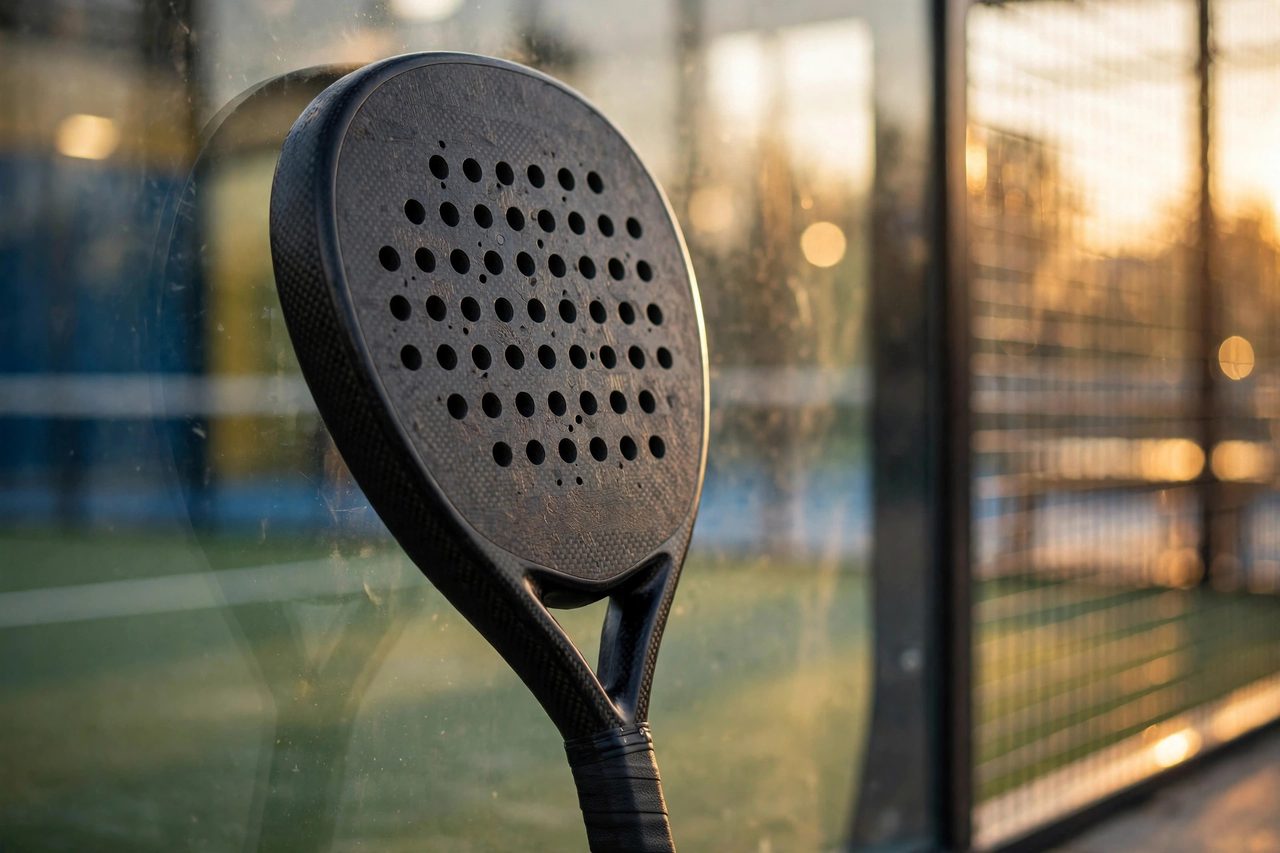
NOX AT10 Genius 18K 2025 review: Tapia's racquet, built for control
Teardrop shape, 360-375g, 18K Alum carbon face and MLD Black EVA core — the NOX AT10 Genius 18K 2025 is Agustín Tapia's signature racquet, and it plays like a precision tool for advanced players.
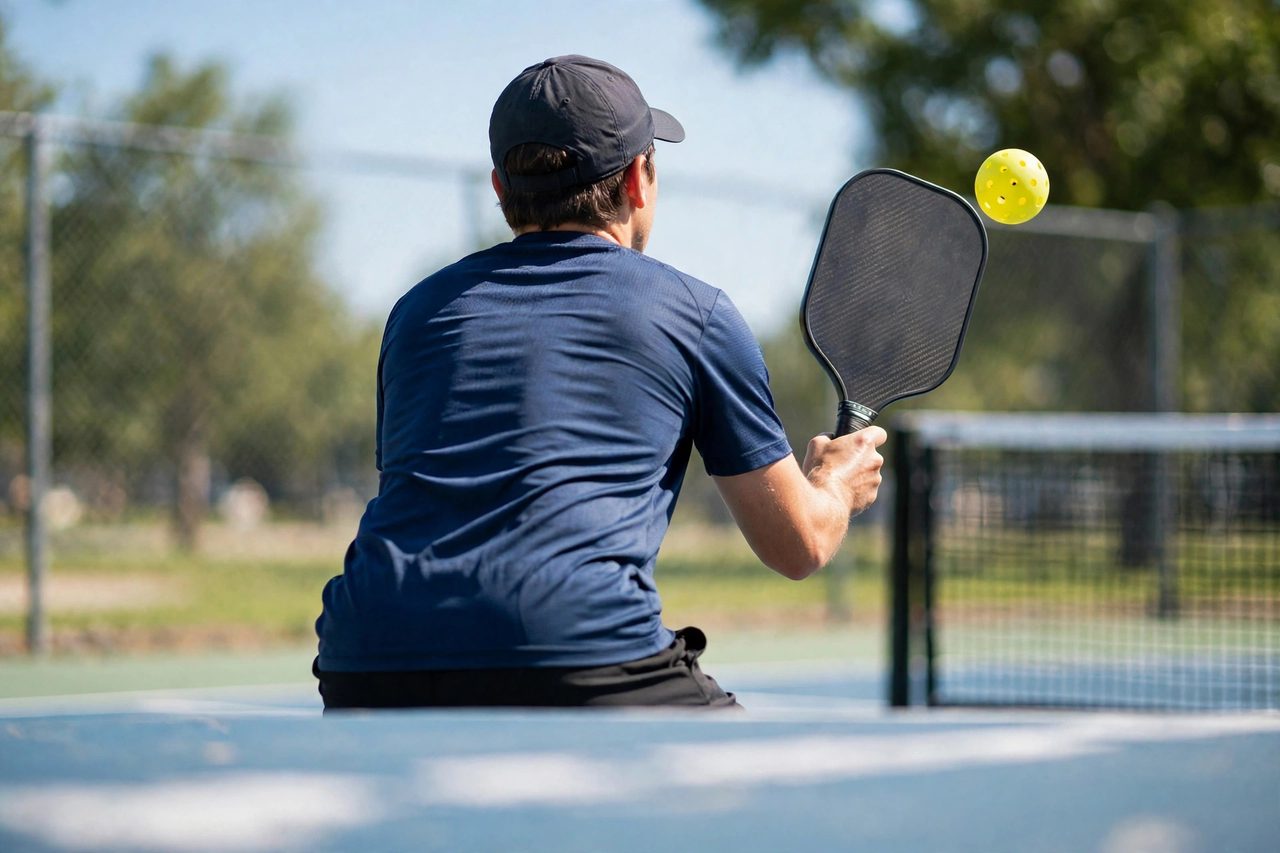
CRBN 3X Power Series Review: Big Sweet Spot, Real Power, Honest Trade-Offs
The CRBN 3X Power Series (now the X Series 3X) pairs a wide elongated shape with a gritty carbon face and foam-reinforced edges. Here is what its specs mean on court, and how to pick between 14 mm and 16 mm.
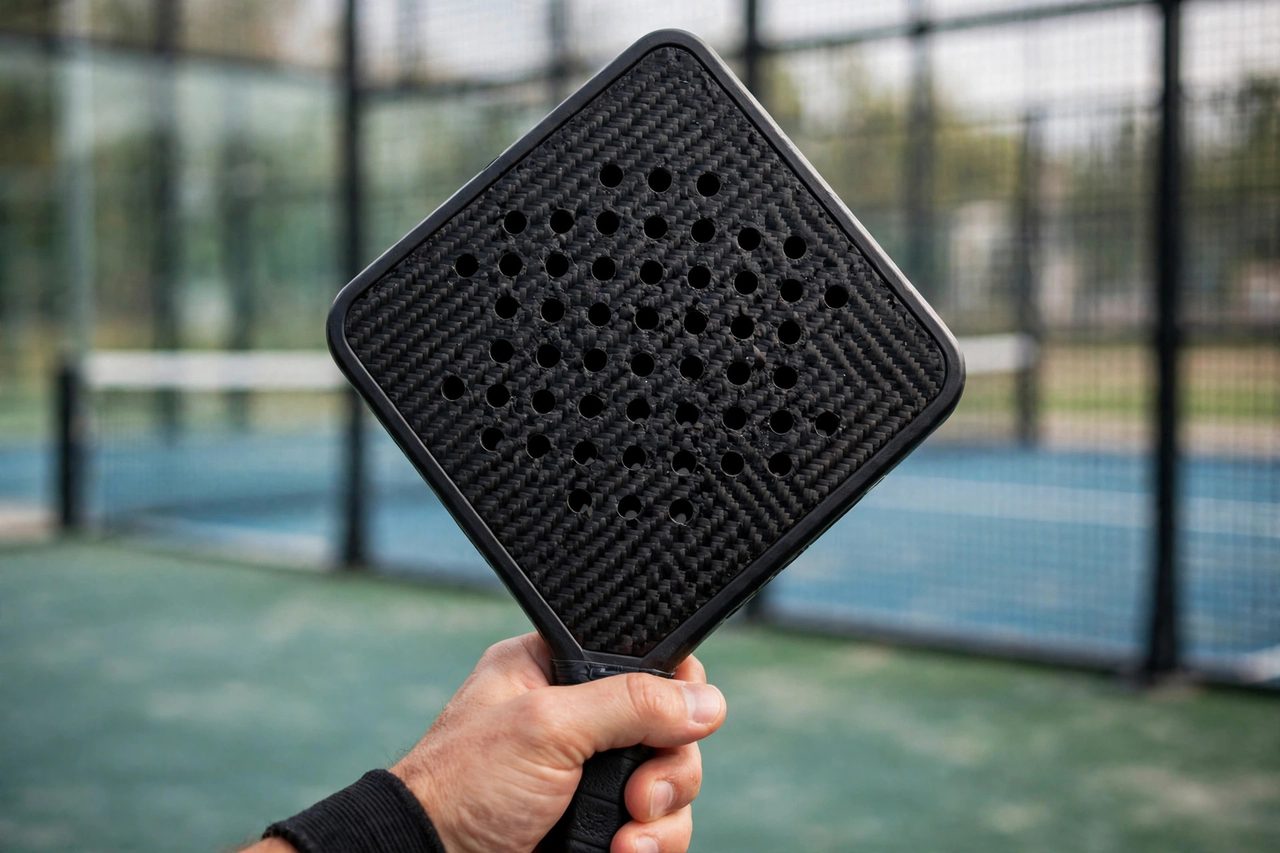
Bullpadel Vertex 04 Review: The Diamond Racquet Built for Attack
The Vertex 04 is Bullpadel's power racquet: diamond shape, high balance, 365–375 grams and a rough 12K carbon face. It hits hard and spins hard — but it asks a lot of the player holding it.