
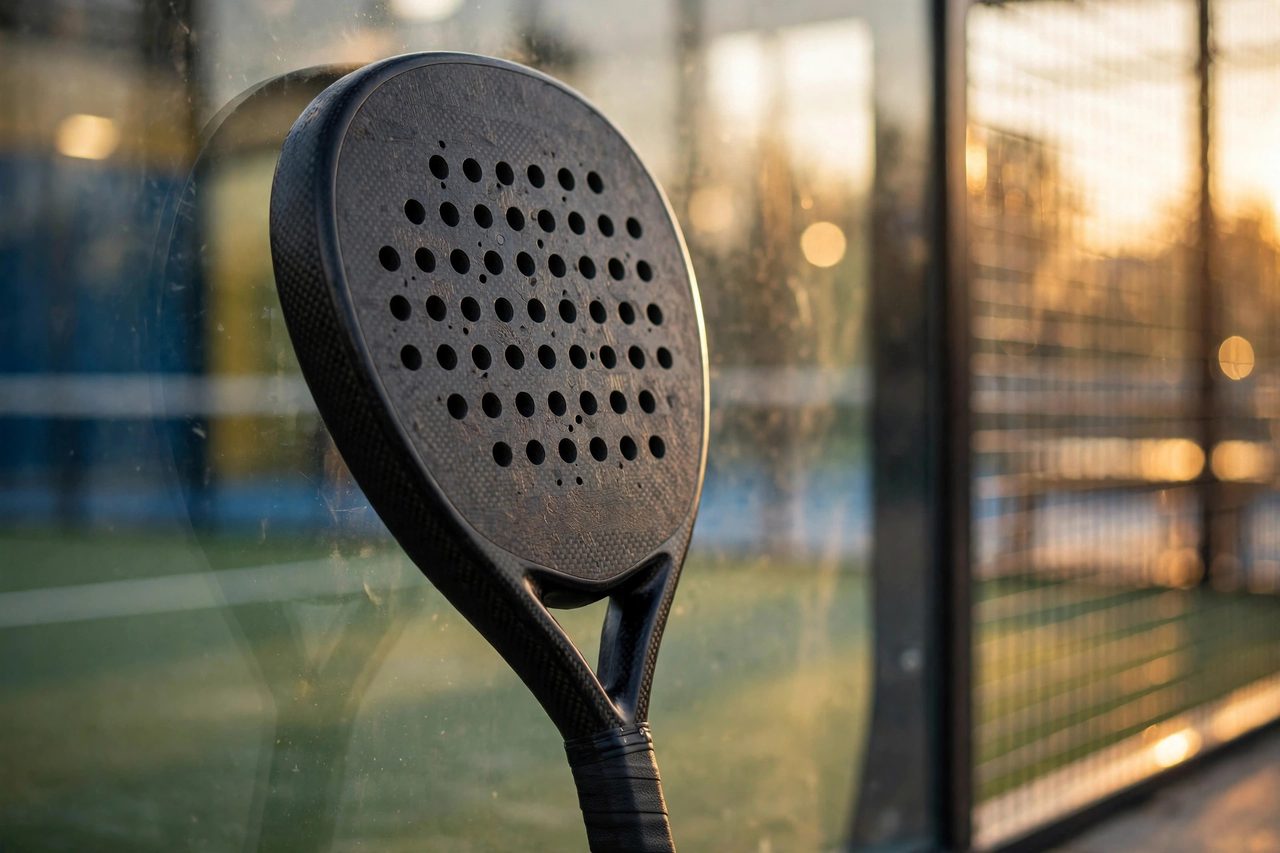
The NOX AT10 Genius 18K 2025 is Agustín Tapia’s signature frame, and the timing could hardly be better. On October 31, Tapia and Arturo Coello won the Kuwait Major 6-1, 6-1 against Juan Tello and Maxi Arce, sealing their place as the world’s number one pair for the fourth season in a row. It was also their 13th title of 2026.
So is the racquet the world’s best padel player uses worth your money? Here is what the spec sheet says, and what it means on court.
The key specs, explained
- Shape: teardrop. A teardrop head sits between a round head and a diamond head: round is built for control, diamond for power, and teardrop tries to give you a bit of both.
- Weight: 360 to 375 g. That is the maker’s range — individual racquets vary by a few grams — and it is on the heavier side, which helps the racquet feel stable when the ball comes at you hard.
- Balance: medium. Balance is where the racquet’s weight sits. A head-heavy racquet adds power but feels slow; a head-light one is quick but softer. Medium means the weight sits in the middle, so the AT10 stays quick at the net without giving up punch.
- Face: 18K Alum carbon. The face is the flat hitting surface. “18K carbon” means tightly woven carbon fibres — 18,000 filaments per bundle — which makes the face firm and crisp. “Alum” is an aluminised coating NOX says keeps the feel steady when the temperature changes.
- Core: MLD Black EVA. The core is the foam inside the racquet. MLD means layers of foam with different firmness, so soft shots get a bit of help and hard shots get a firm, direct answer.
- Thickness: 38 mm, the standard for performance padel racquets.
- Frame: 100% carbon, with NOX’s Dynamic Composite Structure reinforcing the frame-to-face join.
- Surface: rough, with NOX’s Exclusive Spin texture. A rough face grips the ball, which helps you add spin — the ball curving or kicking after the bounce.
- Extras: EOS Flap holes in the bridge to spread the weight and help the racquet move through the air, a Pulse System in the grip to cut down vibration, NOX’s Custom Grip, and the Smartstrap — a wrist cord you can swap out on its own.
One thing to watch when you shop: NOX sells several AT10 models with very similar names. The 2025 version reviewed here is the AT10 Genius 18K Alum (sold as the AT10 Luxury Genius 18K Alum). The 2024 model has a plain 18K carbon face and no EOS Flap, and the diamond-shaped AT10 Genius Attack 18K is built for pure power. Check the model year on the listing before you buy.
On the court
The AT10 Genius 18K is a control racquet first. The teardrop shape and medium balance keep it quick in fast exchanges at the net. Volleys feel direct and precise, and the firm 18K Alum face gives you clear feedback on every contact — you know exactly where the ball met the racquet.
The sweet spot — the part of the face where the ball comes off cleanest — is generous for a performance racquet, but not huge. Hit it clean and the ball goes exactly where you aimed it. Miss it and the firm face is less forgiving than a soft beginner frame: the ball drops short and your arm feels it.
That firmness is the trade-off at the heart of this racquet. The MLD Black EVA core gives slow defensive shots a useful lift off the glass, while hard swings get a crisp, direct response. It is a combination that suits players who already make their own power and want precision in return. If you are still building your swing and need the racquet to do the work, this one will feel demanding.
It earns its keep on the attacking shots padel is known for. The bandeja is a slow, high shot played from the back of the court to buy time and move forward. The vibora is its faster, spinnier cousin, hit with a cut that makes the ball skid low off the glass. The rough Exclusive Spin surface adds bite to both, and the teardrop shape gives smashes enough weight to finish points without the head-heavy feel of a diamond frame.
Comfort is decent rather than plush. The Pulse System takes some sting out of hard contacts, but players with a sensitive elbow should try it before committing.
Who should buy it
This is a racquet for advanced players. If you play regularly, your technique is settled, and you want a firm, precise tool for all-court padel — solid at the net, steady from the back, dangerous overhead — the AT10 Genius 18K fits. It suits players who attack with placement and spin, not brute force.
It is not a first racquet. Beginners will find it heavy, firm and unforgiving, and lighter, softer frames cost far less and teach the game better. Power hunters should look at the diamond-shaped AT10 Genius Attack 18K instead, and players who want the softest feel should look at NOX’s 12K model, which trades some of the 18K’s crispness for a more predictable response.
On price, the AT10 Genius 18K launched as a premium racquet, at around €300. As a 2025 model it now turns up discounted as shops clear stock for newer lines — and that is when it makes most sense.
The verdict
The NOX AT10 Genius 18K 2025 does exactly what a signature racquet should do. It is not the easiest racquet to play with, and it is not trying to be. It is a firm, precise, all-court tool for players who already have the game to match it — the kind Tapia showed in Kuwait. If that sounds like you, and you find it at a fair price, it is one of the best control racquets of its generation.
Related articles
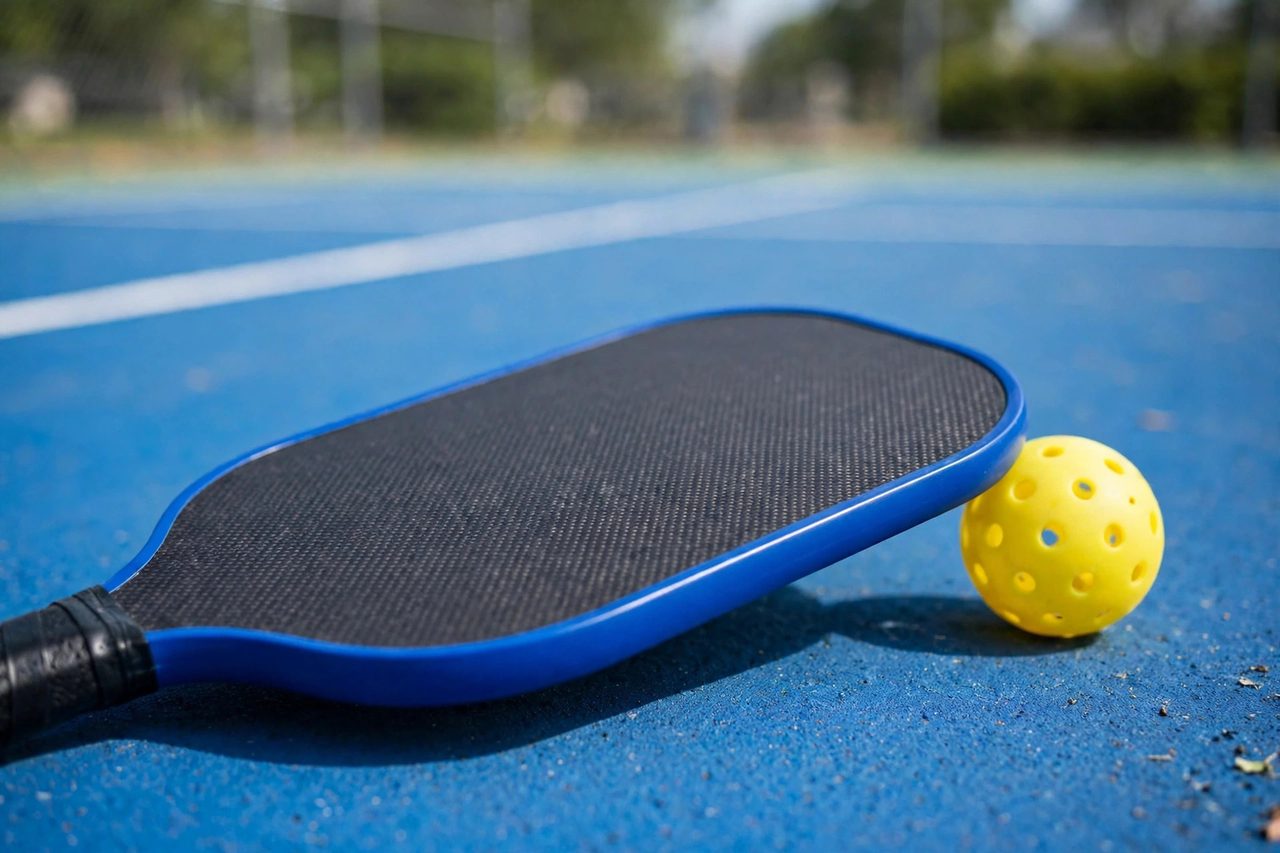
JOOLA Agassi Pro 16mm review: Agassi's racquet, built for tennis converts
Elongated 16.5 by 7.5 inches, 8.1 oz, 16 mm Propulsion Core with TechFlex Power and a textured carbon face — the JOOLA Agassi Pro 16mm is Andre Agassi's signature pickleball paddle, and it plays like it was made for players coming from tennis.
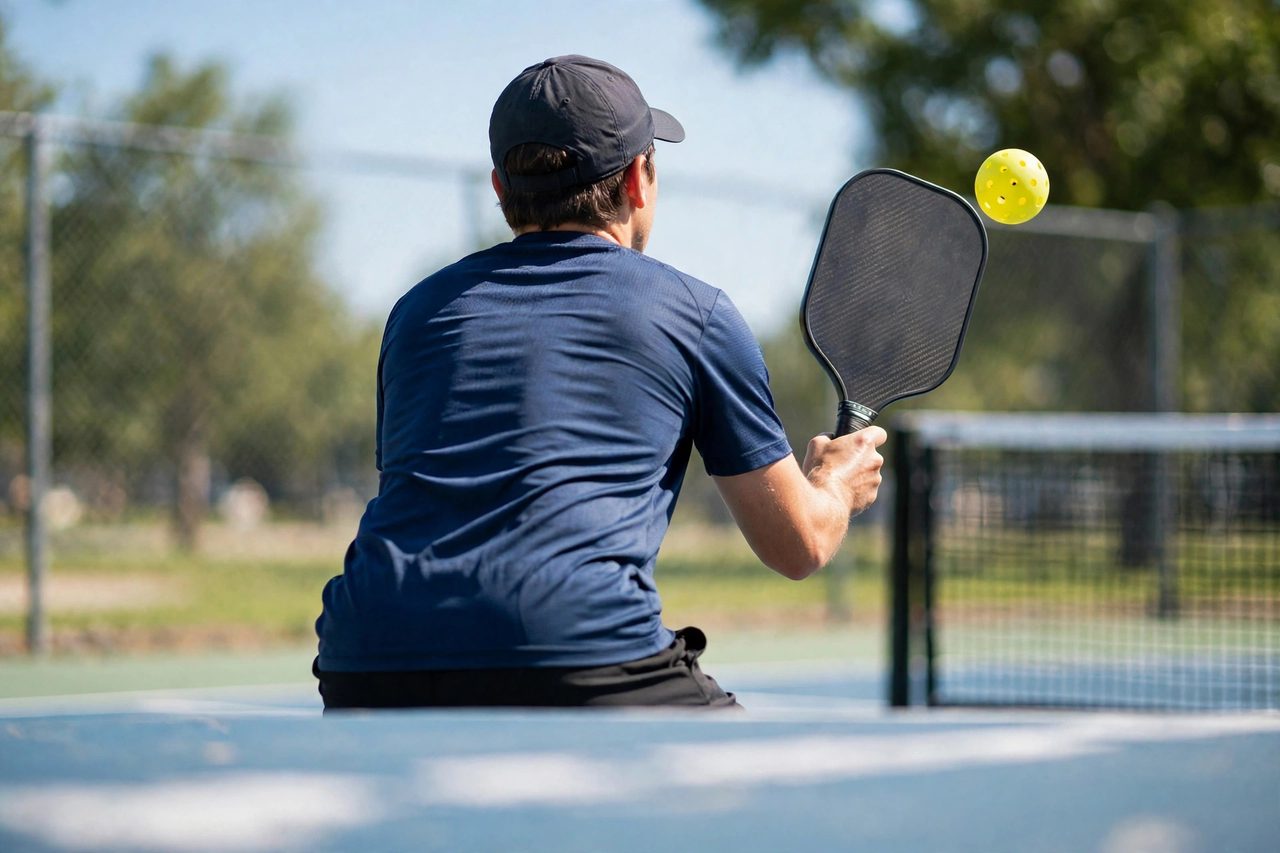
CRBN 3X Power Series Review: Big Sweet Spot, Real Power, Honest Trade-Offs
The CRBN 3X Power Series (now the X Series 3X) pairs a wide elongated shape with a gritty carbon face and foam-reinforced edges. Here is what its specs mean on court, and how to pick between 14 mm and 16 mm.
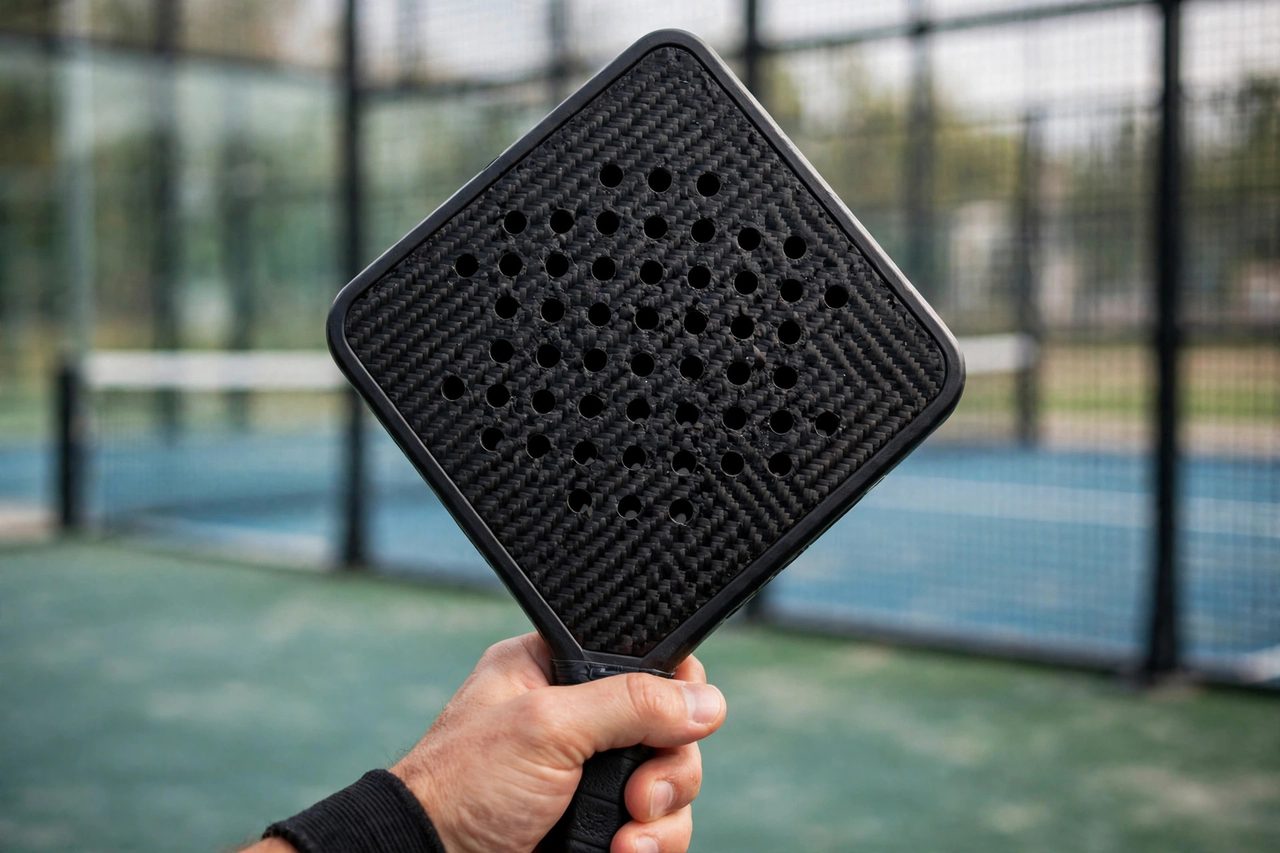
Bullpadel Vertex 04 Review: The Diamond Racquet Built for Attack
The Vertex 04 is Bullpadel's power racquet: diamond shape, high balance, 365–375 grams and a rough 12K carbon face. It hits hard and spins hard — but it asks a lot of the player holding it.