
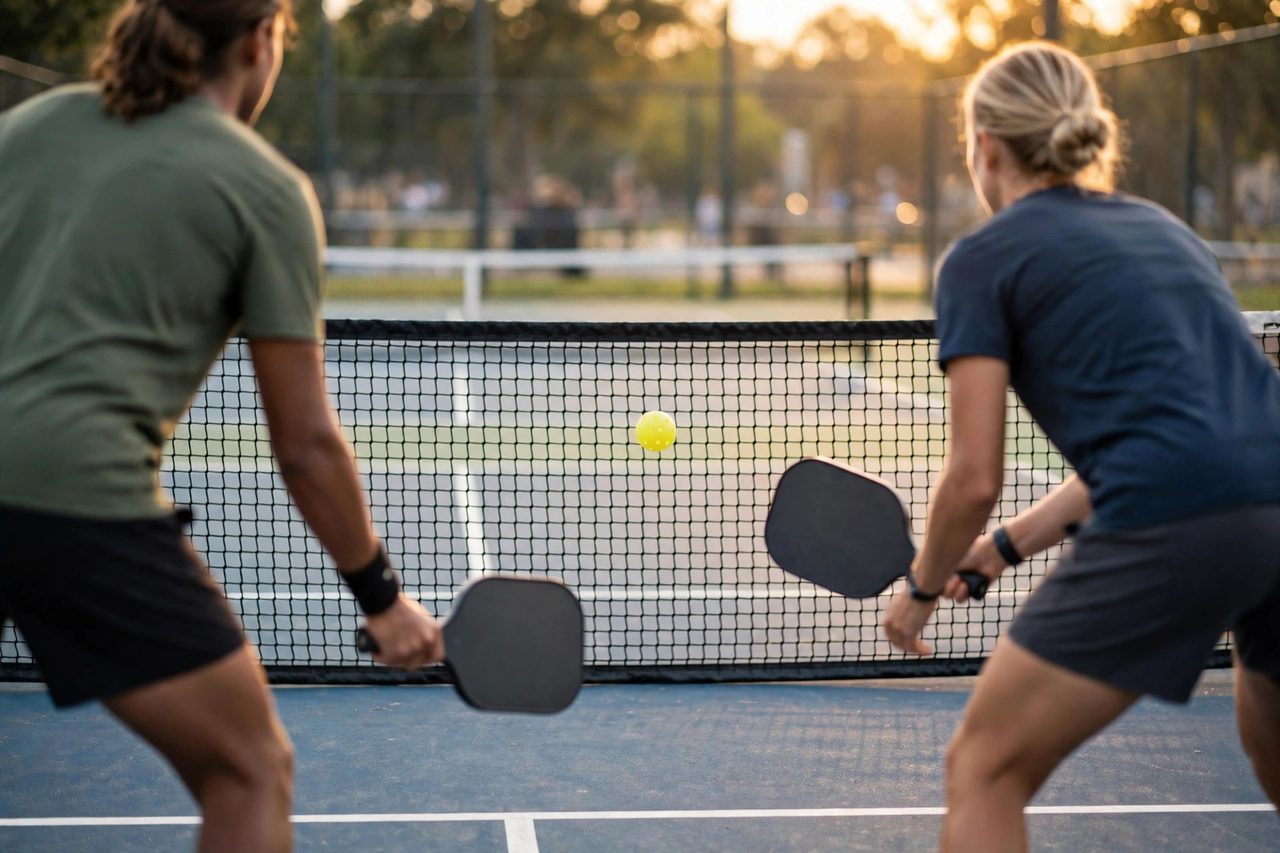
Watch a high-level pickleball match and you will not see much of the long game. After the serve and the return, both teams work their way to the non-volley zone line — the kitchen — and then the real sport begins: soft, short, patient exchanges a few inches over the net, until somebody blinks. That is the dink, and it is the single biggest difference between intermediate and advanced play.
Why the kitchen decides everything
The dink is a soft, arcing shot designed to land in the kitchen and stay low. Done well, it prevents your opponent from attacking: the ball arrives below net height, and the kitchen rules forbid them from volleying it in the air. Every exchange becomes a negotiation about who will be the first to lift a ball high enough to punish.
At recreational levels you can win with drives and power. But as the competition improves, raw pace gets neutralized — good players reset hard shots and extend dink rallies until the driver breaks. Above the 4.0 level, coaches say, dinking is not optional. It is the point.
The fundamentals: a compact checklist
Ten points make a reliable dink, and they are all unglamorous.
Stay low and balanced. Knees bent, weight forward on the balls of your feet. A low stance improves stability, reach, and reaction time.
Paddle out in front. Hold it in front of your body, not to the side — faster reactions, better control.
Grip it light. Around 3 to 4 out of 10 on the pressure scale. A soft grip absorbs impact and keeps dinks low.
Short, simple motion. Let the shoulder and arm do the work; keep the wrist stable. Short and soft — no big swings.
Clear the net by inches, not feet. The ideal dink skims the net and lands in the kitchen. Anything higher invites an attack.
Target feet and corners. Make it hard to return aggressively. Mix up placement to create openings.
Favor the crosscourt dink. It gives you the diagonal — more court room and a lower net to clear — while pulling your opponent wide.
Be patient. Dinking is strategy, not speed. Wait for a mistake — a high dink, a pop-up — before attacking.
Add spin only when ready. A little topspin keeps the ball low; backspin can make the bounce die. Spin is a bonus, not a crutch.
Drill it. Crosscourt exchanges with a partner, focusing on contact in front of the body and short follow-through, build the muscle memory that holds up under pressure.
The golden rule: up soft, down hard
Coach Jeff Shank distilled the whole kitchen game into one sentence that every club player should tape to their paddle cover: “If you have to hit up on the ball, hit it soft into the kitchen. If you are able to hit down on the ball, it is ok to try and hit it hard.”
That is the speed-up decision. A ball arriving at net height or above is attackable — step in and finish. A ball below the net demands a soft, arcing dink back into the kitchen. Random speed-ups from bad positions get countered; disciplined dinkers wait for the pop-up and pounce.
Playing with intention, not just patience
Patience is active, not passive. The best dinkers use the exchange to build pressure: roll dinks crosscourt to drag an opponent off the line, then go middle for the open ball; push deep dinks to disrupt balance and invite the weak return; jam the middle defined by the opponents’ inside feet, not the center line.
And know how to reset. Not every dink is an attack setup — sometimes you are under pressure and need the neutral ball: loosen the grip, reset crosscourt for margin, and prioritize arc over softness. Intention beats instinct, every time.
Take it to the court
Start with twenty minutes of crosscourt dinking in your next warm-up — no keeping score, no speeding up, just low, soft, and in. Then add one pattern: crosscourt dink to pull them wide, then middle. Master that, and you have the core of the kitchen game. The net will start to feel closer. That is not an illusion — it is the whole idea.
Related articles
The Padel Serve: How to Start Every Point Underarm, Step by Step
In padel, the serve starts the rally — it doesn't end it. The rules, the technique step by step, and three easy drills to make your serve steady and smart.
The reset: how to turn a hard ball into a soft one, step by step
When your opponent fires a hard ball at you at the net, the reset is your answer. A simple step-by-step guide to soft hands, paddle angle, and where to aim.
Playing Off the Glass: How to Use Padel's Walls, Step by Step
The glass walls are not the enemy. Learn how the ball comes off the back and side walls, when to let it bounce, and simple drills to build your confidence.