
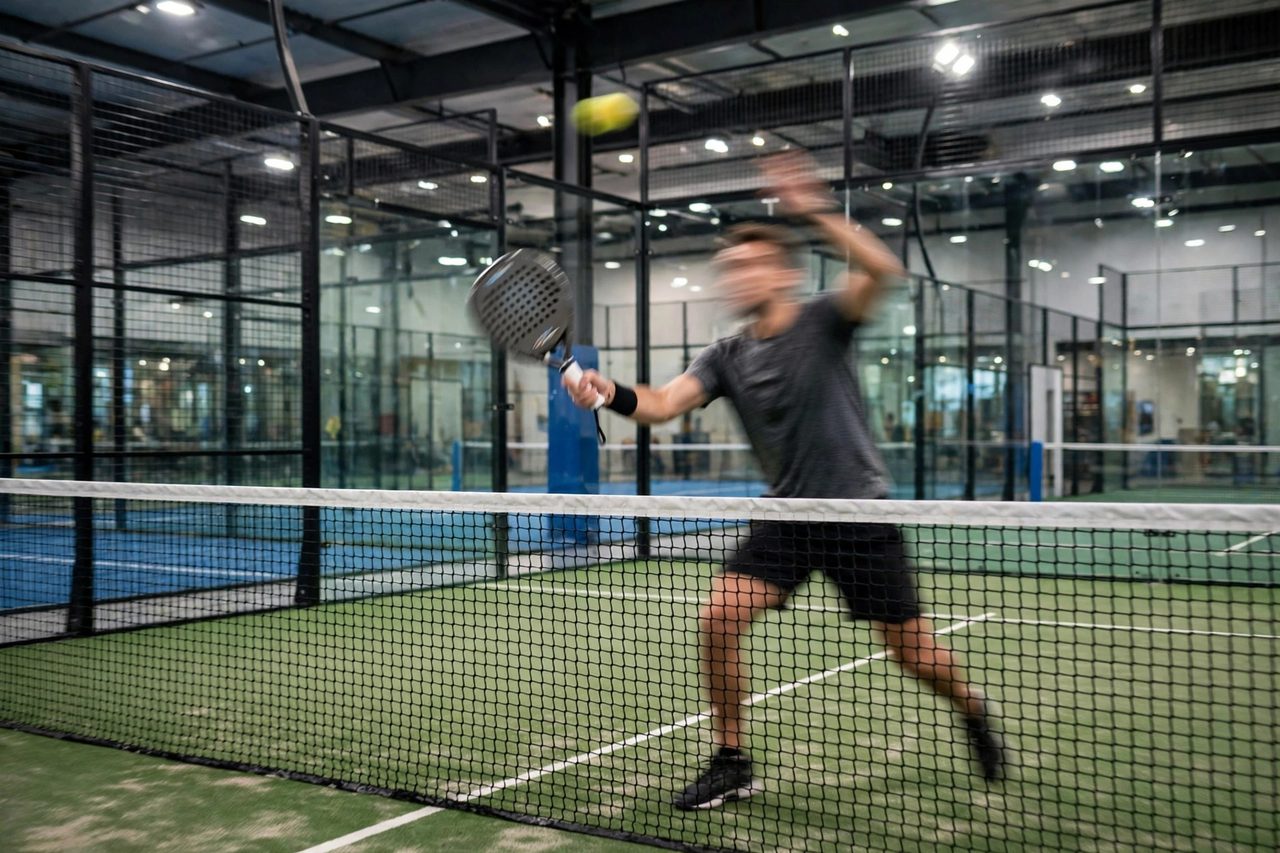
If padel has one shot that defines it, it is the bandeja. Spanish for “tray” — named for the flat, tray-like motion of the racquet — the bandeja is a sliced overhead played from the back of the court instead of a full smash. It is the shot that separates padel from tennis, and mastering it is the fastest way to level up your game.
Why the bandeja exists
In tennis, a high ball is an invitation to smash. In padel, smashing from deep is dangerous: the walls give your opponents time, a missed smash hands them the net, and the court’s geometry punishes overhitting.
The bandeja solves this. Instead of going for a winner, you hit a controlled, sliced overhead that stays low, skids off the back glass, and keeps you and your partner at the net. It is an attacking shot with a defensive purpose: maintain position, apply pressure, wait for the real opening.
When to play it — and when to smash
The rule of thumb: smash the easy balls, bandeja the rest. If the lob is short and you are balanced inside the service line, take the smash (the víbora, its aggressive cousin, is the in-between option). If the lob is deep, if you are stretched, or if you are behind the service line — play the bandeja.
Beginners smash everything and wonder why they lose the net. Advanced players bandeja relentlessly and wonder why their opponents never get comfortable.
The technique, step by step
1. Preparation. As the lob goes up, move back keeping your body sideways to the net, racquet up early. Track the ball over your hitting shoulder — never let it get behind you.
2. Contact. Strike the ball at the highest comfortable point, slightly in front of the body. The racquet face is open and the swing is short and controlled — think “slice serve” rather than “smash.”
3. The slice. Brush down and across the outside of the ball to generate sidespin and backspin. This is what makes the bandeja deadly: the spin keeps the ball low after the bounce and makes it skid awkwardly off the back glass.
4. Placement. Aim deep toward the corners or at the opponents’ feet — anywhere that forces a difficult, lifting reply. The bandeja is not trying to win the point; it is trying to earn a weak ball you can attack.
5. Follow-through and recovery. The follow-through is short, finishing across the body. Crucially, move forward as you hit: the bandeja is a transition shot, and its whole purpose is to keep or regain the net. Hit it, then step in.
Common mistakes
- Smashing from too deep: the classic error. If you cannot reach up comfortably, it is a bandeja ball.
- No slice: a flat “mini-smash” sits up and gets punished. The slice is non-negotiable.
- Hitting and staying back: the bandeja without forward movement is just a defensive lob with extra steps. The shot and the step-in are one action.
- Wrong ball selection: bandeja-ing a sitter you should have smashed. Learn to read the lob’s depth early.
The drill that builds it
Have a partner feed deep lobs from the baseline while you start at the net. Play every ball as a bandeja, with one rule: you must take two steps forward after every shot. Count how many consecutive bandejas land deep past the service line. When you can hit 20 without retreating, you own the shot — and probably the net.
Related articles
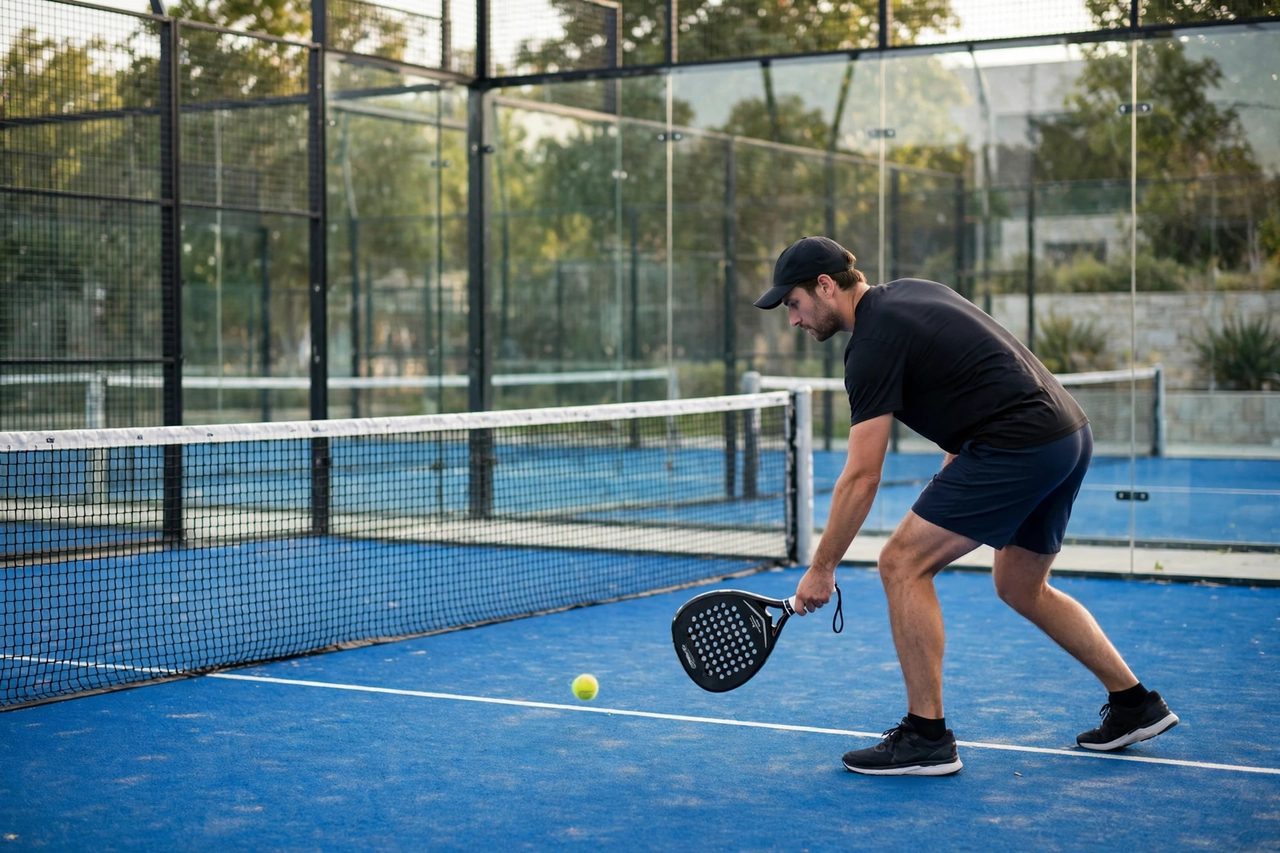
The Padel Serve: How to Start Every Point Underarm, Step by Step
In padel, the serve starts the rally — it doesn't end it. The rules, the technique step by step, and three easy drills to make your serve steady and smart.
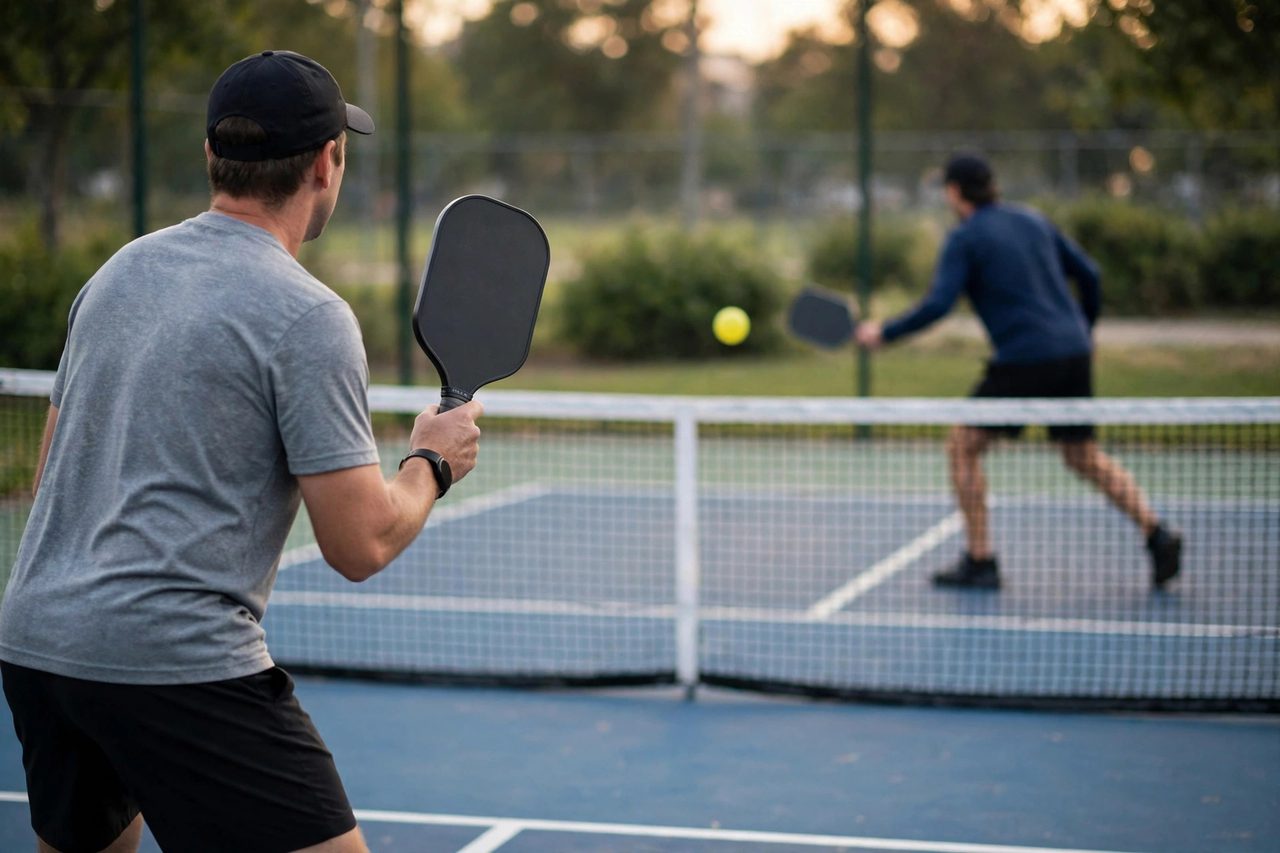
The reset: how to turn a hard ball into a soft one, step by step
When your opponent fires a hard ball at you at the net, the reset is your answer. A simple step-by-step guide to soft hands, paddle angle, and where to aim.
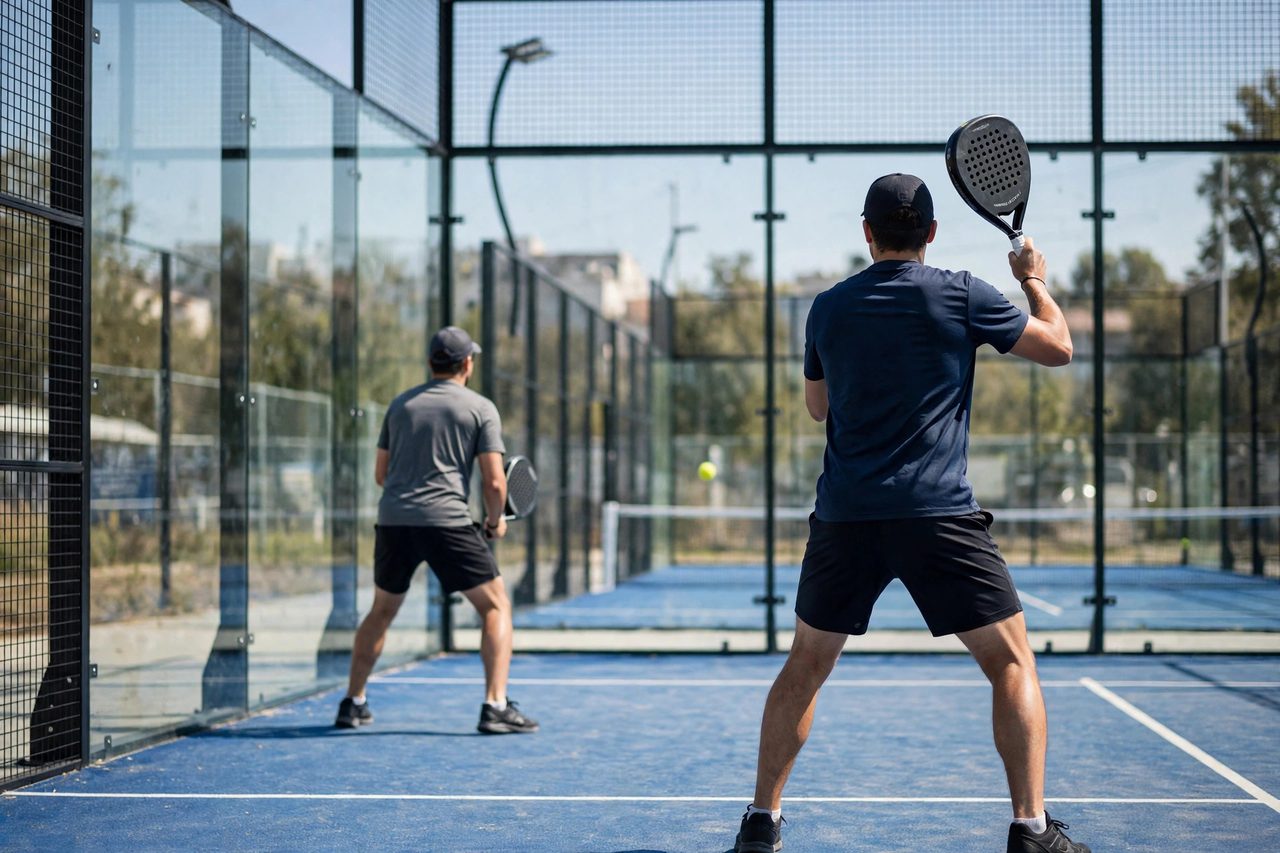
Playing Off the Glass: How to Use Padel's Walls, Step by Step
The glass walls are not the enemy. Learn how the ball comes off the back and side walls, when to let it bounce, and simple drills to build your confidence.