
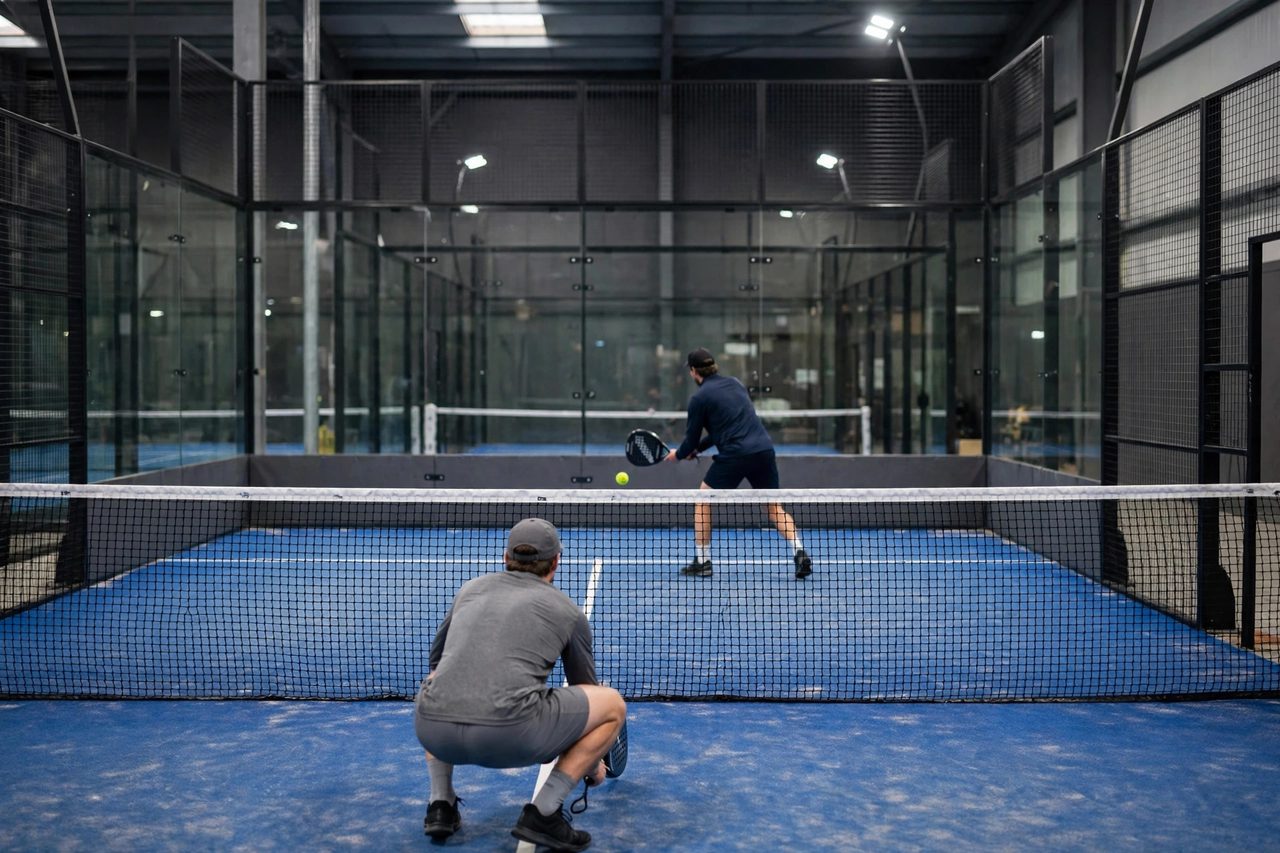
Padel has a shot that looks like nothing and wins points all the time. It is called the chiquita. The word means “little one” in Spanish, and that is exactly what it is: a small, soft, low shot that drops at your opponent’s feet and forces them to hit the ball upwards. Played well, it turns a defensive position into an attacking one. Played badly, it is a gift. Here is how to get it right.
What the chiquita is
First, the basics. Padel is played in pairs on a small court surrounded by glass walls. The net divides the court in half. When your opponents are at the net, they are in charge: they can volley, which means hitting the ball before it bounces, and finish points quickly. When you are at the back, you are defending.
The chiquita is a way out of that trap. Instead of lobbing — hitting a high ball over the net players’ heads — you play a soft, low ball that just clears the net and drops fast, right at the feet of the player at the net. That player now has to dig the ball up from below net height. Their reply will be soft and high. And that is your chance: you move forward, take the net, and attack the weak reply.
The key idea is simple. A ball at someone’s feet is hard to attack. A ball at someone’s waist is easy. The chiquita makes your opponent play from their shoes.
When to play it
Timing is everything. Play the chiquita when:
- Your opponents are close to the net, expecting a lob. If they have already started moving backwards, the chiquita will not work — they will have time to reach it.
- You have time and balance. You need to be steady on your feet, with the ball at a comfortable height between your knees and your waist.
- Your partner is ready to move forward with you. The chiquita is a team shot: it only pays off if both of you advance together.
Do not play it when you are stretched out wide, off balance, or pushed deep behind the baseline. From there you cannot control the ball well enough, and a soft shot will either hit the net or sit up as an easy volley for your opponents. When in doubt, lob. A lob is always safer than a bad chiquita.
How to hit it, step by step
1. Get low. Bend your knees and lower your body to the ball’s height. The chiquita is played on a low ball, so you need to be down there with it. Staying upright is the most common mistake.
2. Take a short backswing. This is not a power shot. Take the racquet back only a little. Most of the work comes from your wrist and forearm, not a big swing.
3. Open the racquet face slightly. The racquet face is the flat hitting surface. Tilt it slightly upwards, like you are scooping the ball with your palm. That helps the ball clear the net on a low arc and drop quickly on the other side.
4. Brush, don’t hit. Make soft contact with a slight slicing motion — the racquet moves a little from high to low as it goes forward. Slice means cutting under the ball so it spins backwards. That backspin makes the ball drop faster after it crosses the net and stay low, which is exactly what you want.
5. Aim at the feet — or the gap. The best targets are the feet of the nearest net player, or the space between the two opponents. The middle of the court is often the best target of all, because neither player is sure whose ball it is.
6. Move forward immediately. This is the most important step, and the one most players skip. The moment you hit the chiquita, step toward the net. A chiquita without a net approach is a wasted opportunity. You played the shot to take the net — so take it.
The mistakes that ruin it
Three errors show up again and again. The first is hitting it too hard. A chiquita with pace is just a normal groundstroke, and a normal groundstroke at the net player gets volleyed back hard. Soft is the whole point.
The second is playing it from too far back. If you are behind the service line with no time, you cannot keep the ball low enough. Lob instead, recover your position, and wait for a better chance.
The third is standing still after you hit it. If you stay at the back, your opponent’s weak reply becomes a comfortable volley, and you have given away the advantage you just created. Move.
How to practise it
Start simple. Rally with a partner where one pair stays at the net and the other practises chiquitas from the back. Focus on three things only: low, soft, at the feet. Count how many out of ten land where you want them. When you can hit seven out of ten, add the forward movement: hit the chiquita, then sprint to the net before the next ball comes back.
Then add pressure. Play practice points where the defending pair must play at least one chiquita per rally. You will quickly learn which balls suit the shot and which ones do not — and that judgement is the real skill.
The chiquita will not win you points on its own. That is not its job. Its job is to make your opponent uncomfortable, force a weak reply, and hand you the net. Learn it, and the court starts to feel smaller for your opponents — and much bigger for you.
Related articles
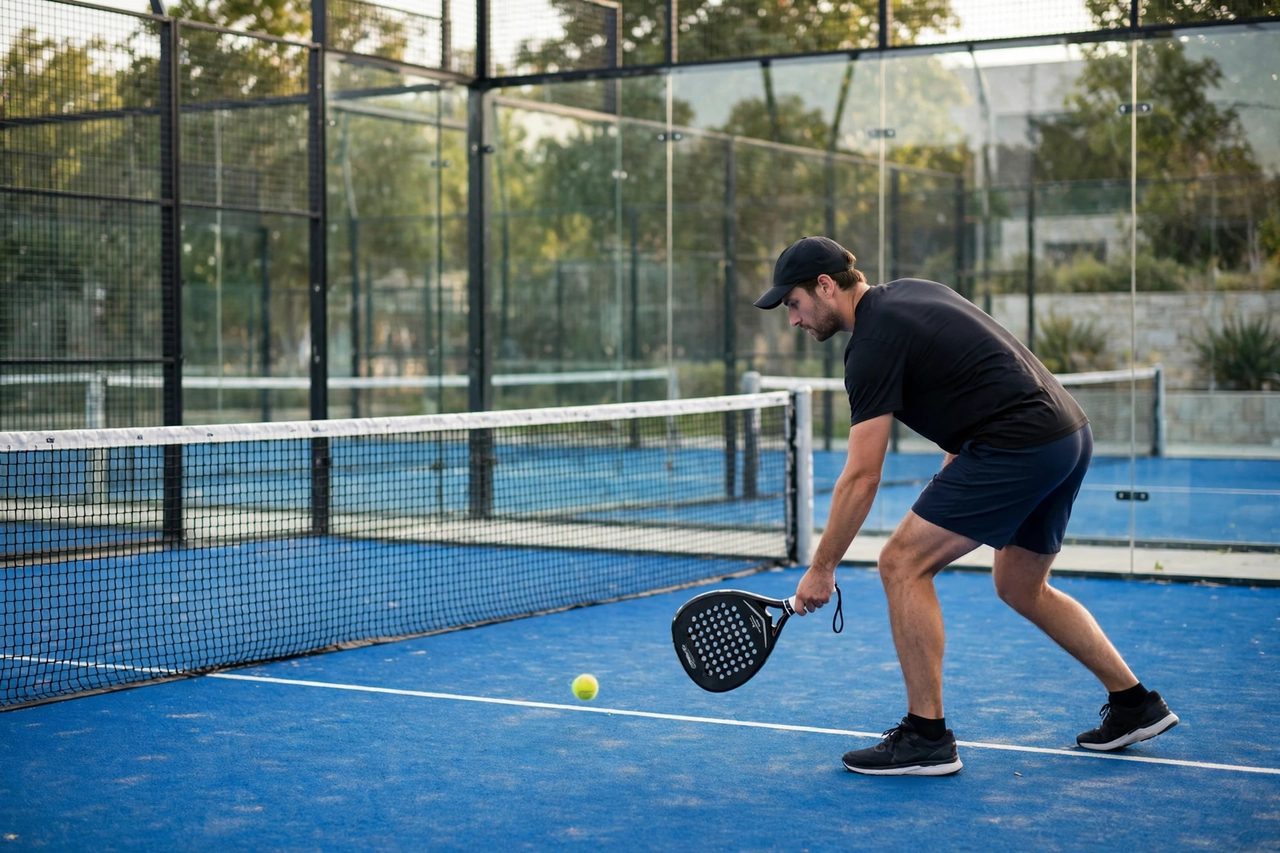
The Padel Serve: How to Start Every Point Underarm, Step by Step
In padel, the serve starts the rally — it doesn't end it. The rules, the technique step by step, and three easy drills to make your serve steady and smart.
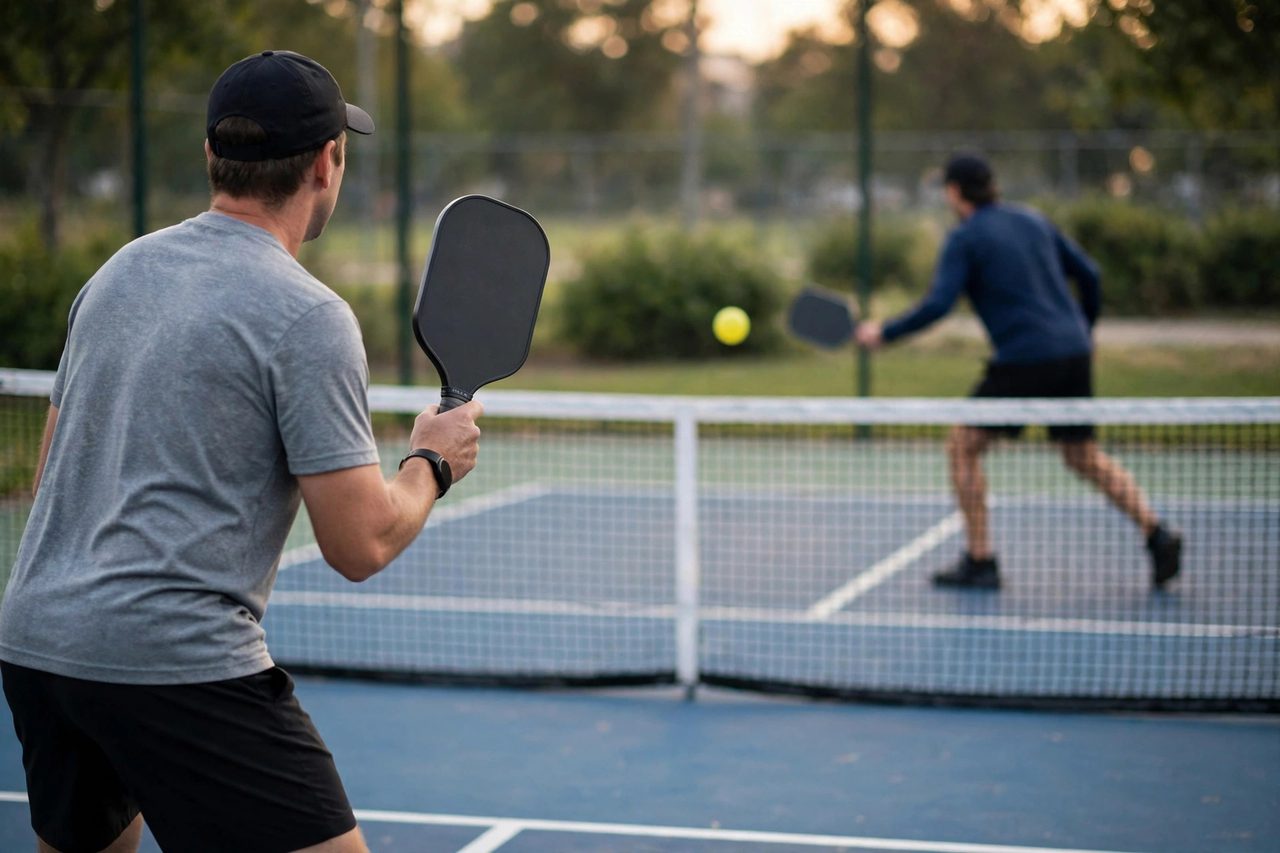
The reset: how to turn a hard ball into a soft one, step by step
When your opponent fires a hard ball at you at the net, the reset is your answer. A simple step-by-step guide to soft hands, paddle angle, and where to aim.
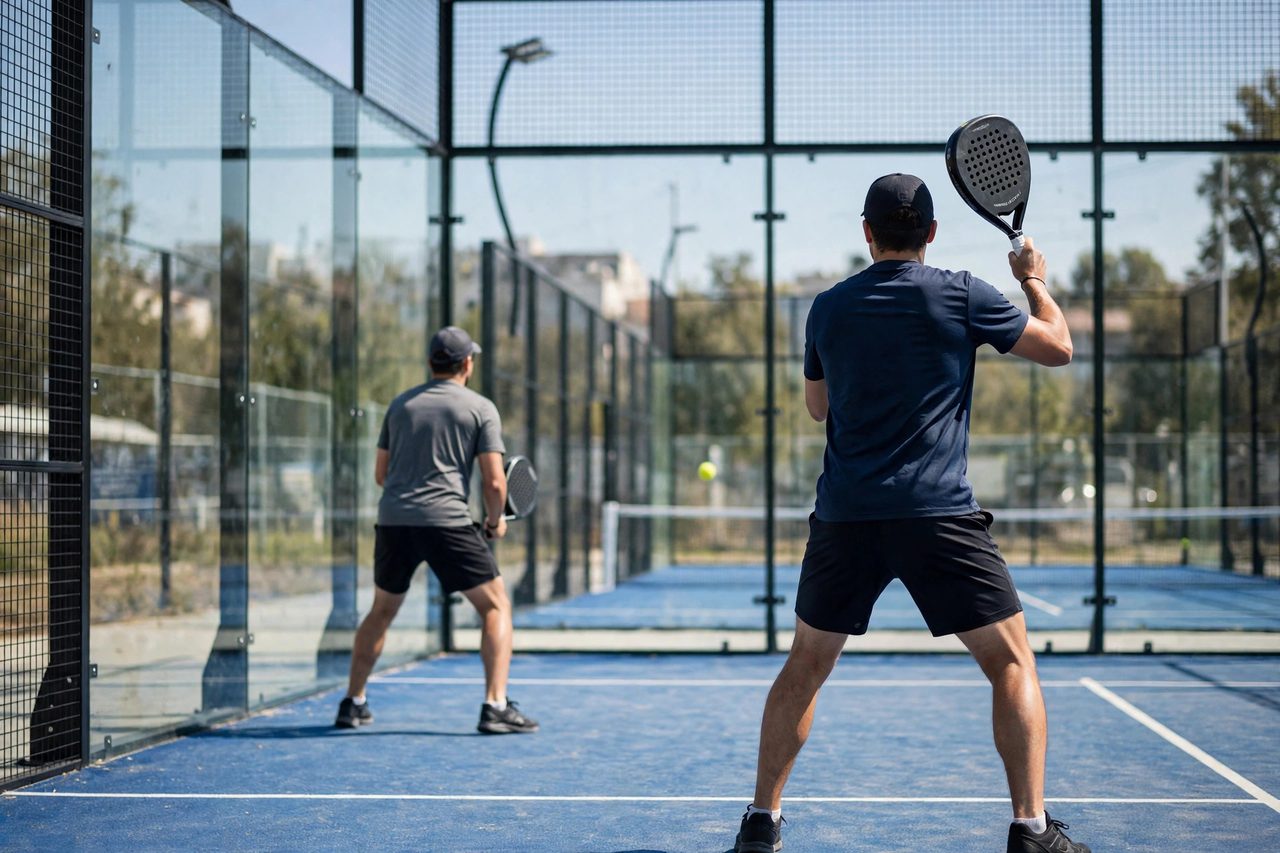
Playing Off the Glass: How to Use Padel's Walls, Step by Step
The glass walls are not the enemy. Learn how the ball comes off the back and side walls, when to let it bounce, and simple drills to build your confidence.