
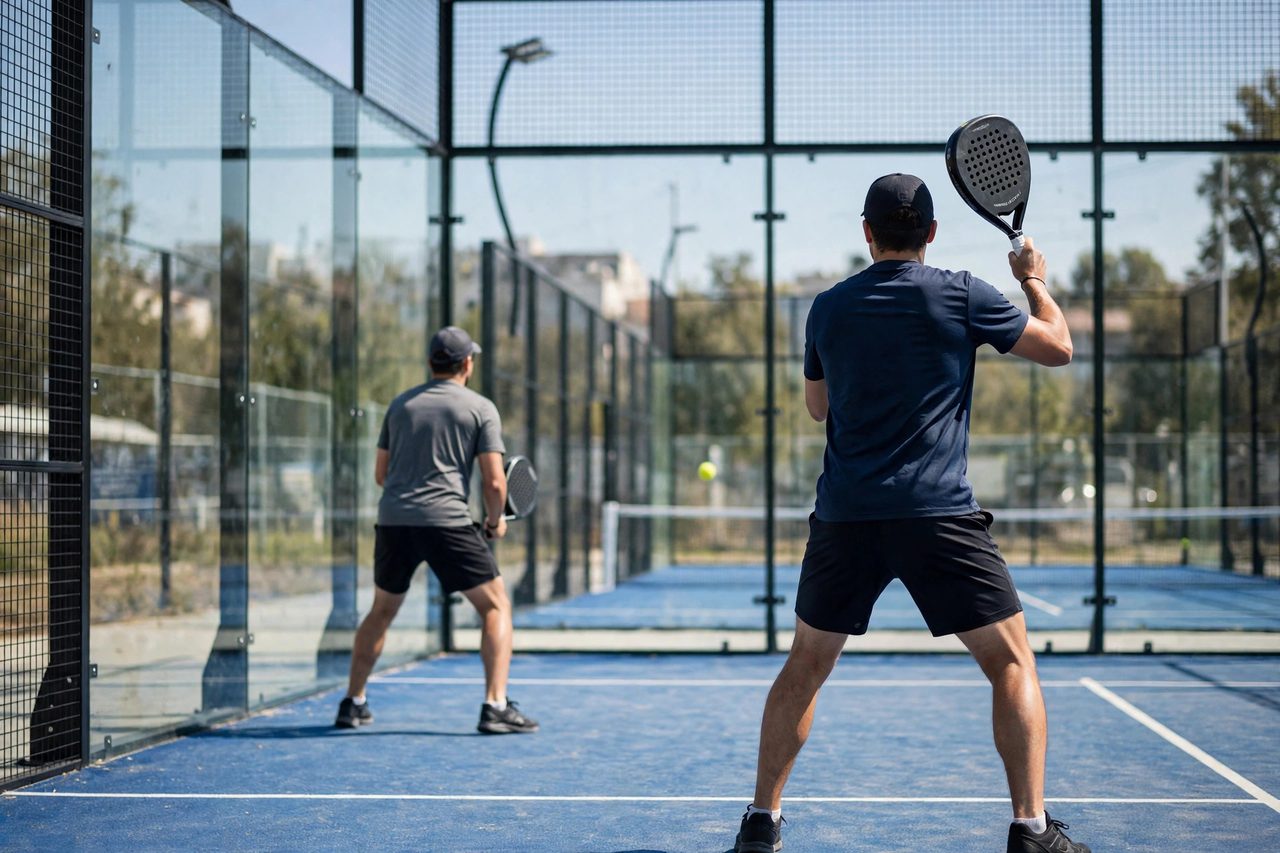
Padel looks a lot like tennis at first glance. Then the ball flies past you, hits the glass, and comes back. That moment surprises every new player. But the glass is part of the game. Learn how it works, and it can help you win points.
The one rule you need to know
In padel, the ball can bounce once on the floor of your side. After that one bounce, it can hit the glass and stay in play. This is called the double bounce rule.
Your opponent hits the ball. It lands on your side. That is bounce one. Then it hits the back glass. You can still play it. There is one catch. If the ball hits the glass before it touches the floor on your side, the point is over. The order matters: floor first, then glass. The same rule applies to the side glass.
How the ball comes off the glass
A ball that hits the glass does not come back the way it came in. It loses speed, and it comes off at a similar angle to the one it arrived at.
The back glass is the one you will use most. When a hard shot lands deep and hits it, the ball usually comes back toward the middle of the court. It comes back slower, which gives you time.
The side glass is trickier. A ball that hits it often comes back at a sharp angle, across the court. Do not chase it sideways at full speed. Move early, stay low, and let the ball come to you.
A soft lob, a high, slow shot that arcs over your head, will drop gently off the glass. A hard drive will come back faster and lower.
Where to stand
Good positioning makes the glass easy. Bad positioning makes it feel impossible. Most beginners stand too close to the net, or too close to the glass. You want the middle ground.
After you hit the ball, move back toward the middle of your half, about a metre in front of the back glass. That gives you room to step back if the ball comes off fast, and room to step forward if it drops short.
Keep your racquet up and in front of you, at chest height. This is the ready position. If your racquet is down by your side, you will be late on every ball off the glass.
Step by step: playing a ball off the back glass
Your opponent hits a deep shot. It lands near the back of your court and heads for the glass. Here is what to do.
Step 1: Turn and move back. As soon as you see the ball going deep, turn your shoulders and take quick, small steps back.
Step 2: Wait. The ball lands on the floor, then hits the glass. Do not swing yet. Wait for it to come off the glass and start moving back toward the net.
Step 3: Get beside the ball. Move so the ball is beside your body, not right in front of your chest. You need space to swing.
Step 4: Hit it gently. You do not need power here. A soft, controlled shot over the net is enough. Aim for the middle of the court.
Step 5: Move back to your spot. Return to your ready position near the middle of the court. The rally is not over.
Turn, wait, get beside the ball, play it softly, recover. Practice it slowly at first.
When to volley, and when to wait
A volley is a shot you hit before the ball bounces. In padel you often have a choice: volley it out of the air, or let it bounce and come off the glass.
Volley when the ball is high and slow and you are near the net. A high ball is easy to hit in the air, and volleying takes time away from your opponents. Let it come off the glass when the ball is fast, low, or deep. If it is flying past you toward the back wall, do not reach for it. Let it bounce, let it hit the glass, and play it on the way back. The glass slows the ball down and gives you a second chance.
Let it come off the glass when you are out of position, too. If you are off balance or too close to the wall, a volley will probably go wrong. Step back and reset the rally with a soft shot.
Common mistakes
Standing too close to the glass leaves the ball no room to come off it, and leaves you no room either. Give yourself space. Swinging too hard is the next trap: a ball coming off the glass is already moving toward you, so a hard swing usually sends it long or into the net. Soft and in control wins the point more often.
Three simple drills
Drill 1: The gentle rally. Stand near the back of the court. Your partner hits soft shots that land deep and come off the back glass. Play each ball back softly, over the net. Drill 2: The side-glass game. Your partner aims shots at the side glass, after the bounce. Practice moving sideways and playing the ball back down the middle. Start slow.
Drill 3: Volley or wait. Your partner mixes up high, slow balls and deep, fast ones. For each ball, decide out loud: “volley” or “wait”. Do these drills once a week and the glass will stop feeling like a surprise. So next time the ball flies past you toward the back wall, do not panic. Turn, wait, get beside it, and play it back softly. The glass is on your side too.
Related articles
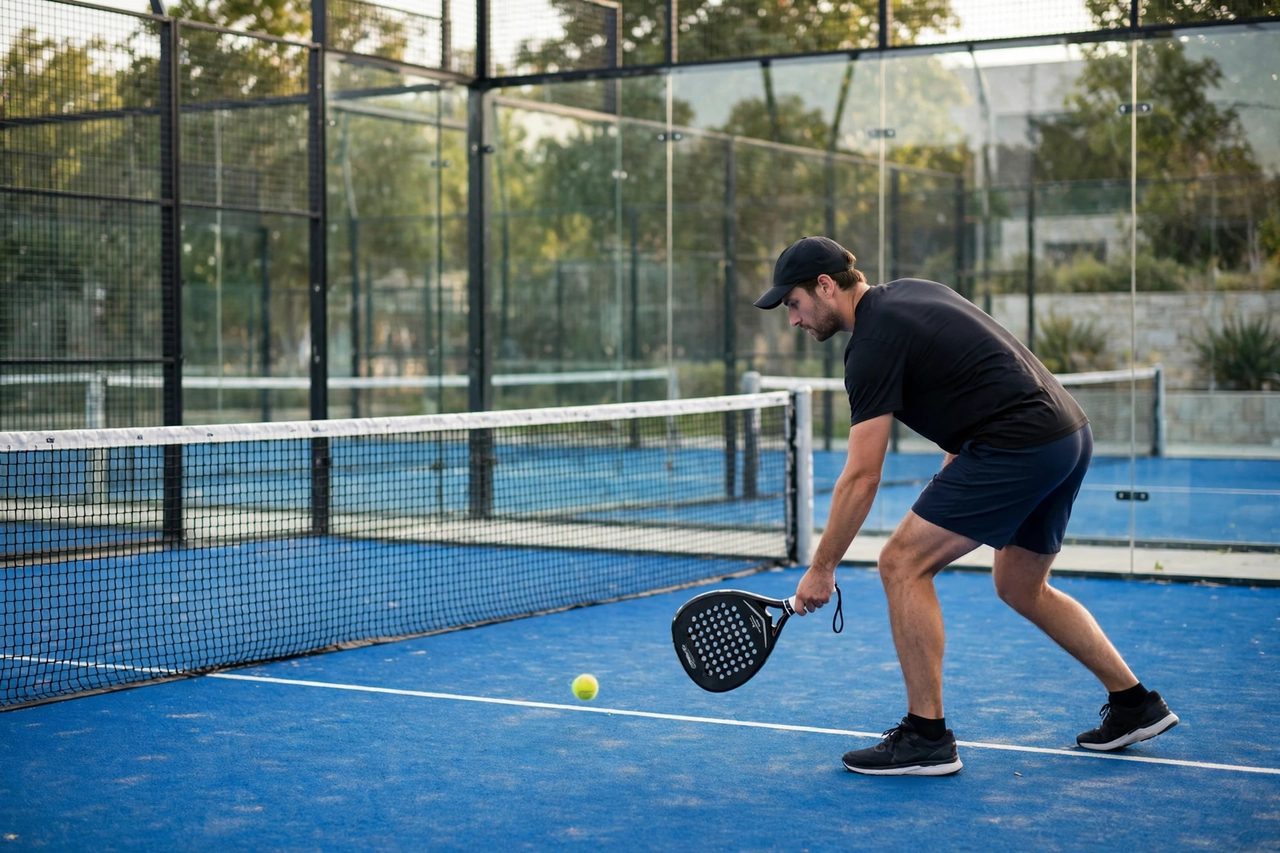
The Padel Serve: How to Start Every Point Underarm, Step by Step
In padel, the serve starts the rally — it doesn't end it. The rules, the technique step by step, and three easy drills to make your serve steady and smart.
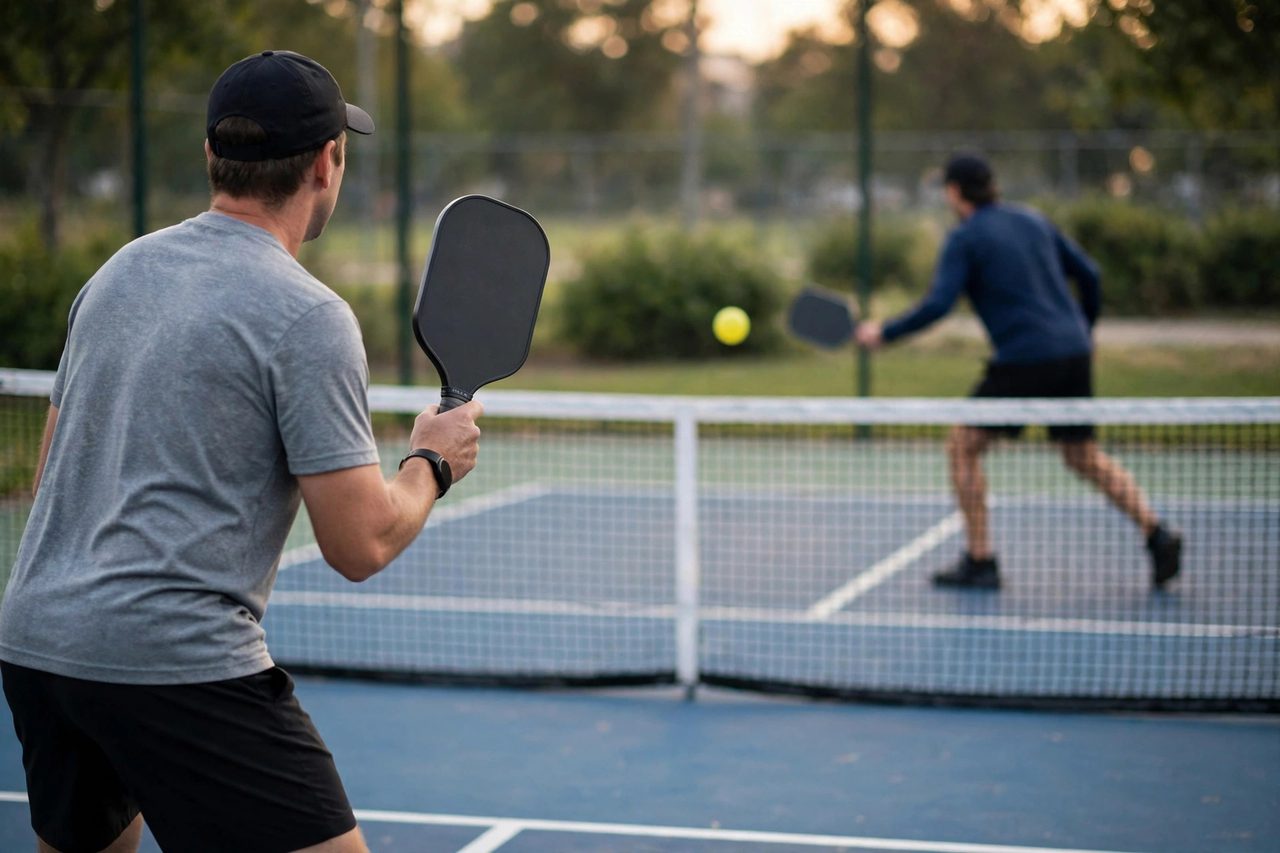
The reset: how to turn a hard ball into a soft one, step by step
When your opponent fires a hard ball at you at the net, the reset is your answer. A simple step-by-step guide to soft hands, paddle angle, and where to aim.
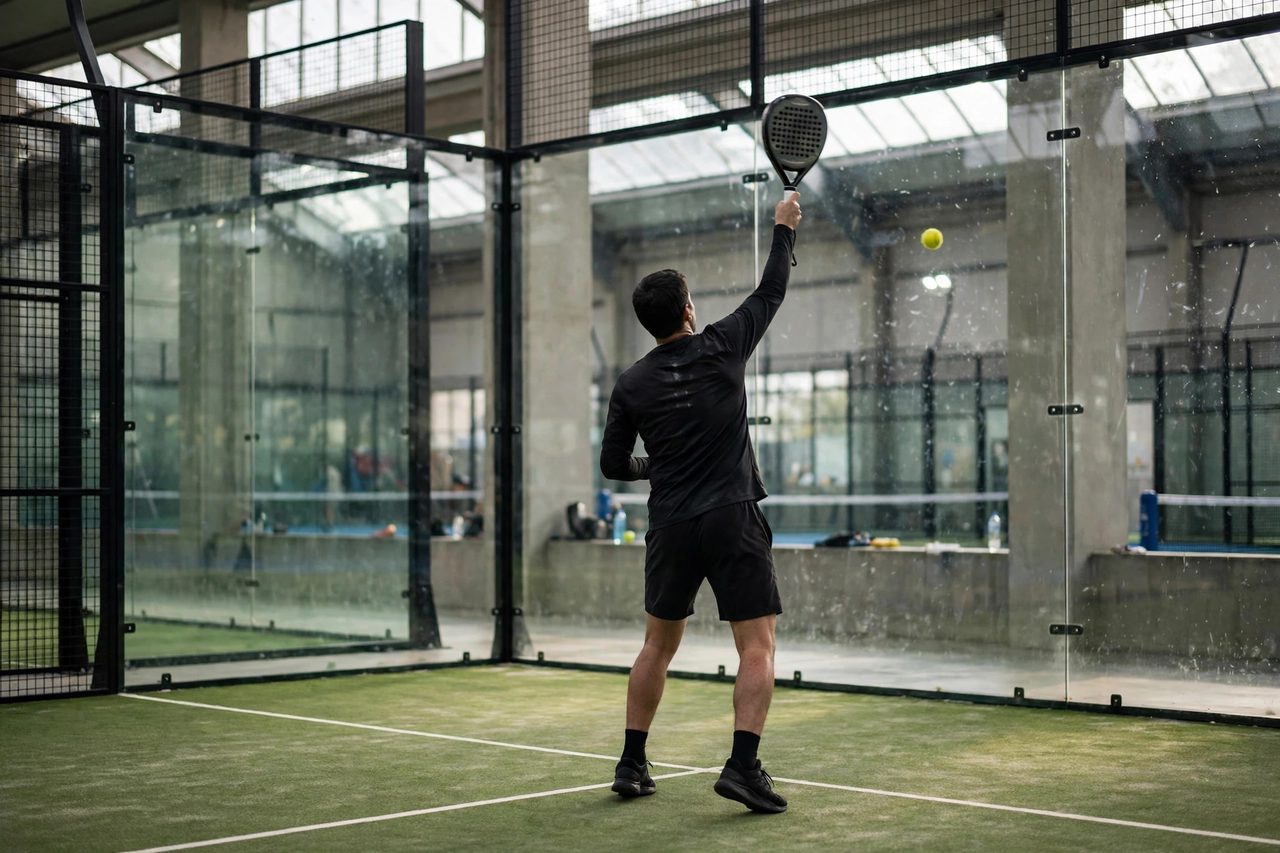
The Bajada: Padel's Overhead Finish, Step by Step
The bajada turns a lob off the back glass into an attacking overhead. Here is how to read the rebound, move your feet, and finish the point.