
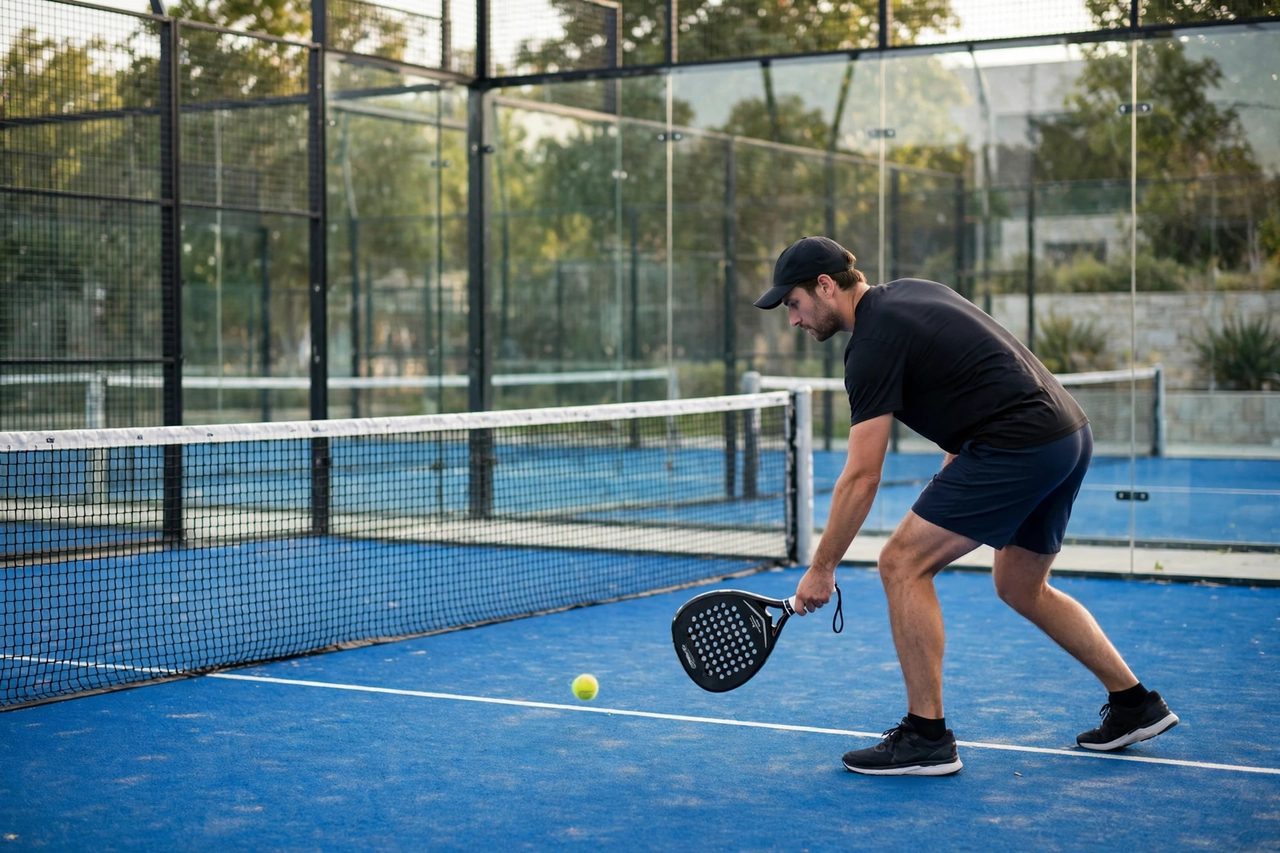
Every point in padel starts the same way: with a soft underarm serve. There is no booming first serve like in tennis. The serve starts the rally — it doesn’t win the point. Once you accept that, the serve gets much easier.
An underarm serve is a serve hit from below waist height, with the racquet swinging low instead of overhead. It sounds simple, and it is — but the small details matter.
The rules, in plain English
The serve follows four rules.
1. The ball must bounce first. Drop the ball and let it bounce behind the service line before you hit it. You can’t hit it straight out of your hand.
2. Hit it below waist height. The contact point is low — at or below your waist. Hit it higher and it’s a fault.
3. It goes diagonally. Serve from behind the service line into the service box diagonally opposite you. The service box is the marked rectangle on the other side of the net, in front of the back glass. The ball must land inside it.
4. One fault, then a second serve. If your first serve misses — it hits the net, lands outside the box, or hits the side fence directly — that’s a fault, and you get a second serve. Miss the second one too and you lose the point: a double fault.
One more detail: after the ball bounces in the box, it may hit the glass wall behind it. That’s normal in padel and the rally continues. But a serve that hits the side fence directly, before bouncing in the box, is a fault.
The technique, step by step
1. Stand sideways, behind the line. Stand just behind the service line, body sideways to the net, front shoulder pointing toward the net post. Feet shoulder-width apart, knees slightly bent.
2. Drop the ball, don’t throw it. Hold the ball in your free hand at waist height and simply let it drop — don’t throw it up or push it forward. Let it bounce once, just in front of you and slightly to the side of your front foot.
3. Swing low and through. As the ball comes up off the bounce, swing your racquet forward and slightly upward in a smooth, low arc — like bowling underarm. Keep your wrist firm and your racquet face slightly open, so the ball lifts gently over the net. The power comes from your legs and your shoulder turn, not your arm alone.
4. Make contact in front of you. Hit the ball just in front of your body, below waist height, as it rises from the bounce. Hit it too late and it goes anywhere except where you want it.
5. Follow through and move in. Let your racquet keep moving toward your target, then step in and move to the net with your partner — in padel, that’s where most points are won.
Where to aim: three simple variations
A good serve isn’t a fast serve. It’s a well-placed serve. Here are three targets to learn.
To the glass. Aim deep into the service box so the ball bounces and then hits the back glass. The glass wall is the glass panel at the back of the court. A ball that comes off the glass is awkward to return, and it often pops up high.
To the body. Serve at the receiver’s body, or just to their backhand side. It’s hard to swing at cleanly, and it usually comes back soft and high — ready to attack.
With a little slice. Slice means brushing across the ball so it spins sideways. A sliced serve stays low after the bounce and skids away from the receiver. You don’t need much spin — just brush the outside of the ball as you swing through.
Mix the three up. Serve to the same spot every time and a good receiver will read it. Change the target, change the spin, keep them guessing.
Common mistakes
Serving too hard. The most common mistake is treating the serve like a tennis serve. Hard serves bounce high off the glass and come back fast — a soft, well-placed serve is much harder to attack.
Hitting the ball too high. If your contact point creeps above your waist, you lose control and risk a fault. Keep the swing low — and if you keep hitting it high, lower your drop.
Standing flat-footed. Some players serve and then watch. Don’t. Your serve is the start of the rally, not a pause in it. Move in with your partner straight away.
Rushing the second serve. After a fault, players often rush the second serve and miss it too. Slow down. A safe second serve — deep, soft, and in — always beats a brave one that misses.
Three drills to practise
Drill 1: The target game. Put a small target — a towel, a cone, anything — in each corner of the service box. Serve ten balls, count how many land near a target, then switch corners.
Drill 2: The bounce check. Practise just the drop and the bounce, without hitting the ball. Drop it, watch it bounce, catch it at waist height. Do it twenty times. When the bounce feels the same every time, your serve will too.
Drill 3: Serve and move. Serve, then sprint to the net as fast as you can, in position next to your partner. Repeat ten times. This builds the habit that matters most: the serve isn’t the end of the point, it’s the beginning of your move forward.
The bottom line
The padel serve will never be the most exciting shot in your game. Its job is quieter: start the point cleanly, put the ball where you want it, and get you to the net in good shape. Practise it little and often — ten minutes at the start of a session is enough.
Related articles
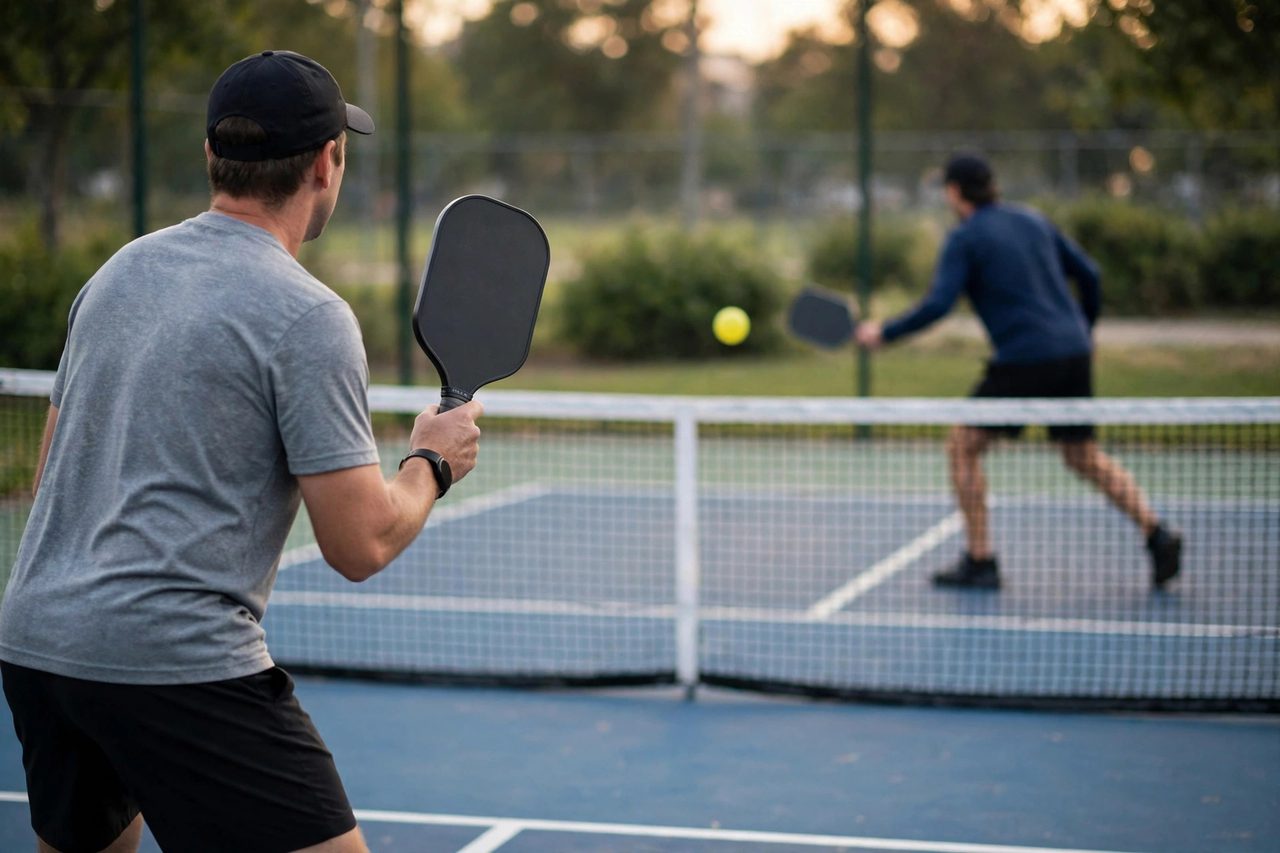
The reset: how to turn a hard ball into a soft one, step by step
When your opponent fires a hard ball at you at the net, the reset is your answer. A simple step-by-step guide to soft hands, paddle angle, and where to aim.
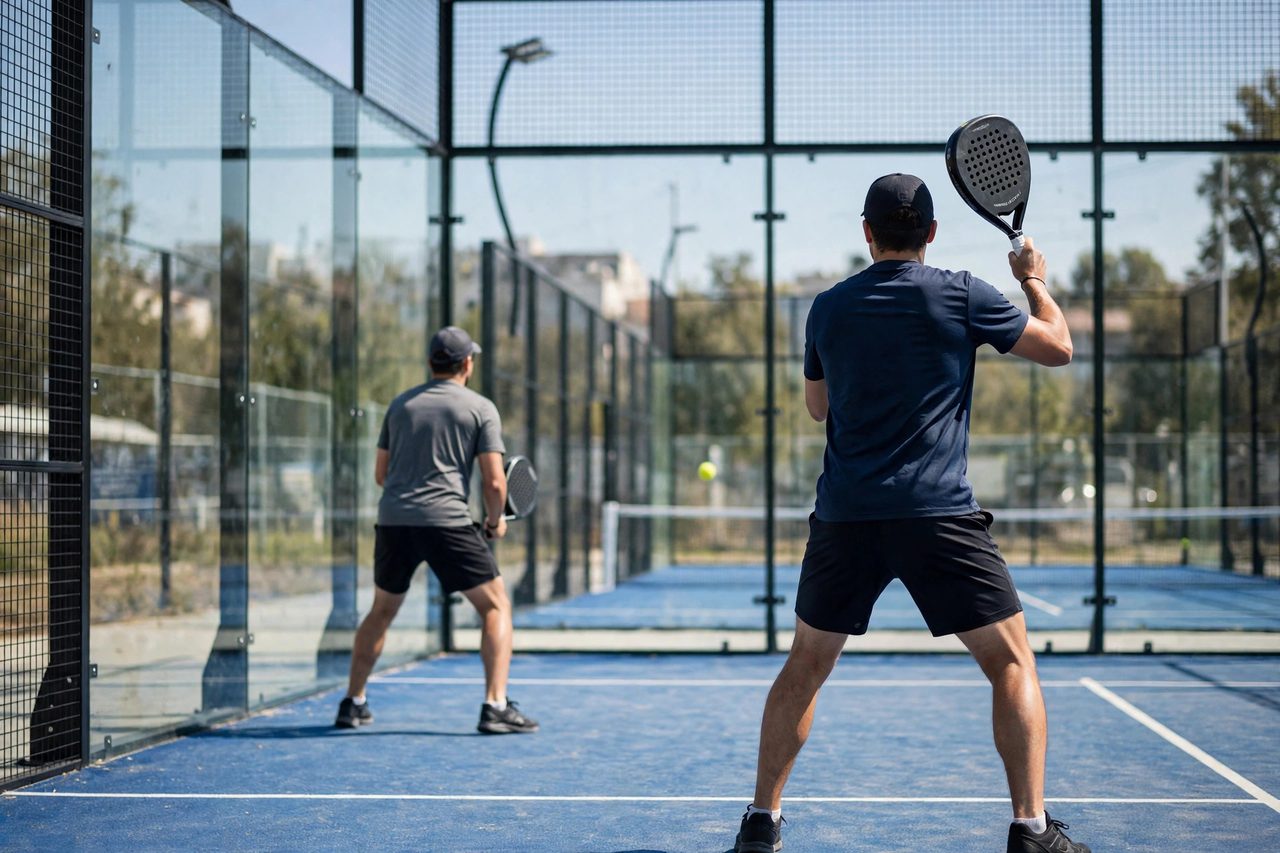
Playing Off the Glass: How to Use Padel's Walls, Step by Step
The glass walls are not the enemy. Learn how the ball comes off the back and side walls, when to let it bounce, and simple drills to build your confidence.
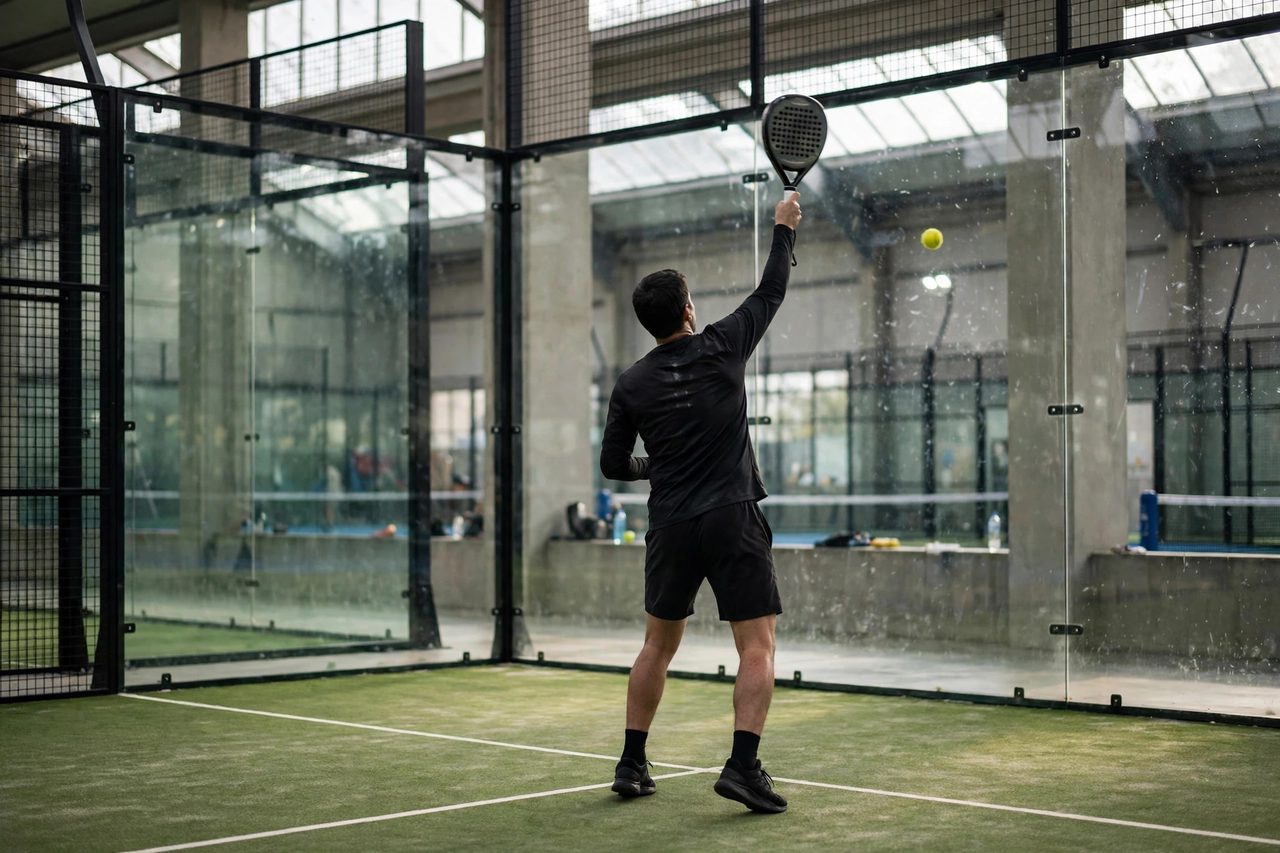
The Bajada: Padel's Overhead Finish, Step by Step
The bajada turns a lob off the back glass into an attacking overhead. Here is how to read the rebound, move your feet, and finish the point.