
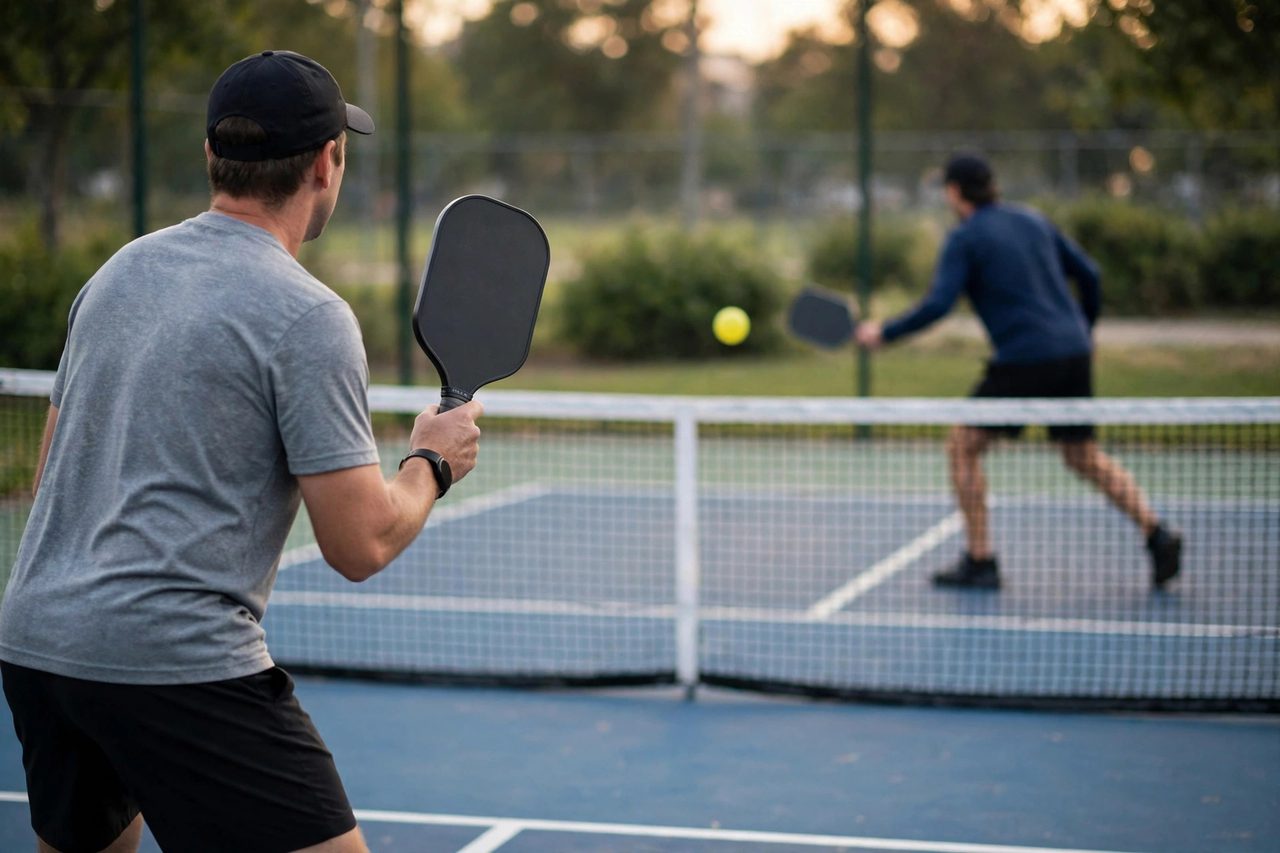
You are at the net. Your opponent fires a hard ball straight at you. Your instinct says: hit it back just as hard.
That instinct loses points. The hard ball comes back harder, you lose control, and the rally ends on your side of the net.
There is a better answer. It is called the reset. A reset is a soft shot that takes the pace off a hard ball and drops it gently into your opponent’s kitchen, the no-volley zone near the net. Instead of fighting power with power, you take the power away. The rally slows down, and the point starts again on fair terms.
Here is how to do it, step by step.
Step 1: Get ready before the ball arrives
The reset starts before you swing. Keep your paddle up and in front of your chest, around shoulder height. This is your ready position at the net, and it matters more than anything else. A paddle that is down low will be too slow when a fast ball comes at you.
Stand with knees slightly bent, weight on the balls of your feet, and stay relaxed. Tension is the enemy of a soft shot, and it starts in your shoulders. If you are tight, the ball will bounce off your paddle like it hit a wall.
Step 2: Loosen your grip
Hold your paddle loosely — about a 3 out of 10 on the pressure scale. Think of holding a small bird: firm enough that it does not fly away, gentle enough that you do not hurt it.
A loose grip lets the paddle absorb the ball’s speed instead of sending it back. A tight grip does the opposite. It turns your paddle into a wall, and the ball flies off it fast and high — usually out of bounds.
Step 3: Angle the paddle face up
Tilt the face of your paddle slightly toward the sky, like a small ramp. This angle does two things. It lifts the ball over the net, and it takes the pace off it at the same time.
The angle does not need to be big. A slight tilt is enough. Too much tilt and the ball floats high, which gives your opponent an easy shot to attack — a speed-up, a sudden hard shot meant to finish the point. Keep the face just open enough to lift the ball.
Step 4: Short motion, soft hands
The reset is not a swing. It is more like a catch. Move your paddle a short distance toward the ball — a few inches, no more — and let the ball meet the paddle. Your arm stays mostly still. Your wrist stays quiet.
Think of your paddle as a cushion, not a bat. The ball has all the energy it needs already. Your job is only to slow it down and guide it. If your arm swings, you add your own power, and the ball goes too far.
Step 5: Aim into the kitchen
Where should the ball land? In the kitchen. The kitchen is the 7-foot zone on each side of the net where players are not allowed to volley, or hit the ball out of the air. A ball that lands there has to bounce, and it arrives low, so your opponent cannot attack it hard.
Aim for the middle of the kitchen, or crosscourt into the kitchen. Crosscourt gives you more room and a lower part of the net to clear, so it is the safer choice. Keep the ball low over the net — just clearing it is perfect. A reset that floats high is a gift to the other side.
If your reset lands in the kitchen and stays low, you have done your job. You are back in the point. The rally slows down into a dink exchange — a dink is a soft, arcing shot that lands in the kitchen — and you are ready for it.
Common mistakes
Gripping too tight. This is the number one mistake. If your resets keep flying long or popping up high, loosen your grip first.
Swinging too big. A big swing adds power you do not want. Short and still beats long and fast.
Aiming at the baseline. A reset is not a drive. Aim deep and the ball stays fast and high, and your opponent attacks it. Aim short, into the kitchen.
Freezing when the ball comes at your body. Fast balls at the chest feel scary. Step back, keep the paddle up, and let the soft hands do the work. You do not need to dodge. You need room.
Trying to win the point with the reset. The reset is not a winner. It is a rescue shot. Its job is to stop the attack and give you a fair rally. If you try to make it perfect or aggressive, it stops working.
Three drills to learn the reset
1. The wall catch. Stand a few feet from a wall with a ball. Toss the ball at the wall, let it bounce back at you, and catch it softly on your paddle face, dropping it to the ground. No swing. This trains the loose grip and the cushion feeling.
2. The partner feed. Ask a partner to hit firm balls at you from the net — not full power, just firm. Your only job is to reset each one into the kitchen. Start slow. As you get comfortable, ask your partner to hit harder. Count how many resets in a row land in the kitchen.
3. The three-reset rally. Play a normal point, but with one rule: the first three times anyone is attacked hard, they must reset. No counter-attacking allowed. This teaches you to choose the reset under real pressure instead of swinging out of habit.
Ten minutes on one of these drills, two or three times a week, is enough to start. The reset is not a fancy shot — it is a calm one, and calm wins a lot of points in pickleball.
Related articles
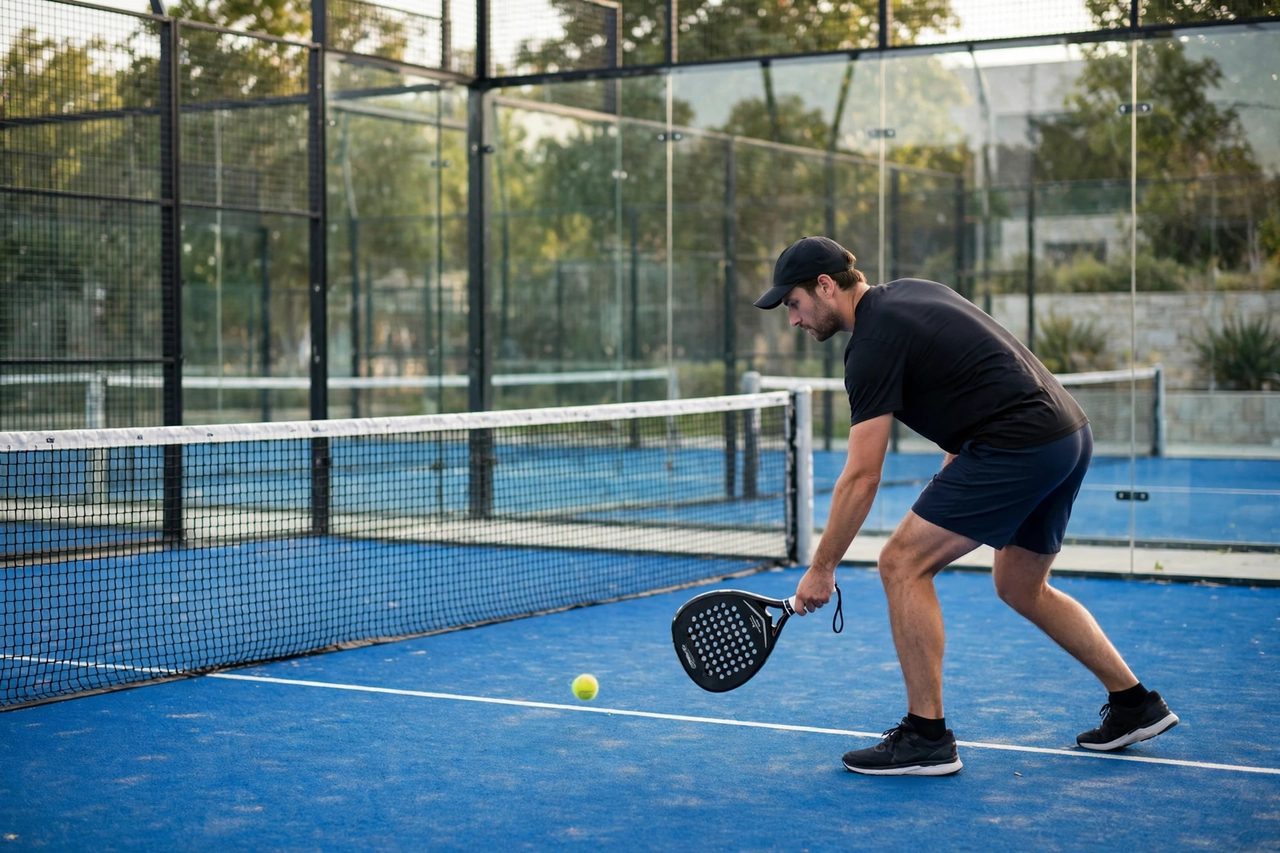
The Padel Serve: How to Start Every Point Underarm, Step by Step
In padel, the serve starts the rally — it doesn't end it. The rules, the technique step by step, and three easy drills to make your serve steady and smart.
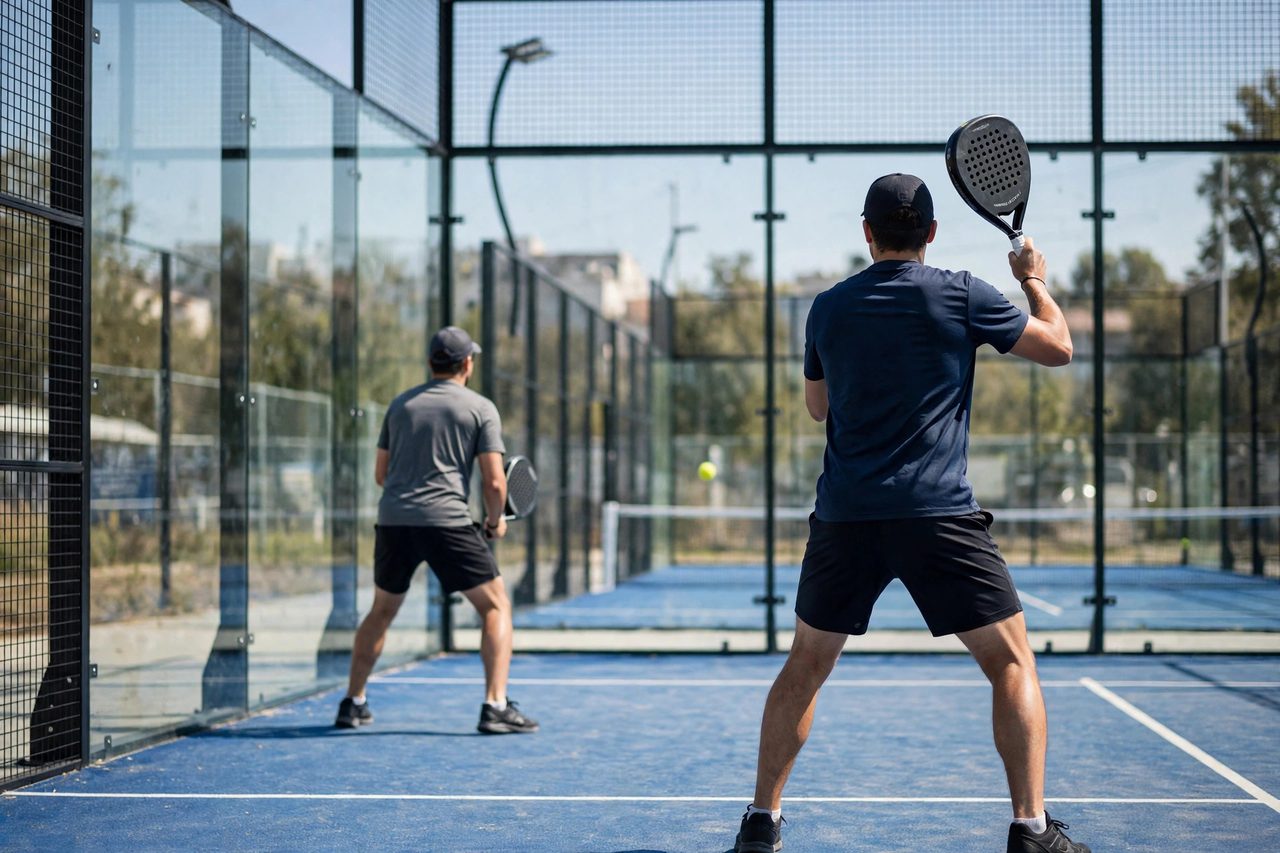
Playing Off the Glass: How to Use Padel's Walls, Step by Step
The glass walls are not the enemy. Learn how the ball comes off the back and side walls, when to let it bounce, and simple drills to build your confidence.
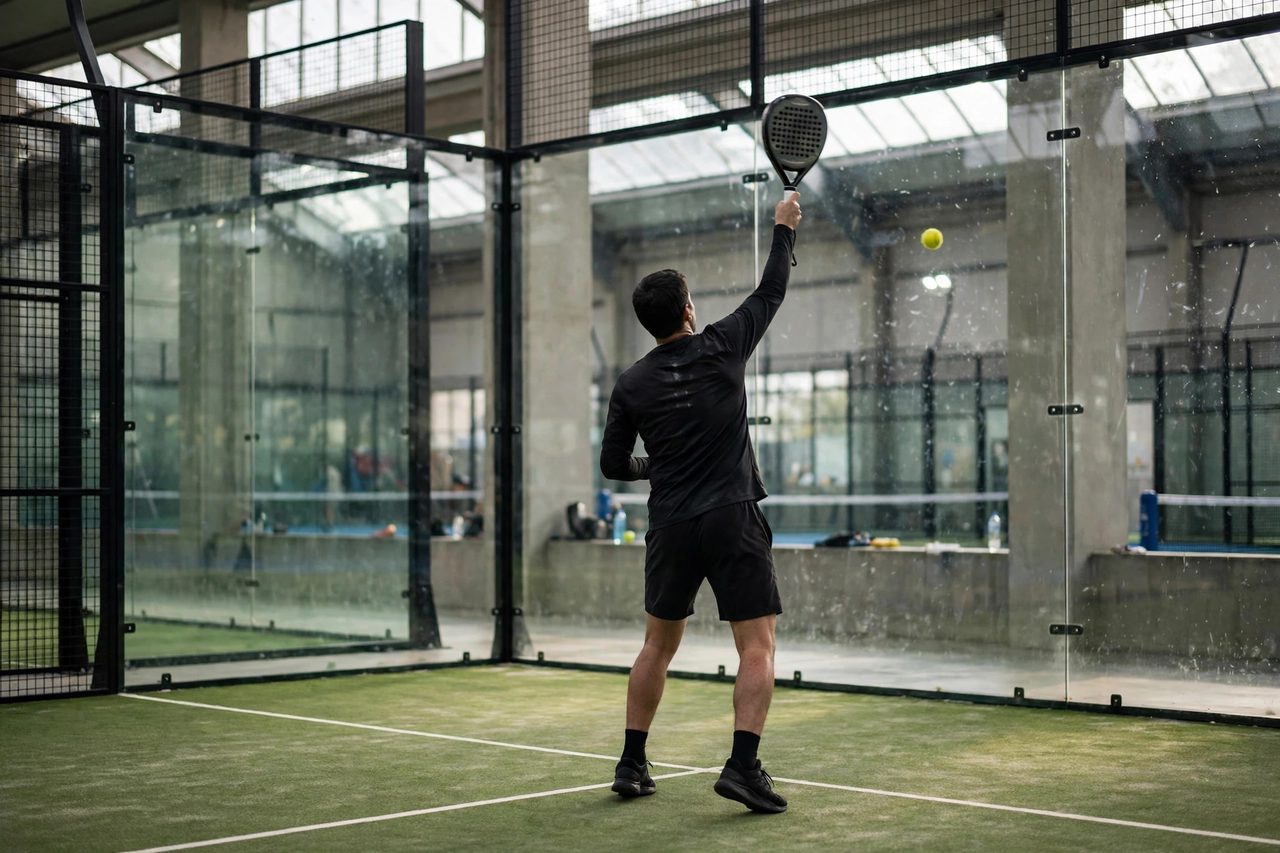
The Bajada: Padel's Overhead Finish, Step by Step
The bajada turns a lob off the back glass into an attacking overhead. Here is how to read the rebound, move your feet, and finish the point.