
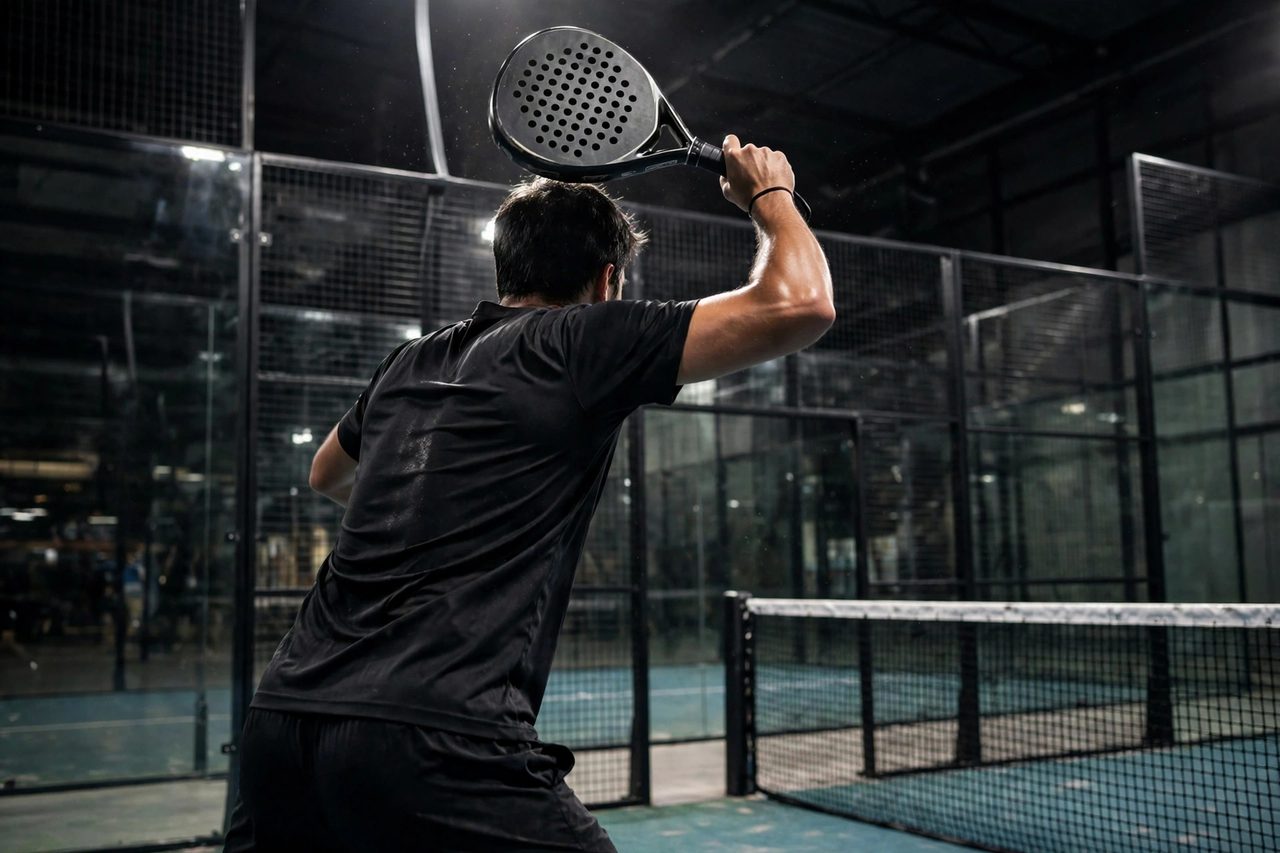
The bandeja keeps you in the point. The full smash — the remate — ends it, when the lob sits up perfectly. But most lobs land somewhere in between: too low to crush, too attackable to block. That gap is owned by the vibora — Spanish for “viper” — padel’s sliced power smash, and the most feared overhead in the intermediate and advanced game.
The vibora is the attacking cousin of the bandeja. Where the bandeja is flat and controlled, the vibora is cut aggressively with heavy sidespin, so the ball skids low off the back glass at an angle the defenders can’t read. Done well, it wins the point outright. Done decently, it buries your opponents so deep in the corner that the next ball is a formality.
Here is how to build it, step by step.
Step 1: recognize the ball
The vibora lives on the poor lob — the one that doesn’t clear your head by enough, or drops a little short. If the lob is high and deep, play your bandeja and hold the net. If it sits up begging to be hit, that’s the remate. The vibora is for everything in between: shoulder-to-head height, close enough to attack, not clean enough to finish flat.
Decision-making is half the shot. A vibora attempted on the wrong ball becomes an error; a bandeja played on a vibora ball wastes an opening.
Step 2: get behind it and turn sideways
Take an extra step back so your body is behind the ball, then turn sideways — your non-hitting shoulder pointing at the net. Keep the racquet head high, well above the expected contact point, with the face slightly open and your elbow high and away from your body. If the elbow drops, the shot flattens out and sits up.
Use a continental grip. If you grip it like a forehand drive (semi-western or eastern), you’ll struggle to generate the slice the shot depends on.
Step 3: the contact — low, in front, brushed
Contact happens at head height for the classic vibora, or a touch above for the faster, higher-contact version. The golden rule: meet the ball in front of your body, never late and never behind you. A short, compact backswing is all you need — this is not a wind-up shot.
Now the cut. Brush the back-right side of the ball (for a right-hander) with a descending, aggressive motion, as if you’re slicing the ball diagonally. The racquet face stays slightly open through contact. And here is the non-negotiable: snap the wrist downwards and forwards at impact. That wrist snap is what generates the unique combination of pace and spin — the viper’s bite.
Step 4: aim for the corner, not the highlight reel
The vibora’s target is the corner, low. A well-struck vibora hits the glass knee-high and skids away; the low-contact version stays down in the corner after the first bounce, while the high-contact version comes off faster and runs toward the side fence. Either way, the defenders are digging the ball up from their shoelaces — and a ball played up is a ball you can volley away.
This is where most club players go wrong: they try to hit the vibora as hard as possible. Don’t. A technically clean vibora at 80% pace, placed in the corner with real sidespin, is far more effective than a flat 100% swing that sits up and gets countered. Even when it doesn’t win the point outright, your opponent has to play the ball up — which keeps them pinned and hands you the next ball at the net.
Step 5: recover to the net
Because you took that extra step back to get behind the ball, your job after contact is to move forward again and reclaim the net position. The vibora is an attacking shot, but it is still a net player’s shot — hit it, then hunt.
The practice progression
Start without a ball: rehearse the sideways turn, the high elbow, the short backswing and the downward-forward wrist snap until the motion feels like one movement. Then add stationary feeds at head height, focusing on brushing the outside of the ball rather than hitting through it. Only then progress to tossed lobs and live rallies — and watch the bounce, not your swing. A good vibora curves sharply and kicks unpredictably off the glass; when you see that, the technique is right.
The bandeja keeps you alive. The remate is the executioner. The vibora is the shot that turns a mediocre lob into a point you were supposed to win — which, over a match, is worth more than all three.
Related articles
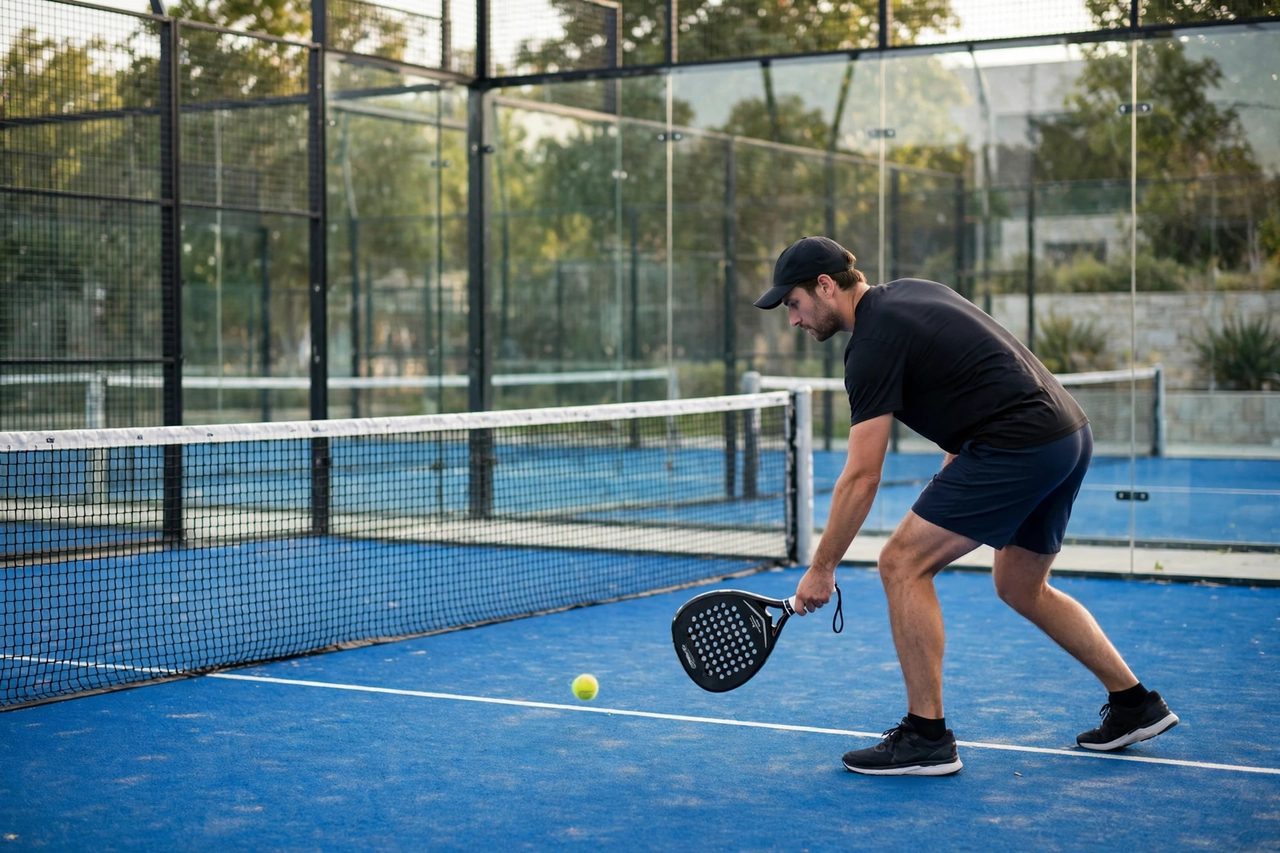
The Padel Serve: How to Start Every Point Underarm, Step by Step
In padel, the serve starts the rally — it doesn't end it. The rules, the technique step by step, and three easy drills to make your serve steady and smart.
The reset: how to turn a hard ball into a soft one, step by step
When your opponent fires a hard ball at you at the net, the reset is your answer. A simple step-by-step guide to soft hands, paddle angle, and where to aim.
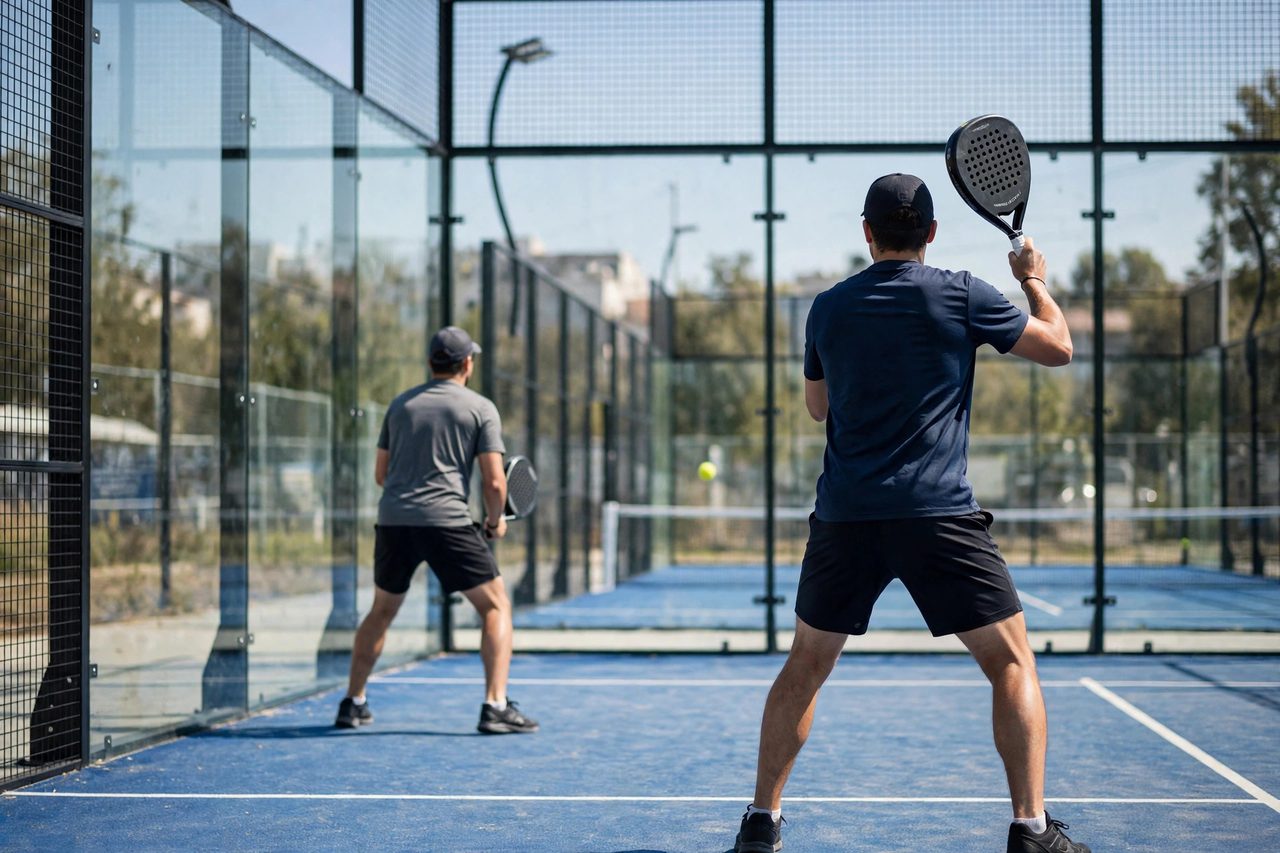
Playing Off the Glass: How to Use Padel's Walls, Step by Step
The glass walls are not the enemy. Learn how the ball comes off the back and side walls, when to let it bounce, and simple drills to build your confidence.