
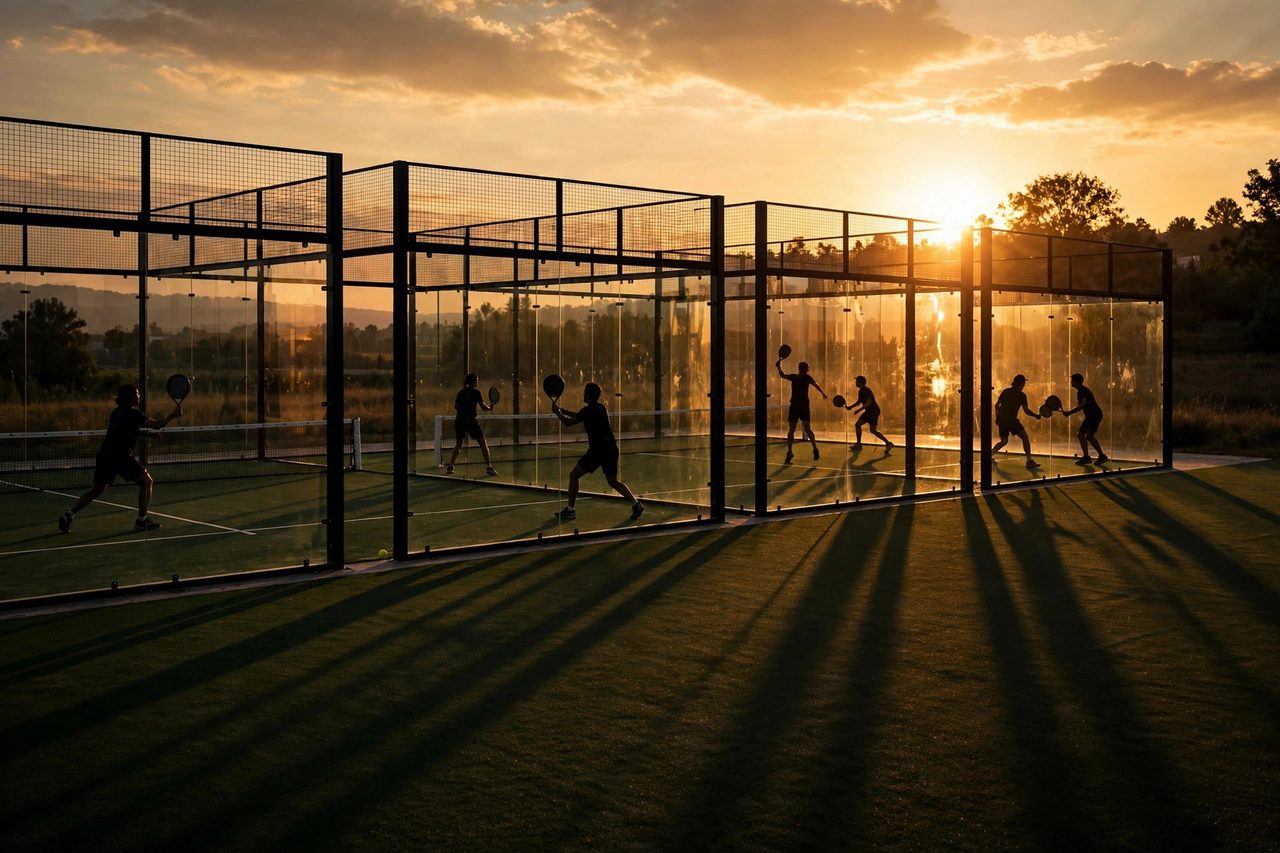
During the Alpine Paris Major at Roland-Garros in September, the French Tennis Federation published its latest overview of padel in France, and the numbers are striking. The sport is no longer a niche pastime for a few urban clubs. It is now a national phenomenon, growing faster than the structures built to organize it.
The figures that changed scale
The FFT now estimates the number of padel participants in France at 850,000, of whom 469,000 are tracked on Ten’Up, the federation’s digital platform. Just two years ago the estimate stood around 500,000. On the licensing side, 150,500 FFT members now hold a padel license, a 43.3% increase compared with the end of the 2024-2025 season.
Infrastructure has followed the same curve. France now counts 4,520 padel courts, up from 3,199 at the same point in 2025, an increase of 41.2% in a single year. The number of clubs offering padel has climbed to 1,348, up 31%. And the competitive base keeps widening: in October 2026, more than 174,000 players were classified in the French rankings, with 152,241 ranked men and 22,323 ranked women, up 5,755 players in a single month.
That pace brings its own growing pains. The FFT’s padel vice-president, Éric Largeron, recently acknowledged that in some regions there are now too many tournaments and too many clubs, and that the competition calendar needs tighter control, with forfeits and last-minute withdrawals a particular headache.
The paradox: mass participation, missing elite men
Here is the uncomfortable side of the boom. Not a single French man appeared among the 39 teams granted direct entry to the Paris Major main draw in September. On the women’s side, Alix Collombon and Lea Godallier secured two direct places, while Dylan Guichard and Thomas Leygue had to go through qualifying.
France is building a million-strong recreational game while the very top of the men’s international circuit remains dominated by Spaniards and Argentines. The federation’s answer is a long-term one: a dedicated National Training Center in Vichy, where twelve young prospects aged 13 to 16 train on twelve newly built courts, is meant to start producing French players capable of competing on the Premier Padel circuit rather than merely watching it.
A sport finding its place
What the 2026 figures show above all is that padel’s French growth is no longer driven only by big private complexes in the major cities. Projects now come from affiliated clubs and local authorities too, and the sport is slowly taking its place inside the French sporting landscape, alongside the tennis clubs that host so many of its courts. The FFT is even working on acoustic guidelines for new projects, a sign that padel has arrived firmly enough to be argued about with the neighbors.
Related articles
Mexico Major preview: Coello and Tapia chase history in Acapulco
The last Major of the season starts Monday in Acapulco, with Coello and Tapia chasing a clean sweep and the final Barcelona spots on the line.
Pickleball Ruled Out of the Brisbane 2032 Olympics
Brisbane 2032 has confirmed pickleball will not be considered for the Olympic programme. The sport has no single international federation the IOC can recognise — and its two rival bodies still cannot agree on one.
Lebrón and Augsburger End the Long Wait in Dubai as Fernández and Calvo Win Again
Juan Lebrón and Leo Augsburger beat Tino Libaak and Gonza Alfonso 7-6, 5-7, 6-3 to win the Dubai P1, while Claudia Fernández and Martina Calvo beat Paula Josemaría and Bea González 7-5, 6-1 for their third title together.