
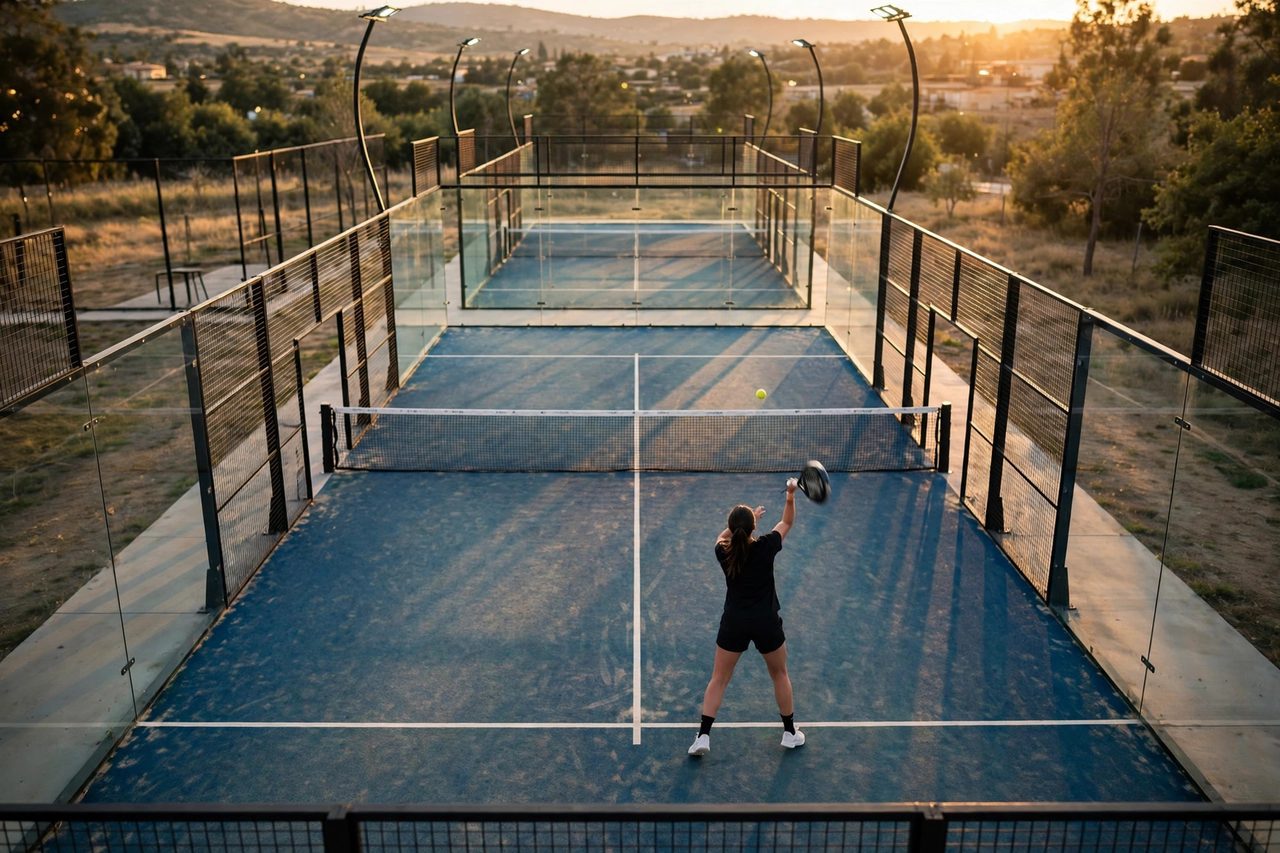
Gemma Triay’s career should have ended before it started. She was a promising tennis player from Menorca, a small island in the Mediterranean, when a serious injury stopped her tennis career in its tracks. She was 21 years old.
Instead, she found a second sport, and built one of the great careers in padel history. Today, at 34, she is world No. 1 again, alongside her Argentine partner Delfina Brea. She has been the top-ranked woman in the world in four different seasons. She has won 58 titles on the major professional circuits. And she did it all after starting over.
From tennis courts to padel courts
Triay was born in Alaior, a town in the middle of Menorca, on 28 June 1992. She grew up playing tennis at the local club. Padel was not the plan. It was the backup plan, the sport she turned to when tennis was taken away from her.
She started competing in padel in 2013. She was not a star right away. She had to learn a new game, with walls, with a partner, with a completely different rhythm. But the tennis background helped: the footwork, the hand-eye coordination, the competitive instinct. They were all still there, waiting for a new sport to use them.
Her first professional titles came in 2017, alongside Lucía Sainz, when the pair won in Granada. Triay was named the tour’s player of the year. The second chance was starting to look like a first choice.
The partnerships that defined an era
Padel is a pairs sport. You win and lose with one partner, and the partnership matters as much as any single shot. Triay’s career is really the story of three great partnerships.
The first was with Sainz. Sainz moved to the right side of the court so Triay could play on the left, her natural side. Together they finished 2020 as the world No. 1 pair. The left side is usually where the more attacking player stands, the one who takes more overhead shots and tries to finish points.
Then came Alejandra Salazar. For two straight years, 2021 and 2022, Triay and Salazar were the No. 1 pair in the world. That made Triay the first woman to top the rankings in three seasons in a row. It was a run of dominance that few players in any sport ever achieve.
After a quieter period, she found her third great partnership: Delfina Brea. In 2025, alongside Brea, Triay returned to the top of the world rankings for a fourth time. In 2026, the pair have been just as strong. They have won 59 matches and lost only 14 this season, with six titles, including the Italy Major, the Málaga P1 and the Madrid P1. A Major is padel’s biggest tournament tier. A P1 is the next tier down, still an elite event.
What makes her different
Triay does not win by overpowering people. She wins by thinking faster than them. Her game is built on control of the middle of the court, on smart overhead shots, and on staying calm in the biggest moments. She leads her pair’s tactics on court, deciding where to serve, where to attack, and when to slow the rally down.
The numbers back up the reputation. Across her career on the major circuits, she has won more than eight out of every ten matches she has played. She has won 36 titles on the old World Padel Tour and 22 on the Premier Padel circuit, including six Majors. With Spain, she has won five World Cups, in 2016, 2018, 2021, 2022 and 2024.
She is also a voice for the women’s game off the court. She has spoken up for equal prize money, better playing conditions and more visibility for women’s padel. As a vice president of the players’ association, she has pushed for players to have a real say in how the sport is run.
Still at the top
There is something fitting about where Triay is right now. She is back at world No. 1 in the same week that the Kuwait Major is being played, with her and Brea leading the women’s draw. She is 34, an age when many athletes are winding down. She is not winding down anything.
Her story is the one she tells best herself: padel gave her a second chance to make a living from competition. She took that chance, and she turned it into one of the longest runs at the top that women’s padel has ever seen. The injury that ended her tennis career did not end her story. It just changed the sport it was written in.
Related articles

Tyson McGuffin: the showman who made pickleball loud
From tennis pro in Yakima to world No. 1 and a triple crown: how Tyson McGuffin's power, noise and big-match nerve helped turn pickleball into a pro sport.
Delfina Brea: The Quiet Brain of the World's Best Padel Pair
World No. 1 Delfina Brea went from her father's small padel club in Buenos Aires to the top of the women's game. The story of the calm, clever right-side player who makes the best pair in padel work.
Ariana Sánchez: The Quiet Genius of Women's Padel
They call her Magic Ari. No shouting, no drama — just the smartest game in women's padel, a former world No. 1, and a trophy cabinet that now holds 58 major titles.