
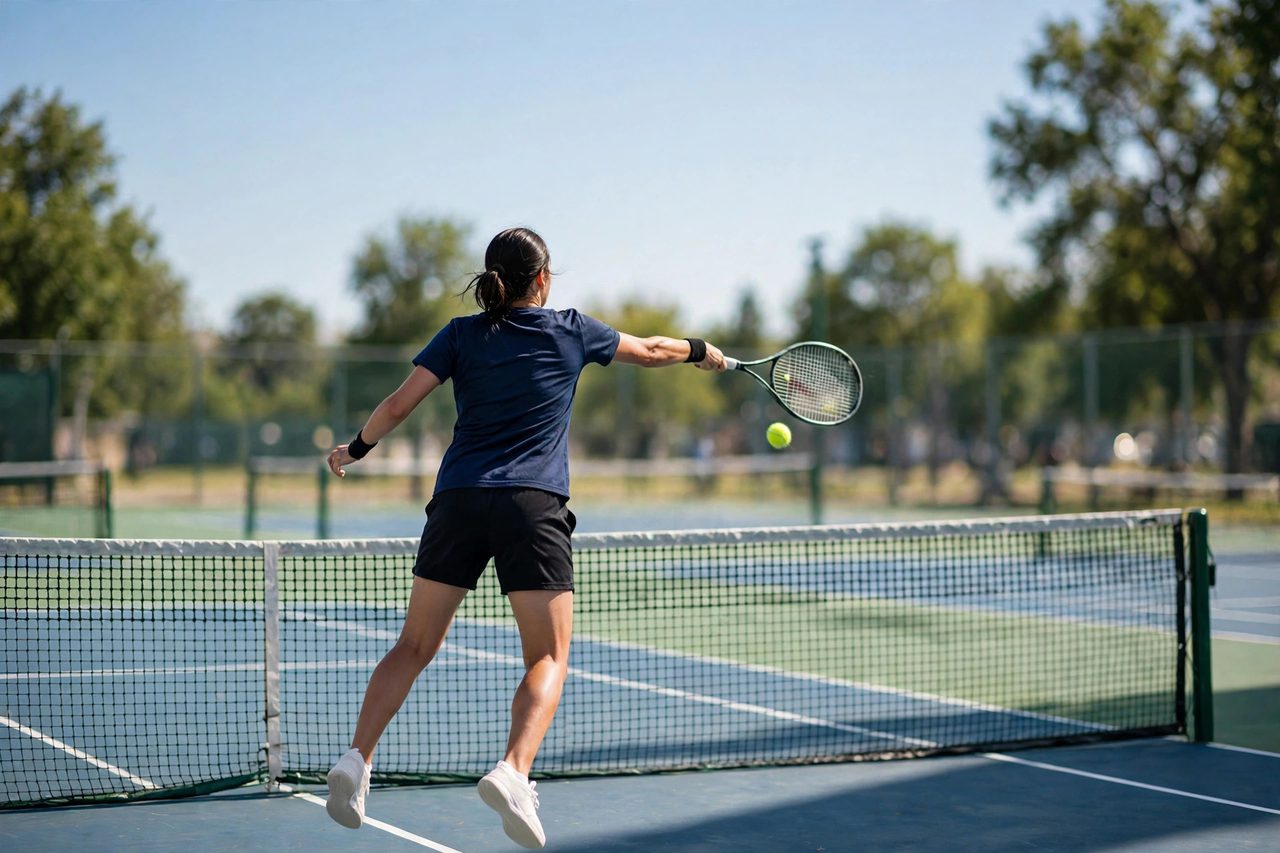
The overhead smash is the shot you hit when your opponent sends up a high, looping ball, known as a lob. A lob is a defensive shot that arcs high over your head, meant to buy time or push you back. When it comes up short, it is your chance to finish the point in style. Here is how to do it, step by step.
Step 1: Read it early
The smash starts before you swing. As soon as you see the ball going up high, turn sideways. Your shoulders should point roughly towards the side fence, not towards the net. This is called the sideways stance, and it is the same starting position as a serve. Turning early gives you time and balance, and it stops you from rushing.
Keep your eyes on the ball the whole time. This sounds obvious, but most missed smashes happen because the player looks away too soon, usually to check where the opponent is standing. Trust your position. The ball will tell you where to be.
Step 2: Move your feet
Now move to where the ball will come down, not where it is right now. This is the key skill. Beginners often run to the ball’s current position and then find it has drifted past them. Instead, judge the landing spot and get there early, with small adjustment steps at the end.
Use a shuffle step, a small sideways step, to fine-tune your position. You want the ball to drop slightly in front of you and to your racquet side, not directly above your head. If the ball is going over your head, do not panic: run back a little further, or let it bounce and hit it after the bounce. A smash after the bounce is still a smash, and it is much easier than reaching backwards.
Step 3: Take the racquet back
Point your non-racquet hand up at the ball. This is your aiming hand, and it helps you track the ball and keep your balance. At the same time, take your racquet back behind your head, with your elbow bent. Think of it like the serve motion: the racquet drops down behind your back, ready to whip upwards.
Keep your grip relaxed. The grip is the way you hold the racquet handle, and for a smash you want the continental grip. That is the grip where your hand sits on top of the handle like you are holding a hammer, the same grip used for serves and volleys. A tight, tense grip slows your swing down. Stay loose.
Step 4: Swing up and through
When the ball is at the right height, roughly a racquet’s length above your head, swing up to meet it. Hit the ball at the highest point you can reach comfortably, slightly in front of your body. Contact the ball with the strings facing down towards the court, not flat. Think of throwing a ball downwards hard: your arm extends up, then snaps down through the ball.
Follow through down across your body, finishing with your racquet near your opposite hip. A good follow-through is the sign of a committed swing. If your racquet stops at the ball, you were probably being careful. The smash rewards confidence.
Step 5: Aim smart, not just hard
Here is the secret that separates good smashers from wild ones: aim for a big target. Do not try to hit the lines. The lines are the white markings that mark the edge of the court, and aiming at them is risky. Aim for the middle of the open court, or at your opponent’s feet if they are close to the net. Power plus a safe target wins far more points than power plus a tiny target.
Also, vary your smash. Sometimes hit it flat and hard. Sometimes hit it with a little angle, sending it wide. Sometimes, if your opponent is far back, hit a soft angled smash that drops short. Variety keeps your opponent guessing, and a guessing opponent is a slow opponent.
Common mistakes to avoid
The most common mistake is standing still and reaching. If you are reaching, you are in the wrong place. Move your feet first, swing second. The second mistake is swinging too early, which sends the ball into the net or long. Wait for the ball to come down to you. Patience is part of the shot.
The third mistake is looking at your opponent instead of the ball. Decide your target before you swing, then watch the ball until contact. You cannot do both at once.
A drill to practise
Here is a simple drill. Ask a friend to feed you high lobs from the baseline, the back line of the court. Start at the net and practise moving back to each lob, turning sideways, and smashing it into the open court. Do ten in a row, then swap roles. Do not worry about power at first. Focus on footwork and contact. Power comes naturally once the timing is right.
The overhead smash is one of the most fun shots in tennis. Get the footwork right, stay relaxed, aim for a big target, and you will start finishing points with a smile.
Related articles
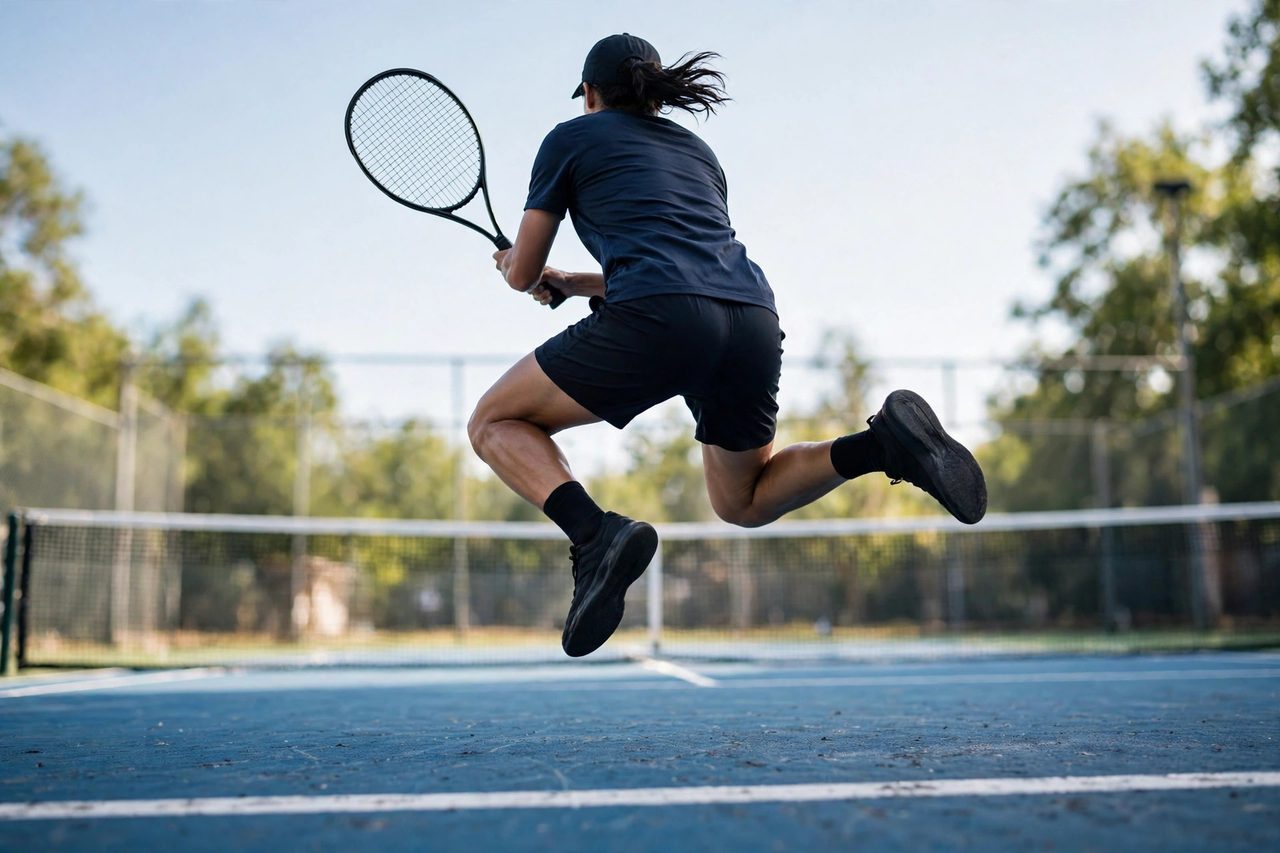
The Split Step: Tennis's Smallest Move That Changes Everything, Step by Step
The split step is a tiny hop you make just as your opponent hits the ball, and it is the reason good players always seem to be in the right place. This guide explains what it is, when to do it, and how to learn it.
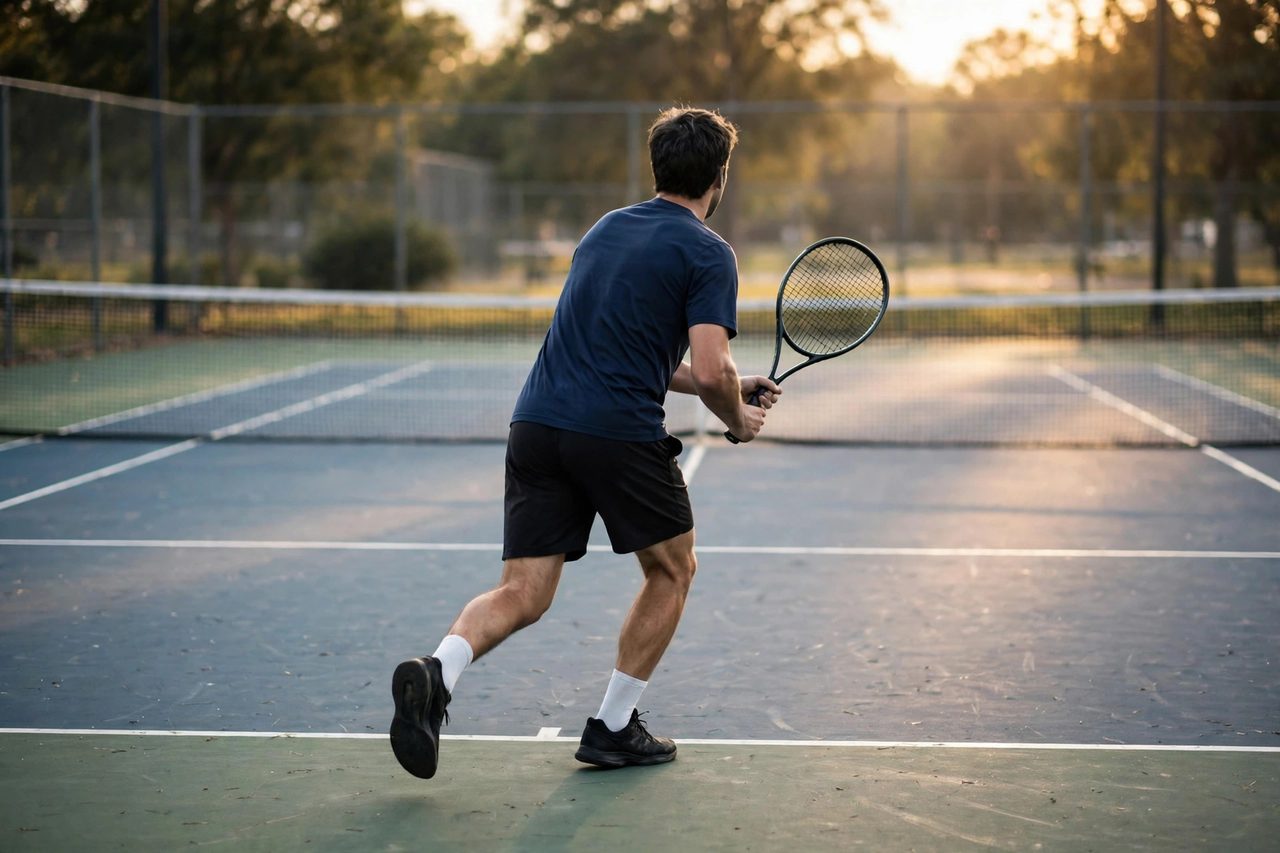
The Approach Shot: How to Come to the Net and Finish the Point, Step by Step
The approach shot is the ball that carries you from the back of the court to the net, so you can finish the point up close. This guide explains when to hit it, how to move, where to aim, and the simple drills that make it work.
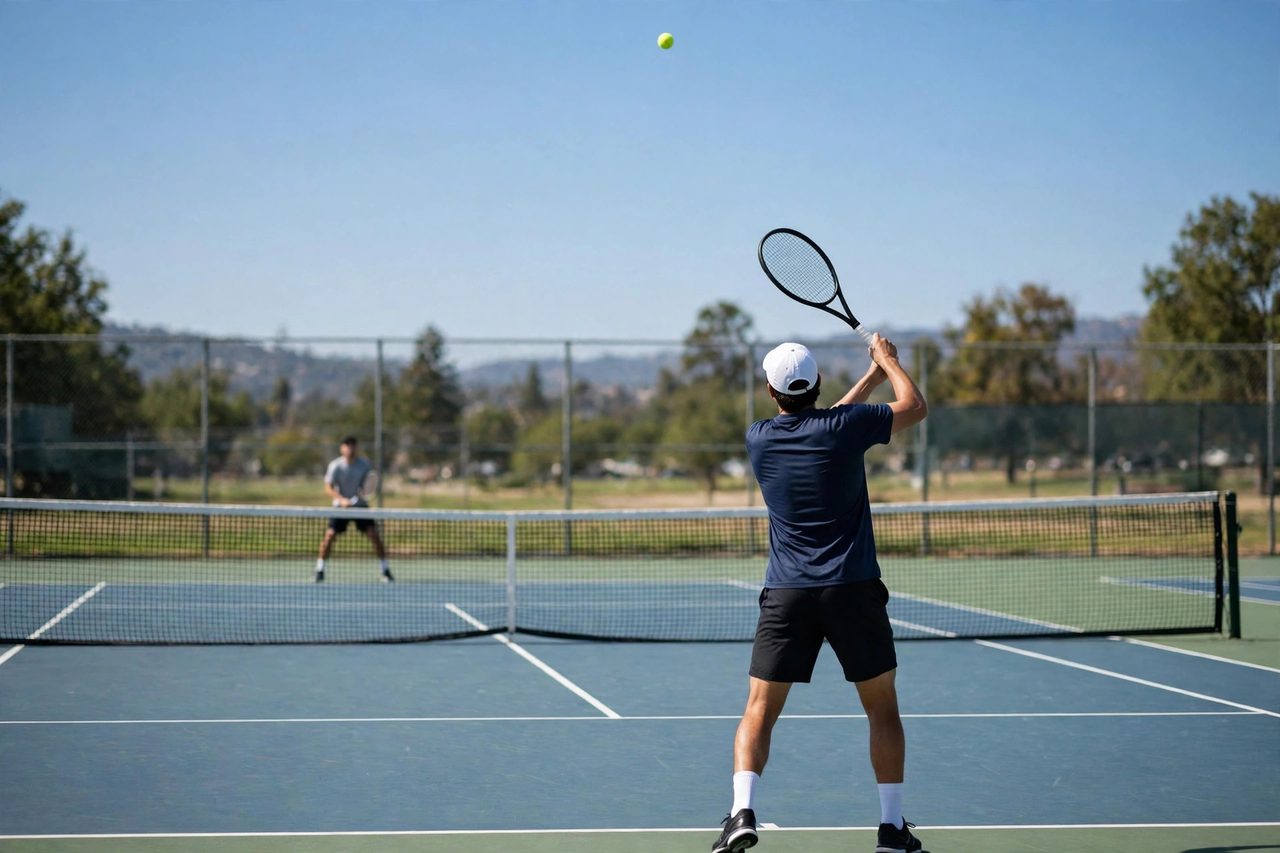
The Lob: Tennis's Rescue Shot, Step by Step
The lob is the high, arcing shot that sails over your opponent's head and buys you time. This guide explains when to use it, how to hit it, and the simple drills that make it reliable.