
The return of serve is the shot most players practise least, and the one that matters most. You will hit more returns than any other shot except your own serve. A good return keeps you in the point. A bad one hands your opponent a free point before the rally even starts.
Here is the good news: the return is simpler than it looks. It is not about power. It is about position, timing, and a short swing. Follow these steps, and your return will improve fast.
Step 1: Stand in the right place
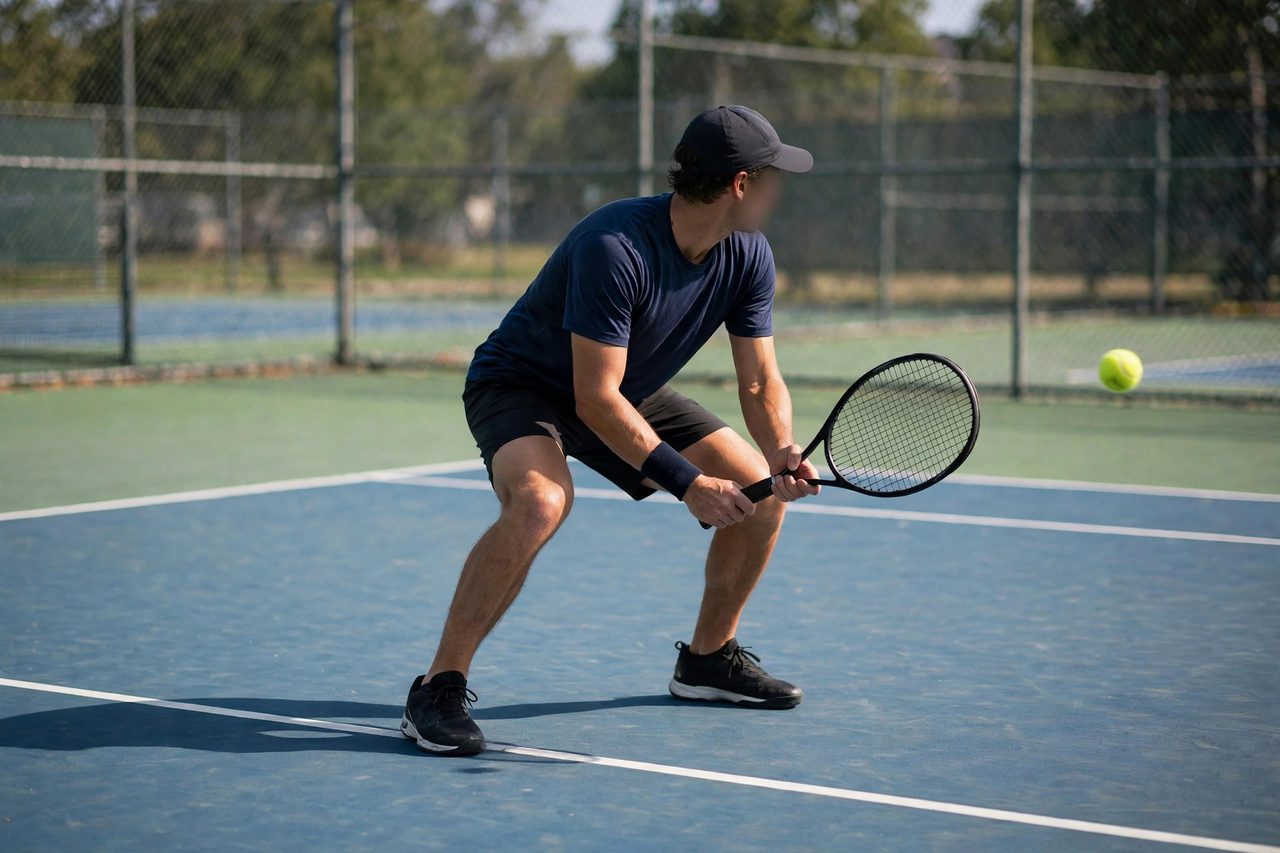
Start behind the baseline, the white line at the back of the court. How far behind depends on the serve you are facing. Against a big first serve, stand further back, about a metre or two behind the line, to give yourself time. Against a slower second serve, step in, close to the baseline or even just inside it, to take time away from the server.
Stand in the middle of your half of the court, slightly favouring your backhand side. Most servers aim at the backhand because it is the weaker shot for most players, so give yourself a little extra room there. Keep your feet shoulder-width apart and your weight on the balls of your feet, ready to move either way.
Step 2: Split step as the server tosses
The split step is a small hop you make just as your opponent hits the serve. It is the most important move in the return, and the one most beginners skip.
As the server tosses the ball up, take a small jump and land with your feet apart. Landing loads your legs like a spring. From that loaded position, you can push off in any direction: left, right, or forward. Without the split step, you are flat-footed, and a fast serve will blow past you before you move.
Time it like this: jump as the server’s racquet starts its upward swing, and land just as they make contact. If you land too early, you will be stuck. If you jump too late, you will still be in the air when the ball arrives. Practise the timing without a ball first, until it feels automatic.
Step 3: Keep the swing short
This is the biggest mistake players make. They take a huge backswing on the return, like they are hitting a normal groundstroke. A groundstroke is a shot hit after the ball bounces, usually from the baseline. The serve is already fast. A big swing means you will be late, every time.
Instead, turn your shoulders and take the racquet back only a short way, about half your normal backswing. Think of it as a block with intent, not a full swing. Let the pace of the serve do the work. Your job is to redirect it, not to generate all the power yourself.
On the forehand side, keep your wrist firm and your swing compact. On the backhand side, the same rule applies: short backswing, firm contact, follow through towards your target. If you use a two-handed backhand, both hands stay on the racquet through contact for extra control.
Step 4: Aim crosscourt, and aim deep
A crosscourt shot travels diagonally across the court. It is the safest return for two reasons. The net is lower in the middle than at the sides, and the court is longer diagonally, so you have more room for error. Aim your return crosscourt, deep into the court, and you will rarely go wrong.
Deep means landing the ball close to the opponent’s baseline. A deep return pushes the server back and stops them from attacking. A short return sits up in the middle of the court and invites them forward. If you can only do one thing well on the return, make it depth.
Once you are comfortable, add one variation: the return down the line. A down-the-line shot travels straight down the side of the court. Use it rarely, as a surprise, when the server starts cheating towards the middle expecting your crosscourt return.
Step 5: Attack the second serve
The first serve is fast and hard to attack. The second serve is slower and softer, because the server does not want to miss it and lose the point with a double fault. A double fault is when a player misses both serves and loses the point outright.
This is your chance. When the second serve comes, step in, take it early, and be aggressive. You can take a slightly bigger swing. You can aim closer to the lines. You can even come forward after the return and look to finish the point at the net.
Many matches are decided here. The player who wins more second-serve return points usually wins the match. If you only remember one attacking idea from this guide, make it this: punish the second serve.
Step 6: Practise it properly
Here are three drills that work.
First, the block drill. Have a partner serve from the service line, the line halfway between the net and the baseline, at half pace. Practise blocking the ball back deep with a short swing. No big swings allowed.
Second, the target drill. Place two cones deep in the crosscourt corners. Your goal is to hit five returns in a row past the cones. Count your streaks. It turns practice into a game.
Third, the pressure drill. Play points where the server only gets one serve. That forces you to return well under pressure, and it forces the server to serve well too. Both players improve.
The mindset
The best returners in the world share one attitude: they want the ball. They do not hope the serve misses. They do not flinch. They split, they watch the ball onto the strings, and they make the server play one more shot.
You will miss returns. Everyone does, even the pros. The goal is not perfection. The goal is to put the ball back in play, deep and crosscourt, more often than not, and to attack whenever the second serve gives you the chance.
Do that, and you will hold your own against any server you meet.
Related articles
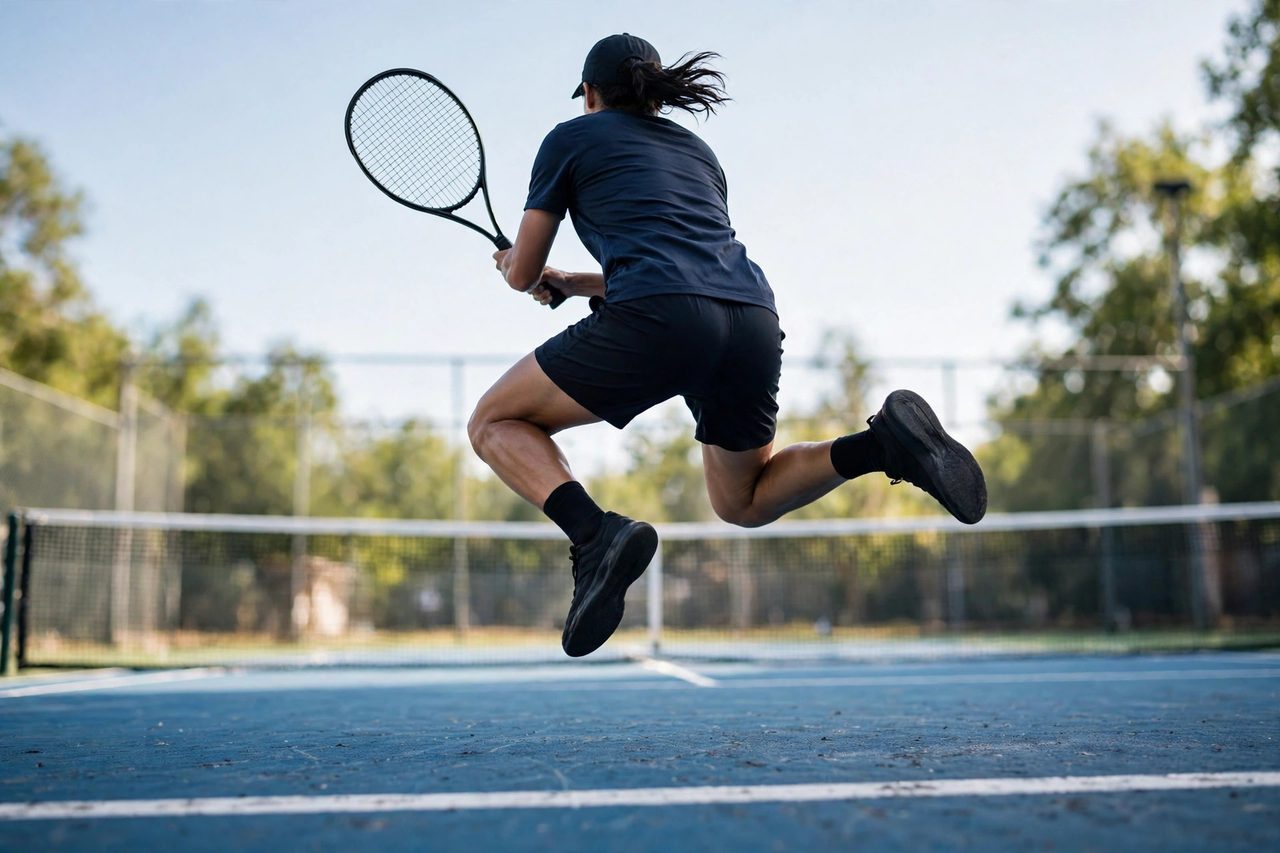
The Split Step: Tennis's Smallest Move That Changes Everything, Step by Step
The split step is a tiny hop you make just as your opponent hits the ball, and it is the reason good players always seem to be in the right place. This guide explains what it is, when to do it, and how to learn it.
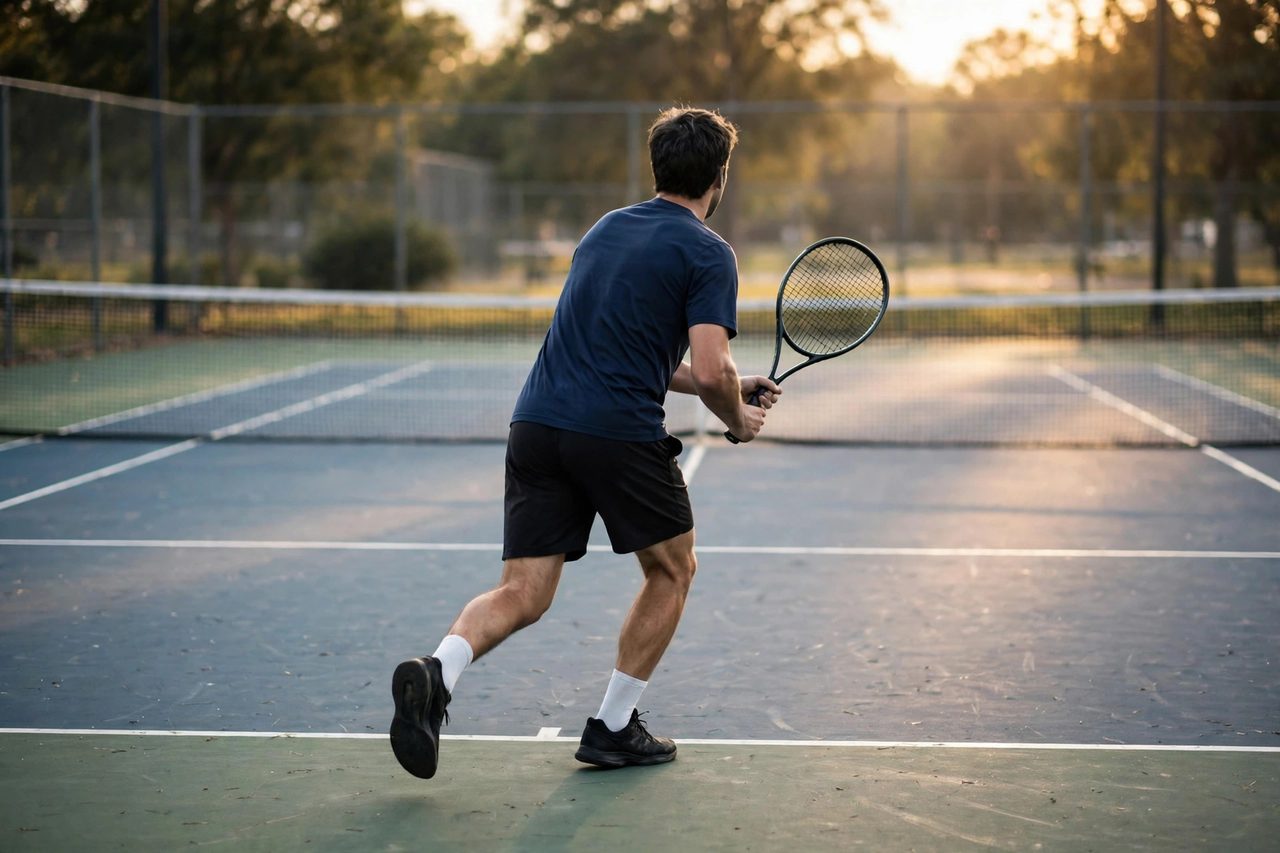
The Approach Shot: How to Come to the Net and Finish the Point, Step by Step
The approach shot is the ball that carries you from the back of the court to the net, so you can finish the point up close. This guide explains when to hit it, how to move, where to aim, and the simple drills that make it work.
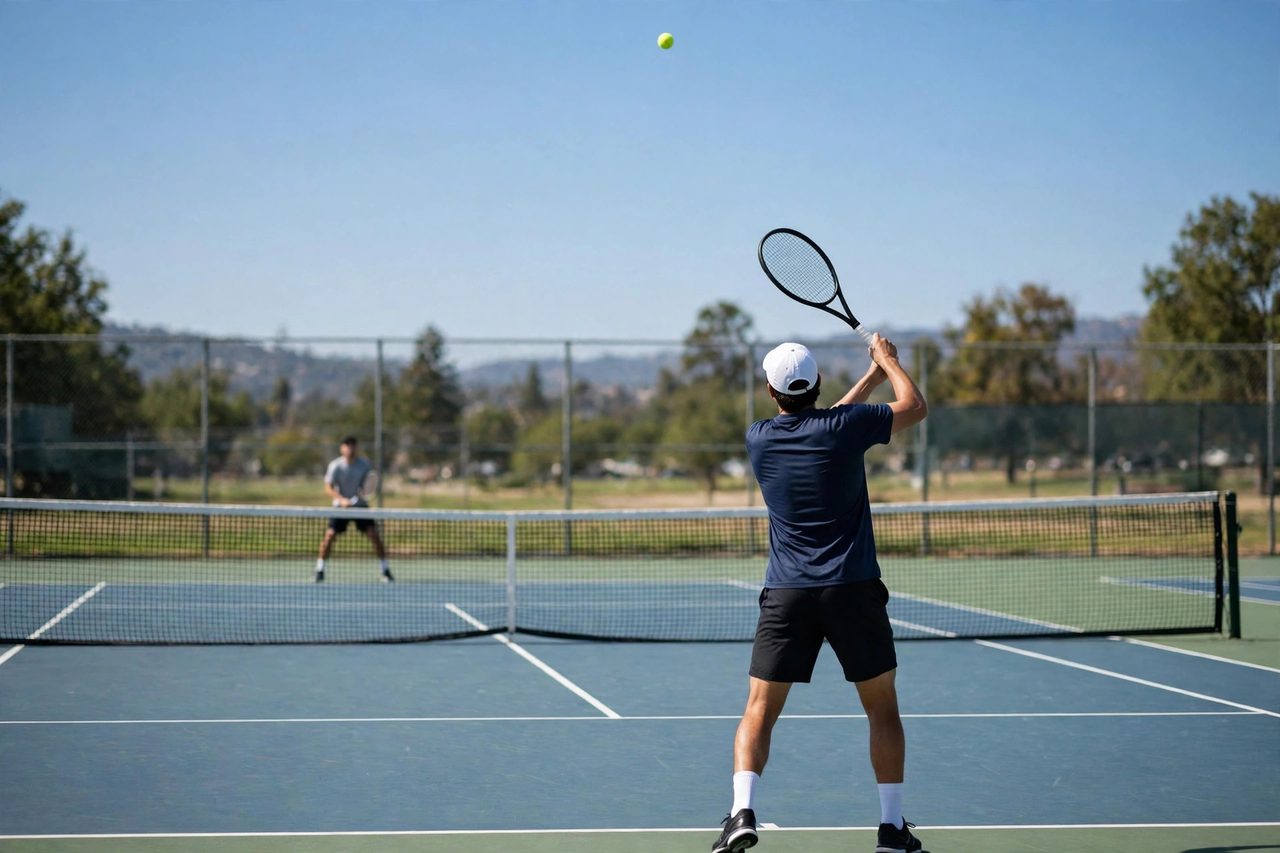
The Lob: Tennis's Rescue Shot, Step by Step
The lob is the high, arcing shot that sails over your opponent's head and buys you time. This guide explains when to use it, how to hit it, and the simple drills that make it reliable.