
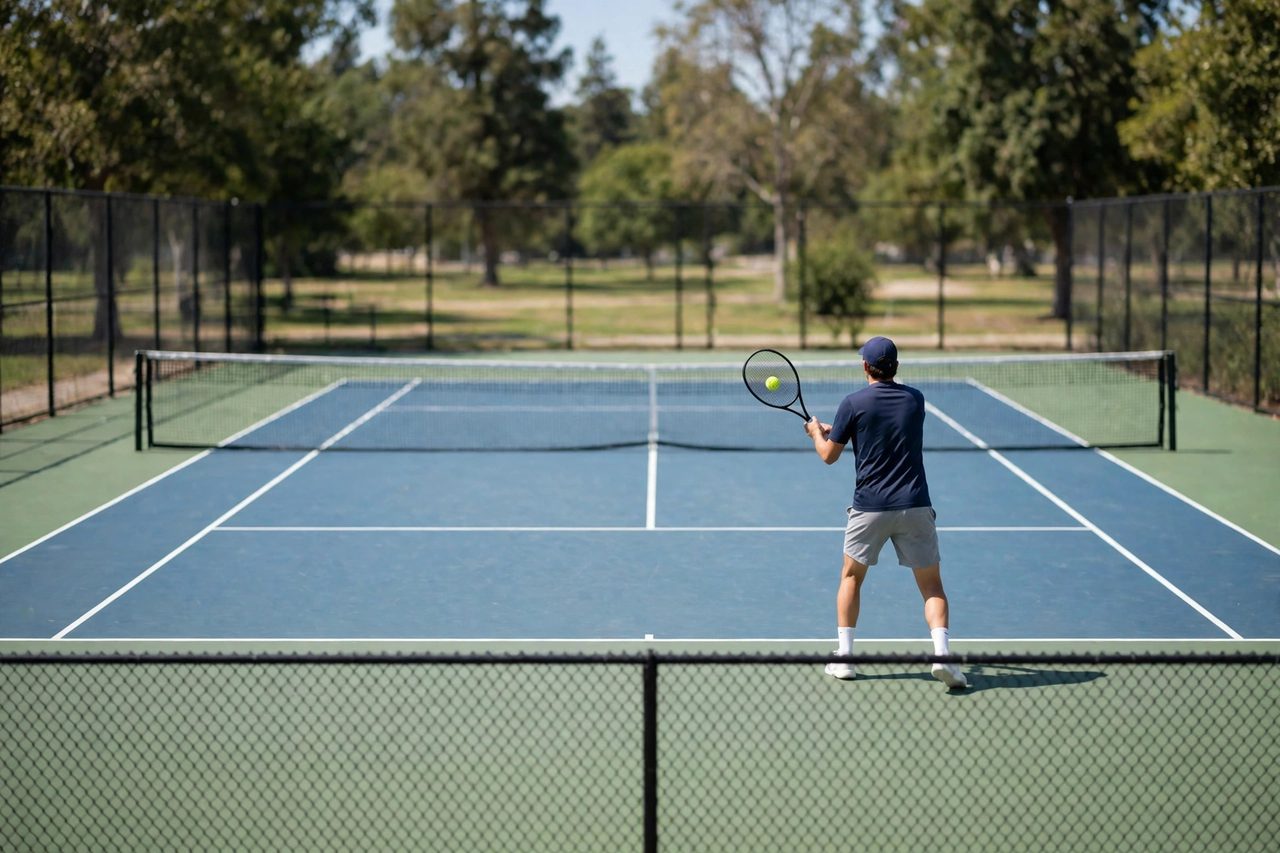
The backhand is the shot you hit on the opposite side of your racquet hand. For a right-handed player, that is the left side. Most modern players hit it with two hands on the racquet. The two-handed backhand is stable, powerful and reliable, and it is the backhand most coaches teach beginners today. Here is how to build it, step by step.
Step 1: Get the grip right
Stand with the racquet in front of you. Your main hand, the one on top, goes on the grip like a handshake. For a right-handed player, that is the right hand. Your other hand goes above it, with the fingers wrapped around the grip. Think of it like holding a baseball bat, but with your hands close together.
The bottom hand controls the racquet. The top hand adds power and stability. Both hands stay on the racquet through the whole swing. That is the whole point of a two-handed backhand: two hands are steadier than one.
Step 2: Turn early
As soon as you see the ball coming to your backhand side, turn your shoulders. Your chest should rotate so your back is almost facing the net. Your feet should turn too, with your front foot stepping toward the sideline.
Turning early is the secret of a good backhand. Players who turn late have to rush the swing, and rushed swings go wrong. Turn as soon as you know where the ball is going, not when it is already on top of you.
Step 3: Take the racquet back low and simple
With your shoulders turned, take the racquet back behind you. Keep it simple. The racquet head should drop a little below the height of the incoming ball, and your arms should stay relaxed. Do not lift the racquet high over your shoulder. A low, compact take-back is easier to repeat, and repeatable beats flashy every time.
Your weight should be on your back foot at this point. You are coiled, like a spring, ready to uncoil into the shot.
Step 4: Step in and swing through
As the ball bounces and rises toward you, step forward with your front foot, toward the ball. Then swing. The swing starts from your legs and hips, not from your arms. Push off your back foot, rotate your hips toward the net, and let your arms follow.
Contact happens in front of your body, roughly level with your front hip. This is the most important detail in the whole shot. If you hit the ball too late, beside your body or behind it, you lose all your power. Meet it out in front, where you can see it clearly.
Hit through the ball, not at it. Imagine you are pushing the ball toward your target, not slapping it. Your racquet should travel in a smooth line from low to high, finishing up over your opposite shoulder.
Step 5: Finish high and balanced
A good two-handed backhand ends with the racquet over your shoulder, your chest facing the net, and your weight on your front foot. You should be balanced enough to move again straight away. If you fall backward or spin around, something went wrong earlier in the swing.
Watch the best players and you will see the same finish every time. It looks effortless because it is rehearsed. Thousands of repetitions make the same shape appear again and again.
Step 6: Add topspin
Topspin is the forward rotation that makes the ball dip down into the court. To add it, brush up the back of the ball as you swing through. Your racquet should travel from low to high, like you are lifting the ball over a small fence.
You do not need huge topspin. A little is enough. It gives your shot a safety margin, so the ball clears the net and still lands inside the lines. Flat backhands, hit with no spin, are faster but riskier. For most players, a backhand with moderate topspin is the best default shot.
Common mistakes to avoid
The most common mistake is hitting late. If the ball is passing your body before you swing, you are too slow. Turn earlier, and step in sooner.
The second mistake is arming the shot. That means swinging with only your arms, while your legs and hips stay still. Power comes from the ground up. If your backhand feels weak, check your feet first, not your hands.
The third mistake is gripping too tight. A death grip on the racquet kills feel and speed. Hold it firm but relaxed, like you are holding a hammer, not strangling it.
A simple practice plan
You do not need a coach to improve your two-handed backhand. You need repetitions and a simple plan.
Start with a partner or a ball machine feeding balls gently to your backhand. Focus only on turning early and meeting the ball in front of you. Do not worry about power. Hit 50 balls like that.
Next, add the step-in. Every ball, step forward with your front foot before you swing. Feel your weight move from back foot to front foot.
Finally, play points where you must hit every backhand cross-court. Cross-court means diagonally, to the opposite corner. It is the safest direction, and it forces you to swing freely without aiming for risky lines.
Do this twice a week for a month, and your backhand will feel like a different shot. It will not happen overnight. But the two-handed backhand rewards patience. It is the most reliable shot in tennis for a reason: once you build it, it stays built.
Related articles
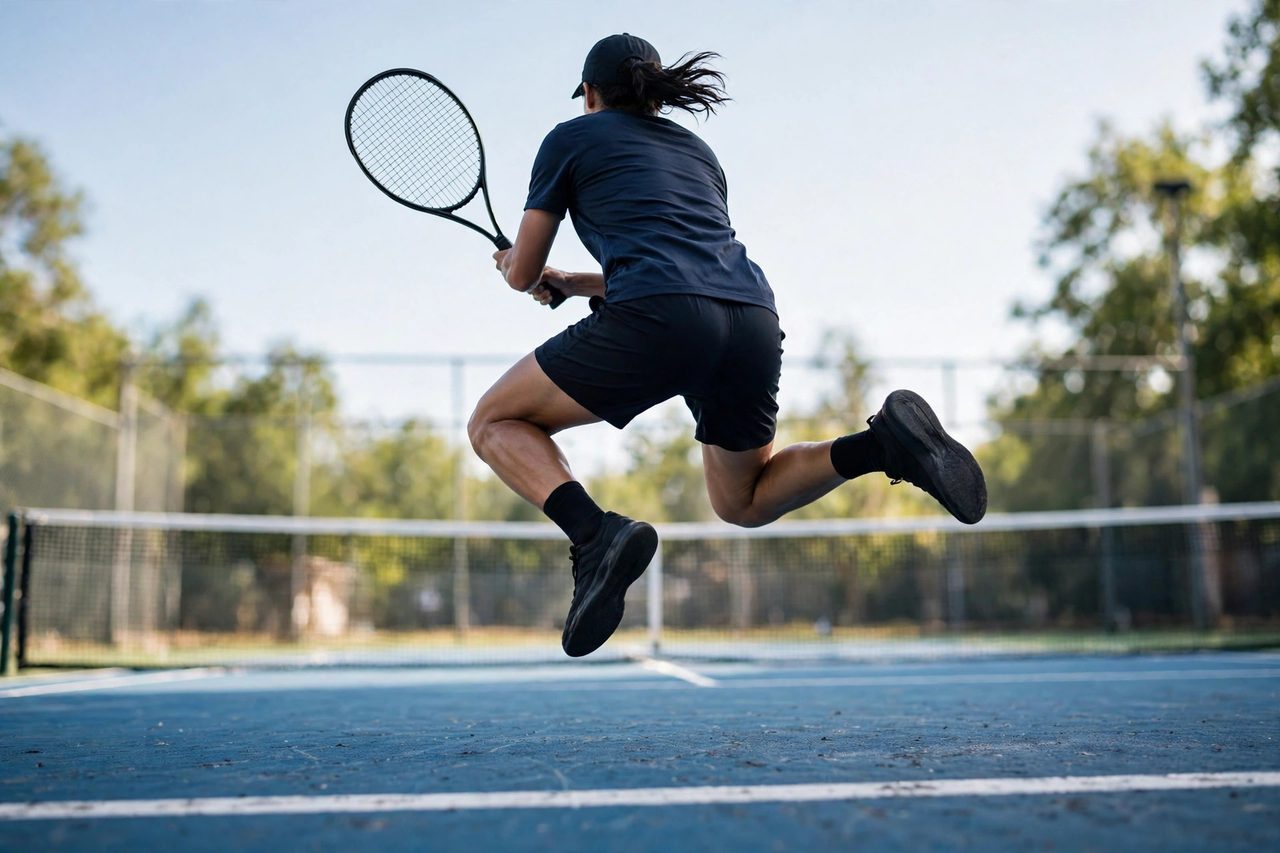
The Split Step: Tennis's Smallest Move That Changes Everything, Step by Step
The split step is a tiny hop you make just as your opponent hits the ball, and it is the reason good players always seem to be in the right place. This guide explains what it is, when to do it, and how to learn it.
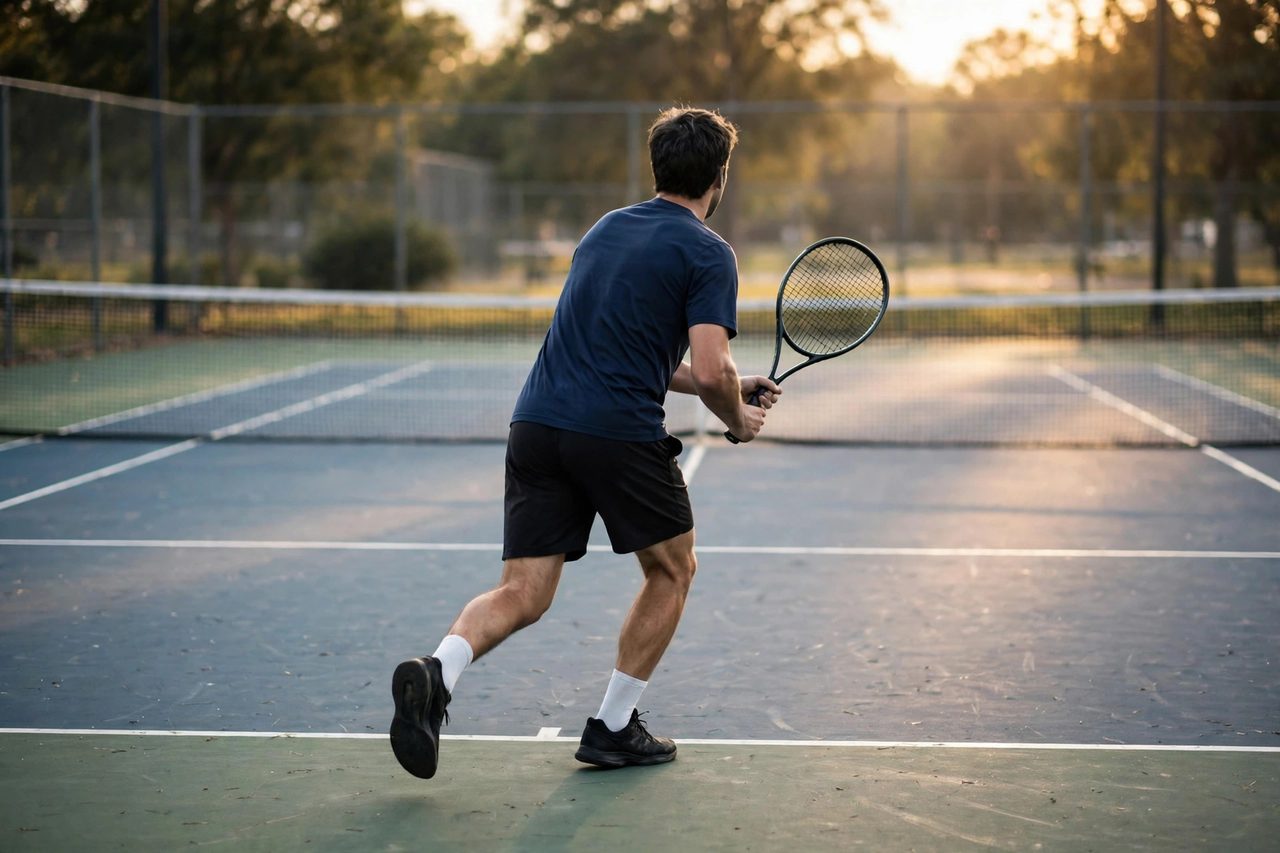
The Approach Shot: How to Come to the Net and Finish the Point, Step by Step
The approach shot is the ball that carries you from the back of the court to the net, so you can finish the point up close. This guide explains when to hit it, how to move, where to aim, and the simple drills that make it work.
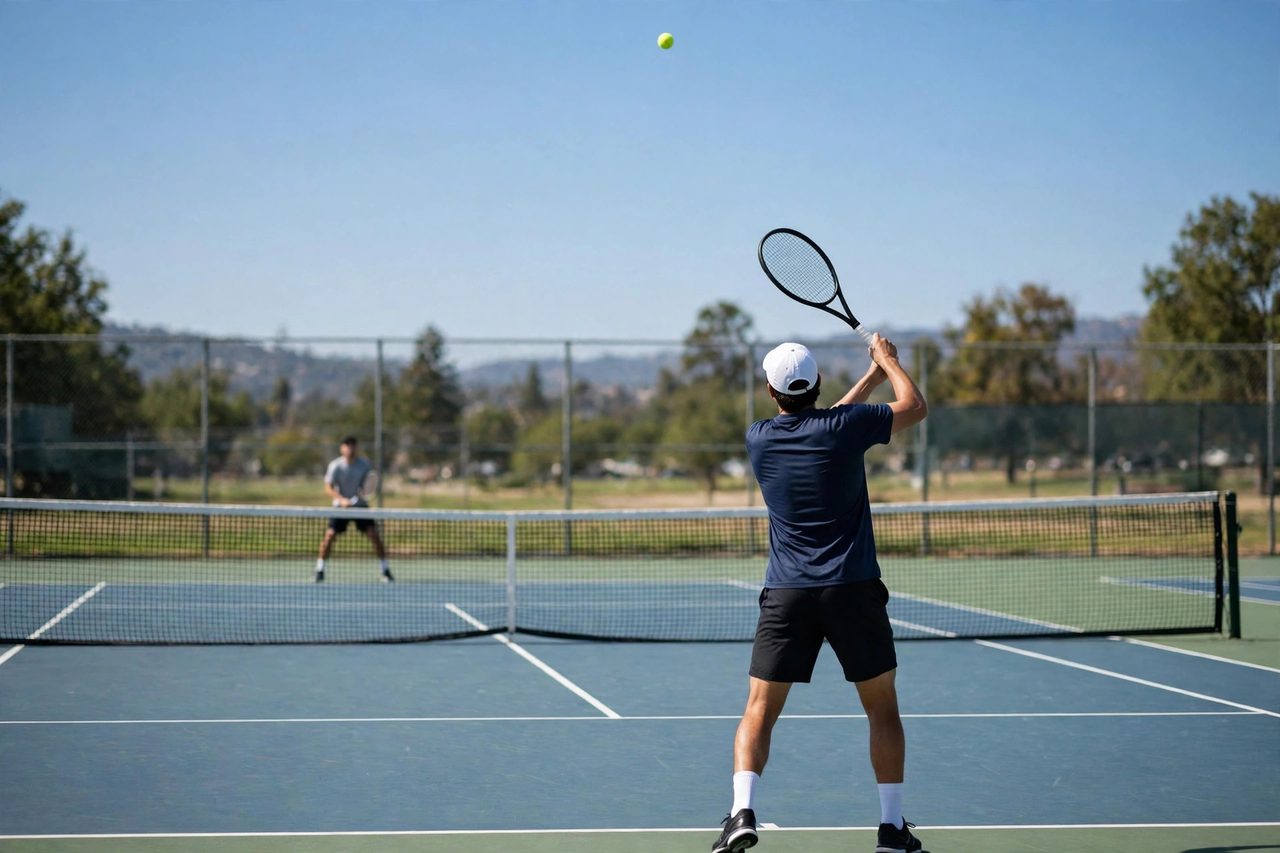
The Lob: Tennis's Rescue Shot, Step by Step
The lob is the high, arcing shot that sails over your opponent's head and buys you time. This guide explains when to use it, how to hit it, and the simple drills that make it reliable.