
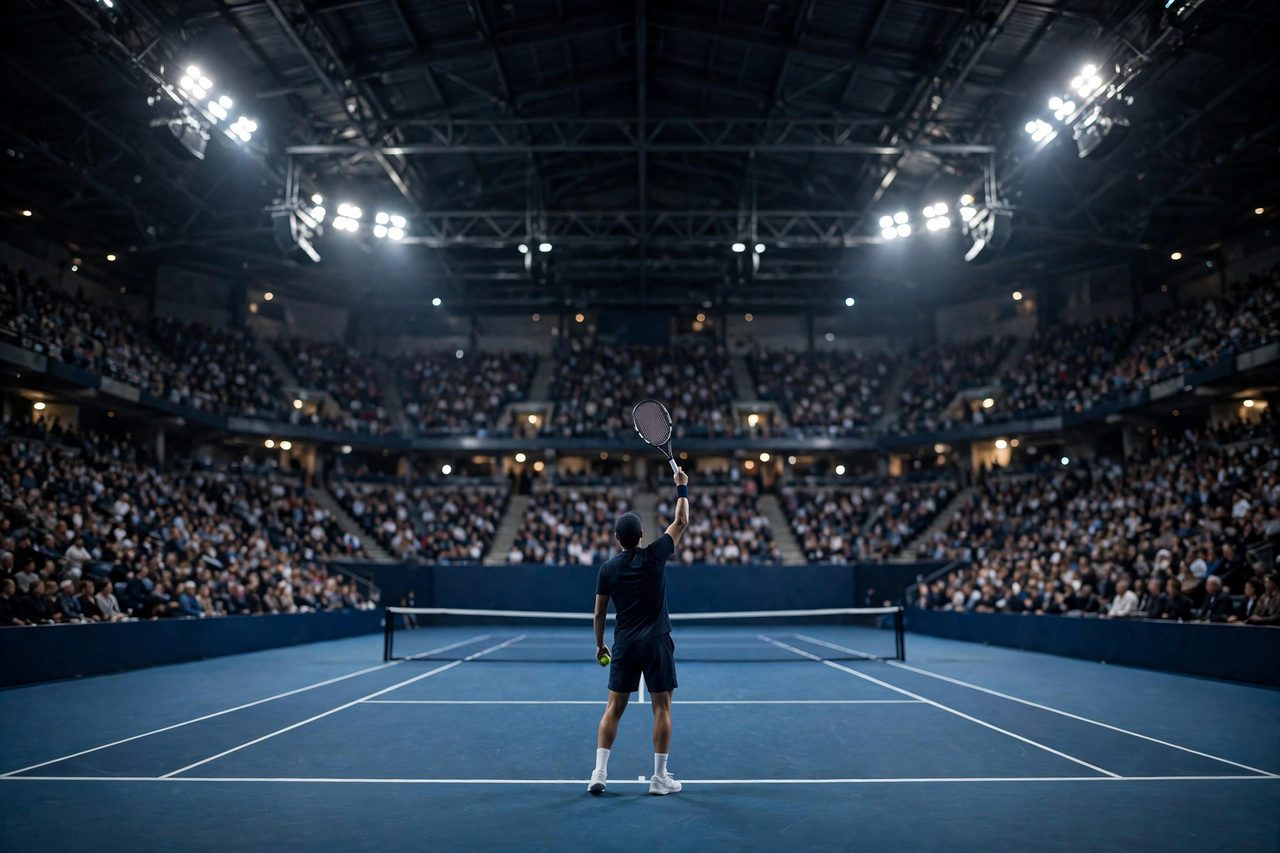
Carlos Alcaraz is through to the semi-finals of the Paris Masters for the first time — and he got there the hard way. On Friday in Paris, the Spaniard saved two match points and came back from the edge of defeat to beat Taylor Fritz of the United States 6-7(10-12), 7-5, 6-3, after two hours and 45 minutes of high-drama tennis.
A match point is simple: it is a point that would win the whole match. Fritz had two of them, and Alcaraz saved them both.
The match started with a wild first set. Neither player gave an inch, and it went to a tiebreak — a short extra game played when a set reaches 6-6, first to seven points. Fritz edged it 12-10 after both men had chances to take it.
Fritz kept rolling in the second set. He broke Alcaraz’s serve at 3-3 — breaking serve means winning a game when your opponent is serving, which is the hardest way to win a game in tennis — and moved ahead 5-3. One game later, serving at 5-4, he held two match points. The match, and his season, were one point away from going his way.
Alcaraz refused to go. He saved both match points, broke Fritz to level the set at 5-5, and then won four games in a row to take it 7-5. The third set was his. He took control early, broke Fritz again, and closed it out 6-3.
Fritz had arrived in Paris knowing exactly what was on the line, and he had played well all week. He beat Arthur Fils 6-3, 6-4 in the third round for the 100th Masters 1000 win of his career, and he went into the Alcaraz match with the season finale in his sights. He leaves Paris with nothing to show for it except a match he will replay in his head for a long time.
What the win decides
The result is about much more than one quarter-final. It settles the field for the ATP Finals, the season-ending tournament for the eight best men of the year, which runs in Turin from November 15 to 22.
Fritz went into the match knowing what he needed. A place in the semi-finals would have lifted him past Rafael Jódar of Spain in the season-long race to Turin. The loss ends his hopes. Jódar, who turned professional only in January, takes the eighth and final spot instead — a debut at the season finale in his first full year on tour.
The eight men heading to Turin are now set: Alexander Zverev, Carlos Alcaraz, Ben Shelton, Daniil Medvedev, Flavio Cobolli, Arthur Fils, Frances Tiafoe and Rafael Jódar.
Zverev leads the field. The German takes over as world No. 1 on Monday, and he is already locked in as the year-end No. 1. Alcaraz, chasing his fifth title of the season in Paris, is the other headline name. But the field is young and open, with Tiafoe and Jódar both heading to Turin for the first time.
The field was decided across two matches on Friday. Earlier in the day, Ben Shelton beat Tommy Paul 6-4, 4-6, 6-3, a result that ended Paul’s hopes and confirmed Tiafoe’s place. Then Alcaraz’s win over Fritz settled the last spot. Jannik Sinner, out for the season with a knee injury, will not be there — which is why ninth place in the race takes the last spot.
Jódar’s breakthrough year
Jódar’s season is the surprise story of the field. He turned professional in January and lost in the second round in Paris this week, to Casper Ruud. But his results across the season were strong enough to hold the last qualifying place, and nobody below him could catch him once Fritz lost.
He is the eighth man in, and he got there the quiet way: no late drama of his own, just a season of steady results while the players chasing him ran out of matches.
What happens next
Alcaraz plays on. In the semi-finals he faces the winner of the quarter-final between Casper Ruud and Nuno Borges, the lucky loser from Portugal who has already made history in Paris as the first lucky loser ever to reach the last eight. A lucky loser is a player who lost in qualifying but got into the main draw when someone else withdrew.
The Paris final is on Sunday. Then the season moves to Turin, where the eight qualifiers will be split into two groups of four for the ATP Finals.
Friday in Paris gave the sport two stories in one match: a comeback that saved a season’s big moment, and a final field for the year-end showpiece. Alcaraz wrote both of them.
Related articles
Davis Cup Finals 2026 Preview: Alcaraz Races to Bologna as Eight Teams Chase the Title
Eight teams meet in Bologna from November 24 to 29, with Carlos Alcaraz fresh from his ATP Finals win leading Spain into the quarter-finals.

Alcaraz Beats Zverev to Win His First ATP Finals Title
Carlos Alcaraz beat world No. 1 Alexander Zverev 6-2, 7-6(7) in the ATP Finals final in Turin on Sunday, saving three set points in the second-set tie-break to win the season-ending title for the first time.

French Debutants Arribage and Olivetti Win the ATP Finals — and Deny Pavic His Super Slam
Théo Arribage and Albano Olivetti beat Marcelo Arevalo and Mate Pavic 3-6, 7-6(7-2), 10-6 to win the ATP Finals doubles title in their first season together — and stop Pavic from completing the Career Super Slam.