
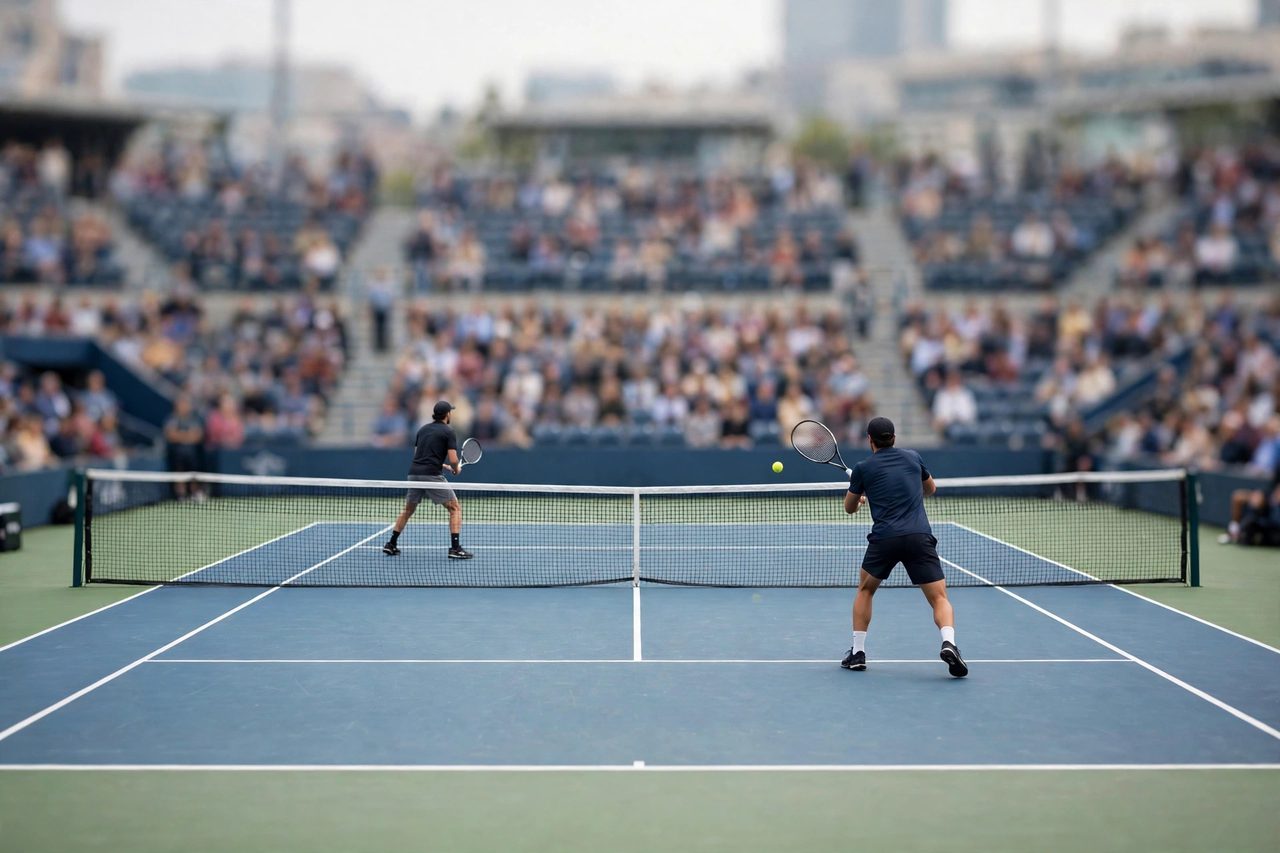
Doubles players have had enough. On Monday, October 27, they published an open letter to the ATP board and management, signed by 137 active players, 33 former players and 20 national federations, demanding that the men’s tour drop plans to shrink doubles and move its money to singles.
The ATP is the governing body of men’s professional tennis. It runs the tour, sets the rules and decides how prize money is shared out. The letter is the biggest public pushback the doubles world has ever mounted, and it lands just weeks before the ATP’s year-end meetings in Turin, where the plans are due to be discussed.
What the ATP is planning
The plans under discussion would change doubles from 2028 onward. The headline changes are stark.
First, the size of doubles draws would be cut. A draw is the bracket that decides who plays whom in a tournament. At Masters 1000 events, the biggest regular tournaments below the four Grand Slams, doubles draws would shrink from 32 teams to 16 teams. That means half as many pairs get in. Events below that level, including the Challenger circuit, would also see smaller fields. A Challenger is the level just below the main tour, where young players and lower-ranked pros fight for ranking points and a living.
Second, the money would move. Doubles currently takes about 20 percent of total prize money at tour events. Under the proposals, that share would fall to about 10 percent. Roughly $20 million would shift from doubles to singles, with the freed-up money going toward singles qualifying and early-round prize money. Qualifying is the extra mini-tournament played before the main event, where lower-ranked players fight for a few places in the main draw.
The ATP has said it is reviewing doubles as part of its plans for 2028 and beyond. Earlier this month it said doubles will continue to be a core part of the tour, and that the review is about finding a model that works for the long term. It also said discussions would continue with the Player Advisory Council, a group of players elected to speak for the locker room.
Why doubles players are furious
The letter does not mince words. It says the current plans would cut a significant number of professional opportunities for doubles specialists, and make it much harder for talented players to build and keep a doubles career.
“A healthy professional sport cannot rely solely on a small group of top stars; it needs pathways for players to develop, compete and earn a living,” the letter says.
That last point is the heart of it. Doubles is not just the showpiece at the end of a big week. It is a career path. Hundreds of players make their living almost entirely from doubles. They travel the same circuit, pay the same coaches and hotel bills, and play in front of the same crowds. Halving the draws does not just cut matches. It cuts jobs.
The letter also warns about trust. “Implementing changes of this scale without broad support risks undermining confidence in the ATP’s leadership across the wider tennis community,” it says.
Among the signatories are Henry Patten and Julian Cash, the British pair who won the Wimbledon doubles title in 2025, and Pat Cash, the former singles and doubles star. Twenty national federations signed too, though Britain’s Lawn Tennis Association is not among them. According to reporting on the letter, a player strike has not been discussed. This is a protest, not a walkout threat.
What doubles is actually worth
It is easy to see doubles as the warm-up act. That misses what it does for tennis.
Doubles is where many fans first fall in love with the sport. The points are fast, the net play is spectacular, and the teamwork is visible in a way singles never shows. It is also the version of tennis most people actually play. Weekend players almost always play doubles. Cutting it at the top sends a strange message to the millions who play it at the bottom.
Doubles also keeps careers alive. A singles player ranked 150th in the world often earns too little to survive on singles alone. Doubles prize money and doubles ranking points can be the difference between staying on tour and quitting. Many of the game’s best coaches, captains and commentators came through doubles. Shrink the pathway and the whole sport gets narrower.
And doubles has been producing stars of its own. Patten and Cash’s Wimbledon win was one of the feel-good stories of 2025. The doubles game has its own rivalries, its own specialists and its own fans. Treating it as a cost to be trimmed ignores all of that.
What the ATP says it wants
To be fair to the ATP, the tour faces real pressures. Singles is what sells television rights and fills stadiums. Broadcasters want the biggest names, and the biggest names play singles. Tournament schedules are crowded, and doubles matches compete for court time and camera time with singles.
The ATP’s argument, in essence, is that a smaller, sharper doubles product could be more watchable, and that the money moved to singles would help lower-ranked singles players, who also struggle to make a living. Singles qualifying and early rounds are where most pros actually lose money, once travel and coaching costs are counted.
That is a real problem. But the letter’s answer is that you cannot solve one group’s money problem by taking another group’s jobs. There are other ways to help singles players that do not involve cutting doubles in half.
What happens next
The timing matters. The ATP holds its year-end meetings in Turin next month, alongside the season-ending ATP Finals. The letter is designed to force the issue onto that agenda, with 190 names behind it.
The players are not asking for the moon. They say they understand the need for reform. What they oppose is the scale of these particular cuts, decided without broad support. They want the ATP to rethink, and to talk properly with the people whose livelihoods are at stake.
This fight will not be settled in a week. But Monday changed it. Doubles players have spent years grumbling in private about being squeezed. Now they have put their names on a letter, in public, and counted them: 137 active players, 33 former players, 20 federations. That is hard to ignore.
If the ATP presses ahead anyway, it will do so knowing exactly who disagrees and why. If it backs down or compromises, doubles will have won its biggest victory in decades without hitting a single ball.
Either way, the message from Monday is clear. Doubles is not a side event. It is half the sport. And its players have finally said so, together.
Related articles
Davis Cup Finals 2026 Preview: Alcaraz Races to Bologna as Eight Teams Chase the Title
Eight teams meet in Bologna from November 24 to 29, with Carlos Alcaraz fresh from his ATP Finals win leading Spain into the quarter-finals.
Alcaraz Beats Zverev to Win His First ATP Finals Title
Carlos Alcaraz beat world No. 1 Alexander Zverev 6-2, 7-6(7) in the ATP Finals final in Turin on Sunday, saving three set points in the second-set tie-break to win the season-ending title for the first time.

French Debutants Arribage and Olivetti Win the ATP Finals — and Deny Pavic His Super Slam
Théo Arribage and Albano Olivetti beat Marcelo Arevalo and Mate Pavic 3-6, 7-6(7-2), 10-6 to win the ATP Finals doubles title in their first season together — and stop Pavic from completing the Career Super Slam.