
There is a particular sound a tennis crowd makes when a teenager hits the ball cleanly enough to silence a stadium. Brazilian crowds have been making it for João Fonseca since he was 16. Now 20, with two ATP titles, a Grand Slam quarter-final and a career-high ranking inside the world’s top 25, Fonseca is no longer Brazilian tennis’s great hope. He is simply one of the best young players on the planet.
The breakthrough
Fonseca was born in Rio de Janeiro on 21 August 2006 and grew up hitting on the clay courts of the city that produced Gustavo Kuerten’s legend. He announced himself the way modern careers begin: at the 2024 Next Gen ATP Finals in Jeddah, where he entered as the eighth seed — the lowest-ranked player in the field — and beat Learner Tien 2-4, 4-3, 4-0, 4-2 to lift the title. The message was hard to miss: here was the best teenager in the world.
Six weeks later he proved it again. At the 2025 Australian Open, on Grand Slam debut, the 18-year-old qualifier stunned world No. 9 Andrey Rublev in straight sets. He lost a five-setter to Lorenzo Sonego in the next round, but the point was made. Then came Buenos Aires in February 2025: entry via the ATP’s Next Gen Accelerator programme, and a maiden ATP title at 18, beating Francisco Cerundolo in front of a crowd that had come to cheer the Argentine. A second title followed in Basel later that season. In a single year, Fonseca went from Next Gen champion to a two-time tour champion.
The 2026 step up
If 2025 was the announcement, 2026 has been the consolidation. Fonseca has yet to win a third title, but the weight of his results has gone up. He stunned Novak Djokovic at the French Open on his way to a first Grand Slam quarter-final. He beat Stefanos Tsitsipas and Casper Ruud back-to-back in Montreal before falling to Ben Shelton in the last 16. At Indian Wells he saved two match points against Karen Khachanov and swept past Tommy Paul to reach a Masters 1000 fourth round.
There was even a doubles chapter: in February 2026, Fonseca teamed up with 41-year-old Marcelo Melo to win the Rio Open doubles, coming from 4-6 down in the final — the first teenager since Roger Federer in 2001 to win a doubles title above ATP 250 level. He cried during the trophy speech and promised the home crowd he would win the singles title one day. Rio believed him.
The game
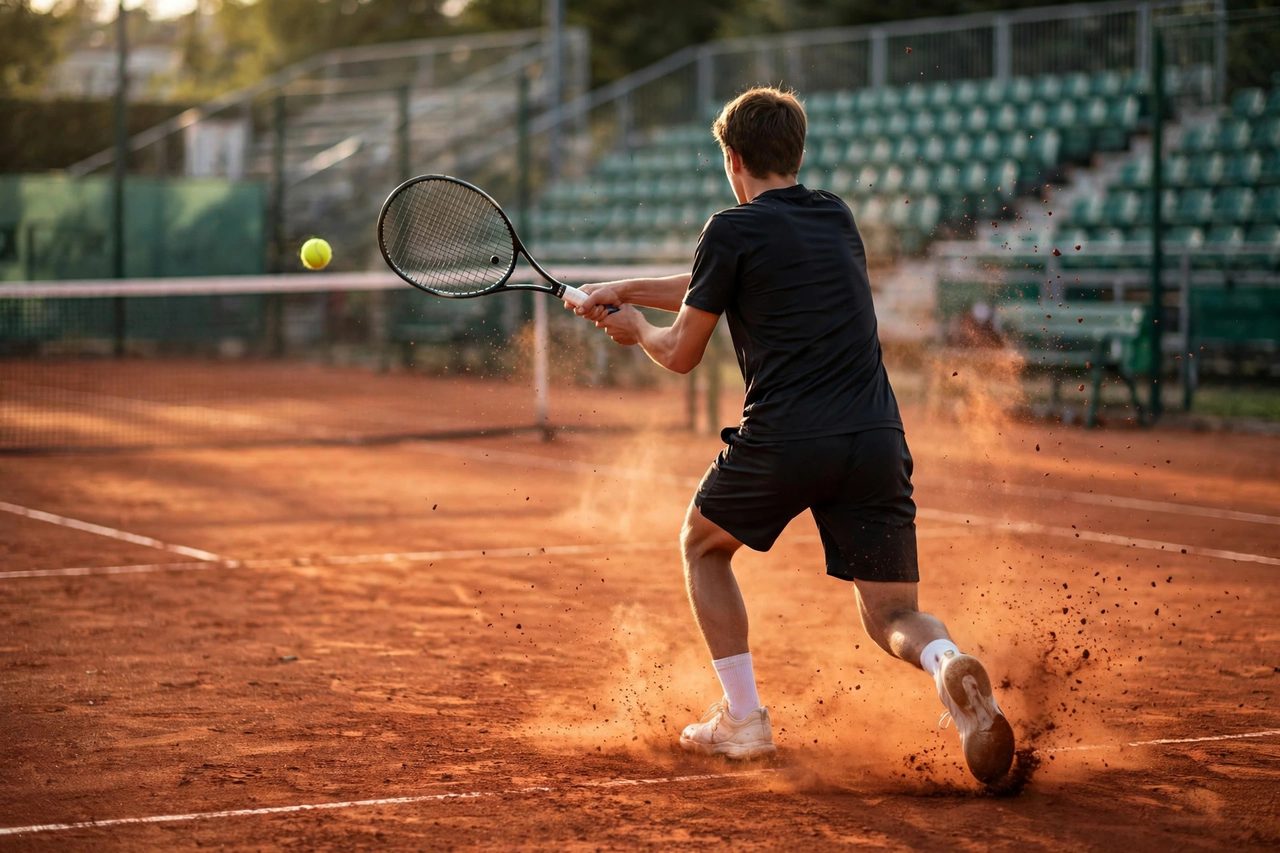
Fonseca is right-handed with a two-handed backhand, and the backhand is the shot: flat, early, taken on the rise, with genuine pop in both directions. The serve has always been a weapon and has tightened further — over the last year he has won more than two-thirds of the break points he has faced, the mark of a player who stays calm with the scoreboard against him. The forehand is the heavier rally ball, the one that pushes opponents back and opens the court.
What separates him from the pack of talented 20-year-olds is competitive temperament. He has beaten top-10 players on hard courts and clay, in finals and in front of hostile crowds. Nothing about his game looks rushed; he plays like someone who has already decided he belongs.
What is next
The ranking says No. 24 at its best; the game says higher. Fonseca’s 2026 included three Masters 1000 last-16 runs and a Slam quarter-final before his 20th birthday — a résumé that puts him in very rare company. The next steps are obvious and difficult: a first Masters 1000 quarter-final or better, a deep run at a second Slam, and that elusive third title.
Brazil has waited a long time for a successor to Kuerten’s throne. Fonseca does not talk about it much. He does not need to. Every clean strike off that backhand says it for him.
Related articles
Jannik Sinner: The Quiet Machine Who Took Over Tennis
Jannik Sinner won five Grand Slams and spent 95 weeks as world No. 1 — then a knee injury ended his 2026 season. Here is the rise, the game, and the chase to get the top spot back.
Aryna Sabalenka: The Power Player Who Ruled Women's Tennis for 99 Weeks
Aryna Sabalenka spent 99 straight weeks as world No. 1, won four Grand Slams, and hits the ball harder than almost anyone in the game. Now, as No. 2, she heads to the WTA Finals chasing one missing trophy.
Rybakina's Year-End Crown: Two Slams, 54 Wins, and One Tokyo Afternoon
Elena Rybakina sealed the year-end world No. 1 ranking in Tokyo on Oct 29 — the first Kazakh, male or female, to finish a season on top. How she did it, and what the WTA Finals hold next.